How Cavalier Ancestors Changed Shape in the 1800s
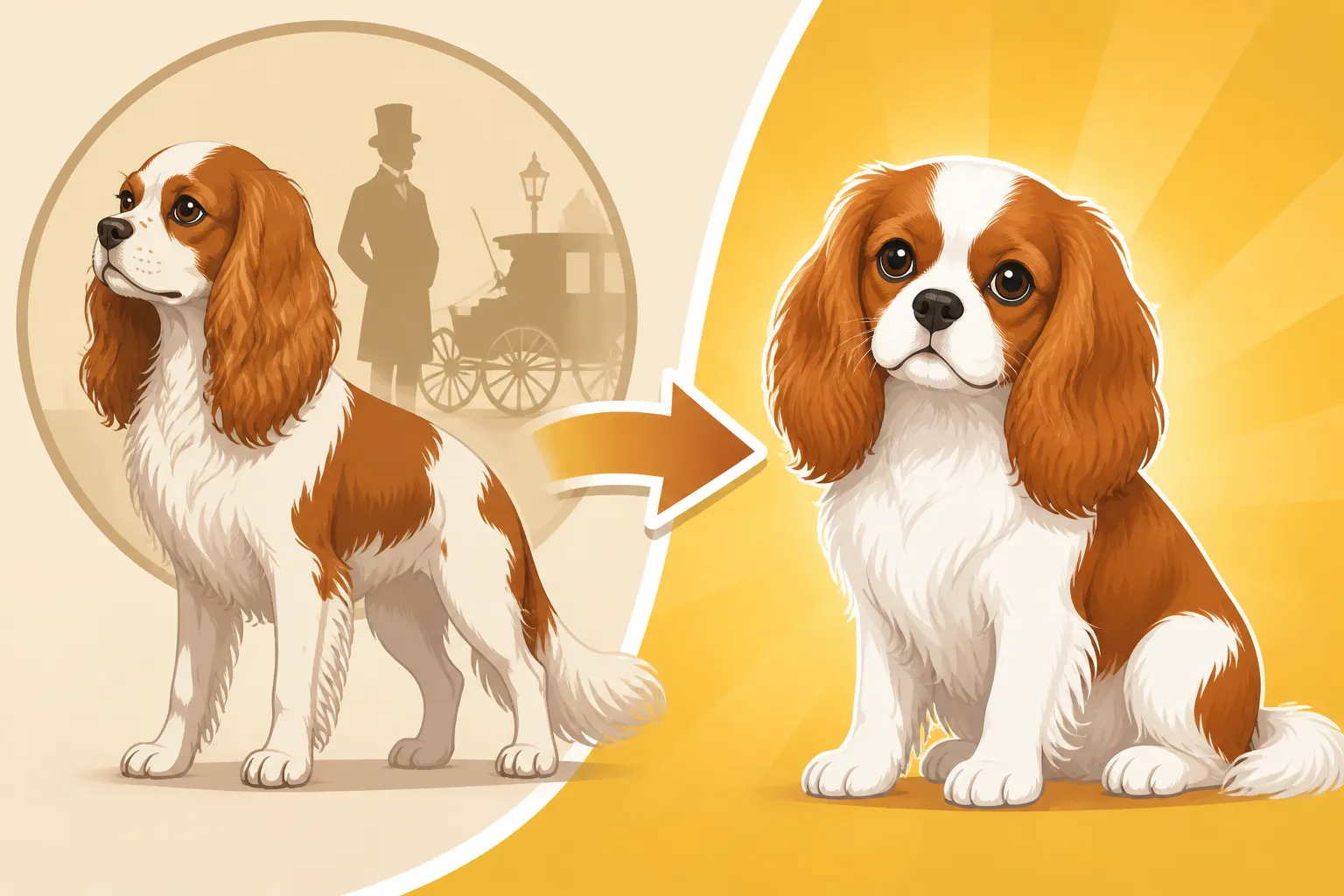
If you've ever gazed at an old painting from the 17th or 18th century featuring a graceful spaniel at a noble's feet, then looked at a modern Cavalier King Charles Spaniel, you might have scratched your head. They look similar, yes, but also distinctly different. How did the beloved Cavalier go from one shape to another, and then, in a fascinating twist of fate, almost back again? This guide delves into the intriguing history of how Cavalier ancestors dramatically changed shape throughout the 1800s, explaining the trends, influences, and lasting impacts of these transformations.
The Spaniels Before the Transformation: A Snapshot of the 17th and 18th Centuries
Before the 1800s, the dogs that would eventually become the Cavalier King Charles Spaniel were quite different from the short-nosed, round-headed darlings we adore today. They were lively, active little spaniels, perfectly suited for both the comfort of a lap and the rigors of a light hunt.
The Original 'Comforter' Spaniel: A Longer-Nosed, Flatter-Skulled Companion
Imagine a dog that was undeniably a spaniel – silky coat, long, pendulous ears, and a wagging tail – but with a distinctly longer muzzle and a much flatter skull than you typically see in modern Cavaliers. These were the original "comforter" spaniels, known for their affectionate nature and their ability to warm laps on chilly days or accompany their noble owners on gentle strolls. Their snouts were proportionate to their heads, allowing for easy breathing and an excellent sense of smell, traits inherited from their sporting spaniel ancestors. Their eyes were dark and round, but not prominently bulging like some later toy breeds. They possessed a more athletic, yet still elegant, build, capable of a full day of gentle activity without discomfort.
Their appearance, captured in countless historical portraits, showed a robust yet refined small dog. They were not fragile creatures, but dogs bred for companionship and some practical purpose, maintaining a healthy, functional structure. This allowed them to run and play with relative ease, showcasing the agility and endurance that comes with a well-proportioned face and skull. The gentle slope from their forehead to their nose was unbroken, a clear difference from the "dish face" or very flat face that would emerge later.
Royal Endorsement and Practical Roles: From Court Laps to Flushing Game
These early spaniels found immense favor in the courts of Europe, particularly with royalty. King Charles II of England, from whom the breed eventually took part of its name, was famously devoted to these dogs. He was rarely seen without several of them at his heels, even reportedly issuing a decree that the King Charles Spaniel should be allowed in any public place, including Parliament. This royal patronage solidified their status as beloved lap dogs and companions. You can still see echoes of The Court Spaniels the Cavalier Descends From in their affectionate nature and desire to be close to their human family.
While primarily companions, their heritage as spaniels meant they also retained some working instincts. They weren't used for extensive hunting, but they could certainly flush out small birds or vermin in a garden, and their keen noses would track interesting scents. This dual role meant they had to be robust enough for some outdoor activity, yet gentle and small enough to be perfectly at home curled up on a velvet cushion. Their longer muzzles weren't just for aesthetics; they were functional, aiding in scent work and allowing for unimpeded respiration, whether resting by a fire or scampering across a lawn.
The Victorian Craze for the Extreme: A Changing Aesthetic
As the 1800s progressed, especially into the Victorian era, societal tastes in dog breeding underwent a dramatic shift. The focus moved away from functional, balanced structures towards increasingly exaggerated, often "toy-like" features.
Fashion Dictates Form: The Move Towards Exaggerated Features
The Victorian era was a time of burgeoning dog shows and the formalization of many breeds. With this came a strong emphasis on specific, often extreme, physical characteristics that breeders sought to perfect. For toy breeds, the trend leaned heavily towards neoteny – the retention of juvenile features into adulthood. This meant larger, rounder eyes, domed heads, and significantly shortened muzzles, traits often perceived as "cute" or "baby-like." The flatter the face, the more pronounced the dome of the skull, and the larger the eyes, the more desirable the dog became in certain show rings.
This shift was a conscious human choice, driven by an aesthetic preference rather than any functional benefit for the dog. Owners and breeders delighted in the novelty of these new looks, and the demand for such dogs grew. It was less about what made a dog healthy or capable, and more about what made it stand out in a drawing-room or catch the eye of a judge. This era saw an intense focus on breeding "to type," but the "type" itself was becoming more and more artificial, moving away from the natural, balanced form of the earlier spaniels.
The Influence of Eastern Breeds: Introducing New Genetic Lines
A significant factor in this transformation was the introduction of various Eastern toy breeds to Europe, particularly from China and Japan. Breeds like the Pug and the Japanese Chin, with their distinctly flat faces, large eyes, and domed skulls, captured the imagination of Victorian breeders. These dogs were often seen as exotic and highly fashionable, and their unique physical traits became highly prized.
It wasn't long before these Eastern breeds were cross-bred with the existing European "King Charles Spaniels" (the ancestral form of both the modern King Charles Spaniel and the Cavalier). Breeders sought to infuse these desired brachycephalic traits into the native spaniels, believing it would improve their appeal and make them more competitive in the emerging dog show circuit. This deliberate infusion of genes with very different cranial structures fundamentally altered the skull shape, muzzle length, and eye set of the once longer-nosed spaniels. The Pug Crosses That Shortened the Cavalier's Face were instrumental in this reshaping, leading to a new silhouette that was starkly different from their 17th-century forebears.
The Birth of the King Charles Spaniel: A New Canine Silhouette
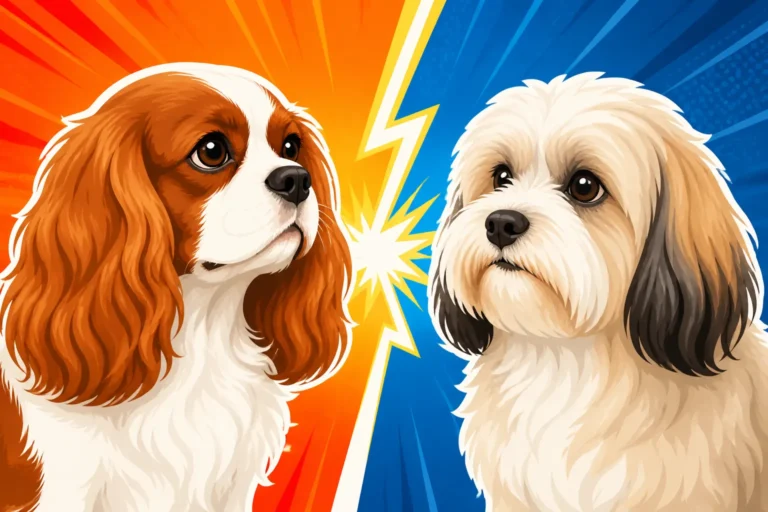
By the mid to late 1800s, the transformation was largely complete, giving rise to what was then known simply as the King Charles Spaniel, but which we now differentiate as the English Toy Spaniel. This new breed was a stark contrast to its ancestors.
Deliberate Selection for Domed Heads and Short Faces: How Breeders Cultivated the New Look
Victorian breeders, captivated by the new aesthetic, meticulously selected breeding pairs to enhance the short-faced, domed-headed characteristics. They weren't aiming for a return to the long-nosed spaniel; they were actively pushing for the most extreme versions of the new look. This meant that dogs with even slightly longer muzzles were passed over in favor of those with flatter faces, more pronounced doming of the skull, and eyes that appeared larger and rounder, set further forward. Every breeding decision was geared towards maximizing these fashionable traits.
This intense selective breeding meant that within a few generations, the physical appearance of the King Charles Spaniel was almost entirely overhauled. What was once a gradual slope from forehead to nose became a distinct "stop," an abrupt indentation between the eyes, or even an "undershot" jaw where the lower jaw protruded beyond the upper. The overall head shape became much rounder and more domed, accommodating a slightly larger brain for their smaller body size, but also contributing to certain anatomical challenges. The goal was a compact, dainty toy dog that perfectly embodied the Victorian ideal of canine elegance.
Health Implications of the Shorter Muzzle: Early Challenges with Breathing and Eyes
While the new look was considered fashionable, it unfortunately came with significant health compromises. The dramatic shortening of the muzzle, a characteristic known as brachycephaly, impacted the dog's ability to breathe efficiently. The soft palate often became too long for the shortened oral cavity, obstructing the airway. Nostrils were frequently pinched, further restricting air intake. This meant these dogs often struggled with exercise, heat, and even general respiration, producing characteristic snorts and snores. It was a trade-off: aesthetic appeal for functional well-being.
Furthermore, the increasingly domed skull and forward-set, larger eyes made these dogs more prone to eye issues. Their eyes became more exposed, making them vulnerable to injury, ulcers, and conditions like dry eye. Why Cavalier Ancestors Lost Their Muzzles is a critical point in understanding this period, as the loss of this functional feature introduced a host of problems that hadn't been prevalent in their earlier, longer-nosed relatives. The very traits that made them desirable in the show ring also set the stage for chronic health struggles that would plague many brachycephalic breeds for generations.
Solidifying the "New" Breed Standard: The Formal Recognition of the King Charles Spaniel
As these new physical traits became dominant, breed clubs began to formalize them into written standards. These standards described the ideal King Charles Spaniel as having a very short, turned-up nose, a high-domed skull, and large, dark, expressive eyes. The emphasis was clearly on these extreme features, effectively cementing the new silhouette as the accepted norm. Any dog that resembled the older, longer-nosed type would no longer be considered "typey" or competitive in the show ring.
The creation of these standards was a pivotal moment. It formalized the departure from the breed's original appearance and established the characteristics that would define the King Charles Spaniel (now known as the English Toy Spaniel in the US, to distinguish it from the Cavalier King Charles Spaniel) for decades to come. This official recognition meant that breeders were now actively working to perpetuate and refine these acquired traits, moving further and further away from the ancestral spaniels of the Stuart era. This period clearly illustrates how human preferences, codified into breed standards, can rapidly reshape a canine population.
The Vanishing Act: Where Did the Old Type Go?
With the new aesthetic firmly in place and codified by breed clubs, the original type of spaniel, with its longer nose and flatter skull, began to fade from public consciousness and the breeding world.
The Dominance of the Brachycephalic Look: Why the Original Spaniel Fell Out of Favor
Once the short-faced, domed-headed King Charles Spaniel became the fashion, the older type of spaniel, with its more moderate features, simply couldn't compete. In dog shows, which were gaining immense popularity, judges favored the exaggerated traits outlined in the new breed standards. Dogs that looked like their 17th-century ancestors were deemed "old-fashioned" or "incorrect" and were swiftly overlooked. This cultural shift meant that breeders had little incentive to continue breeding the older type, as there was no market for them among show enthusiasts or the general public seeking the latest canine trend.
The demand drove supply, and soon, almost all King Charles Spaniels being bred and sold conformed to the new, brachycephalic ideal. The original spaniel, once a ubiquitous companion, became a rarity, pushed to the brink of extinction as a distinct type. It’s a powerful lesson in how quickly a breed's appearance can be altered when human selection pressures are strong and consistent. The very attributes that once defined them – their functional muzzles and balanced heads – were now seen as undesirable flaws.
Records and Representation: The Visual Shift in Art and Literature
The shift in canine appearance during the 1800s is vividly documented in the art and literature of the time. Earlier paintings, especially from the 17th and 18th centuries, clearly depict dogs with longer muzzles and flatter skulls. Artists like Sir Peter Lely or Jean-Baptiste Oudry show spaniels that are undeniably the ancestors of the Cavalier, with graceful, proportionate features. However, as the Victorian era progressed, these depictions began to change.
By the mid-19th century, paintings and illustrations predominantly featured the new, short-faced King Charles Spaniel. Artists were commissioned to portray the fashionable pets of the day, reflecting the prevailing aesthetic. Likewise, literature of the period would often describe these "new" spaniels, cementing their image in the public mind. This visual record provides a clear timeline of the transformation, demonstrating how thoroughly the older type was supplanted. If you were to search for images of "King Charles Spaniels" from the late 1800s on a site like Chewy's vintage prints section, you would almost exclusively find the short-nosed version, a testament to how completely the breed's look had changed.
The Turn of the Century and the Cavalier's Resurgence
As the 20th century dawned, a remarkable turn of events began to unfold, driven by a desire to bring back the charm of the past.
Roswell Eldridge's Challenge: A Quest to Bring Back the Dogs of Old
By the 1920s, the original type of spaniel, so popular in the days of King Charles II, was virtually extinct. The short-faced King Charles Spaniel (English Toy Spaniel) was dominant. However, one American enthusiast, Roswell Eldridge, noticed the distinct difference between the spaniels in old paintings and the dogs of his time. He harbored a strong desire to see the "old type" of King Charles Spaniel, with its longer nose and flatter skull, revived. In 1926, Eldridge made a bold move: he offered prize money at Crufts, the prestigious British dog show, for any "King Charles Spaniels of the old type, as shown in the pictures of King Charles II's time, with long face, no stop, flat skull, and well-placed ears." How Roswell Eldridge Brought Back the Cavalier was not just a whim; it was a deliberate and financially supported effort to reverse a century of selective breeding.
This challenge was a pivotal moment. It brought attention back to the forgotten ancestral form and sparked the imagination of a few dedicated breeders who believed in the beauty and functionality of the original spaniel. Eldridge's vision wasn't just about nostalgia; it was about recognizing that the older type possessed a balanced structure that had been lost. He sought to re-establish a more natural and, arguably, healthier conformation, paving the way for the development of the Cavalier King Charles Spaniel as we know it today.
Rebuilding a Breed: The Careful Process of Selecting for Ancestral Traits
The task of bringing back the "old type" was not an easy one. It required careful and dedicated breeding from the few remaining dogs that still carried some of the desired ancestral traits, or that were less extreme in their brachycephaly. Breeders who took up Eldridge's challenge focused on selecting for longer muzzles, flatter skulls, and less prominent eyes, essentially reversing the selective pressures of the Victorian era. They had to be vigilant, choosing dogs that, while perhaps not perfect representations, moved closer to the 17th-century ideal with each generation. The Old Type of Cavalier Eldridge Wanted Back became the blueprint, and breeders meticulously studied old portraits and descriptions to guide their efforts.
This process involved outcrossing to other spaniel types that might retain some of the desired head structure, and then carefully breeding back to establish a consistent "type" that reflected the original. It was a slow and painstaking endeavor, requiring immense patience and a deep understanding of genetics. Unlike the Victorian era where speed to exaggeration was key, this new movement prioritized thoughtful selection for moderate, healthy features. The goal was not to create something entirely new, but to resurrect what had been lost, creating a robust foundation for a new breed that honored its historical roots.
The Distinct Identity of the Cavalier King Charles Spaniel: Solidifying the Breed We Know Today
Through the tireless efforts of these dedicated breeders, the "old type" began to re-emerge, distinct from the short-faced King Charles Spaniel. In 1945, the Kennel Club in the UK formally recognized this revived breed, giving it the name "Cavalier King Charles Spaniel" to clearly differentiate it from its closely related, but physically distinct, cousin. This official recognition was a triumph for those who had championed Eldridge's vision. Why Cavalier and King Charles Spaniel Mean Two Dogs became a clear statement of two separate, though historically linked, breeds.
The Cavalier King Charles Spaniel was standardized with a moderate muzzle, a flat skull between the ears, and large, dark, round eyes that were well-spaced but not bulging. These characteristics reflected a deliberate return to the more balanced and functional head shape of their 17th-century ancestors. The breed quickly gained popularity for its gentle temperament and charming appearance, becoming a beloved companion worldwide. It stands as a living testament to the power of dedicated breeders to shape, and sometimes reshape, canine history.
Here's a table to help illustrate the differences between these historical types:
| Feature | 17th/18th Century Spaniel (Cavalier Ancestor) | 19th Century King Charles Spaniel (English Toy Spaniel) | Modern Cavalier King Charles Spaniel |
|---|---|---|---|
| Muzzle Length | Moderate to longer, proportionate to skull | Very short, often pushed-in or upturned | Moderate, still distinct from skull |
| Skull Shape | Flatter between the ears | Distinctly domed, often very rounded | Flat between the ears |
| Stop | Gentle, gradual slope | Pronounced, abrupt indentation ("dish face") | Moderate, distinct but not abrupt |
| Eye Placement | Well-set, round, but not prominent | Very large, round, often prominent/bulging | Large, dark, round, well-spaced |
| General Build | More athletic, balanced | Dainty, often fragile-looking | Sturdy, graceful, athletic |
| Breathing | Generally unhindered | Often restricted, prone to snorting/snoring | Generally unhindered, but varies |
Understanding the Legacy of Change
The historical journey of the Cavalier's shape change in the 1800s is more than just a fascinating anecdote; it's a crucial part of understanding the breed today and the ongoing responsibilities of owners and breeders.
Enduring Traits and Health Considerations: How History Informs Modern Care
Even though the Cavalier King Charles Spaniel was deliberately bred to move away from the extreme brachycephaly of the 19th-century King Charles Spaniel, echoes of that period, and even earlier ancestral traits, can still be seen in the breed. For instance, while their muzzles are longer than their Victorian cousins, they are still considered a relatively short-nosed breed compared to, say, a Setter. This means that The Cavalier's Longer Muzzle and Flatter Skull still requires owners to be mindful of certain considerations, like ensuring they don't overheat in warm weather, as their ability to cool themselves through panting might not be as efficient as a longer-nosed dog.
Similarly, the large, expressive eyes that are a hallmark of the Cavalier are beautiful, but they can still be vulnerable to irritants or injury due to their prominence. Owners often invest in specialized bowls to keep their long ears out of their food and water, which is available from retailers like Chewy, preventing ear infections and keeping them clean. Understanding this history helps us appreciate why certain health predispositions exist and encourages proactive care, from regular vet check-ups that include heart and eye examinations to maintaining a healthy weight that supports their overall structure.
The Importance of Responsible Breeding Today: Learning From the Past
The drastic changes the Cavalier ancestors underwent in the 1800s, driven purely by fashion, serve as a powerful cautionary tale about the potential pitfalls of selective breeding. It highlights how quickly a breed's health and functional well-being can be compromised when aesthetics take precedence over everything else. Today, responsible Cavalier breeders are acutely aware of this history. Their focus is not just on producing beautiful dogs, but on prioritizing health and temperament above all else. The Health Debate Around Breeding Cavaliers is ongoing, and many reputable breeders are committed to extensive health testing for conditions common in the breed, such as Mitral Valve Disease, Syringomyelia, and hip and knee issues.
They strive to breed dogs with correct conformation – a moderate muzzle, a flat skull, and well-set eyes – that are not only true to the breed standard but also promote good health and quality of life. Owners, too, have a role to play by seeking out ethical breeders who are transparent about their health testing and breeding practices. By learning from the past, we can ensure that the Cavalier King Charles Spaniel continues to thrive as a beloved companion, honoring its rich history while safeguarding its future. And for everything you need to support a healthy Cavalier, from specialized food bowls to comfy beds, a trusted source like Chewy can be a great place to start.
Disclaimer
This article is for general informational purposes only and does not constitute professional advice. Laws, prices and regulations vary by location and change over time. Consult a qualified professional for guidance on your specific situation.