Famous Owners of Cavalier King Charles Spaniels
A famous dog can make the Cavalier King Charles Spaniel look like the perfect celebrity companion, but a few familiar names are easy to mislabel. The breed’s royal history also gets blurred with that of its ancestors. This guide separates well-documented owners from historical lookalikes, explains the name behind the breed, and offers a sensible way to evaluate celebrity claims.
The famous owners most closely linked to Cavaliers
Ronald Reagan and Rex
One of the best-known modern Cavalier King Charles Spaniels was Rex, a dog associated with President Ronald Reagan and his family. Rex lived at the White House during Reagan’s presidency, making him a particularly visible example of the breed in American public life. His presence helped introduce many people to a small spaniel with a soft expression, long ears and a companionable temperament.
Rex’s fame is a useful reminder that a dog’s public profile can shape how people think about a breed. Seeing a Cavalier in a presidential home may suggest an easygoing family pet, and Cavaliers often are affectionate, people-oriented companions. But a White House setting doesn’t tell you how much grooming, exercise, training or veterinary care the individual dog needed. A famous dog’s lifestyle is not a care plan for every Cavalier.
Rex is also a clearer example than many celebrity-owner claims that circulate online. When a well-known person is reported to have owned a Cavalier, it’s worth checking whether the dog’s breed is actually identified, whether the claim refers to the person or a family member, and whether the story concerns a modern Cavalier or an older type of toy spaniel.
King Charles II and the breed’s royal association
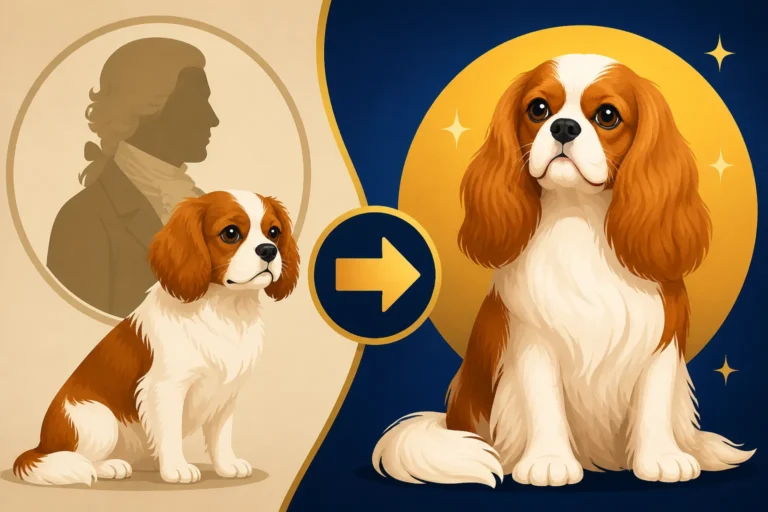
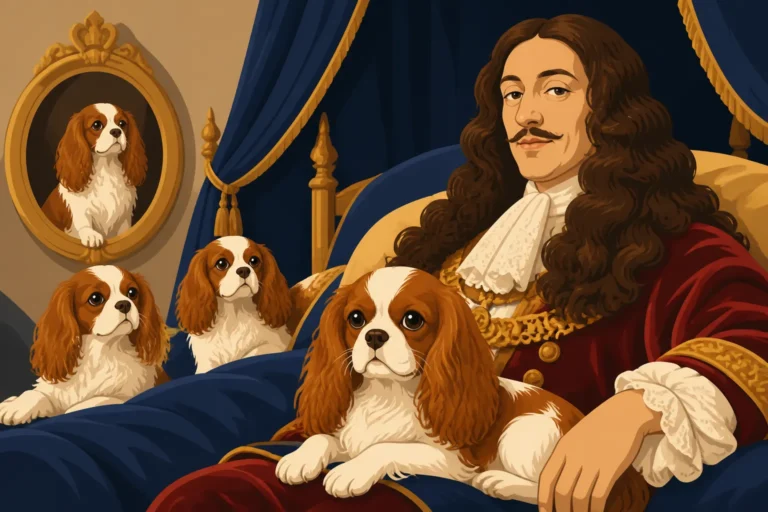
The breed’s name points to King Charles II, who was closely associated with small toy spaniels. Those dogs are part of the breed’s historical story, but it would be misleading to say that the modern Cavalier King Charles Spaniel existed in its current form during his reign. The modern breed was established much later, after breeders worked to revive a longer-faced type of toy spaniel.
That distinction matters because historical portraits and written accounts often use names such as “King Charles Spaniel” or “toy spaniel” broadly. A dog in a seventeenth-century painting might resemble a Cavalier in some ways, but that doesn’t make it a registered modern Cavalier. The breed’s history includes older spaniels, later changes in appearance, and a twentieth-century revival. For more background, see Cavalier Ancestors at the Court of Charles II and Which King the Cavalier Is Named After.
So, King Charles II is best understood as the namesake and a central figure in the breed’s historical lineage—not as a documented owner of the modern breed in the way a contemporary family might own a Cavalier today. The distinction is less catchy than a simple celebrity list, but it gives the history a more accurate foundation.
Queen Victoria and Dash
Queen Victoria is another royal figure often brought into conversations about toy spaniels. Her dog Dash was a much-loved spaniel, and his story is part of the wider history of small companion dogs in Britain. But Dash lived before the modern Cavalier King Charles Spaniel was established as a distinct breed, so calling him a modern Cavalier would be anachronistic.
The broader royal connection is still relevant. Small spaniels were familiar companions in royal households, and their appearance and popularity changed over time. The breed now called the Cavalier was revived in part because some people wanted to bring back the older, longer-muzzled look associated with earlier toy spaniels. The modern breed story is explained in How Roswell Eldridge Brought Back the Cavalier.
| Person or dog | Connection to Cavaliers | Important distinction |
|---|---|---|
| Ronald Reagan and Rex | A well-known modern Cavalier associated with the Reagan family and the White House | A contemporary example of the breed |
| King Charles II | The breed is named for him, and he is closely linked to its historical background | He lived long before the modern breed was established |
| Queen Victoria and Dash | Dash was a royal toy spaniel and part of the wider spaniel story | He was not a modern Cavalier King Charles Spaniel |
Why famous historical spaniels are often misidentified
The Cavalier and the King Charles Spaniel are not interchangeable names
The names can be confusing because the Cavalier King Charles Spaniel and the King Charles Spaniel are separate breeds. They share a history, and both are toy spaniels, but they developed along different paths and have different breed standards. The modern Cavalier is generally associated with a longer muzzle and flatter skull than the King Charles Spaniel.
That difference becomes important when someone describes a royal dog from centuries ago as a Cavalier. The dog may have been a toy spaniel related to the breed’s ancestry, but there was no modern Cavalier breed standard at the time. Calling every small spaniel in an old portrait a Cavalier makes the history sound neat while obscuring how much the breed changed. The distinction is explored in Why Cavalier and King Charles Spaniel Mean Two Dogs and The Cavalier's Longer Muzzle and Flatter Skull.
When reading a claim about a famous owner, look for the exact breed name used in the original account. “Spaniel,” “toy spaniel” or “King Charles Spaniel” may not mean Cavalier King Charles Spaniel. A modern article may use the familiar breed name as shorthand, even when the historical dog predates the breed.
The modern breed was shaped much later
The Cavalier’s modern revival is associated with Roswell Eldridge, who encouraged breeders to recreate an older type of toy spaniel. That effort helped shape the breed recognized today. As a result, the Cavalier’s royal associations reach back much further than the modern breed itself.
This is why a careful account uses two ideas at once: the Cavalier has a genuine historical connection to royal toy spaniels, and the breed as we know it is comparatively modern. Neither point cancels the other. Saying the breed has royal roots is reasonable; saying that a particular seventeenth-century dog was definitively a modern Cavalier may not be.
For readers interested in how the breed took shape after its revival, The 1940s Cavaliers That Started American Lines offers another useful piece of the story. It helps explain how the breed’s history continued beyond the original royal association and into the development of modern Cavalier populations.
How to check a celebrity Cavalier claim
Look for the dog’s name and a reliable breed identification
A convincing claim should include more than a celebrity’s name beside a stock photograph of a Cavalier. Look for the dog’s name, the person’s connection to the dog, and a clear statement identifying the breed. A contemporary photograph may help, but appearance alone is not proof: several small spaniel breeds can look similar, especially in old images or at a distance.
It’s also helpful to distinguish between a person who personally owned a dog and a dog that belonged to a household or family. News stories may call a pet “the president’s dog” or “the queen’s dog” even when another family member was the primary caregiver. That wording doesn’t necessarily make the claim false, but it can make ownership sound more direct than it was.
If a claim concerns a historical figure, check the date. If the person lived before the modern Cavalier was established, the dog may have been an ancestor or related toy spaniel rather than a Cavalier in today’s breed sense. This is especially relevant for royal portraits and stories that use older breed names inconsistently.
Treat viral lists with a little skepticism
Online celebrity lists often repeat one another. A claim can appear on several sites without each one independently confirming it. Be cautious when a list gives no dog’s name, uses a photograph without context, or describes a centuries-old spaniel as a modern Cavalier without explaining the timeline.
It’s also common for images to be mislabeled. A celebrity may be pictured with a small dog, but the photograph alone might not establish the dog’s breed. If accuracy matters, look for a direct interview, a reputable biography, a clearly identified public appearance or a reliable account that names the dog and breed.
The same careful approach helps prospective owners. A famous owner may be part of the breed’s appeal, but celebrity association says little about whether a Cavalier will fit your household. Consider the dog’s needs and your own schedule, budget and ability to provide ongoing care. Whether a Cavalier Is the Right Dog for You is a useful next read if you’re weighing that decision.
What famous owners can and cannot tell you about living with a Cavalier
A public image doesn’t show the everyday work
Cavaliers are often portrayed as lap dogs who fit easily into a busy household. Many are affectionate and eager to be near their people, but that closeness can also mean they need thoughtful preparation for time alone. They have a silky coat that needs regular attention, and their long ears can need routine checks and care. Their health also deserves careful attention, including breed-associated heart and neurological concerns.
A celebrity’s dog may have access to professional grooming, household help or a flexible schedule. Most owners are managing care around work, family and ordinary errands. If you’re preparing for your first Cavalier, plan for routines that are realistic in your own home rather than trying to imitate a famous household.
Practical supplies can make those routines easier. For example, an owner organizing coat care may compare brushes, combs and ear-care essentials through a retailer such as Chewy, while still asking a veterinarian or groomer which products suit the individual dog. For guidance on the breed’s appearance, temperament and care requirements, The Four Cavalier Colors and What They Are Called is one of several helpful starting points in the breed hub.
Temperament and health matter more than celebrity status
Famous owners can help people discover a breed, but they cannot guarantee that every Cavalier will have the same personality or health history. Individual dogs vary. A puppy’s upbringing, inherited traits, social experiences and medical needs all influence what life with that dog will actually be like.
Before choosing a Cavalier, ask a breeder or rescue organization what health records are available and what care the dog may need. If you’re planning for routine grooming or assembling basic supplies, Chewy can be one place to compare everyday pet-care options; the important part is choosing items appropriate to your dog rather than buying based on a celebrity association. For coat maintenance, Brushing a Cavalier's Feathering Three Times a Week offers a practical overview of the regular work behind that polished spaniel look.
It’s also wise to think beyond the puppy stage. Cavaliers can be loving companions for many years, but health monitoring and age-related adjustments may become part of the picture. A celebrity story rarely follows a dog through every veterinary appointment or senior-care change. For that longer view, Cavalier Lifespan and What Cuts It Short provides context that a glamorous photo cannot.
Use the fame as a doorway, not a decision rule
Rex’s visibility and the Cavalier’s royal associations make the breed memorable. They can be a fun starting point for learning about the dog, but they are not a substitute for understanding its needs. The most reliable picture comes from combining breed history with careful research into temperament, grooming, health screening and the realities of your own daily routine.
If you’re assembling a care kit, Chewy may help you compare common supplies in one place, but it is still sensible to confirm grooming and health choices with a veterinarian or experienced groomer. Whether your interest started with Rex, a royal portrait or a friend’s dog, the best next step is to learn about the real Cavalier: an affectionate spaniel with a long history, individual needs and no guarantee of a celebrity’s lifestyle.
Disclaimer
This article is for general informational purposes only and does not constitute professional advice. Laws, prices and regulations vary by location and change over time. Consult a qualified professional for guidance on your specific situation.