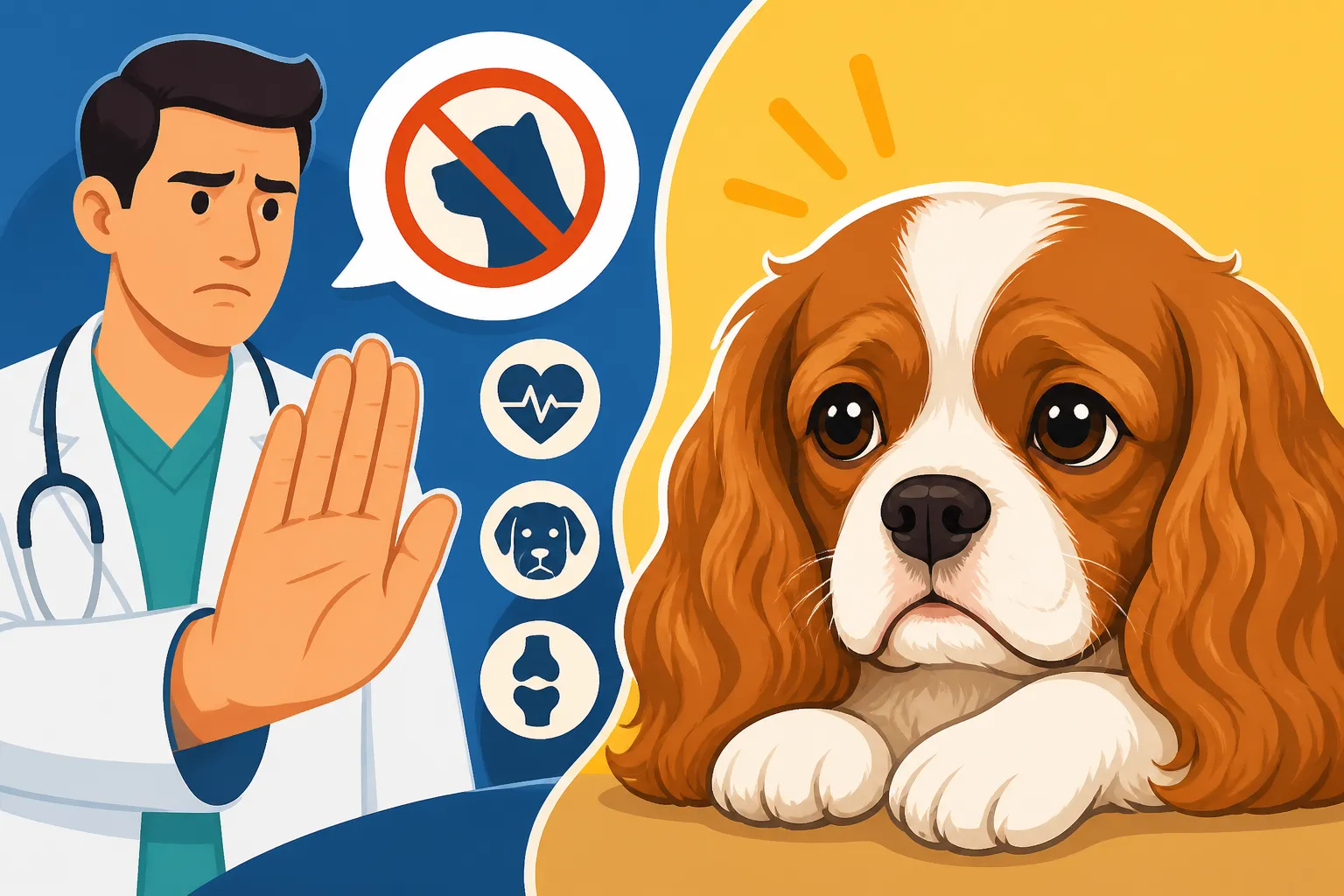
Why Some Vets Advise Against Buying a Cavalier
A Cavalier King Charles Spaniel can be affectionate, adaptable and wonderfully easy to love. But some veterinarians urge caution because the breed is predisposed to serious health problems, especially mitral valve disease and syringomyelia. That warning is not a judgment on every Cavalier or every breeder. It is a reminder to understand the medical, emotional and financial realities before bringing one home.
Why veterinarians raise concerns about Cavaliers
The breed’s health risks are more than theoretical
The most common reason for caution is the breed’s inherited risk of mitral valve disease, or MVD. This condition affects a heart valve, which can gradually become leaky. Some dogs develop a heart murmur before they seem unwell; others may eventually develop heart enlargement or congestive heart failure. The course varies between individuals, so a diagnosis does not tell an owner exactly what will happen or when.
MVD is not unique to Cavaliers, but it is a central health concern in the breed. A vet who has seen many Cavaliers with progressive heart disease may feel uncomfortable recommending that someone buy one without first discussing the risk. For background on what the condition involves, read Mitral Valve Disease in the Cavalier King Charles Spaniel.
The other major concern is Chiari-like malformation and syringomyelia. In affected dogs, the shape of the skull and the flow of fluid around the brain and spinal cord can be associated with a fluid-filled cavity in the spinal cord. Some Cavaliers show signs such as sensitivity around the neck or shoulders, phantom scratching, or discomfort when handled. Others have imaging findings without obvious signs, and symptoms can have other causes too. Syringomyelia and Chiari Malformation in Cavaliers explains why the condition can be complex to assess.
These are not the only health issues that may come up. Cavaliers can also experience eye problems, ear infections, dental disease and orthopedic conditions. A vet may be weighing the overall pattern: several potential health burdens in a breed whose friendly, small-dog image can make prospective owners underestimate the care involved.
A warning is not a prediction about every individual dog
A veterinarian’s caution does not mean every Cavalier will become seriously ill, nor does it mean that a dog already in a home is destined for a poor quality of life. Risk is not certainty. Many Cavaliers are affectionate companions, and individual health histories differ. Still, the possibility of serious illness is relevant when deciding whether to seek out a puppy.
It also helps to distinguish between a clinical concern and a moral verdict. A vet might advise against buying a Cavalier because they believe the breed’s health problems are too widespread or difficult to prevent through breeding alone. Another vet may focus on helping a prospective owner understand screening, ongoing monitoring and realistic care needs. Both may be responding to the same medical realities, while reaching different practical advice.
If you are hearing a strong warning, ask what specifically informs it. Is the vet concerned about heart disease, neurological pain, the limits of available screening, or the likelihood of future expenses? A clear explanation is more useful than a blanket statement. It can help you decide whether your household can accept the risks and whether another breed or an adult rescue dog would suit you better.
The health and care realities prospective owners should consider
Screening helps, but it cannot promise a healthy lifetime
Health testing is important, but it is not a guarantee that a puppy will never develop disease. A responsible breeder should be open about the health of the parents and close relatives, explain what tests have been completed, and provide records you can review. For heart health, ask what examinations were done, when they took place, and whether the results are documented. The Heart Testing a Cavalier Breeder Must Do offers a closer look at the questions that matter.
A single examination is a snapshot. Some conditions become apparent as a dog ages, and the results of one test cannot rule out every inherited risk. Screening is most useful as part of a broader breeding approach, including careful decisions about which dogs are paired and how family health histories are considered. Even then, there is no simple way to promise that a Cavalier puppy will avoid MVD or neurological disease.
Ask the breeder to explain results in ordinary language rather than relying on reassuring phrases such as “vet checked” or “healthy lines.” Request the actual paperwork and take time to understand what it does and does not show. You can also discuss the documents with your veterinarian before making a deposit. The Health Debate Around Breeding Cavaliers and Whether Cavalier Heart Disease Can Be Bred Out provide useful context for thinking about the limits of breeding and testing.
Ongoing care can involve time, uncertainty and cost
The practical burden is not limited to a puppy’s first vaccinations and routine checkups. Depending on the dog, owners may need repeat heart examinations, diagnostic imaging, medication, specialist consultations or investigation of signs such as coughing, reduced stamina, neck sensitivity or unusual scratching. A symptom can have several explanations, so it may take more than one appointment to understand what is happening.
That uncertainty can be difficult. An owner might notice that a dog is sleeping differently or tiring sooner on walks and wonder whether it is normal aging, heart disease, pain or something unrelated. Regular veterinary care and a written record of changes can make conversations with the clinic more productive. They do not remove the worry, but they can help owners respond earlier and describe what they have observed.
Budgeting should include both predictable routine expenses and the possibility of unexpected care. Some families set aside savings; others look into insurance before a condition appears, since existing or previously noted health issues may affect coverage. For everyday supplies, owners may compare food and grooming items through retailers such as Chewy, while asking their veterinarian before changing a prescription diet or treatment routine. The goal is not to assume a particular expense, but to be honest about what your household could manage if a specialist visit or long-term medication became part of the dog’s care.
| Consideration | What to ask yourself | Why it matters |
|---|---|---|
| Heart health | Can I keep up with recommended examinations and follow-up? | MVD may progress over time and require monitoring. |
| Neurological signs | Would I seek veterinary assessment for pain, scratching or handling sensitivity? | Signs can be subtle and may have more than one cause. |
| Budget | Could I manage specialist care or ongoing treatment if needed? | Routine costs do not capture every possible health expense. |
| Time | Can I give daily care and notice changes in behavior or stamina? | Small changes may be useful to share with a veterinarian. |
| Breeder transparency | Will I review dated health records and ask follow-up questions? | Clear documentation is more useful than broad assurances. |
How to make a responsible decision about getting a Cavalier
Ask specific questions before choosing a breeder
A careful decision starts with questions, not a deposit. Ask about heart examinations, the age of the parents, relevant family history, and any available screening for other inherited conditions. Find out whether the breeder will discuss health concerns openly, provide records, and remain available if questions arise after you take the puppy home. A breeder’s willingness to explain uncertainty can be more reassuring than a promise that a litter is guaranteed healthy.
Do not treat a certificate as a substitute for understanding what was examined and when. A puppy may appear healthy at the time of sale while still having inherited risk that becomes visible later. Ask what follow-up the breeder recommends and whether they will take the dog back or help if circumstances change. These conversations are part of assessing the breeder, not an accusation.
Be cautious if you are pressured to decide quickly, discouraged from speaking with your veterinarian, or given vague answers about testing. The questions in The Cavalier Heart and MRI Papers to Ask For can help you prepare for a more focused discussion. If you are unsure whether buying a puppy is the right route, Where Cavaliers Come From Besides Breeders describes other paths to consider, including rescue.
Think about fit, not just affection for the breed
Cavaliers are known for their people-oriented nature, but a loving temperament does not automatically make the breed a fit for every home. Ask whether you can accommodate routine grooming, companionship needs and veterinary follow-up, as well as the possibility of health problems. Consider what would happen if your dog needed regular appointments: could you arrange transport, time away from work and help from another person if necessary?
It is also fair to consider how you handle uncertainty. Some people feel comfortable caring for a dog with known breed risks and would rather plan carefully than rule out the breed. Others would find the possibility of progressive disease too distressing or financially difficult. Neither reaction makes someone a better or worse dog owner. The important thing is to choose with open eyes rather than assume that a particular puppy will be an exception.
For a broader look at lifestyle fit, see Whether a Cavalier Is the Right Dog for You. It can be useful to talk through your own plans with a veterinarian who knows your circumstances, especially if you already have pets, limited access to specialist care, or a strict household budget. A vet can help you identify what questions remain unanswered without making the decision for you.
What a veterinarian’s advice means for your next step
Take the concern seriously without turning it into a rule
If your vet advises against buying a Cavalier, ask for the reasoning and discuss what would change their recommendation, if anything. They may be concerned about breed-wide disease risk, the limits of screening, or your ability to manage potential care needs. Knowing which concern is driving the advice lets you consider it thoughtfully instead of feeling dismissed or judged.
You can also ask whether the vet would be comfortable reviewing a breeder’s documentation or discussing a specific puppy’s family health history. If you are considering adoption, ask what is known about the dog’s medical background and what examinations may be sensible before bringing the dog home. An adult dog’s established health history can provide useful information, though it cannot guarantee what will happen in the future.
Some owners find it helpful to seek another veterinary opinion, particularly when they want clarification rather than reassurance. The aim should be a practical conversation about risk, not a search for someone to promise that everything will be fine. No breeder, test or clinic visit can remove every uncertainty.
Make room for the dog in front of you
If you already live with a Cavalier, breed-level concerns are not a reason to panic or delay care. Keep up with routine veterinary visits, share changes in breathing, stamina, sleep, movement or sensitivity, and follow the plan your veterinarian recommends. For heart concerns, ask what signs should prompt a call and when follow-up is appropriate. For scratching, discomfort or altered behavior, avoid assuming the cause before an examination.
The same compassionate approach applies when deciding whether to bring a dog home. A vet’s warning is an invitation to prepare: learn about the health risks, assess the care you can provide, and ask direct questions before committing. Some prospective owners may decide a Cavalier is still right for them; others may choose a different breed or adopt a dog whose needs better match their situation. Thoughtful caution is not a rejection of the breed or the individual dogs who need homes. It is a way to make a decision with the dog’s long-term welfare in view.
Disclaimer
This article is for general informational purposes only and does not constitute professional advice. Laws, prices and regulations vary by location and change over time. Consult a qualified professional for guidance on your specific situation.