When the Cavalier Became a Separate Breed
If you're a Cavalier King Charles Spaniel owner, you know the confusion that sometimes arises when people hear "King Charles Spaniel" and wonder if it's the same dog. It’s a common frustration, and one that has deep historical roots! Many people don't realize that the Cavalier King Charles Spaniel, the sweet, outgoing companion we adore today, actually had to be brought back into existence and formally recognized as distinct from its shorter-nosed cousin. This guide will walk you through the fascinating journey of how our beloved Cavaliers officially became their own separate breed.
The Ancestors and the Original Comfort Spaniels
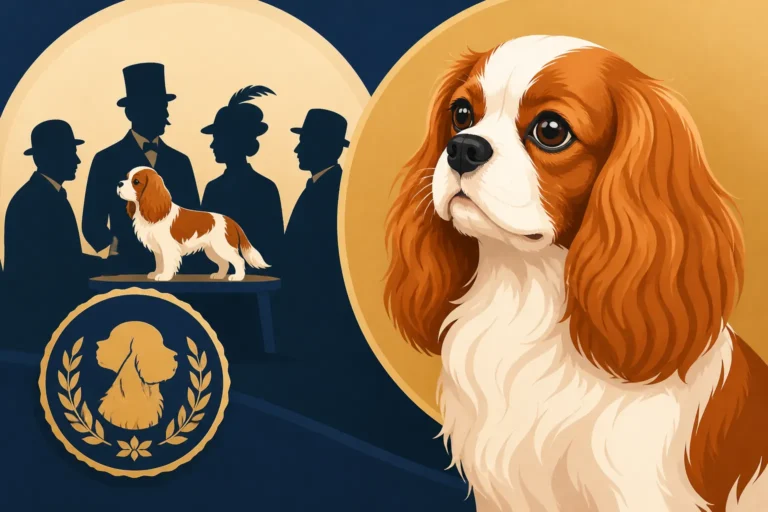
To understand when the Cavalier King Charles Spaniel became a separate breed, we first have to rewind quite a bit, back to the 16th, 17th, and 18th centuries in England. Imagine the grand halls and opulent chambers of royalty and nobility; you'd often find small, toy spaniels scampering at their feet, warming laps, and generally being adored companions. These were the ancestors of both the modern King Charles Spaniel and our Cavaliers. They were often depicted in famous paintings of the era, sitting contentedly beside their royal owners, perhaps most famously with King Charles II himself, who was so devoted to them that they were rarely out of his sight. The Court Spaniels the Cavalier Descends From tells us more about these early companions.
These early spaniels were not a standardized breed in the way we think of them today. They varied a bit in size and appearance, but generally, they had flatter heads and longer muzzles than the King Charles Spaniel that would emerge later. They were lively, affectionate, and utterly charming, serving as true comfort dogs. They didn't have a specific job beyond companionship, and they excelled at it. You can see their influence in portraits where they have a more natural, slightly longer face, not the pushed-in look that would become fashionable. This historical period is crucial because it established the type of dog that Roswell Eldridge would later strive to revive. Understanding their original form is key to appreciating the later divergence and the subsequent efforts to reclaim their classic look.
However, fashion is a fickle thing, and canine aesthetics were no exception. As time wore on, particularly into the 18th and 19th centuries, there was a growing preference for dogs with flatter faces, more domed heads, and larger, rounder eyes. This trend was largely influenced by the introduction of breeds like the Pug and the Japanese Chin to England. Breeders began selectively breeding the existing toy spaniels to conform to this new ideal. This led to a significant change in the appearance of the King Charles Spaniel (which in America is now known as the English Toy Spaniel). The Pug Crosses That Shortened the Cavalier's Face details this shift in appearance. The spaniels of the Victorian era started to look very different from their ancestors, with much shorter muzzles, a more pronounced "stop" (the indentation between the eyes), and a more compact body. This was the first major fork in the road for these charming little dogs, setting the stage for the need to "bring back" the original type.
Roswell Eldridge's Vision and the Revival
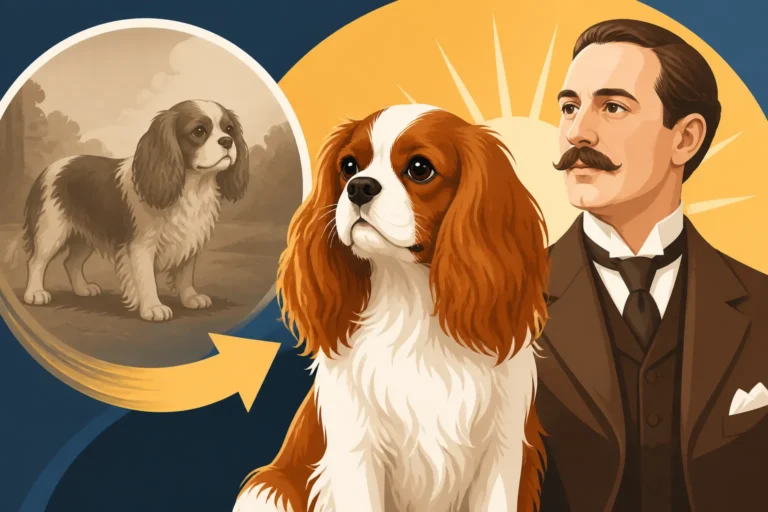
The story of the Cavalier becoming a separate breed really takes off in the early 20th century, thanks to the passionate dedication of an American named Roswell Eldridge. He traveled to England in the 1920s and was captivated by the portraits of the original King Charles Spaniels with their longer noses and flatter skulls – dogs that looked quite different from the contemporary, shorter-faced King Charles Spaniels he saw in the show rings. He felt a deep desire to see these "old type" spaniels returned to their former glory. It wasn't just a whim; it was a genuine yearning for a piece of canine history that he believed was being lost. He championed the belief that the original look was more natural and perhaps even healthier.
Eldridge was a man of action. In 1926, he made a bold move: he offered prize money at Crufts, the prestigious British dog show, for any King Charles Spaniel that most resembled the dogs depicted in the paintings of King Charles II's time. He explicitly sought "dogs of the old type… with long faces, no stop whatever, flat skulls, not inclined to be domed, and with the spot in the middle of the skull." This was a direct challenge to the prevailing fashion and a call to revive the dogs that had inspired the breed's name in the first place. The 1926 Advertisement That Revived the Cavalier gives more insight into his groundbreaking efforts. Breeders who had perhaps kept dogs closer to the old type, or those intrigued by the prize money, began to bring forward these longer-nosed spaniels.
The breeders who took up Eldridge's challenge were instrumental in laying the foundation for the Cavalier King Charles Spaniel we know today. They meticulously selected dogs that exhibited the desired characteristics – the longer muzzle, the flatter skull, the gentle expression. It was a slow process, a careful reversal of generations of selective breeding towards the short-faced type. The offspring of these carefully chosen dogs began to show the desired traits more consistently. One of the most significant early dogs to emerge from these efforts was a male named Ann's Son, who became a foundational sire for the revived breed and significantly influenced the look of the burgeoning "new" breed standard. His lineage became incredibly important, demonstrating that the old type could indeed be brought back.
Formal Recognition: A New Breed Emerges
Despite Roswell Eldridge's initial efforts and the growing interest, it took some time for the "old type" King Charles Spaniel to gain official recognition as a distinct breed. Initially, they were just considered a different type of King Charles Spaniel. However, as more and more breeders dedicated themselves to preserving Eldridge's vision, it became clear that these dogs were consistently producing puppies that looked like their ancestors, distinct from the short-faced King Charles Spaniel (English Toy Spaniel). This consistent difference in conformation and appearance eventually led to the necessity of separating the two.
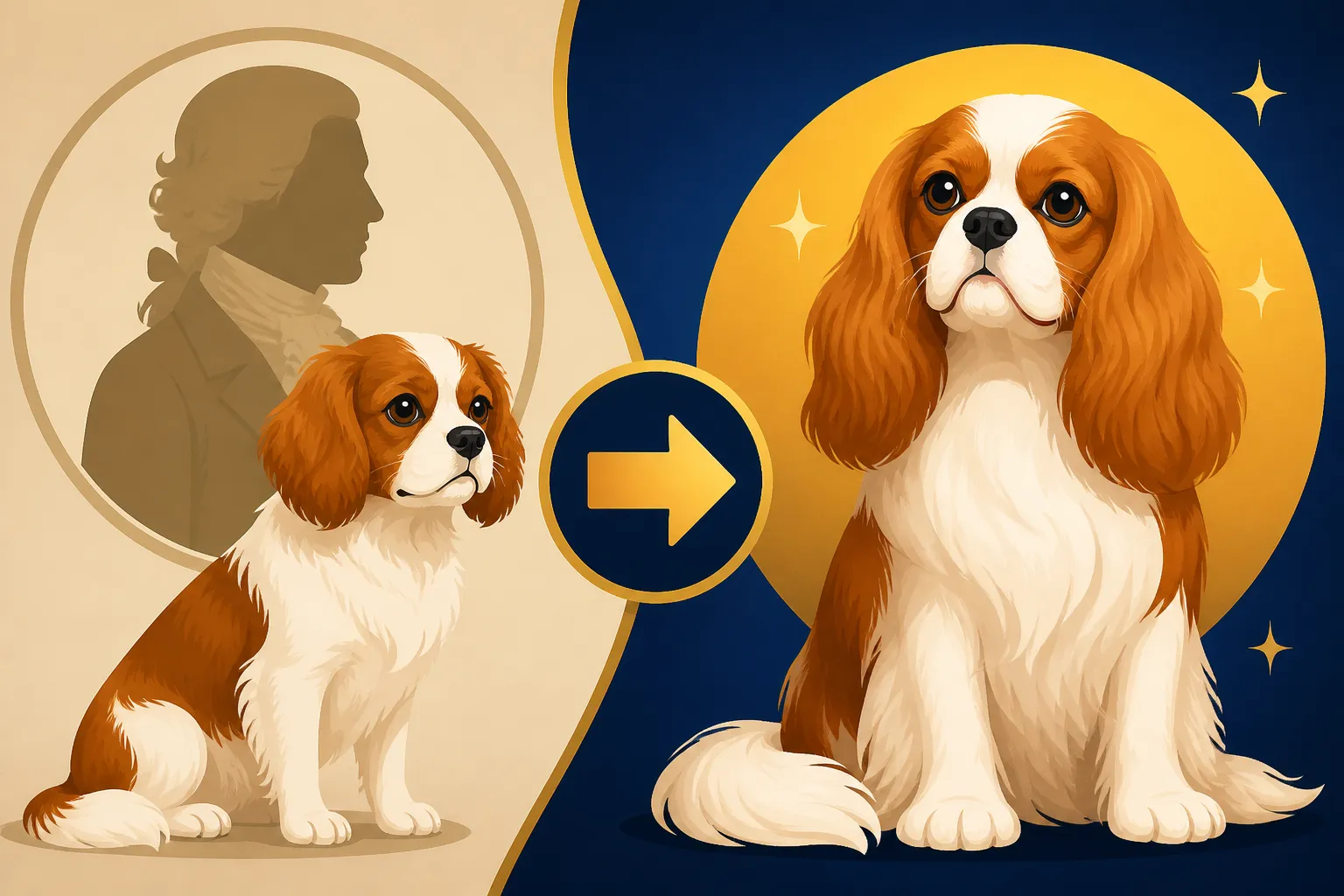
In 1945, the British Kennel Club officially recognized the "Cavalier King Charles Spaniel" as a separate and distinct breed. This was a monumental moment. It meant that these dogs were no longer just a "throwback" or an "old type" but had their own breed standard, their own classes in dog shows, and their own place in the canine world. The name "Cavalier" was deliberately added to differentiate them, honoring the "Cavaliers" of King Charles II's time, supporters of the monarchy during the English Civil War. This formal recognition solidified their place, acknowledging the dedication of those who had worked so hard to revive the original type. From this point forward, the paths of the King Charles Spaniel and the Cavalier King Charles Spaniel were officially diverged. Why the Cavalier Split From the King Charles Spaniel delves deeper into the reasons for this crucial separation.
To better illustrate the differences that led to this separation, let's look at some key physical characteristics that distinguish the modern King Charles Spaniel (English Toy Spaniel) from the Cavalier King Charles Spaniel:
| Feature | King Charles Spaniel (English Toy Spaniel) | Cavalier King Charles Spaniel |
|---|---|---|
| Muzzle Length | Very short, pushed-in, often "dish-faced" | Moderate length, gently tapering, not pushed-in |
| Skull Shape | Domed, often with a prominent "stop" | Flatter between the ears, moderate stop |
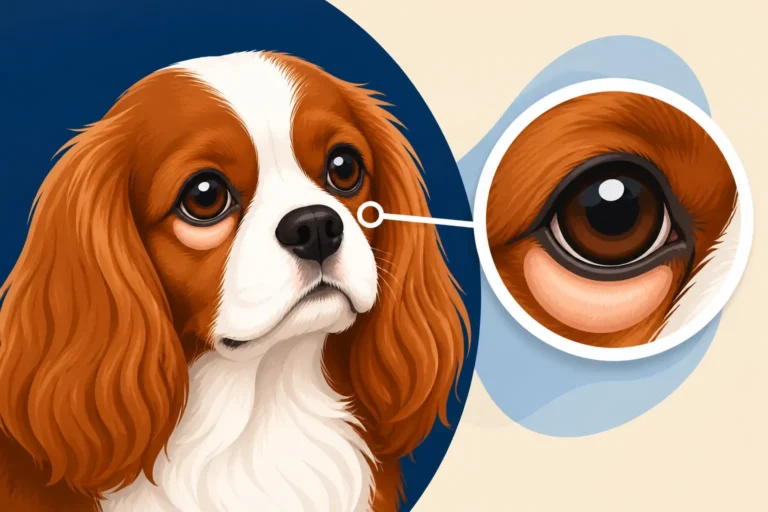
| Eye Shape | Large, round, prominent, often dark and soulful | Large, round, but set for a softer expression |
| Ear Set | Set lower on the head, longer leather | Set high, long and heavily feathered |
| Overall Head | More compact, almost "apple-domed" | More balanced, gentle, "sweet" expression |
This table highlights the clear distinctions that were formalized in the breed standards, marking the Cavalier as truly separate.
The Cavalier's Global Journey to Separate Status
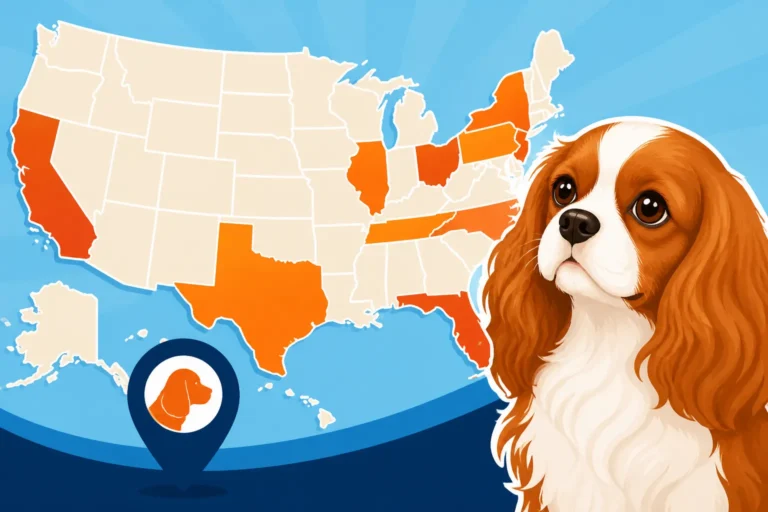
While the British Kennel Club recognized the Cavalier King Charles Spaniel in 1945, the journey to separate status wasn't instantaneous across the globe. Each country's kennel club has its own recognition process. In the United States, for example, the Cavalier's path to full American Kennel Club (AKC) recognition was a much longer endeavor. For decades, Cavaliers were shown in miscellaneous classes or through dedicated breed clubs that were working towards AKC acceptance. Enthusiasts in America had to build up a substantial registry of dogs, demonstrate consistent breeding practices, and prove the breed's stable temperament and distinct characteristics.
The efforts of early American breeders and dedicated enthusiasts were tireless. They imported Cavaliers from established British lines, carefully bred them, and tirelessly promoted the breed, educating the public and showing their dogs at various events. It was a true labor of love, building a foundation for the breed in a new country. Finally, after many years of dedicated work and growing popularity, the American Kennel Club officially opened registrations for the Cavalier King Charles Spaniel in 1995. When AKC Cavalier Registrations Opened marks this significant milestone. This meant that Cavaliers could finally compete in all AKC-sanctioned events, earning championship titles alongside other recognized breeds. It was a huge triumph for those who had worked for so long.
Today, the Cavalier King Charles Spaniel is a beloved breed worldwide, cherished for its affectionate nature, gentle temperament, and classic beauty. Its separate status is firmly established, and it is a testament to the vision of Roswell Eldridge and the countless breeders and enthusiasts who dedicated themselves to preserving the "old type" spaniel. From its roots as a royal companion to its near-disappearance and subsequent revival, the Cavalier's story is one of enduring charm and passionate advocacy. They are truly distinct dogs, and knowing their history only deepens our appreciation for these wonderful companions. When you consider setting up your home for one of these delightful dogs, a quick trip to Chewy can provide you with all the essentials, from appropriate food to cozy beds that suit their gentle nature.
Disclaimer
This article is for general informational purposes only and does not constitute professional advice. Laws, prices and regulations vary by location and change over time. Consult a qualified professional for guidance on your specific situation.