Whether a Cavalier’s Tail Is Ever Docked
It's a question many new Cavalier parents ponder, especially if they've had other breeds or seen pictures of dogs with shortened tails: are Cavalier King Charles Spaniel tails ever docked? The reassuring news for those who adore their Cavalier's elegant, plumed tail is that, according to breed standards and ethical practices in most regions, tail docking is simply not a part of being a Cavalier King Charles Spaniel. Their beautiful, naturally flowing tails are a hallmark of the breed, contributing to their balanced appearance and expressive nature. This guide will delve into why Cavaliers sport their full tails, the history and ethics of docking, and how to properly care for this charming breed feature.
The Cavalier King Charles Spaniel Breed Standard and Its Natural Tail
When you look at a Cavalier King Charles Spaniel, one of the first things that strikes you, beyond their sweet, melting eyes, is their gorgeous, plumed tail. It’s an integral part of their overall silhouette, their balance, and even their communication. For the Cavalier, a long, well-feathered tail is not just an aesthetic preference; it's explicitly outlined in the breed standard by major kennel clubs worldwide.
What the Standard Says About the Cavalier Tail
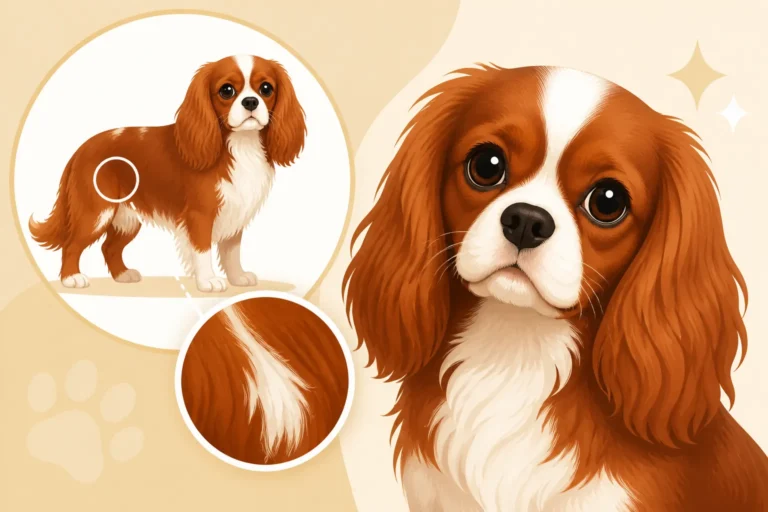
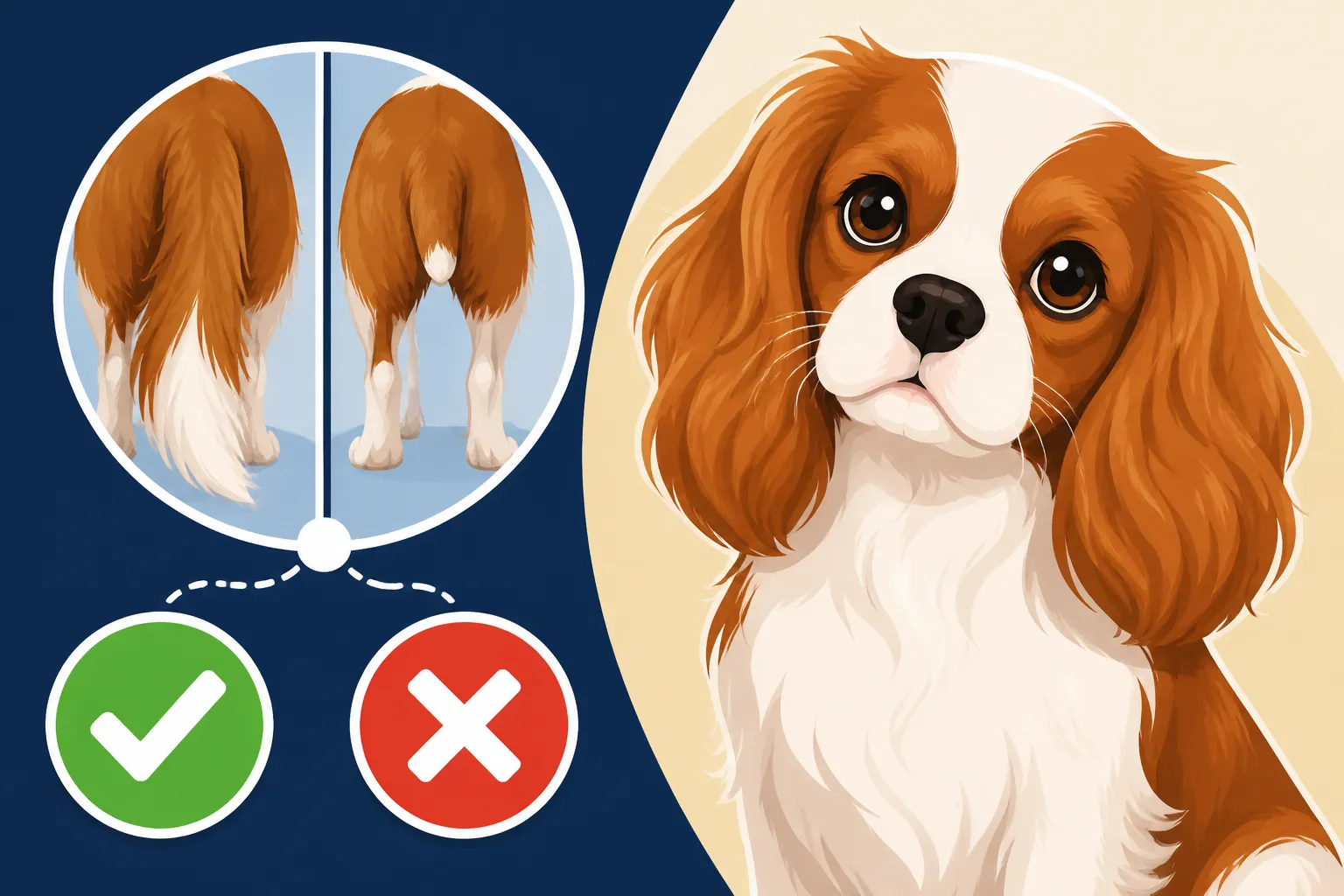
Both the American Kennel Club (AKC) and The Kennel Club (UK) breed standards describe the Cavalier's tail as a natural feature, never docked. The AKC standard, for instance, calls for a "well-set, carried gaily but never much above the level of the back." It should be "in proportion to body," and importantly, "docking is prohibited." This isn't a suggestion; it's a clear mandate that a Cavalier's tail must remain natural and untouched. The emphasis is on a tail that flows gracefully from the body, often with abundant feathering, and contributes to the dog's overall elegant outline. A Cavalier's tail acts as a counterbalance when they move, whether they're trotting across the lawn or navigating a show ring.
This directive is crucial for understanding what defines a true Cavalier. Any dog presented as a purebred Cavalier King Charles Spaniel with a docked tail would immediately be seen as deviating from the breed standard, making it ineligible for conformation showing. More importantly, it would raise serious questions about the dog's origins and the ethical practices of the breeder. A responsible breeder meticulously adheres to these standards, not just for show purposes, but because they define the health and integrity of the breed itself. If you're looking into The AKC Standard for the Cavalier King Charles Spaniel, you'll see how detailed these descriptions are, leaving no room for ambiguity regarding the tail.
The Importance of a Natural Tail for Cavaliers
Beyond the show ring, a Cavalier's natural tail serves several vital functions. Firstly, it’s a key tool in their communication. A wagging tail, a tucked tail, a tail held high – these are all signals that help your Cavalier express joy, fear, excitement, or deference. Imagine trying to read your dog's mood without this crucial visual cue; it would be like trying to understand someone speaking without any facial expressions. Their tail helps them connect with us and with other dogs, forming a language that transcends words.
Secondly, the tail, especially with its beautiful feathering, contributes to the Cavalier's balance and agility. While they aren't a high-impact sporting breed in the same way a Border Collie might be, Cavaliers are still active, playful dogs that enjoy running and exploring. Their tail acts as a natural rudder, helping them navigate turns and maintain stability, especially when moving at speed or on uneven terrain. This is part of The Cavalier Tail and Its Carriage that gives them their characteristic gait. Removing this natural appendage would fundamentally alter their physical mechanics, potentially affecting their movement and overall well-being.
Understanding Tail Docking: History, Practice, and Ethics
Tail docking is a practice that involves removing a portion of an animal's tail. Historically, it was performed on various dog breeds for a multitude of reasons, though many of these reasons are now considered outdated or lacking scientific basis. Understanding the background of tail docking helps clarify why it's not applicable to Cavaliers and why the practice itself has become so contentious.
Historical Reasons for Tail Docking
In the past, tail docking was often done for what were perceived as practical reasons related to a dog's working function. For breeds involved in hunting, guarding, or fighting, tails were sometimes docked to prevent injury. For example, some hunting breeds, particularly those working in dense underbrush, might have had their tails docked to prevent cuts and scrapes that could lead to infection. Owners believed a shorter tail was less likely to get caught or injured in the field. Similarly, some guard dog breeds had their tails docked, supposedly to prevent an intruder from grabbing it.
Another historical, though less practical, reason was a belief that docking prevented rabies, strengthened the dog's back, or improved speed. These claims have, of course, been debunked by modern veterinary science. In some cases, it was simply a matter of tradition or fashion, with certain breeds becoming recognizable by their docked tails. This is why you might still see some breeds, like Rottweilers or some Terriers, with traditionally docked tails, though even for these breeds, the practice is becoming less common.
The Ethical and Legal Shift Against Docking
Over recent decades, there has been a significant global shift in the perception and legality of tail docking. Veterinary associations worldwide, including the American Veterinary Medical Association (AVMA), oppose routine tail docking, especially for cosmetic reasons, citing ethical concerns about animal welfare. The procedure is typically performed on very young puppies, often without anesthesia, leading to pain and distress. Even if performed with anesthesia, it is an elective amputation that carries surgical risks.
Many countries, particularly across Europe, have completely banned cosmetic tail docking. In these regions, any dog found with a docked tail (unless it's for documented medical necessity, such as a severe injury) is often prohibited from being imported or shown. While laws in North America are more varied, with some states allowing it and others restricting it, the ethical pressure from veterinary bodies and animal welfare organizations continues to grow. This global movement underscores the belief that a dog's tail is a natural and functional part of its anatomy, and its removal for non-medical reasons is unjustified. This is very much part of The Health Debate Around Breeding Cavaliers and other breeds, pushing for practices that prioritize the dog's welfare above all else. When you are equipping your home for a new dog, whether it's setting up a cozy bed or selecting the right food, choosing trusted suppliers like Chewy helps ensure you're prioritizing your pet's well-being with quality, ethically-sourced products.
The Specificity for Cavaliers: Why No Docking?
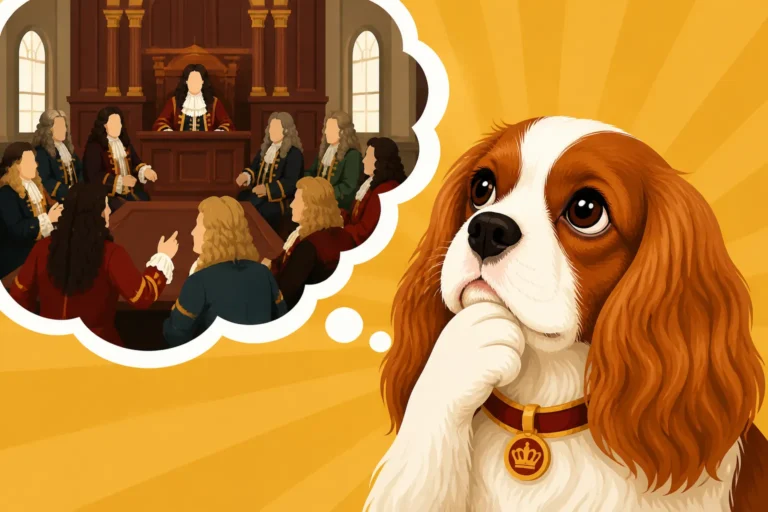
Given the historical context of tail docking, it's important to understand why Cavaliers have largely been exempt from this practice, and why it's now explicitly prohibited in their breed standard. Unlike many working breeds, Cavaliers were bred primarily as companions and lapdogs, tracing their lineage back to the court of King Charles II. Their role was never to flush game from dense cover or guard property, so the 'practical' reasons for docking never applied to them.
A Companion Breed's Tail
Cavaliers were developed to be gentle, affectionate companions, whose primary job was to bring joy and comfort to their human families. Their tails, far from being a liability, are an asset to their charming personality. A Cavalier's enthusiastic tail wag is a hallmark of their sweet temperament. This breed isn't known for needing physical modifications to perform its intended function; rather, its natural form is perfectly suited to its purpose as a loving pet.
The visual appeal of their flowing tail, often decorated with lush feathering, is also a significant part of their breed identity. Trimming or shortening it would detract from the classic "picture" of a Cavalier King Charles Spaniel that breeders and enthusiasts strive to preserve. It’s part of their endearing nature, and something that generations of Cavalier lovers have cherished. Their tails are a direct link to their historical role as aristocratic lap warmers and confidantes.
Identifying Ethical Breeding Practices
If you encounter a Cavalier King Charles Spaniel with a docked tail, it should immediately raise a red flag. Reputable, health-testing breeders adhere strictly to the breed standard and the ethical guidelines set forth by kennel clubs and veterinary organizations. They understand that docking a Cavalier's tail is not only against the standard but also an unnecessary surgical procedure for a companion dog. When looking for a puppy, always ask to see the parents and observe their natural tails. Reviewing Reading a Cavalier Puppy's Health Certificates is critical, but also visually inspecting the puppy and parents for adherence to the standard is important.
Here are a few pointers for identifying ethical breeding:
- Natural Tails: All Cavalier puppies from a reputable breeder will have their full, natural tails.
- Health Testing: Ethical breeders prioritize the health of their lines, performing extensive health screenings for conditions common in Cavaliers, such as Mitral Valve Disease in the Cavalier King Charles Spaniel and Syringomyelia and Chiari Malformation in Cavaliers. They are transparent about these results.
- No Early Separation: Puppies are kept with their mother and littermates until at least 8-10 weeks of age, allowing for crucial socialization.
- Open Communication: A good breeder will welcome your questions, provide references, and be keen to ensure their puppies go to suitable homes. They certainly wouldn't suggest or perform a tail docking on a Cavalier.
Caring for Your Cavalier's Beautiful Natural Tail
Since a Cavalier's tail is a prominent and often heavily feathered feature, it requires some attention to keep it healthy and beautiful. Far from being something to be removed, it's a part of your dog that you'll cherish and want to maintain.
Grooming and Maintenance
The beautiful feathering on a Cavalier's tail can be prone to tangles and mats, especially if your dog is active outdoors or enjoys rolling around. Regular grooming is key to preventing discomfort and maintaining its luxurious appearance. Brushing a Cavalier's Feathering Three Times a Week is a good rule of thumb, and the tail should be a重點 part of this routine.
Start by gently combing through the tail with a wide-toothed metal comb, working from the tip towards the base. Follow up with a slicker brush to ensure all loose hair and minor tangles are removed. Pay particular attention to the underside of the tail and where it meets the body, as these areas can be mat magnets. If you encounter a stubborn mat, don't pull! Instead, use a detangling spray and carefully work it out with your fingers or the tip of your comb. You can find excellent grooming tools, including detangling sprays and brushes, on pet supply sites like Chewy, making it easy to keep your Cavalier's tail in tip-top shape.
Health Checks and Injury Prevention
Beyond aesthetics, regular checks of your Cavalier's tail are important for their overall health. During your grooming sessions, take a moment to inspect the tail for any cuts, scrapes, or skin irritations. Because the tail is often in motion and can brush against things, minor injuries can occur. Check for any signs of swelling, tenderness, or unusual lumps. If you notice anything concerning, it's always best to consult your veterinarian.
While rare, a condition known as "limber tail" or "cold tail" can affect various breeds, including spaniels. This is where the tail becomes painful and hangs limp, often after strenuous exercise or exposure to cold water. If your Cavalier suddenly has a limp tail and seems uncomfortable, a vet visit is in order. Ensuring your Cavalier has a comfortable place to rest, perhaps a soft bed you could purchase from Chewy, can also help prevent tail injuries if they're prone to bumping it.
The Expressiveness of a Healthy Tail
Ultimately, a Cavalier's undocked tail is not just a standard requirement; it's a vibrant extension of their personality. It wags with pure joy when you come home, tucks in slightly when they're unsure, and swishes gently when they're relaxed by your side. Observing your Cavalier's tail carriage and movement can tell you a lot about their mood and well-being. A healthy, well-cared-for tail is a testament to an owner who understands and cherishes every beautiful, natural aspect of their beloved Cavalier King Charles Spaniel.
| Feature | Cavalier King Charles Spaniel Tail | Historically Docked Breeds (e.g., Rottweiler, some Pointers) |
|---|---|---|
| Breed Standard | Full, natural, feathered. Docking prohibited. | Historically, a portion of the tail was removed. Modern standards increasingly prohibit docking for cosmetic reasons. |
| Function | Communication, balance, expression, integral to breed aesthetic. | Historically, to prevent injury in working roles (hunting, guarding) or for aesthetic tradition. |
| Legality | Never docked. Docking would be illegal in many countries if performed for cosmetic reasons. | Illegal in many countries for cosmetic reasons. In some regions, specific exemptions may exist for working dogs or puppies if done by a vet. |
| Appearance | Long, flowing, often heavily feathered, carried gaily. | Shortened, often stumpy, with little to no natural movement or feathering remaining. |
| Ethical Stance | Strong opposition to docking. Valued as a natural body part. | Veterinary bodies widely oppose routine, cosmetic docking due to animal welfare concerns. |
Disclaimer
This article is for general informational purposes only and does not constitute professional advice. Laws, prices and regulations vary by location and change over time. Consult a qualified professional for guidance on your specific situation.