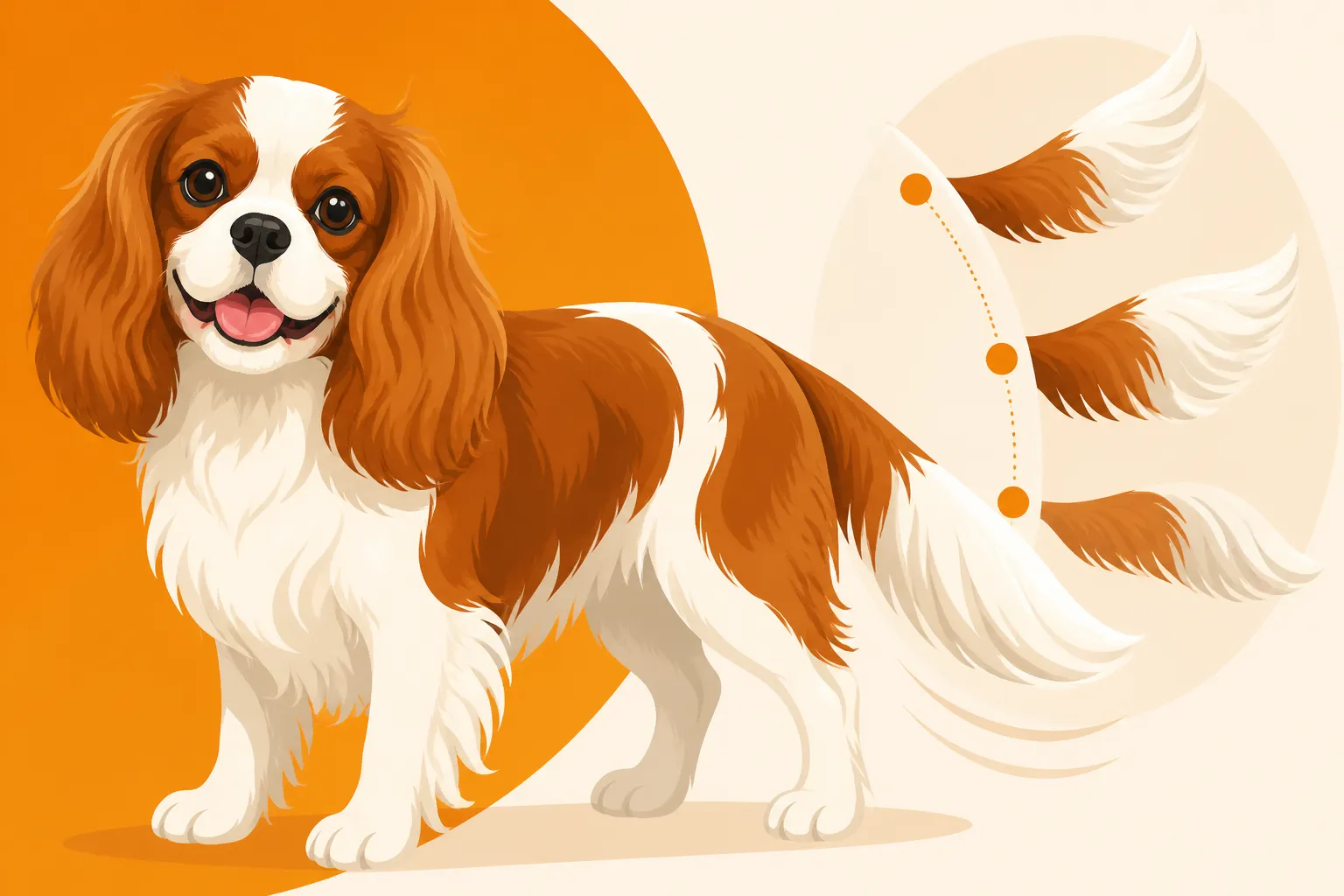
The Cavalier Tail and Its Carriage
It can be surprisingly easy to overlook a detail like a dog's tail when you're caught up in the overwhelming cuteness of a Cavalier King Charles Spaniel. Yet, the tail – how it's shaped, how it moves, and how it’s held – is a vital part of their breed identity and even their health. This guide will take a deep dive into everything you need to know about the Cavalier tail, from what the breed standard demands to what its movements might be telling you.
Understanding the Cavalier Tail Standard: What's Ideal?
When you look at a Cavalier, your eye is probably drawn to their big, soulful eyes or their luxurious coat. But for those of us involved in the breed, the tail is a small but significant detail. It's not just a wagging appendage; it's a key characteristic defined by the breed standard, reflecting both aesthetics and underlying soundness. Understanding this standard helps you appreciate the breed's ideal form and recognize when something might be amiss.
The Ideal Length and Set
The breed standard is quite clear about the Cavalier's tail. It should be "well set on" – meaning it flows smoothly from the topline of their back – and carried "gaily, but never much above the level of the back." Crucially, it should also be proportionate to their body, giving a balanced look. The length is important here; it should be long enough to reach approximately to their hocks, which are the equivalent of our ankles on their back legs. This natural length and set contribute to the overall elegant silhouette of the Cavalier.
You'll notice the standard specifically states the tail should not be docked, which is a traditional practice in some other spaniel breeds. This commitment to an undocked tail is a hallmark of the Cavalier King Charles Spaniel. When you see a Cavalier, their full, feathered tail is a celebration of their natural form. A tail that's set too low might give a perpetually sad or subdued appearance, while one set too high can disrupt the smooth flow of their topline. These seemingly minor details are what define the breed's overall balance and conformation, which is why they are so important to breeders and judges alike.
Carriage and Movement: The Merry Tail
The phrase "carried gaily" is perhaps the most evocative description of a Cavalier's tail carriage. What exactly does "gaily" mean? It conjures an image of a lively, happy dog, and that's precisely it. A Cavalier's tail should be held with an enthusiastic, upward sweep when they are alert, happy, or greeting someone. It should be animated, often wagging with joy and excitement, conveying their famously affectionate nature. This "merry" tail is a direct reflection of their typical cheerful and outgoing temperament.
However, the standard also adds the crucial caveat: "but never much above the level of the back." This means while the tail should be enthusiastic, it shouldn't curl tightly over their back like some other breeds, nor should it be carried vertically like a flag. It's a fine line between "gaily" and "gay," with the latter referring to a tail that is carried too high or actually curled over the back. A truly merry tail maintains that graceful, slightly arced line, never breaking the plane of the back too severely. This specific carriage is part of what makes a Cavalier unmistakably a Cavalier, and it’s a characteristic that breeders strive to maintain, as outlined in guides like The AKC Standard for the Cavalier King Charles Spaniel.
Common Variations and What They Might Mean
While the breed standard gives us an ideal to aim for, dogs, just like people, come with variations. Not every Cavalier will have a perfectly standard tail, and sometimes these variations are simply aesthetic quirks. Other times, however, a deviation in tail carriage can be a subtle indicator of something deeper, whether it's behavioral or even a health concern. It's important for Cavalier owners to observe these nuances and understand their potential implications beyond just conformation.
The Over-Carried Tail (Gay Tail)
An "over-carried tail," often referred to as a "gay tail" in canine circles, is when the tail is held significantly above the level of the back, sometimes even curling over the spine. While it might look charming to a casual observer, in the context of the Cavalier breed standard, it's considered a fault. For a show dog, a gay tail can mean losing points, as it deviates from the desired elegant and balanced outline. It disrupts the classic silhouette that is so characteristic of the breed, a feature discussed in more detail when considering What Disqualifies a Cavalier in the Show Ring.
From a pet owner's perspective, a gay tail is almost always purely a cosmetic issue. It doesn't typically impact the dog's health or quality of life. Some Cavaliers simply carry their tails higher due to their individual anatomy or even their personality – an extra exuberant dog might just have an extra enthusiastic tail! It's not something to worry about unless it's accompanied by other signs of discomfort or pain, such as the dog refusing to lower its tail or yelping when the tail is touched. If your Cavalier has an over-carried tail, embrace it as part of their unique charm, but be aware that it wouldn't be favored in a conformation ring.
Low-Set or Tucked Tails
In contrast to the gay tail, a low-set or tucked tail can sometimes be a more significant indicator. A tail that is consistently held low, or even tucked tightly between the legs, can often be a sign of emotional distress, fear, or even pain. A Cavalier who is feeling shy, uncertain, or intimidated might lower their tail as a sign of appeasement or nervousness. This is typical canine body language and isn't usually cause for alarm if it's a temporary response to a specific situation, like meeting a new person or being in a noisy environment. You might see this as part of Signs a Cavalier Is Distressed When Alone if they are feeling insecure.
However, if your Cavalier's tail is habitually low or tucked, especially if it's a sudden change in behavior, it warrants closer investigation. A tucked tail can also be a strong signal of physical discomfort. For instance, if your Cavalier yelps when picked up, or shows Behavior Changes That Mean a Cavalier Hurts, a perpetually tucked tail could indicate back pain, anal gland issues, or even abdominal discomfort. It's important to observe your dog's overall body language and not just the tail. Are they moving differently? Are they reluctant to sit or lie down? Any sustained change in tail carriage, particularly towards a lower or tucked position, combined with other subtle cues, should prompt a visit to your vet to rule out underlying health problems.
The Undocked Tail: A Signature Feature
One of the most distinguishing features of a Cavalier King Charles Spaniel, setting them apart from many other spaniel breeds, is their magnificent, natural tail. It’s a point of pride for enthusiasts and a beautiful element of their overall appearance. This undocked tail is not just an aesthetic choice; it's steeped in history and requires specific care to keep it looking its best.
Historical Context of Undocked Tails
Historically, many working spaniel breeds had their tails docked. The practice was believed to prevent injuries in the field, where dogs would be crashing through dense undergrowth. However, the Cavalier King Charles Spaniel evolved primarily as a companion dog, cherished by royalty and nobility, rather than a gundog. Their role was to sit on laps, adorn drawing rooms, and provide affectionate company. Therefore, the practical need for tail docking simply wasn't there for the Cavalier's ancestors. This historical difference is a key reason why their tails remained natural, full, and undocked, making it a defining characteristic of the breed today.
This preservation of the natural tail also connects back to the efforts of Roswell Eldridge in the early 20th century, who sought to revive the "old type" of Toy Spaniel seen in historical paintings, which invariably depicted dogs with full, flowing tails. The undocked tail is thus a direct link to the breed's origins and a testament to its long-standing role as a beloved companion. It differentiates them clearly from their cousin, the English Toy Spaniel (also known as the King Charles Spaniel in the UK), which does have a docked tail.
Care and Maintenance for a Full Tail
A full, feathered Cavalier tail is undeniably beautiful, but it doesn't stay that way without a little effort. Just like the long feathering on their ears, legs, and chest, the tail feathering is prone to matting and collecting debris. Regular grooming is essential to keep it looking pristine and feeling comfortable for your dog. You’ll find that the long, silky hair can pick up burrs, twigs, and even remnants of their dinner, especially if they are enthusiastic eaters who don't always use a snood!
I recommend brushing your Cavalier's tail feathering at least three times a week, as part of a general grooming routine that includes Brushing a Cavalier's Feathering Three Times a Week. A good quality slicker brush and a wide-toothed metal comb are your best friends here. Start by gently brushing through the feathering, working from the tip of the tail upwards, being careful not to pull on any tangles. If you encounter a mat, don't force it. Instead, use a detangling spray or a conditioning spray – you can find excellent options on places like Chewy – and gently tease the mat apart with your fingers or the end of your comb. Make sure to check the underside of the tail, too, as this area can get particularly matted or soiled. Regular baths with a good dog shampoo and conditioner, followed by thorough drying, will also help keep the tail healthy and mat-free. This diligent care ensures their beautiful tail remains a source of comfort, not discomfort.
Tail Talk: Understanding Your Cavalier's Communication
Dogs communicate a tremendous amount through their body language, and the tail is a significant part of that intricate vocabulary. For Cavalier owners, learning to "read" their dog's tail can unlock a deeper understanding of their emotions, intentions, and overall well-being. It's not just about a simple wag; the height, speed, and even the direction of the wag all contribute to the message being sent.
Tail Wagging: More Than Just Happy
Most people associate a wagging tail with happiness, and often, that's absolutely true for a Cavalier. A broad, sweeping wag, often accompanied by a wiggling body and a happy face, almost universally signals joy and excitement, especially when greeting a beloved family member. However, the nuances are important. A slow, tentative wag, perhaps with the tail held lower than usual, might indicate uncertainty or a polite, questioning approach rather than unbridled glee. This is often seen when a Cavalier is meeting a new dog or person and is assessing the situation.
Think about the speed and amplitude of the wag. A rapid, almost vibrating wag, held at a neutral or slightly raised position, can indicate high arousal or excitement, which isn't always purely positive; it could also be anticipation or even a slight anxiety in a stimulating situation. On the other hand, a short, stiff, fast wag, held high, can sometimes signal a dog that is alert and possibly feeling challenged or territorial, though this is less common in the generally amiable Cavalier. Paying attention to the entire dog – their ears, eyes, mouth, and body posture – along with the tail will give you the full picture of what your Cavalier is trying to convey. It's a rich language, and your Cavalier is constantly speaking it.
Tail Position and What It Reveals
Beyond the wag, the static position of a Cavalier's tail is a powerful indicator of their internal state. A tail held in a natural, relaxed curve, flowing from the back, generally signifies a calm and content dog. This is their baseline, comfortable posture. When the tail rises slightly, maintaining that "gaily" curve but with increased animation, it suggests alertness, interest, or mild excitement – perhaps they've heard a familiar sound or seen a bird outside.
Conversely, a tail that is noticeably lowered, perhaps even tucked between the legs, often signals fear, submission, or discomfort. If your Cavalier encounters something startling, like a loud noise or an unfamiliar person approaching too quickly, their tail might drop immediately. If this behavior becomes chronic, such as a Cavalier who always tucks their tail when interacting with a certain person or in a particular place, it's a strong sign they are unhappy or anxious in that situation. As mentioned earlier, a consistently tucked tail can also indicate pain, especially if it's coupled with other signs like stiffness, reluctance to move, or a general withdrawn demeanor. Understanding these subtle cues helps you respond appropriately and provide comfort or seek help when needed. Observing these small changes in body language is crucial for their well-being, particularly when they might be experiencing pain, which they cannot vocalize clearly.
| Tail Position | Common Interpretation |
|---|---|
| Relaxed, natural curve | Content, calm, comfortable, neutral |
| Raised, "gaily" curve | Alert, interested, happy, excited, confident |
| Slightly lowered, stiff | Tentative, uncertain, cautious, mild anxiety |
| Tucked between legs | Fear, submission, extreme anxiety, pain, discomfort |
| Rapid, high wag | High arousal, excitement, sometimes stress |
| Slow, low wag | Uncertainty, appeasement, questioning |
Health Considerations Related to the Tail
While a Cavalier's tail is often admired for its beauty, it's not just a decorative appendage. It's an integral part of their anatomy and can be susceptible to various health issues. Owners need to be aware of potential injuries and understand how certain neurological conditions can affect tail carriage and function, ensuring their beloved companion remains healthy and comfortable.
Injuries and Accidents
Despite their relatively robust nature, a Cavalier's tail is not immune to injury. One common issue is "happy tail" syndrome, which can occur in dogs with long, whip-like tails that are wagged with extreme enthusiasm. While perhaps more common in larger breeds with less feathering, a very excited Cavalier can still whack their tail against hard surfaces – walls, furniture legs, crates – causing scrapes, cuts, or even bruising. These injuries, especially if they occur repeatedly in the same spot, can be slow to heal due to the constant motion of the tail. Keeping a close eye on any nicks or soreness, particularly after a bout of excited wagging, is important.
Beyond superficial wounds, the tail is an extension of the spine and contains bones that can be fractured or sprained. A severe impact or an accidental yank (perhaps a child pulling on it, or getting caught in a door) could lead to a fracture or soft tissue damage. Signs of a tail injury might include reluctance to wag, holding the tail at an unusual angle, swelling, or pain when the tail is touched. If you suspect a tail injury, it's crucial to have your vet examine your Cavalier. Untreated injuries can lead to chronic pain or nerve damage, so prompt attention is always best.
Neurological or Spinal Issues Affecting Tail Carriage
More seriously, changes in tail carriage can sometimes be a red flag for underlying neurological or spinal problems, which are unfortunately not uncommon in Cavaliers. Conditions like Syringomyelia (SM), a painful neurological disorder where fluid-filled cavities (syrinxes) form within the spinal cord, can affect nerve pathways that control tail movement and sensation. A Cavalier with SM might experience pain or numbness that leads to an altered tail carriage, such as holding it stiffly, low, or even favoring one side. This is often part of a broader set of symptoms that could include A Cavalier That Yelps When Picked Up or Syringomyelia and Chiari Malformation in Cavaliers.
Similarly, other spinal issues like intervertebral disc disease (IVDD) can cause nerve compression that manifests in tail changes. If your Cavalier's tail suddenly becomes limp, goes to one side, or they seem unable to wag it despite appearing happy, it could indicate nerve damage. These types of changes are much more concerning than a simply "gay" tail and require immediate veterinary attention, ideally from a neurologist. Observing your Cavalier's movement, their reaction to touch, and any accompanying pain signals is paramount. Early detection and intervention can make a significant difference in managing these complex conditions and improving your Cavalier's quality of life, something often discussed when talking about Pain Management for a Senior Cavalier.
Breeding and the Tail Standard
For ethical Cavalier breeders, every aspect of the breed standard is important, and the tail is no exception. It's not just about producing pretty puppies; it's about preserving the integrity of the breed, ensuring correct structure, and breeding for overall health and temperament. The tail, in its set and carriage, plays a role in this larger picture.
The Importance of Correct Tail Carriage in Breeding
Reputable breeders dedicate themselves to producing Cavaliers that conform as closely as possible to the breed standard, which includes the correct tail set and carriage. This means carefully selecting breeding stock where the parents demonstrate the desired "well set on" and "gaily carried, but never much above the level of the back" tail. The goal is to pass these desirable traits onto the next generation, maintaining the iconic Cavalier silhouette. Breeders will scrutinize puppies as they grow, observing how their tails develop and whether they exhibit the characteristic merry wag.
The commitment to an undocked tail is also a critical part of a breeder's responsibility. It's an intrinsic feature of the Cavalier and a non-negotiable aspect of responsible breeding. Any deviation from the natural, undocked tail, or a consistent "gay" tail in a breeding dog, would be noted as a fault and might influence breeding decisions. The overall balance and grace of the Cavalier, from nose to tail tip, are carefully considered to uphold the breed's distinct identity and health parameters, much like the diligent approach to health protocols such as The Cavalier MVD Breeding Protocol.
When a Tail Deviation is More Than Cosmetic
While an over-carried tail might be considered a cosmetic fault in the show ring, breeders are also keenly aware that some tail deviations can hint at deeper, more serious issues. For instance, a very low-set tail that appears almost "stuck" in that position, or a tail that is constantly tucked and rigid, could potentially be linked to structural problems in the spine or even neurological conditions. While not all low-set tails indicate a problem, an experienced breeder knows to observe these signs in conjunction with other aspects of the dog's movement and demeanor.
A tail deviation that impacts the dog's comfort or ability to communicate normally would be a significant concern for any conscientious breeder. Their focus extends beyond just pretty faces; they aim for sound, healthy dogs. If a particular line consistently produces dogs with tails that suggest pain or neurological issues, a breeder would use that information to adjust their breeding program. It's a testament to the dedication of ethical breeders that they look at the whole dog, ensuring that even something as seemingly minor as tail carriage is evaluated for its potential implications on health and well-being. This holistic approach is why tools and resources from trusted sources, like comprehensive articles on breed standards and care (even those found on Chewy, which offers a wide array of information and products for pet health), are so valuable to both breeders and owners.
Disclaimer
This article is for general informational purposes only and does not constitute professional advice. Laws, prices and regulations vary by location and change over time. Consult a qualified professional for guidance on your specific situation.