Where a Show Cavalier Loses Points
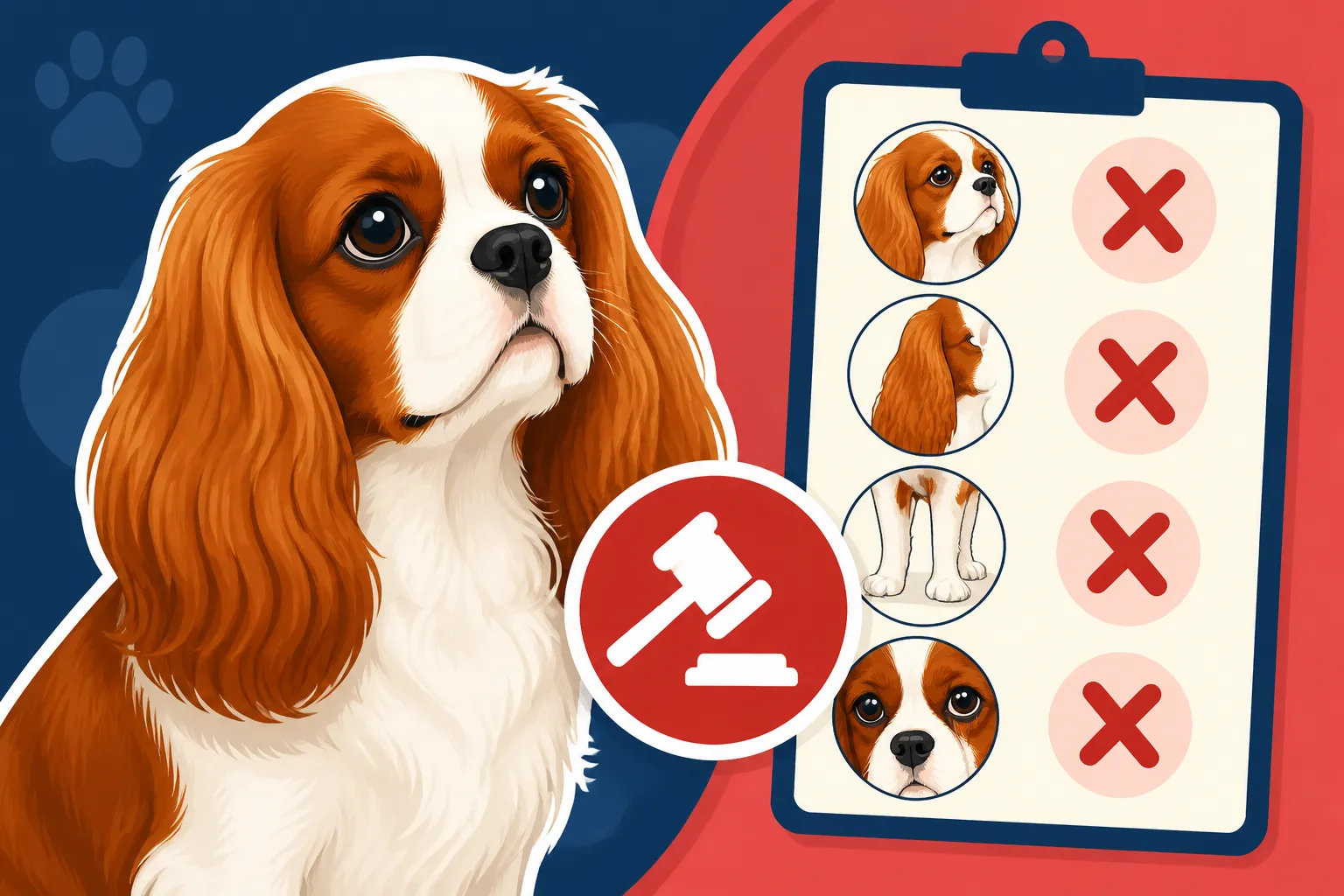
Dreaming of having a show Cavalier King Charles Spaniel can be incredibly exciting, but the reality of stepping into the show ring often brings a wave of questions and anxieties. Judges aren't just looking for a cute face; they're meticulously evaluating every single aspect of your Cavalier against a very precise breed standard. This guide will walk you through the common areas where even a beloved Cavalier might fall short of the ideal, helping you understand what judges are looking for and why those subtle details matter so much.
Understanding the Cavalier Breed Standard: The Blueprint for Judging
When you first get involved in the world of showing dogs, it's easy to get caught up in the glamour and the ribbons. But beneath all that polish and excitement is a foundational document that dictates everything: the breed standard. For Cavalier King Charles Spaniels, this isn't just a guideline; it's the definitive description of what the ideal Cavalier should embody, from the tip of their nose to the set of their tail.
Why the Standard Matters So Much
The passion behind showing a Cavalier often starts with an undeniable love for the breed's beauty and temperament. You see your dog and think they're perfect – and in your heart, they absolutely are! But a show ring judge has a different task: to objectively compare each dog to a written ideal. This ideal is painstakingly crafted by the breed club and approved by organizations like the American Kennel Club (AKC) to preserve the unique characteristics and health of the Cavalier. It's a living document that guides breeders and judges alike.
The standard isn't vague; it's incredibly detailed, outlining everything from size and weight to the exact angle of the shoulders and the color of the nose leather. Think of it as the blueprint for canine perfection for that specific breed. A judge spends years studying this blueprint, developing an "eye" for what is correct and what deviates. They aren't looking for flaws to pick on, but rather measuring each dog's conformity to this established ideal, hoping to find the one that best exemplifies it.
For exhibitors, understanding this deep dive into the standard is paramount. It helps you appreciate why a judge might place one dog over another, even if both appear lovely to the untrained eye. It also empowers you to critically evaluate your own dog, not to find fault, but to understand their strengths and weaknesses in the context of the breed's ideal. This knowledge is crucial whether you're just starting out or striving for that championship title. It also underscores why The AKC Standard for the Cavalier King Charles Spaniel is the foundational document for anyone involved in the breed.
General Appearance and Balance: The First Impression
When a Cavalier enters the ring, the judge's first impression is often the most critical. They're not immediately scrutinizing individual features but rather taking in the overall picture, the dog's "presence." They want to see an elegant, balanced, and proportionate dog that moves with purpose and grace. Is the dog too long in the body, too tall on the leg, or too heavy in bone? These are immediate questions that flash through a judge's mind, shaping their initial assessment.
A perfectly balanced Cavalier should flow smoothly from one body part to the next, creating a harmonious outline. The length of body, the length of leg, the depth of chest – all these components must be in correct proportion to each other, as described in the standard. A dog that appears "leggy" might indicate insufficient body depth, while a very long-backed dog could suggest a structural weakness. These subtle imbalances, even if not severe, can detract from the overall impression and cause a dog to lose points against one with more ideal proportions.
Consider how a dog holds itself, both standing and moving. An alert, confident stance with a naturally high head carriage contributes to an elegant picture. Conversely, a dog that looks tucked up, has a roached back, or moves awkwardly immediately presents a less favorable impression. This initial visual sweep helps the judge narrow down their choices, as general balance and symmetry are often the first major hurdles a show dog must clear.
Head and Expression: The Cavalier's Signature Look
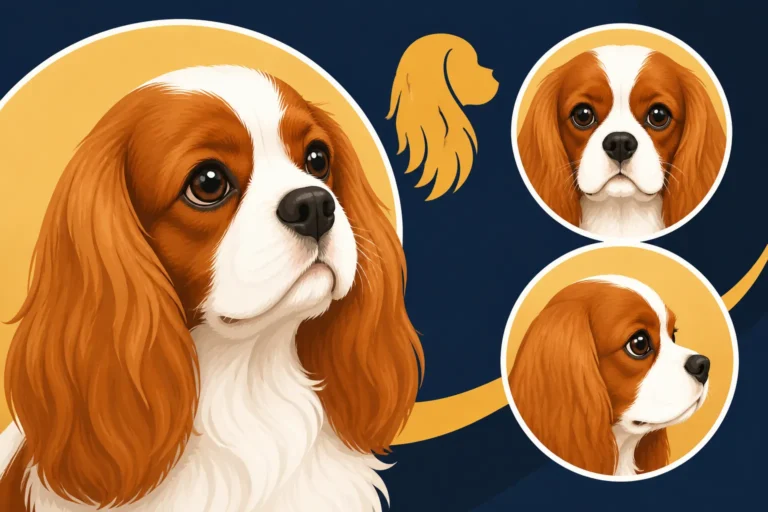
The Cavalier's head is arguably its most defining feature, contributing to that sweet, melting expression we all adore. Judges pay extremely close attention to the details of the head, as these elements are crucial to the breed's unique type and charm. Even minor deviations can result in lost points in the show ring.
The Muzzle, Stop, and Skull
The Cavalier standard calls for a specific head structure. The skull should be slightly rounded, not domed or flat. This subtle curve provides the characteristic soft appearance. From the front, it should appear full between the ears, gradually tapering to the muzzle. The muzzle itself is described as full, slightly tapered, and approximately 1.5 inches in length from the stop to the tip of the nose. It's not meant to be short and "pushed in" like a Pug or a King Charles Spaniel, nor long and pointed like a miniature Pinscher. The Length of Muzzle a Cavalier Should Have is a critical component of breed type.
A moderate stop is also essential. This is the indentation where the muzzle meets the skull, right between the eyes. It should be clearly defined but not abrupt or exaggerated. A "dish-faced" appearance (too shallow a stop) or an overly prominent stop can both be considered faults. A pinched or narrow muzzle, often referred to as a "snipey" muzzle, is another common area where Cavaliers might lose points. This detracts from the desired full, soft expression. Judges are looking for that perfect balance that creates the quintessential Cavalier face.
Think about the overall "softness" of the head. Harsh or angular lines are incorrect. The transition from skull to muzzle, and the definition of the stop, must all blend harmoniously. Any feature that appears too extreme – too flat, too domed, too long, too short – will work against the dog in the judge's mental tally.
Eyes, Ears, and Pigment
The eyes are often called the windows to the soul, and for the Cavalier, they are key to that melting, gentle expression. The standard requires them to be large, dark, round, and set well apart, without any bulging. They should convey warmth and intelligence. Light-colored eyes or small, almond-shaped eyes are considered faults because they dramatically alter the desired sweet expression. Overly prominent eyes, while a common Cavalier trait, can also be penalized if they appear too large or expose too much white.
The ears are equally important for framing that lovely face. They should be set high on the head, but not too high, and hang close to the cheeks. Long, well-feathered ears are a hallmark of the breed. Any deviation, such as ears that are set too low, too high, or that lack sufficient feathering, will result in lost points. The luxurious feathering should ideally reach to the dog's chest when gently pulled forward.
Finally, pigment plays a crucial role. The nose should be completely black, and the eye rims must be dark. Any pink on the nose or around the eyes is a serious fault, often referred to as a "butterfly nose" or "haw" (light eye rims). This lack of pigment can detract significantly from the overall expression and clean appearance of the head. It's why attention to details like Whether a Cavalier's Nose Must Be Black is so important in the show ring.
Body, Coat, and Movement: Form and Function
Beyond the head, the Cavalier's body structure, coat quality, and how they move are all critically evaluated. A show dog needs to be sound in body as well as beautiful in appearance, and its movement should reflect both elegance and efficiency.
Topline, Chest, and Tail Set
The topline of a Cavalier should be level, from just behind the withers (shoulders) to the slight rise over the loins, ending at the tail set. A "roached" back (arched) or a "sway back" (dipped) are both considered structural faults that indicate weakness. The ribs should be well-sprung, giving a good depth of chest that reaches to the elbow. This provides adequate room for the heart and lungs, vital for a healthy, active dog. A narrow, shallow chest or barrel ribs are both undesirable.
The tail set is also clearly defined. It should be carried happily, but not much above the level of the back. A tail carried "gay" (curled over the back) is a definite fault and can be a significant point deduction. The tail should also be in proportion to the body, neither too short nor excessively long, and well-feathered. While some variation in tail carriage can be attributed to excitement or mood, a consistently high or curled tail will be penalized. The Cavalier Tail and Its Carriage describes this ideal perfectly.
A judge will run their hands over the dog's body to feel for correct structure, topline, and rib spring. They're looking for firm musculature and good conditioning, not excessive fat or boniness. The overall body should present a compact yet graceful picture, allowing for free and easy movement.
Coat Condition and Grooming Presentation
The Cavalier's coat is one of its most glorious features: long, silky, and free of curl, with abundant feathering on the ears, chest, legs, and tail. In the show ring, the coat must be presented naturally, meaning no clipping, trimming, or sculpting. This is a common point where handlers lose points, either by over-trimming or failing to maintain the coat's natural beauty.
A judge wants to see a coat that is clean, well-conditioned, and free of mats. While the feathering can be very luxuriant, it should still be silky, not cottony or wiry. Any signs of a harsh or curly coat are faults, as is sparse feathering. The natural flow and texture are paramount. Using high-quality grooming products can certainly help maintain this, and you can find a huge variety of shampoos, conditioners, and brushes on sites like Chewy to keep that coat in top shape.
Over-trimming is a significant point of contention. While a sanitary trim around the feet and anal area is generally accepted for hygiene, any extensive clipping on the body, ears, or tail is a serious fault and often leads to disqualification or severe penalties. The Cavalier is meant to be shown in its natural glory. Regular Brushing a Cavalier's Feathering Three Times a Week and proper bathing are essential to present a magnificent, untrimmed coat that highlights the dog's beauty rather than hiding it under a scissor-sculpted façade.
Temperament and Movement: The Living Picture
A show Cavalier isn't just a static sculpture; it's a living, breathing companion. Its personality and how it carries itself are just as important as its physical attributes, especially in a breed known for its charming disposition.
The Cavalier Temperament in the Ring
The Cavalier King Charles Spaniel is renowned for its delightful temperament: cheerful, outgoing, fearless, and utterly gentle. These qualities are enshrined in the breed standard, making temperament a crucial aspect of judging. A show Cavalier should be confident and happy to be in the ring, engaging with its handler and generally unfazed by the activity around it. A dog that is shy, timid, aggressive, or overly nervous will lose points, regardless of how structurally perfect it might be.
A judge will observe how the Cavalier interacts during the examination and while moving. Does it shy away from touch? Does it appear fearful or snap when approached? Any signs of aggression, even if subtle, are considered very serious faults and can lead to immediate disqualification. Conversely, a dog that is excessively timid, shaking, or trying to hide also does not present the ideal Cavalier picture. The breed is meant to be a loving companion, and that spirit needs to shine through in the ring.
This emphasis on a sound temperament highlights the importance of socialization from a young age and careful breeding choices. A well-bred Cavalier should naturally possess the sweet disposition that is so characteristic of the breed. Understanding Cavalier Temperament and the Sporting Spaniel Beneath It helps frame why this trait is so valued. A dog that is happy to be handled and shows its true Cavalier charm will always make a better impression than one struggling with nerves or fear.
Gait and Soundness
Movement is another critical component of judging, as it demonstrates the functionality and soundness of the Cavalier's structure. The standard calls for a free-moving, elegant gait, with good reach and drive. The dog should move true, meaning the legs move in straight lines without crabbing (moving sideways), paddling (front paws arc out), or weaving. From the rear, the hocks should track smoothly and powerfully.
Any lameness, stiffness, or lack of coordination will result in significant point deductions. A judge wants to see an effortless flow, reflecting proper angulation of the shoulders and hindquarters. A dog that is unsound in movement often has underlying structural issues. For instance, a Cavalier with patellar luxation (loose kneecaps) might exhibit a skipping gait, or one with hip dysplasia could move with a noticeable limp or stiffness, both leading to lost points. These are serious concerns that impact a dog's overall well-being and show potential.
It’s important to remember that some health conditions prevalent in the breed, such as Cavalier Knees, Hips and Joint Problems or even neurological conditions like Syringomyelia and Chiari Malformation in Cavaliers, can manifest in altered gait or posture. While a judge isn't diagnosing health issues, they are evaluating the physical manifestation of soundness. A truly sound Cavalier will move with grace, power, and efficiency, reflecting the breed's historical role as an active companion.
Specific Faults and Disqualifications to Avoid
Beyond the general impression and ideal conformation, judges meticulously look for specific faults and, in some cases, disqualifications that can immediately remove a Cavalier from contention. Knowing these can help prospective owners and exhibitors understand the fine line between a beautiful pet and a show-quality dog.
Common Faults That Aren't Disqualifications
Many faults are simply deviations from the ideal that result in a deduction of points, rather than an outright disqualification. These are often the subtle differences that separate the top placers from the rest of the class. For example, dental imperfections are common; an undershot bite (lower jaw protrudes beyond the upper) or an overshot bite (upper jaw protrudes beyond the lower) will lead to point deductions. Missing teeth, especially canines or incisors, are also considered faults. While Cavaliers are prone to Cavalier Dental Disease in a Crowded Jaw, these issues are judged on their structural presentation, not necessarily on health history.
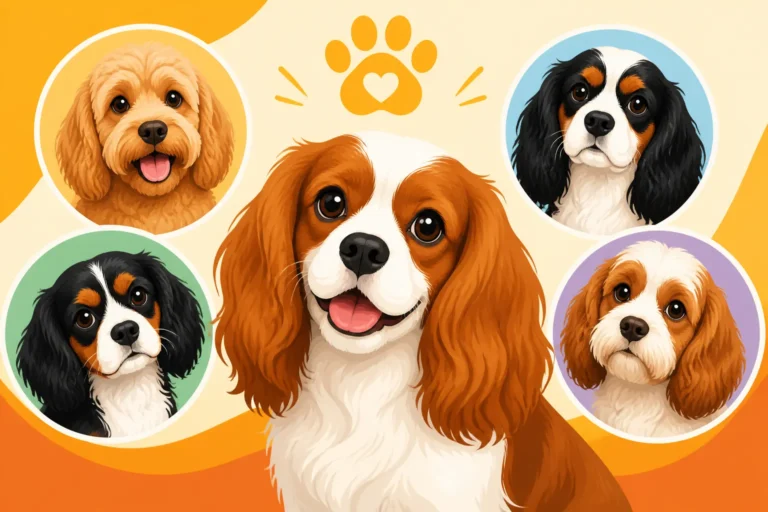
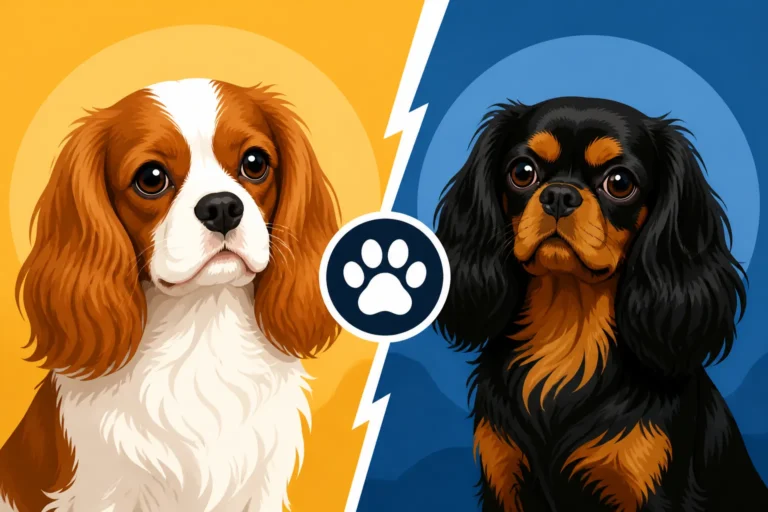
Coat quality can also present faults. While a naturally wavy coat is acceptable, a truly curly or wiry coat is a fault. Similarly, while feathering should be abundant, a sparse coat is not ideal. Color and markings can also lead to minor deductions. For Blenheim Cavaliers, the desired chestnut markings should be clearly broken up on a pearly white ground, and while the "Blenheim spot" or "lozenge" on the head is desirable, its absence is not a fault; however, excessively piebald or uneven markings can be. For Ruby Cavaliers, Why Ruby Cavaliers Sometimes Show White in patches is considered a fault, as they should be a solid, rich red. Black and Tan and Tricolor Cavaliers also have specific marking requirements that, if not met, can lead to point deductions.
Size is another area. While the standard gives a weight range (typically 13 to 18 pounds), a dog significantly outside this range, either too small or too large, will be penalized. These faults, while not immediate disqualifications, accumulate and can prevent a dog from winning.
Disqualifying Faults: An Automatic Exit
Disqualifying faults are severe deviations from the breed standard that prevent a dog from being awarded points or even competing in that particular class. These are immediate "no-gos" in the show ring. One of the most critical disqualifications is related to temperament: aggression or extreme shyness will result in an immediate dismissal. A show dog must demonstrate a stable, friendly demeanor.
Physical impairments that prevent proper movement or function are also disqualifying. This includes lameness, blindness, or deafness. A dog that cannot move soundly or interact appropriately due to a sensory deficit cannot be considered an ideal representation of the breed. Any dog showing signs of a docked tail, an altered bite (unless due to injury or veterinary necessity, with documentation), or other surgical alterations intended to conceal a fault, could also be disqualified.
Color also plays a role in disqualification. Unrecognized colors or patterns, such as a merle pattern, or a substantial amount of white on a whole-color Cavalier (unless specified as acceptable in the standard for that color pattern), would typically be a disqualification. Ultimately, What Disqualifies a Cavalier in the Show Ring is a clear list of fundamental departures from breed type and health. Judges have a responsibility to uphold the standard, and disqualifications ensure that only dogs truly representative of the breed's core traits are considered for top honors.
| Category | Ideal Standard | Common Faults (Point Deductions) | Disqualifying Faults (Automatic Exit) |
|---|---|---|---|
| General | Balanced, elegant, proportionate | Heavy bone, leggy appearance, poor overall balance | None specific for general appearance, but severe lack of breed type could. |
| Head | Moderate stop, full muzzle, slightly rounded skull | Flat skull, pinched/snipey muzzle, domed skull | None explicit for head alone, but extreme deviations affect type. |
| Eyes/Ears | Large, round, dark eyes; low-set, long-feathered | Small/light eyes, high-set ears, sparse ear feathering | Blindness (physical), ears not characteristic of breed. |
| Coat | Silky, natural, well-feathered | Clipped/trimmed coat, wiry/curly texture, sparse feathering | Extreme trimming/sculpting, atypical coat texture not characteristic of breed. |
| Movement | Free, elegant, true, well-coordinated | Stilted, paddling, weaving, any degree of unsoundness/lameness | Overt lameness or inability to move soundly. |
| Temperament | Cheerful, outgoing, fearless, gentle | Shyness, timidity, nervousness | Aggression towards humans or other dogs, extreme shyness. |
| Teeth/Bite | Level or scissors bite | Undershot, overshot, missing teeth (beyond standard allowance) | Severely undershot/overshot, wry mouth, missing more than allowable teeth. |
| Tail | Carried happily, not above topline | Carried over back ("gay tail"), high-set, too low | Docked tail (unless for medical reasons with vet certificate). |
| Color/Markings | Specific to Blenheim, Tricolor, Ruby, Black/Tan | Minor white on whole colors (e.g., Why Ruby Cavaliers Sometimes Show White), uneven markings | Unrecognized colors (e.g., merle), albinism. |
| Other | Healthy appearance, correct weight | Under/oversized, poor condition | Cryptorchidism (undescended testicles in males), physical deformities. |
Disclaimer:
This article is for general informational purposes only and does not constitute professional advice. Laws, prices and regulations vary by location and change over time. Consult a qualified professional for guidance on your specific situation.