How a King’s Name Ended Up on the Cavalier
Have you ever looked at your sweet, unassuming Cavalier King Charles Spaniel curled up on the sofa and wondered about the grand title he carries? "King Charles" sounds incredibly regal, and it certainly implies a lineage connected to royalty. But the history of how this beloved breed inherited such a distinguished name, and the journey it took to separate it into the two distinct breeds we know today, is a fascinating tale often overlooked. It's not just a fancy label; it's a direct link to centuries of British monarchy and a testament to one king's profound affection for his little companion dogs. This guide will unravel the rich tapestry of history behind your Cavalier's name, exploring its royal origins and the dramatic evolution that shaped this charming breed.
The Royal Lineage: A King's Undying Affection
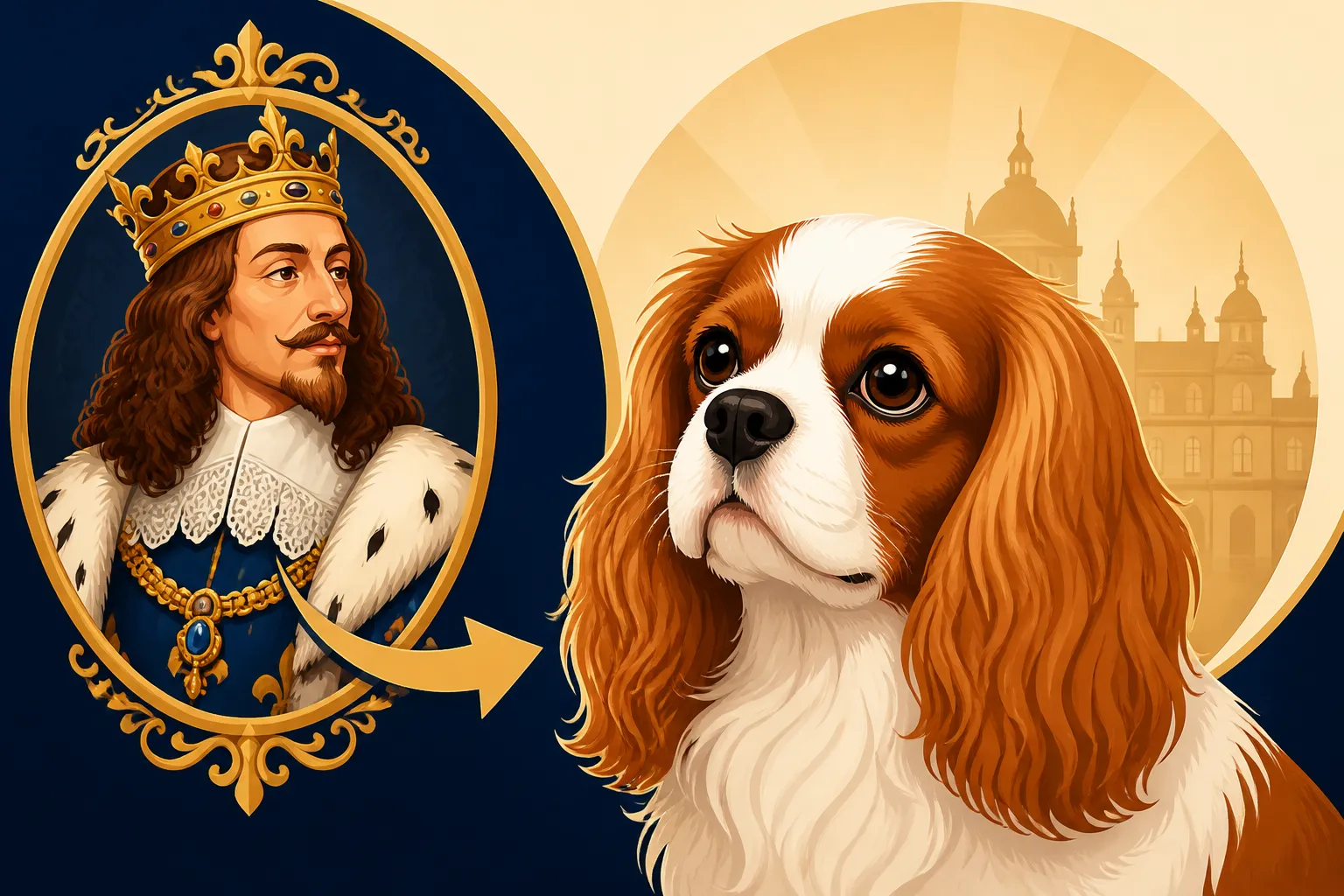
The story of the "King Charles" in your dog's name begins, quite naturally, with a king. Or, more accurately, two kings: King Charles I and his son, King Charles II. These were monarchs who absolutely adored their small spaniels, to a degree that became legendary and forever etched itself into the breed's identity. Understanding their passion is key to appreciating why these dogs became so intertwined with royalty.
Charles I's Companions During Tumultuous Times
King Charles I, who ruled England, Scotland, and Ireland from 1625, was known for his love of art, his refined tastes, and, significantly, his small spaniels. These dogs, often depicted in portraits of the era, were very similar in appearance to what we now call the "old type" Cavalier. They had longer muzzles, flatter skulls, and a more athletic build than many of the later toy spaniels. For Charles I, these weren't just decorative pets; they were constant companions, offering solace during what proved to be an incredibly turbulent reign.
Imagine the king, facing civil war and immense political pressure, finding comfort in the unwavering loyalty and gentle presence of his little dogs. They were there with him through thick and thin, a quiet, non-judgmental presence in a world filled with strife. This deep attachment wasn't merely a passing fancy; it was a genuine bond that observers noted. It’s said that even on the scaffold, moments before his execution in 1649, one of his beloved spaniels was by his side, a poignant testament to their inseparable connection. This profound loyalty set the stage for the dogs to become symbols of the Royalist cause and, eventually, to bear the king's name.
Charles II and the Unofficial Royal Decree
It was King Charles II, the son of Charles I, who truly cemented the spaniel's place in royal history and public consciousness. After the restoration of the monarchy in 1660, Charles II ascended to the throne, bringing with him an even more intense and well-documented devotion to these charming little dogs. He was rarely seen without several of them trotting at his heels, in his chambers, or even under his council table. His spaniels were not confined to kennels; they were members of his inner circle, allowed access to almost any royal space.
There's a famous anecdote, widely believed though perhaps slightly exaggerated, that King Charles II issued a decree stating that King Charles Spaniels should be allowed in any public place, including Parliament. While no official written law has ever been found, the story itself speaks volumes about his profound attachment and the sheer audacity of his affection. It highlights how utterly ubiquitous these dogs were in his life and court. This king's personal preference single-handedly boosted the popularity of the breed, associating it permanently with his name and solidifying its status as a favored companion dog for centuries to come. You can practically hear the echoes of royal privilege in every "King Charles" that follows your dog's name, a direct nod to this historical affection. Why Charles II Kept Cavalier Ancestors in His Bedchamber really drives home just how close these dogs were to the monarch.
The "Spaniel" Identity: From Hunter to Lapdog
While the "King Charles" part of the name speaks to their royal patronage, the "Spaniel" designation has its own rich history, rooted deeply in the purpose for which these dogs were originally bred. It tells a story of transformation, from active hunting companions to the quintessential lapdogs we adore today.
Flushing Game and Fetching Birds
The term "spaniel" itself comes from "Espagne," or Spain, where many of these types of dogs are believed to have originated. For centuries, spaniels were working dogs, valued for their ability to "flush" game from dense undergrowth for hunters, or to retrieve fallen birds. They were active, intelligent, and had an excellent sense of smell, making them indispensable in the field. The ancestors of our modern Cavaliers, often referred to as "comfort spaniels" or "comforter spaniels," were likely smaller versions of these working dogs, but they still retained many of those inherent spaniel traits.
Even as they became favored by royalty and their primary role shifted, these early King Charles Spaniels still possessed instincts inherited from their working ancestors. They would undoubtedly have enjoyed a good chase in the royal gardens, or enthusiastically followed a scent. Their soft mouths, a hallmark of retrieving breeds, made them gentle companions even as they were capable of more active pursuits. This dual nature—part keen hunter, part devoted companion—is a fascinating aspect of their heritage and contributes to their adaptable temperament even now. The Court Spaniels the Cavalier Descends From offers more insight into these early canine companions.
The Evolution into True Companions
Over time, as their popularity grew within the royal courts and among the aristocracy, the emphasis shifted further from hunting prowess to companionship. These spaniels became cherished pets, bred primarily for their gentle nature, affectionate disposition, and charming appearance. They were warmers of laps, confidantes, and symbols of status. Their small size made them ideal for ladies to carry or keep on their laps, and their affectionate personalities ensured they were always in demand.
This transition wasn't an abandonment of their spaniel roots, but rather an evolution. The inherent loyalty and desire to please that made them good working dogs translated perfectly into making them exceptional companions. They retained their intelligence and eagerness to be involved in family life, traits that many Cavalier owners recognize today. The "spaniel" in their name, therefore, is a nod to a heritage that is both practical and devoted, a breed shaped by function and refined by affection.
The Great Divide: King Charles Spaniel vs. Cavalier
Here's where the story gets really interesting and explains why we have two distinct breeds with such similar names: the King Charles Spaniel (known as the English Toy Spaniel in America) and the Cavalier King Charles Spaniel. A significant divergence in breeding preferences led to a temporary loss of the "old type" and eventually, its deliberate resurrection.
The Rise of the Dome-Headed, Flat-Faced Look
As the 17th century gave way to the 18th and 19th centuries, fashion in dog breeding began to change. There was a growing fascination with breeds exhibiting more extreme features, particularly flatter faces and dome-shaped skulls. The King Charles Spaniels of the Restoration era, with their longer muzzles and flatter heads, started to be bred with these newer, often Oriental toy breeds like the Pug and Japanese Chin. The result was a dramatic alteration in appearance.
The "new type" King Charles Spaniel emerged: a much smaller dog with a very short, pushed-in nose, a dramatically domed skull, and large, round eyes set wide apart. This became the fashionable look, and for a long period, the original type of spaniel cherished by Charles II nearly vanished. Breeders actively sought these features, and the dogs became quite popular in their own right, exemplified by breeds like the modern King Charles Spaniel. It's easy to see how this shift could lead to confusion and the eventual need to re-establish the original look. How Cavalier Ancestors Changed Shape in the 1800s explores this aesthetic shift in more detail.
Roswell Eldridge and the Revival of the "Cavalier"
Fast forward to the early 20th century, specifically the 1920s. An American named Roswell Eldridge visited England and was dismayed to find that the "old type" King Charles Spaniels, those depicted in the paintings of the Restoration period, were virtually extinct. He was captivated by the dogs of Charles II's era, dogs with longer noses and less prominent skulls, and he decided to do something about it.
In 1926, Eldridge offered prize money at Crufts Dog Show for King Charles Spaniels that most resembled the dogs from the paintings of Charles II's time, specifically those with a "long face, no stop, flat skull, and not too much coat." This bold move sparked a revival. A dedicated group of breeders took up the challenge, meticulously selecting dogs that still carried some of the older characteristics and breeding them to bring back the original look. To differentiate them from the popular, flat-faced King Charles Spaniel, these revived dogs were given the additional moniker "Cavalier," referencing the Royalist supporters of King Charles I during the English Civil War. The Cavaliers were known for their dashing, free-spirited nature, a fitting name for a dog meant to evoke a bygone era. How Roswell Eldridge Brought Back the Cavalier is a must-read for anyone interested in this pivotal moment.
Distinguishing the Modern Breeds
Today, the names clearly differentiate two distinct breeds recognized by kennel clubs around the world. While they share a common ancestor and a royal namesake, their appearance, history, and even some temperament traits have diverged, making them unique in their own right.
The King Charles Spaniel (English Toy Spaniel)
The King Charles Spaniel, often referred to as the English Toy Spaniel in the United States, is the breed that developed from the 19th-century preference for shorter faces and dome-shaped heads. They are generally smaller than Cavaliers, typically weighing less, and possess a distinctly brachycpehalic (flat-faced) appearance. Their eyes are very large and round, and their skull is quite domed.
These dogs are often described as being a bit more reserved than Cavaliers, though still very affectionate with their families. They are wonderful lapdogs, content with quiet companionship. Their grooming needs are similar, with beautiful, long coats and feathering. It's crucial for owners to understand the health implications of their brachycephalic structure, which can include breathing difficulties. Though historically significant, they are less commonly seen than their Cavalier cousins.
The Cavalier King Charles Spaniel: A Return to Form
The Cavalier King Charles Spaniel is the result of Roswell Eldridge's vision and the dedicated efforts of breeders to restore the "old type." They possess a more moderate, proportionate head with a longer muzzle, a less pronounced "stop" (the indentation between the eyes), and a flatter skull. Their eyes are still large and expressive, but not as prominent as those of the King Charles Spaniel. They are slightly larger and heavier, typically weighing between 13 and 18 pounds.
Cavaliers are renowned for their incredibly sweet, gentle, and outgoing temperament. They are known as "Velcro dogs" because of their desire to be constantly with their human companions. This affectionate nature, combined with their adaptability, makes them excellent family pets, therapy dogs, and loyal companions for individuals of all ages. Their spaniel instincts still peek through; many enjoy a good walk and a sniff around the garden. When considering which breed you’re talking about, the "Cavalier" part specifically refers to this revived, longer-nosed type. Why the Cavalier Split From the King Charles Spaniel details this historical separation.
Here's a quick comparison of the two distinct breeds:
| Feature | King Charles Spaniel (English Toy Spaniel) | Cavalier King Charles Spaniel |
|---|---|---|
| Origin Era | 19th Century (from crosses with Asian toy breeds) | 20th Century (revival of 17th Century type) |
| Muzzle Length | Very short, flat face (brachycephalic) | Moderate length, distinct but not flat |
| Skull Shape | Highly domed | Relatively flat between the ears |
| Eyes | Very large, prominent, round, set wide apart | Large, round, expressive, but less prominent |
| Weight Range | Generally 8-14 pounds | Typically 13-18 pounds |
| Temperament | Often more reserved, gentle, quiet | Outgoing, eager to please, affectionate, adaptable |
| Nicknames | Charlie, English Toy Spaniel | Cavalier, Cav |
| Head Example | Think a slight resemblance to a Pug or Pekinese influence | Think the classic "spaniel" head, but toy-sized |
Understanding these differences is crucial for anyone looking for historical accuracy or considering either breed. Both are wonderful in their own ways, but they are definitively not the same dog, even if they share part of a king's name. You can even find specific items for both breeds when shopping for supplies at places like Chewy, ensuring you get the right fit for your dog's unique needs.
The Enduring Legacy of the Name
So, your Cavalier King Charles Spaniel carries a name steeped in history, one that speaks of royal courts, changing fashions, dedicated breeders, and a remarkable comeback story. It’s a name that signifies both an aristocratic past and a delightful, affectionate present.
A Nod to a Bygone Era
The name "King Charles" is an honorific, a direct link to the passion of two English monarchs who cherished these dogs above almost all else. It evokes images of stately homes, velvet cushions, and loyal companions nestled close to power. For owners today, it’s a wonderful connection to centuries of history, a reminder that your sweet, cuddly Cavalier is part of a grand tradition. When you see your dog exhibiting that characteristic Cavalier affection, that desire to be close, you're witnessing a trait that has been prized by royalty for hundreds of years. This deep connection to their past is part of what makes Cavaliers so special, and it's something that responsible breeders continue to protect. You'll find many resources discussing the breed's origins on platforms like Chewy, for those who want to delve deeper into its history.
The "Cavalier" as a Mark of Distinction
The "Cavalier" part of the name, however, is equally important. It serves as a permanent historical marker, a reminder of the intentional effort to restore the breed to its original type. It distinguishes your dog from its shorter-faced cousin and highlights the dedication of those who believed in preserving the specific features and temperament of the Restoration-era spaniels. This word embodies the triumph of historical accuracy and the commitment to maintaining the breed's unique qualities.
It also speaks to the playful, yet noble spirit of the breed. Cavaliers are not just pretty faces; they possess a lively intelligence and a joyful approach to life. Their name, therefore, is a fitting tribute to their ancestry and their enduring charm. Whether you're researching potential health concerns like Mitral Valve Disease in the Cavalier King Charles Spaniel or simply picking out a new toy for your furry companion from a comprehensive pet supply store like Chewy, remembering the full story of their name adds a layer of richness to your connection with this wonderful breed. It truly makes your Cavalier more than just a pet; it makes them a living piece of history.
Disclaimer
This article is for general informational purposes only and does not constitute professional advice. Laws, prices and regulations vary by location and change over time. Consult a qualified professional for guidance on your specific situation.