Whether Cavaliers Were Bred to Warm Laps
A Cavalier King Charles Spaniel may happily curl up on your lap, but that doesn’t mean the breed was created for warmth alone. The story is more interesting: small spaniels became treasured companions in royal and aristocratic households, where closeness was part of their role. This guide separates the lapdog image from the breed’s broader history and explains what that history means for Cavaliers today.
Were Cavaliers bred specifically to warm laps
Warmth was part of the appeal, not the whole purpose
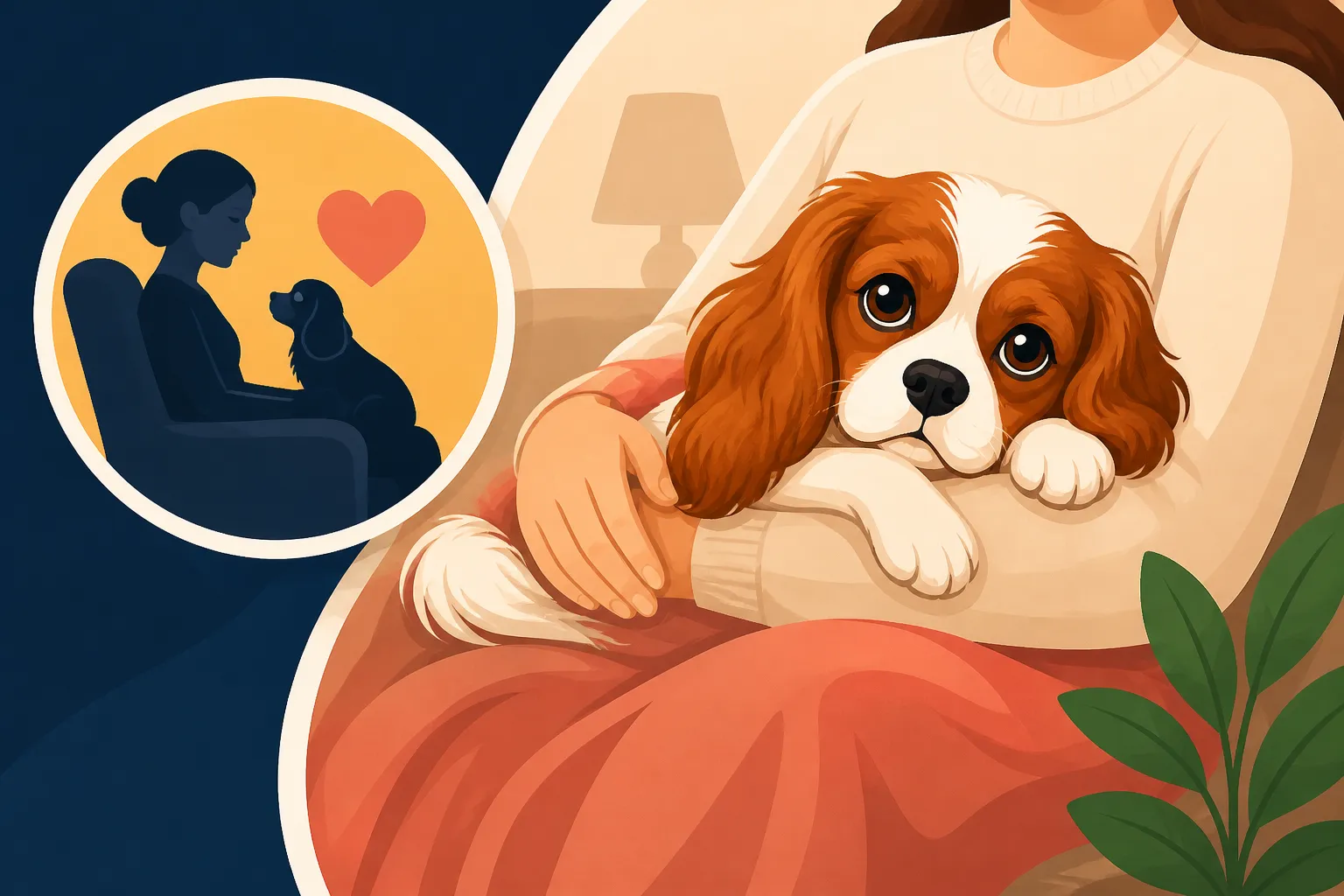
The short answer is no: Cavaliers were not bred solely as living hot-water bottles. Their ancestors were small spaniels valued as close companions, and a warm lap was one natural place for a little dog to rest. In a cool room, a small animal tucked beside a person could provide comfort to both. But reducing the dogs’ purpose to warmth misses their social role and the affection people sought from them.
For families with a Cavalier, the distinction can feel familiar. A dog may press against your legs on a chilly evening, then follow you into the kitchen, greet a visitor with enthusiasm, or sniff every interesting patch of grass on a walk. The lap is part of the relationship, not the whole relationship.
The historical record is also more complicated than a neat origin story. Small spaniels appear in paintings and accounts from earlier centuries, but those dogs were not all members of today’s standardized Cavalier breed. The modern breed took shape much later. It is safer to say that Cavaliers descend from a tradition of small companion spaniels than to claim that every dog in an old portrait was a Cavalier as we know one now. For more background, see The Court Spaniels the Cavalier Descends From.
Companionship and proximity mattered
A lap dog was close at hand: easy to keep in a household, able to share quiet time, and well suited to human company. That closeness likely contributed to the spaniels’ appeal among people who wanted a companion indoors. Warmth may have been a practical bonus, but companionship helps explain why these dogs were kept, depicted, and remembered.
It is tempting to imagine that every historic lap dog spent the day motionless on a cushion. In reality, dogs living in a household were part of ordinary daily life. They moved between rooms, responded to people, and explored what was around them. The old image of a dog on a lap captures one scene, not necessarily the full range of its behavior.
That matters when interpreting a modern Cavalier’s fondness for contact. A dog that leans against you is showing a preference for closeness; it is not proof that the breed has no interests beyond sitting still. A Cavalier can enjoy a cuddle and still benefit from walks, sniffing opportunities, play, and training.
What history tells us about Cavalier ancestors
Small spaniels had a place in royal households
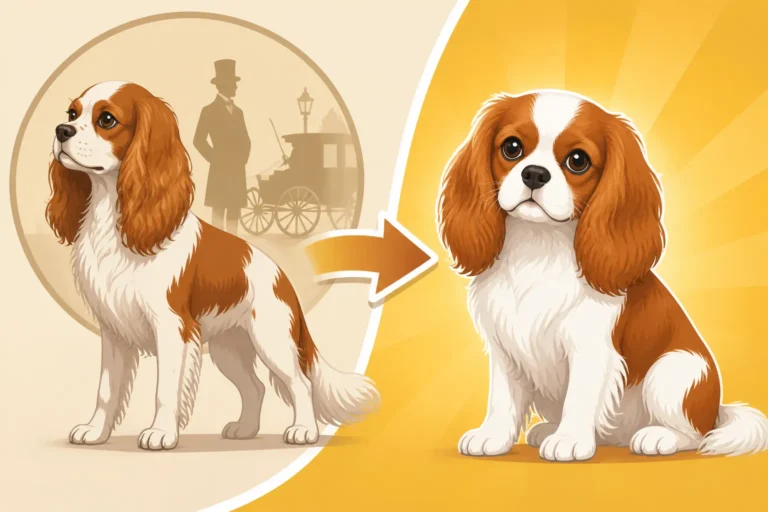
Small spaniels were associated with royal and aristocratic settings long before the Cavalier King Charles Spaniel became a distinct modern breed. The dogs were valued as companions, and their small size made them suited to life close to people. The name connects the breed with Charles II, whose court was associated with toy spaniels. The popular image of these dogs at court is one reason the lapdog story has endured.
The historical connection is worth understanding without taking every detail as literal proof about the modern breed. The dogs of earlier centuries varied in appearance, and breed standards did not operate as they do today. An old painting can show the type of small spaniel people admired, but it cannot establish that the dog had the exact appearance, ancestry, or temperament of a present-day Cavalier.
Charles II’s spaniels are an important part of the breed’s cultural story, but their presence in a royal household does not mean they were bred only to keep people warm. For a closer look at that association, read Cavalier Ancestors at the Court of Charles II and Why Charles II Kept Cavalier Ancestors in His Bedchamber.
The modern Cavalier is a later breed
Today’s Cavalier King Charles Spaniel was shaped through deliberate breed development, not simply carried unchanged from the royal courts of the past. In the twentieth century, breeders sought to revive the look of the older, longer-muzzled toy spaniels represented in historical images. The Cavalier became distinct from the King Charles Spaniel, which developed a different appearance.
This history explains why the breed’s name and its ancestry can be confusing. The Cavalier has a connection to the toy spaniels associated with Charles II, but the modern breed is not identical to every historical dog called a spaniel. When people say Cavaliers were “bred to be lap dogs,” they are often blending a long companion-dog tradition with the much more recent formation of the breed.
The affectionate temperament many owners recognize today fits the companion history, but it should not be treated as a guarantee that every individual dog wants constant handling. Socialization, health, past experiences, and personality all shape how a Cavalier responds to being held or sitting close.
Why Cavaliers can be cuddly and still act like spaniels
The breed’s sporting heritage has not disappeared
The Cavalier is a toy breed, but it comes from spaniel ancestry. That background helps make sense of behaviors such as following a scent, investigating birds, or becoming absorbed in a trail during a walk. A Cavalier that spots a pigeon may be far more interested in moving toward it than settling on a lap.
These tendencies are not contradictions. Dogs can be affectionate companions and curious explorers at the same time. A Cavalier might curl up beside you after a walk, then perk up when it hears movement outside. That mix of closeness and alert interest is part of what many owners find charming—and occasionally challenging.
It is useful to keep a secure leash or harness on walks, especially near roads, because small dogs may follow a bird or scent without judging traffic safely. A lap-friendly temperament does not remove the need for everyday supervision. The related articles Cavalier Temperament and the Sporting Spaniel Beneath It, The Spaniel Behavior Left in a Cavalier, and Whether Cavaliers Still Flush Birds explore those instincts in more detail.
Affection does not mean a dog should be carried or held all the time
Some Cavaliers actively seek a lap; others prefer to lie beside their person, choose a nearby bed, or move away after a brief cuddle. Letting the dog opt in and out helps keep contact pleasant. If a dog stiffens, turns its head away, licks its lips, or tries to leave, give it room rather than insisting on a hug.
A comfortable resting spot can help a dog stay close without needing to be held. A small, washable bed or blanket beside the sofa gives a Cavalier a choice of its own place while keeping you within reach. Owners comparing bedding or basic care supplies may find options through retailers such as Chewy, but the main consideration is a stable, comfortable spot that suits the dog and household.
If your Cavalier suddenly avoids being picked up or no longer settles as usual, consider whether something has changed. Soreness, discomfort, fear, or a new household routine can affect a dog’s desire for contact. A marked or persistent behavior change is worth discussing with a veterinarian rather than assuming the dog has simply become less affectionate.
What the lapdog history means for owners today
Expect a companion, not a decorative accessory
A Cavalier’s history as a close companion can help explain why many enjoy being near their people. It does not mean they are content to be treated like an ornament. They need attention, gentle training, exercise appropriate to their health, and opportunities to sniff and explore. A dog left alone for long stretches may struggle, even if it is small enough to sit comfortably on a lap.
For example, a Cavalier whose person works from home may nap nearby for much of the morning, then need a short walk and a little interaction later. Another may be more active and eager to investigate every sound in the yard. The breed’s companion background suggests a strong social orientation, but individual needs vary.
Apartment living can suit a Cavalier when daily care and companionship are planned well. The size of the home matters less than whether the dog gets appropriate activity, a predictable routine, and chances to be with its people. See Why a Cavalier Suits an Apartment for more on matching a Cavalier’s needs to home life.
Make closeness comfortable and voluntary
A lap can be a lovely place for a Cavalier to rest, but it should be one option among several. Keep a clear path down from furniture, avoid placing the dog where it could tumble, and provide a comfortable floor-level bed if jumping on and off furniture is difficult. If your dog is very small, older, or dealing with joint concerns, a step or ramp may reduce repeated jumps.
Training can also make shared quiet time easier. Rewarding a dog for settling on a mat beside the sofa teaches it that calm proximity is worthwhile, without requiring it to remain on your lap. Small treats can help reinforce that behavior; when choosing treats, account for their size and calories. Chewy is one retailer where owners may compare treat options, but your dog’s dietary needs and veterinary guidance should determine what you offer.
A Cavalier that wants to be close is not being “spoiled” simply because it enjoys company. At the same time, teaching a little independence—such as relaxing on its own bed while you read or cook—can make household routines more comfortable for everyone. The goal is not to suppress affection, but to help the dog feel secure whether it is on your lap or resting nearby.
| Common claim | More accurate explanation |
|---|---|
| Cavaliers were bred only to warm laps | Warmth may have been a benefit of close companionship, but it does not explain the breed’s whole history |
| Every historical toy spaniel was a modern Cavalier | Earlier small spaniels varied, and the modern breed developed later |
| A lapdog should want to be held constantly | Individual Cavaliers differ; many prefer choice and may want contact only at certain times |
| Cavaliers are only indoor companions | They are companion dogs with spaniel ancestry and may enjoy sniffing, exploring, and following movement |
| A cuddly dog does not need training or exercise | Cavaliers still need daily care, enrichment, safe walks, and gentle training |
A Cavalier’s lapdog reputation has a real basis in its long association with human companionship, but “bred to warm laps” is too narrow. Warmth was likely part of the appeal of keeping a small dog close; affection, household companionship, and a varied spaniel heritage tell a fuller story. Today, the best approach is to enjoy your dog’s closeness while also respecting its comfort, curiosity, and individual temperament.
Disclaimer
This article is for general informational purposes only and does not constitute professional advice. Laws, prices and regulations vary by location and change over time. Consult a qualified professional for guidance on your specific situation.