Whether a Cavalier Notices Cars At All
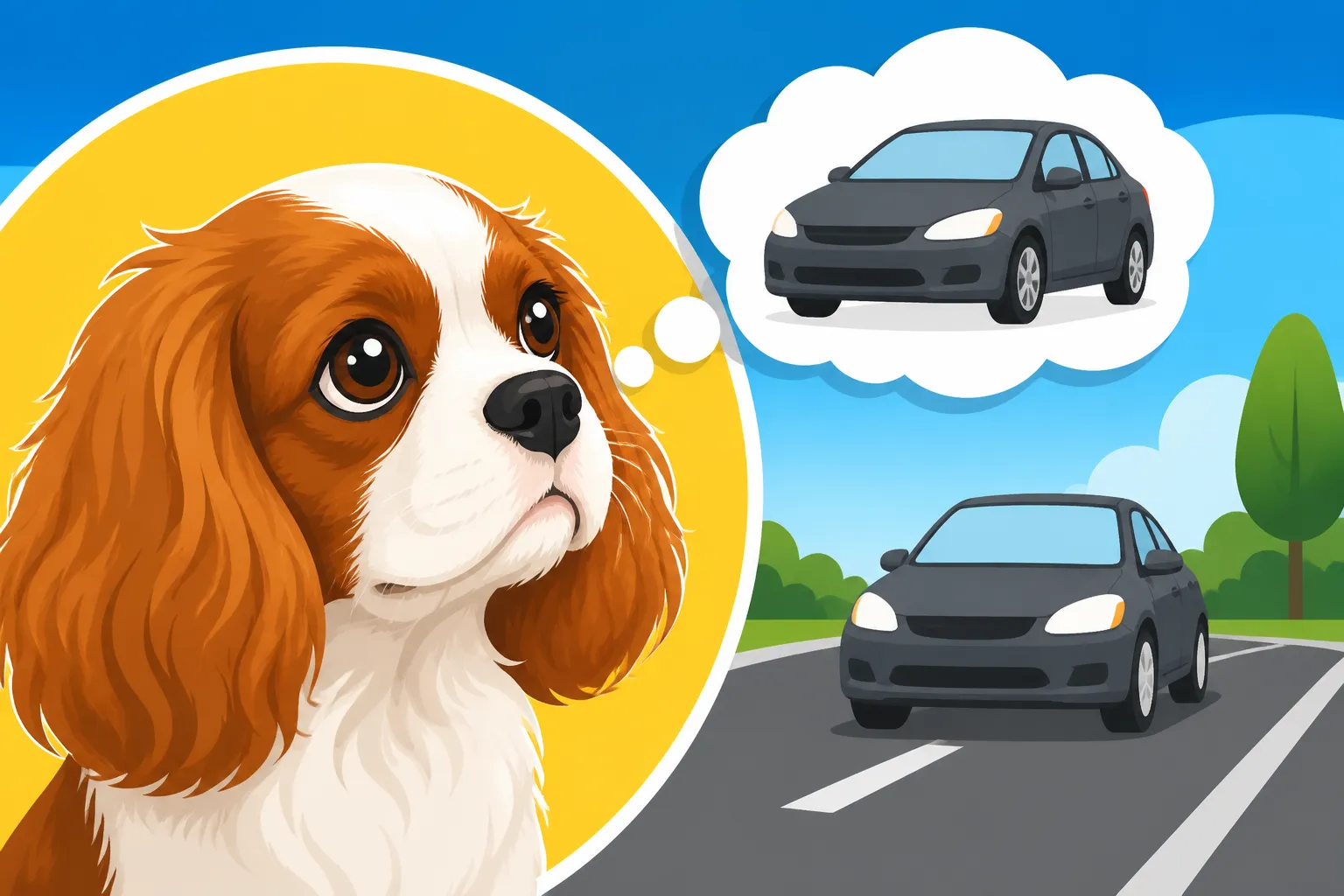
It's a familiar panic for so many Cavalier King Charles Spaniel owners: that heart-stopping moment when your sweet, seemingly oblivious companion suddenly makes a beeline for a bird, a squirrel, or even just a particularly interesting smell, utterly unconcerned by the whizzing traffic just feet away. The truth is, many Cavaliers seem to live in a joyful bubble where cars, trucks, and bustling roads are simply not on their radar, leading to very real dangers. This guide will delve into why your Cavalier might appear to ignore cars, the profound risks this poses, and practical, empathetic strategies to keep your precious pup safe near roadways.
Why Cavaliers Seem Oblivious to Traffic
You'd think a dog with such sharp senses would instinctively understand the danger of a moving vehicle, but often, that's just not the case with our beloved Cavaliers. Their history and inherent temperament contribute significantly to this apparent lack of "street smarts," often leaving owners scratching their heads – and pulling frantically on leashes.
The Companion Breed Instinct
Cavaliers were bred for centuries as devoted companions, lap warmers, and charming household members. Their original purpose wasn't to hunt independently or guard property with keen environmental awareness. Instead, their job was to be delightful and attentive to their human family. This means their natural instincts are geared towards people and comfort, not survival in a modern, high-speed environment. A Cavalier's world often revolves around you, the comfortable sofa, and the next meal, not the potential hazards of a busy street. They might be completely absorbed in the joy of a walk, tail wagging, nose to the ground, utterly captivated by a scent left by another dog, oblivious to the fact that they've drifted dangerously close to the curb.
Historically, their ancestors were pampered palace dogs, living lives of luxury where the concept of a "car" didn't even exist. There was no evolutionary pressure for them to develop an innate wariness of fast-moving objects outside of perhaps a rolling ball in the garden. This lack of a deeply ingrained instinct to avoid vehicles is a major factor in why they often seem so unconcerned.
Their Focus on Scent and Sound
While Cavaliers might seem oblivious to cars, they are far from oblivious to their environment. They simply prioritize different sensory inputs. Their spaniel heritage means they possess an incredibly sensitive nose. The Spaniel Instincts Left in a Cavalier are primarily about following a scent trail, which can be an all-consuming experience. A particularly enticing patch of grass, a discarded food wrapper, or the lingering scent of another animal can become an irresistible magnet, drawing your Cavalier's attention away from everything else, including oncoming traffic.
Similarly, while they hear very well, their interpretation of sounds might differ from what we'd expect. A loud truck might just be another interesting sound in a world full of interesting sounds, rather than an immediate threat. They might respond more strongly to the crinkle of a treat bag from your pocket than the rumble of an engine passing by. It's not that they don't notice the cars; it's that cars don't register as a high-priority threat compared to the excitement of a new smell or the prospect of praise from you. This makes it incredibly easy for them to become distracted and put themselves in harm's way.
Lack of Independent Problem-Solving for Novel Threats
Cavaliers are generally eager to please and intelligent, but they aren't typically known for their independent problem-solving skills when it comes to novel environmental threats like cars. They rely heavily on their human companions for guidance and safety. If you've ever watched a Cavalier encounter something truly new, you'll often see them look to you for reassurance or direction. In a split second, when a car is approaching, they don't have the ingrained "fight or flight" response towards it that a wild animal might have. Instead, their instinct is often to follow their nose, chase a perceived prey animal like a bird, or simply enjoy the moment, assuming their human will keep them safe.
This is why consistent training and strict safety protocols are paramount. They need us to be their front-line defense against the dangers they don't instinctively comprehend. Their sweet, trusting nature is one of their most endearing qualities, but it also means we, as their guardians, must be extra vigilant in protecting them from the modern world's hazards.
The Dangers of a Cavalier's Lack of Road Awareness
The seemingly innocent habit of not noticing cars carries incredibly serious, often fatal, consequences for Cavaliers. Their small size, combined with this lack of self-preservation instinct around traffic, makes them particularly vulnerable. It's a risk that no Cavalier owner can afford to ignore.
Fatal Accidents and Serious Injuries
The most tragic outcome of a Cavalier's road unawareness is, of course, a fatal accident. A small dog, even one on a leash, can pull free, slip a collar, or dart quickly if startled or overly excited. Once off-leash and in the road, their chances of survival are incredibly slim. Drivers, even attentive ones, may not see a small, low-to-the-ground dog until it's too late. The emotional devastation of Losing a Cavalier to Traffic and How It Happens is something no owner ever wants to experience.
Beyond the ultimate tragedy, collisions with vehicles can cause a range of devastating injuries. These can include broken bones, internal organ damage, severe head trauma, and spinal injuries. Even if a Cavalier survives, the road to recovery can be long, painful, and incredibly expensive. Emergency veterinary care, surgeries, and rehabilitation can cost thousands of dollars, placing a huge financial burden on families, not to mention the immense stress and worry for their beloved pet. Some injuries may even lead to lifelong disabilities or chronic pain, severely impacting the Cavalier's quality of life.
Psychological Trauma for Both Dog and Owner
An incident involving a car, even a near-miss, can be deeply traumatic for both the Cavalier and their human family. A dog that has been hit by a car, even if it survives, may develop severe anxiety around traffic, loud noises, or even going for walks. They might become fearful, withdrawn, or exhibit new behavioral issues stemming from the trauma. This can make future walks incredibly stressful for them and for you, turning what should be an enjoyable bonding experience into a source of constant fear.
For owners, the psychological impact can be profound. The guilt, fear, and grief associated with a pet being injured or killed by a car are immense. Every subsequent walk may be fraught with anxiety, with the owner constantly scanning for potential dangers. The memory of the incident can linger for years, affecting the joy of pet ownership. This is why prevention is not just about physical safety, but about preserving the emotional well-being of the entire household.
Legal and Financial Liabilities
While less discussed, a loose Cavalier causing an accident can also lead to significant legal and financial repercussions for the owner. If your dog darts into the road and causes a driver to swerve and hit another car, a pole, or even a person, you could be held liable for property damage, personal injury, and associated medical bills. Animal control might also be involved, potentially leading to fines or other penalties, especially if your area has leash laws or specific regulations regarding pets.
Imagine a scenario where your Cavalier, excited by a passing jogger, slips their collar and runs into the street. A driver, trying to avoid hitting your dog, swerves and collides with another vehicle, causing injuries to the occupants. In many places, you, as the dog owner, could be held responsible for all damages and medical costs. This is a stark reminder that road safety for your Cavalier isn't just about protecting them; it's also about protecting yourself from unforeseen legal and financial burdens. It adds another layer of gravity to the already critical need for vigilance and proper training.
Training for Road Safety: Building Awareness and Recall
Given the inherent risks, proactively training your Cavalier for road safety is not just a good idea—it's absolutely essential. This isn't about teaching them to drive, of course, but about instilling a profound understanding of boundaries and the critical importance of returning to you immediately, especially near roads.
Establishing a Solid "Leave It" and "Wait" Command
Before you even think about complex recall, your Cavalier needs to master foundational commands like "Leave It" and "Wait." "Leave It" can be a literal lifesaver, teaching your dog to disengage from something tempting (like a dropped piece of food, a squirrel, or even another dog) on command. Practice this extensively in various environments, starting indoors with low distractions and gradually moving to busier settings, including near quiet streets. Use high-value treats to reward immediate disengagement.
The "Wait" command is equally crucial. This teaches your Cavalier to pause at thresholds—be it a doorway, the edge of a sidewalk, or before exiting a car. Never open a car door or gate near a road without your Cavalier waiting patiently until released. This creates an invaluable buffer zone, preventing accidental darting. Practice having them wait while you open a door, count to five, and then give a release command like "Okay!" or "Free!" Reward heavily for their patience. Consistent practice with these two commands builds a strong mental framework for safety, teaching them to defer to your judgment in potentially dangerous situations.
Developing a Bulletproof Recall
A reliable recall is the single most important command for any dog, but especially for a Cavalier who might not "notice" cars. Your recall word needs to be an emergency word, always associated with positive things and never used for scolding. The Recall Word a Cavalier Learns Fastest is often one that is sharp, distinct, and consistently used only for recall. Start practicing recall in a secure, fenced area, like a dog park or a friend's yard, where there are no cars.
Use a long line (a lightweight leash 15-30 feet long) to practice recall in open, yet still safe, environments. This gives your Cavalier the illusion of freedom while you maintain control. When you call them, make it sound like the most exciting thing in the world! Drop to one knee, clap your hands, use an excited voice, and immediately reward with the highest value treat imaginable when they reach you. Never punish your Cavalier for a slow recall; always make coming to you the most rewarding option. Services like BAXTER & Bella offer comprehensive online training programs that can walk you through building a truly "bulletproof" recall, providing structured lessons and expert guidance that can make a huge difference in your Cavalier's safety around potential hazards. Remember, you want them to want to come back to you, even more than they want to chase that bird.
Teaching "Watch Me" and Focus Around Distractions
Beyond specific commands, teaching your Cavalier to focus on you amidst distractions is vital. The "Watch Me" command teaches them to make eye contact on cue, momentarily breaking their focus from whatever has captured their attention. This can be incredibly useful when you're nearing a busy intersection or if you see a potential distraction (like another dog or person) approaching.
Practice "Watch Me" by holding a treat near your nose. When your Cavalier looks at your eyes, even for a second, say "Yes!" or click a clicker, and give them the treat. Gradually increase the duration of eye contact required before the reward. As they get better, introduce this command in increasingly distracting environments, ensuring you always reward successful engagement. The goal is for them to be able to snap their attention to you, even with the rumble of cars in the background or the enticing smell of a hot dog on the sidewalk. This direct connection helps you communicate and guide them through potentially dangerous situations, making them more responsive to your instructions when it matters most.
Safety Measures Beyond Training
Even with the best training in the world, accidents can happen. That's why implementing robust safety measures that don't rely solely on your Cavalier's impeccable obedience is non-negotiable. These are your layers of defense, the physical barriers and habits that protect your furry friend from the unpredictable nature of roads and traffic.
The Right Leash and Harness Combination
For a Cavalier, a simple collar is rarely enough, especially near roads. Their necks are delicate, and they can often slip out of a collar if they pull back hard enough, particularly if they are startled or suddenly bolt. A well-fitting harness, designed for small breeds, distributes pressure across their chest and shoulders, making it much harder for them to back out. Look for harnesses that are snug but not tight, with multiple adjustment points. Many owners find front-clip harnesses helpful for managing pulling, as it redirects their momentum back towards you. Harnesses Suited to a Cavalier's Neck should be comfortable and secure without chafing.
As for leashes, a standard 4-6 foot leash is ideal for walking near roads, as it keeps your Cavalier close and gives you maximum control. Retractable leashes are generally discouraged near traffic. While they offer more freedom in open spaces, they can be dangerous near roads because they allow your dog to get too far ahead, potentially into traffic, before you can react. Moreover, the sudden stop when the leash reaches its full extension can cause neck injuries. If you want to give your Cavalier more room in a safe, fenced area, a long line (as mentioned earlier) is a much safer alternative, allowing you to maintain control without the snap-back risk of a retractable leash. You can find a wide variety of high-quality harnesses and leashes, including long lines for safe recall practice, on Amazon.
Secure Fencing and Gates
Your home environment is the first line of defense. If you have a yard, it absolutely must be securely fenced. Cavaliers are not known for being escape artists like some terrier breeds, but a small gap, an unlatched gate, or a fence they can squeeze under can quickly become an exit onto a busy street. Regularly inspect your fence line for any weaknesses, loose boards, or areas where digging might occur. Ensure gates have strong, reliable latches that your Cavalier cannot manipulate and that younger children are taught how to properly close and latch them.
It's also crucial to remember that even a fenced yard isn't always 100% secure. Always supervise your Cavalier when they are outside, even in a fenced area. Distractions like a squirrel on the other side of the fence can still cause them to push against a weak spot or try to dig. For properties that are not fully fenced, a sturdy, secure tie-out stake can be used under direct supervision, but this is generally a last resort and should never be left unattended. Remember, Fencing a Yard a Cavalier Will Not Leave offers peace of mind but never replaces vigilant supervision.
Constant Vigilance and Defensive Walking
Ultimately, the most powerful safety measure is you. Constant vigilance is paramount when walking your Cavalier near roads. This means no phone scrolling, no deep conversations with companions, and no headphones that might obscure the sounds of traffic. You need to be fully present, scanning your environment for potential dangers and predicting your Cavalier's reactions.
Practice "defensive walking." This involves walking on the side of the sidewalk furthest from the road, placing yourself between your Cavalier and traffic. If you need to cross a street, ensure your dog is on a short leash, by your side, and that you have a firm grip. Make eye contact with drivers if possible. Teach your Cavalier to stop and wait at every curb, reinforcing the "Wait" command, and only proceed when you give the "Okay" command and you've confirmed it's safe. Anticipate distractions—if you see another dog, a person, or a bird that might pique your Cavalier's interest, preemptively shorten the leash, use your "Watch Me" command, or physically guide them away from the curb. Your Cavalier's safety is entirely in your hands, and your unwavering attention is their best protection.
Here's a quick comparison of common leash and harness types for a Cavalier:
| Feature | Standard Leash (4-6 ft) | Retractable Leash | Front-Clip Harness (Y-shaped) | Back-Clip Harness (H-shaped) |
|---|---|---|---|---|
| Control Near Road | Excellent; keeps dog close, limits freedom. | Poor; allows too much distance, hard to reel in quickly. | Excellent; redirects pulling, discourages darting. | Good; secure, but does not discourage pulling forward. |
| Comfort | Depends on material; generally comfortable. | Handle comfort varies; can cause leash burn. | Good; distributes pressure, avoids neck strain. | Good; widely available, generally comfortable. |
| Safety | High; direct control, less risk of tangles. | Low; risk of tangles, injury from sudden stops, escape. | High; secure, less chance of slipping out, good for small dogs. | High; secure, but a determined puller can still strain neck. |
| Training Aid | Excellent for teaching heel, loose leash walking. | Poor; teaches dogs to pull for extension. | Excellent for loose leash training, reducing pulling. | Moderate; good for general walks, not active pull reduction. |
| Best Use Case | Everyday walks, obedience training, near busy areas. | Open, low-distdistraction areas under strict supervision. | Dogs who pull, small breeds with delicate necks, road safety. | Casual walks, dogs who don't pull, ID tag holder. |
Disclaimer
This article is for general informational purposes only and does not constitute professional advice. Laws, prices and regulations vary by location and change over time. Consult a qualified professional for guidance on your specific situation.