Whether a Cavalier Needs Grain-Free Food
The world of dog food can feel like a minefield, especially when you're trying to do everything right for your beloved Cavalier King Charles Spaniel. Every other day, it seems there's a new trend or a scary warning about what you should or shouldn't be feeding your furry family member. One of the biggest debates swirling around is whether a grain-free diet is a healthier choice, or if it's actually doing more harm than good. This guide is here to cut through the noise, examine the facts, and help you understand what's truly best for your Cavalier's unique nutritional needs.
The Grain-Free Trend: Where It Came From and Why It's Misunderstood
For years, "grain-free" has been a buzzword in the pet food industry, touted as a superior option for our dogs. It swept through the market, fueled by human diet trends and clever marketing that often demonized grains as unnatural or harmful "fillers." Many well-meaning Cavalier owners, wanting only the best, jumped on board, believing they were providing a more ancestral or allergy-friendly diet. But the truth about grains in dog food, and the potential pitfalls of indiscriminately cutting them out, is far more nuanced than marketing slogans suggest.
The Myth of Grains as Fillers
One of the biggest misconceptions surrounding grain-free dog food is the idea that grains like corn, wheat, or rice are simply cheap fillers with no nutritional value. This couldn't be further from the truth. Grains, when properly processed, are actually excellent sources of carbohydrates, which provide energy for your active Cavalier. They also offer valuable fiber, which is crucial for digestive health, helping to regulate bowel movements and support a healthy gut microbiome. Furthermore, grains contribute essential vitamins and minerals that play a role in everything from coat health to immune function. Dismissing them as mere fillers overlooks their significant contribution to a balanced diet.
Think about it this way: if you feed your Cavalier a high-quality grain-inclusive food, those grains aren't just taking up space. They're part of a carefully formulated recipe designed to meet all their dietary requirements. It's not about the presence or absence of grains, but the quality of the ingredients and the overall nutritional balance of the food. Reputable pet food manufacturers use grains because they are efficient, digestible sources of necessary nutrients, not just to cut costs at the expense of your dog's health.
Common Misconceptions About Grain Allergies
Another driving force behind the grain-free movement was the belief that many dogs suffer from grain allergies. While true food allergies in dogs do exist, they are actually quite rare, and grain allergies are even rarer still. When a dog has a food allergy, it's typically to a protein source, such as chicken, beef, dairy, or lamb, not usually to grains. Symptoms of a food allergy can include skin issues like itching, redness, ear infections, or gastrointestinal upset like vomiting and diarrhea.
If your Cavalier is showing signs of allergies, it's important to work with your veterinarian to identify the true culprit through a systematic elimination diet, not just assume grains are the problem and switch to a grain-free formula. Randomly removing grains without a proper diagnosis might not address the actual allergy and could potentially lead to other nutritional imbalances. A lot of dogs might experience some mild gastrointestinal sensitivity to a specific ingredient, which isn't a full-blown allergy, but even in those cases, it's often a protein or fat source, rather than a grain.
Understanding DCM: The Link Between Diet and Heart Health
This is where the conversation around grain-free diets takes a very serious turn for Cavalier owners. Cavaliers are already predisposed to heart conditions, particularly Mitral Valve Disease in the Cavalier King Charles Spaniel. So, when reports began to surface linking certain "boutique" (small, often independent brands), "grain-free," and "exotic ingredient" pet foods to a potentially life-threatening heart condition called Dilated Cardiomyopathy (DCM), it sent shivers down the spines of many of us. DCM is a disease of the heart muscle that results in an enlarged heart and weakened contractions, ultimately leading to heart failure.
Historically, DCM has been primarily associated with certain large and giant breeds with a genetic predisposition. However, what made these new reports alarming was the appearance of DCM in breeds not typically prone to it, including smaller breeds like Cavaliers, or in breeds where it is seen, but without a clear genetic link. This suggested an environmental factor, and diet quickly became the prime suspect. For those of us already monitoring our Cavaliers for Why Half of Cavaliers Have a Murmur by Five, this news was understandably terrifying.
The FDA Investigation and Taurine Link
The U.S. Food and Drug Administration (FDA) launched an investigation into the potential link between certain diets and DCM. While the precise mechanism isn't fully understood, the leading theory points to nutritional deficiencies, particularly a deficiency in taurine. Taurine is an amino acid critical for heart muscle function. While dogs can typically synthesize their own taurine from other amino acids, some individuals might struggle, or certain dietary formulations might interfere with its absorption or production.
Many of the diets implicated in the FDA investigation shared common characteristics: they were often grain-free, or they relied heavily on alternative carbohydrate sources like peas, lentils, other legumes, and potatoes as primary ingredients, sometimes pushing traditional meat proteins or grains further down the ingredient list. It's believed that these ingredients, especially in large quantities, might either interfere with taurine metabolism, reduce its availability, or contain compounds that are problematic for canine cardiac health in susceptible dogs. It's a complex puzzle, and the scientific community is still working diligently to piece together all the answers.
The Specific Ingredients Under Scrutiny
When we talk about grain-free diets and their potential link to DCM, it's not just the absence of grains that's concerning, but what often replaces them. Many grain-free formulations substitute grains with ingredients like peas, lentils, chickpeas, and potatoes (both white and sweet potatoes). These ingredients themselves are not inherently bad; they provide fiber and carbohydrates. However, when they become the primary ingredients, making up a significant portion of the food's composition, concerns arise.
For example, a bag of kibble listing "peas" or "lentils" as the second or third ingredient, right after the main protein source, indicates a high concentration of these legumes. This is particularly problematic in "boutique" brands that might not have veterinary nutritionists formulating their diets or conducting extensive feeding trials. The careful balance of amino acids, minerals, and other nutrients needs to be just right, and when novel ingredients are used extensively without adequate research, unforeseen consequences, like potential taurine deficiency or other nutrient imbalances, can emerge.
When Grain-Free Might Be Appropriate for a Cavalier (Rare Cases)
Given the potential risks and the strong evidence linking certain grain-free diets to DCM, the vast majority of Cavaliers do not need a grain-free diet. In fact, for most, it's safer to stick to tried-and-true grain-inclusive formulas. However, in extremely rare, specific circumstances, and only under the direct guidance of a veterinary professional, a grain-free diet might be considered. It's crucial to understand that these situations are outliers and not a justification for a blanket approach.
True Grain Allergies: A Veterinary Diagnosis is Key
As we touched on earlier, true grain allergies in dogs are exceptionally rare. If your Cavalier is indeed one of these rare cases, a grain-free diet would be medically necessary. But this diagnosis doesn't come from guessing or observing mild itching. It requires a rigorous process, usually an elimination diet, conducted under strict veterinary supervision. This often involves feeding a novel protein and carbohydrate source (ingredients your dog has never eaten before) for several weeks, then slowly reintroducing potential allergens to pinpoint the exact trigger.
If a grain allergy is definitively diagnosed, your vet would then help you select a carefully formulated grain-free diet that avoids the problematic grain while still providing complete and balanced nutrition, taking into account the current understanding of DCM risks. This might involve choosing a commercial diet from a large, established brand known for its robust research and veterinary nutritionists, or even exploring a veterinary therapeutic diet specifically designed for allergies. This is a far cry from simply picking up any bag of grain-free food off the shelf.
Other Medical Reasons (Extremely Rare)
Beyond a confirmed grain allergy, there are very few other medical reasons why a grain-free diet might be recommended for a Cavalier. Sometimes, a dog might have a very specific and unusual digestive sensitivity to a particular type of grain, even if it's not a full-blown allergic reaction. In these instances, a vet might recommend trying a formula that removes that specific grain, which might happen to be grain-free, but the focus isn't on being "grain-free" as a philosophy, but rather on avoiding the problematic ingredient.
It's also worth noting that dogs with certain rare metabolic conditions might require highly specialized diets, which could coincidentally be grain-free. However, these are highly individualized cases, managed by veterinary specialists, and would never be chosen as a general dietary approach for a healthy Cavalier. The takeaway here is clear: unless a licensed veterinarian explicitly diagnoses a condition that requires a grain-free diet, it's generally best to choose a well-researched, grain-inclusive food for your Cavalier's long-term health, especially given their genetic predisposition to heart issues.
What a Balanced Diet Really Looks Like for Your Cavalier
When it comes to feeding your Cavalier, our focus should always be on providing a complete and balanced diet that meets all their nutritional requirements, not just avoiding certain ingredients based on fads. A truly healthy diet supports their energy levels, maintains a healthy weight (which is crucial for their little hearts – Cavalier Weight Gain and What It Costs the Heart), promotes a shiny coat, and ensures their internal systems are functioning optimally. For a Cavalier, this means choosing food that is scientifically formulated and backed by sound research.
The Importance of Whole Ingredients
A great starting point for selecting any dog food is to look for whole, identifiable ingredients. When you read the ingredient list, you want to see named meat sources (e.g., "chicken meal," "deboned salmon," "lamb") listed as the first few ingredients, rather than vague terms like "meat by-products" or "animal digest" (though specific, high-quality meat meals are excellent, concentrated protein sources). Following the protein, you should see well-known carbohydrate sources like rice, barley, oats, or corn. These are not "fillers" but valuable energy providers.
Beyond the main ingredients, a balanced diet will include a variety of fruits and vegetables, offering natural vitamins, minerals, and antioxidants. Fats, typically from named sources like "chicken fat" or "fish oil," are essential for energy, skin, and coat health. A truly good food doesn't hide ingredients behind generic terms. It lists them clearly, allowing you to understand exactly what you're feeding your cherished Cavalier. Products available on platforms like Chewy or Amazon often provide detailed ingredient lists, making it easier to research.
Looking for AAFCO Statements
One of the most crucial indicators of a nutritionally complete and balanced dog food is the AAFCO statement. AAFCO stands for the Association of American Feed Control Officials. This organization establishes nutrient profiles for dog and cat foods. When a dog food package states that it is "formulated to meet the nutritional levels established by the AAFCO Dog Food Nutrient Profiles for [life stage, e.g., adult maintenance or all life stages]," or "animal feeding tests using AAFCO procedures substantiate that [Brand Name] provides complete and balanced nutrition for [life stage]," it means the food has been scientifically evaluated to provide all the necessary nutrients in the correct proportions.
Always look for this statement on your Cavalier's food bag. It’s your guarantee that the food isn't just a random mix of ingredients but a carefully designed diet. Without an AAFCO statement, you could be risking nutritional deficiencies or excesses, which can lead to serious health problems over time. For a breed like the Cavalier, with its specific health predispositions, knowing their diet is nutritionally sound is not just a preference, it's a necessity. This is far more important than whether it's "grain-free" or not.
How to Choose the Right Food for Your Cavalier (and What to Watch For)
Navigating the pet food aisle can be overwhelming with countless brands, formulations, and marketing claims. For your Cavalier, making the right choice means prioritizing health, scientific backing, and individual needs above fleeting trends. Remember, your Cavalier's diet is one of the most impactful decisions you make for their longevity and quality of life, especially with conditions like Cavalier Lifespan and What Cuts It Short looming.
Consulting Your Veterinarian
This cannot be stressed enough: the absolute best resource for determining your Cavalier's diet is your veterinarian. They know your dog's individual health history, any pre-existing conditions (like a developing heart murmur), activity level, age, and any sensitivities they might have. They can provide personalized recommendations based on sound veterinary science, not just marketing hype. If your Cavalier has been diagnosed with a heart condition, your vet might even recommend Prescription Cardiac Diets for a Cavalier or specific low-sodium options.
Don't hesitate to bring the ingredient list of your current food or any food you're considering to your vet for their opinion. They can help you understand complex nutritional labels and guide you towards brands that prioritize research and quality control. A good vet will also advise on things like appropriate portion sizes for Feeding a Cavalier on Fifteen Pounds and how to adjust their diet if they start to gain too much weight, helping to prevent issues like Why an Overweight Cavalier Fails Faster. Their expertise is invaluable in protecting your Cavalier's health.
Researching Reputable Brands
When choosing a commercial dog food for your Cavalier, look for brands that invest heavily in nutritional research, employ veterinary nutritionists (often board-certified specialists), and conduct thorough feeding trials. These are typically the larger, well-established pet food companies, though some newer, smaller companies are also doing excellent work. They can provide transparency about their sourcing, manufacturing processes, and nutritional analysis.
Ask questions: Does the company own its manufacturing plants? Do they have quality control measures in place? What kind of research supports their formulations? Be wary of brands that rely heavily on anecdotal evidence, celebrity endorsements, or fear-mongering tactics against common, healthy ingredients. Brands that openly share their nutritional expertise and scientific backing often provide a much safer and more reliable choice for your Cavalier. Some brands, like those found on Ollie, can even customize plans based on your dog's specific profile, which can be great if you're working with a vet to fine-tune a diet.
Monitoring Your Cavalier's Health
Once you've chosen a food, the most important step is to closely monitor your Cavalier's health and well-being. Look for signs of good health: a shiny coat, clear eyes, good energy levels, firm and consistent stools, and maintaining a healthy weight. Any changes in these areas could indicate that the food isn't quite right for your dog. For example, excessive gas, diarrhea, or new skin irritations could signal a dietary intolerance.
It's also essential to keep up with regular veterinary check-ups. Your vet will continue to monitor your Cavalier's overall health, including their weight, heart sounds, and any other indicators that might suggest a need for dietary adjustment. Remember, every dog is an individual, and what works wonderfully for one Cavalier might not be ideal for another. Be patient, be observant, and always prioritize scientific evidence and professional veterinary advice over marketing trends. This careful attention to detail is how we ensure our Cavaliers live their happiest, healthiest lives.
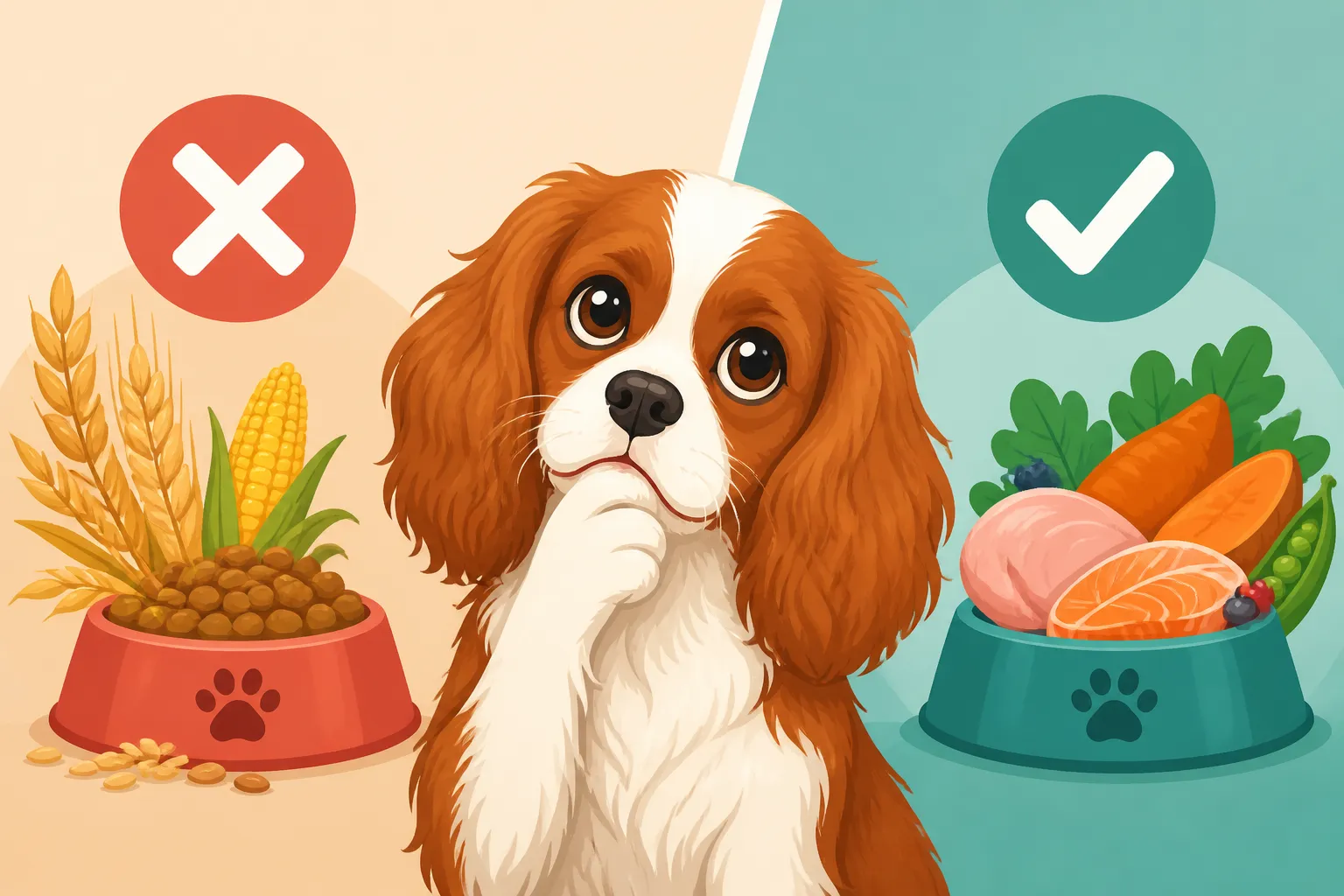
Comparing Grain-Inclusive vs. Grain-Free for Cavaliers
To help you visualize the key differences and considerations, here's a table summarizing the general characteristics of grain-inclusive and grain-free diets, especially concerning the health of a Cavalier.
| Feature | Grain-Inclusive Diets (Typical) | Grain-Free Diets (Typical) | Cavalier-Specific Considerations |
|---|---|---|---|
| Primary Carbohydrate Source | Corn, wheat, barley, rice, oats, sorghum | Peas, lentils, chickpeas, potatoes (white/sweet), tapioca | Cavaliers are prone to heart disease; ingredient sources matter greatly. |
| Nutritional Value of Carbs | Excellent source of energy, fiber, B vitamins, minerals | Excellent source of energy, fiber, some vitamins/minerals | Focus on balanced nutrition, not just carb source. |
| Allergy Risk (True) | Very low risk of grain allergy; protein allergies more common | Very low risk of grain allergy; protein allergies still possible | True grain allergies are rare; don't assume grains are the problem. |
| DCM Risk (Diet-Associated) | Generally low risk when from reputable brands with AAFCO statement | Higher theoretical risk, especially with high legume/potato content in boutique brands | Critical concern for Cavaliers due to breed's cardiac predisposition. |
| Taurine Levels | Typically sufficient or supplemented appropriately | May be lower or have impaired absorption in some formulations | Taurine is vital for heart health; deficiency is a serious risk. |
| Formulation Expertise | Often formulated by veterinary nutritionists, extensive research | Varies widely; some lack extensive nutritional science backing | Prioritize brands with veterinary nutritionist input and research. |
| Vet Recommendation | Generally recommended for most healthy Cavaliers | Only recommended for diagnosed grain allergies or specific medical needs, with vet oversight | Always consult your vet for personalized advice. |
The Final Verdict on Grain-Free for Your Cavalier
After diving deep into the topic, it becomes clear that for the vast majority of Cavaliers, a grain-free diet is not necessary and, in fact, carries potential risks that outweigh any perceived benefits. The notion that grains are inherently bad or just "fillers" is a marketing myth that has unfortunately overshadowed the crucial role they play in a balanced canine diet. For a breed like our beloved Cavaliers, already genetically predisposed to heart conditions, knowingly introducing a diet potentially linked to another serious heart disease is simply not worth the gamble.
Instead of focusing on whether a food is "grain-free," our energy as devoted Cavalier parents should be directed toward choosing a diet that is truly complete and balanced, backed by scientific research, and formulated by experts. This means looking for an AAFCO statement, prioritizing whole, identifiable ingredients with a named meat protein at the top, and most importantly, consulting with your veterinarian. They are your best partner in navigating the often-confusing world of pet nutrition, ensuring your sweet companion gets exactly what they need to thrive.
The truth is, while we all want to do the very best for our Cavaliers, sometimes "less is more" in terms of trendy ingredients and unproven dietary approaches. A high-quality, grain-inclusive diet from a reputable brand, chosen with your vet's guidance, will likely be the safest and most beneficial choice for your Cavalier's long-term health, allowing you to focus on all the joy and companionship they bring into your life.
Disclaimer
This article is for general informational purposes only and does not constitute professional advice. Laws, prices and regulations vary by location and change over time. Consult a qualified professional for guidance on your specific situation.