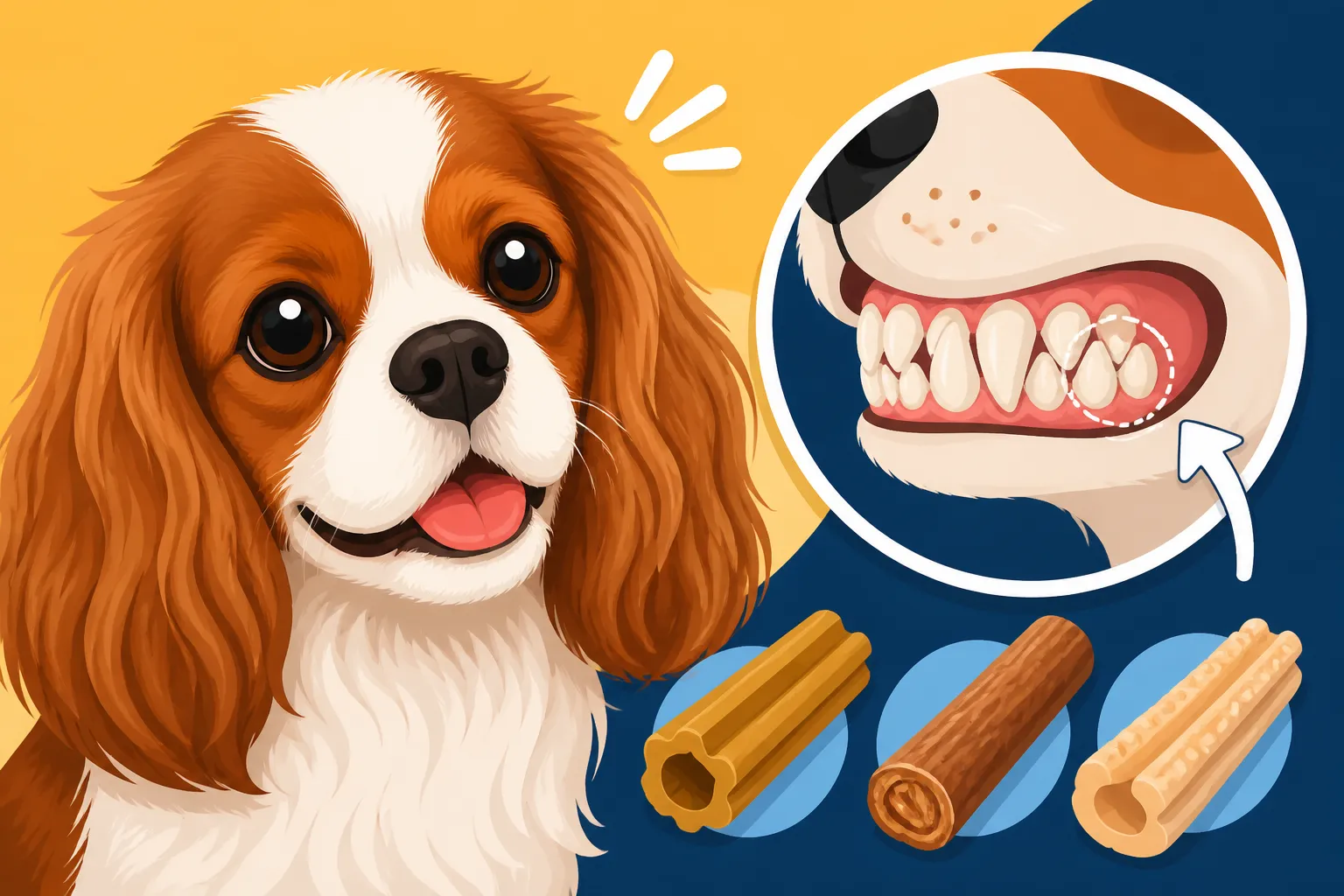
Chews That Fit Behind a Cavalier’s Crowded Bite
One of the most common worries I hear from fellow Cavalier parents is about their dog's teeth. Our beloved Cavaliers often have these adorable, compact little jaws, but sometimes their teeth don't quite fit. It's not unusual to see a bit of crowding, which makes them prone to dental issues. Finding the right chews to help keep those pearly whites clean and healthy, especially those tricky back molars, can feel like a real puzzle. This guide is all about helping you navigate the world of dog chews to find the perfect, safe options for your Cavalier's unique bite.
Understanding the Cavalier's Unique Mouth Anatomy
Cavalier King Charles Spaniels are undeniably charming, and part of that charm comes from their lovely, sweet faces. However, their genetics, stemming from some brachycephalic (short-nosed) ancestry, mean their oral anatomy can be a little different from other breeds. This isn't just about how cute they look; it has real implications for their dental health.
Why Cavaliers Have Crowded Bites
While not as severely brachycephalic as, say, a Pug or a Bulldog, Cavaliers do possess a shorter skull structure compared to longer-nosed breeds. This means that a full set of 42 adult teeth has to squeeze into a smaller space. Imagine trying to fit a standard-sized bookshelf into a tiny alcove – things are going to get tight! This crowding often results in teeth being rotated, misaligned, or overlapping. Those adorable little canines might be a bit askew, or the premolars might sit too close together. This creates nooks and crannies where food particles, plaque, and tartar can easily accumulate, leading to a much higher risk of dental disease. It's simply harder for their natural chewing action, or even your toothbrush, to reach every surface.
The Risks of Poor Dental Hygiene in Cavaliers
Because of this crowded setup, Cavaliers are, unfortunately, very susceptible to dental problems. Plaque, a sticky film of bacteria, quickly hardens into tartar if not removed. This tartar irritates the gums, leading to gingivitis – inflamed, red, and sometimes bleeding gums. If left unchecked, gingivitis progresses to periodontal disease, where the infection spreads below the gum line, damaging the bone and ligaments that support the teeth. This is incredibly painful for your dog and can lead to tooth loss. Beyond just the mouth, untreated dental disease can have systemic effects, with bacteria entering the bloodstream and potentially affecting vital organs like the heart and kidneys. You might have heard whispers of Whether Dental Disease Reaches a Cavalier's Heart, and sadly, it's a very real concern. A healthy mouth is a cornerstone of overall Cavalier health.
The Importance of Appropriate Chew Choices
Given their predispositions, choosing the right chews isn't just a treat; it's a vital part of your Cavalier's proactive dental care. A good chew can help scrape away plaque, stimulate gum health, and provide mental enrichment. But the "right" chew is key. An inappropriate chew can actually do more harm than good, leading to fractured teeth, gum injuries, or even choking. We're looking for chews that are appropriately sized, have the right texture to be effective without being destructive, and are safe for your Cavalier's digestive system. It's about finding that sweet spot where a chew helps clean those hard-to-reach areas without posing additional risks to their delicate mouths.
Types of Chews to Consider for a Cavalier's Crowded Bite
When you're standing in the pet store aisle, or scrolling through a site like Chewy, the sheer volume of chew options can be overwhelming. For a Cavalier with a crowded bite, the selection needs to be more discerning than just picking out the cutest or cheapest option. We want effective, safe, and enjoyable.
Dental Chews Designed for Small Breeds
Many reputable pet supply companies understand the dental challenges small breeds face and have developed chews specifically with them in mind. These dental chews are often formulated with ingredients that help reduce plaque and tartar, such as enzymes or textured surfaces designed to gently scrub teeth as your dog chews. The key here is to look for brands that clearly label their products for "small breeds" or "toy breeds," as their size and texture will be more appropriate for a Cavalier's mouth.
Think about dental sticks that have a slightly pliable texture, allowing them to conform somewhat to the curves of your Cavalier's teeth, reaching into those crowded spaces. Brands like Greenies (specifically their "Teenie" or "Petite" sizes) or certain dental care options you can find on Amazon are popular choices for their VOHC (Veterinary Oral Health Council) seal, which indicates they meet standards for plaque and tartar control. Remember, even with these, moderation is key, as they do contribute to daily calorie intake, a factor you're likely already mindful of given how easily Cavaliers can gain weight. Why an Overweight Cavalier Fails Faster is a serious consideration.
Softer, Digestible Chews for Gentle Chewers
Not all Cavaliers are power chewers. Some prefer a gentler approach, or perhaps they have a more sensitive stomach. For these dogs, softer, more digestible chews can be a great option. These might include certain types of dehydrated sweet potato chews, softer bully sticks (though always supervise with these!), or even specific types of meat-based chews that break down more easily. The advantage here is less risk of tooth fracture, which is a major concern with very hard chews.
However, the trade-off with softer chews is that they might not provide the same abrasive action against plaque and tartar as firmer dental chews. They still offer mental stimulation and can help satisfy the natural urge to chew, which is important for overall well-being. If you opt for these, ensure they are still sturdy enough to provide some cleaning action without being consumed too quickly. Chews from brands like Ollie that focus on natural, digestible ingredients can be a good starting point, but always check the specific product's texture and hardness. The goal is a chew that gives a good "scrub" without putting undue stress on those crowded teeth.
Durable, Non-Edible Chews for Power Chewers
If your Cavalier is one of those who loves to gnaw with determination, durable, non-edible chews can be a lifesaver for your furniture and shoes. These are typically made from nylon, rubber, or other resilient materials. The key with these is selecting the right level of hardness and texture. You want something firm enough to withstand enthusiastic chewing but flexible enough not to be like trying to chew a rock.
Look for textured rubber toys or nylon chews with nubs and ridges that can reach between teeth. Ensure the size is appropriate – too small and it's a choking hazard; too large and your Cavalier won't be able to get their mouth around it effectively. Kong toys, for instance, come in various sizes and can be stuffed with soft food to make them even more engaging, providing a different kind of chewing challenge. Always supervise your Cavalier with non-edible chews, as small pieces can eventually break off and be ingested. If the chew starts to show significant wear or small pieces are coming off, it's time to replace it.
What to Avoid: Dangerous Chews for Cavaliers
Just as important as knowing what to give your Cavalier is knowing what to never offer. The wrong chew can lead to expensive vet visits, painful injuries, and even life-threatening emergencies. With a Cavalier's potentially fragile and crowded bite, being vigilant about chew safety is paramount.
Hard Chews That Can Damage Teeth
This is probably the most critical category to avoid. Anything that feels like you could crack your own kneecap trying to chew it is too hard for your Cavalier's teeth. This includes things like real bones (cooked or raw, especially weight-bearing bones from large animals), antlers, hooves, and certain extremely hard nylon chews not specifically designed with dental safety in mind. While these might seem natural or long-lasting, they pose a significant risk of fracturing teeth.
A fractured tooth is not just painful; it can lead to infection, abscesses, and often requires costly dental surgery, sometimes involving extractions. Imagine trying to eat with a broken tooth – it's no fun for us, and it's no fun for our dogs. Given their already crowded mouths, which can make certain teeth more vulnerable, it’s simply not worth the risk. Instead of thinking "how long will this last?", ask "is this safe for my dog's teeth?" A good rule of thumb is: if you can't indent it with your thumbnail, it's probably too hard.
Chews With Choking Hazards or Splintering Risks
Another major concern, especially with smaller breeds like Cavaliers, are chews that can splinter or be swallowed whole. Rawhide, despite its popularity, can be problematic. When wet, it can become gummy and stretch, potentially lodging in a Cavalier's throat, leading to a choking hazard or digestive blockage. If your Cavalier tends to gulp things down rather than chew thoroughly, rawhide is definitely a no-go.
Similarly, some natural chews like pig ears or certain dehydrated parts can break into sharp shards or be gnawed down to a size that's easily swallowed, creating a choking risk. Even seemingly benign items like ice cubes can be dangerous; they are hard enough to crack teeth and don't offer any real dental benefit. Always supervise your Cavalier closely with any chew, and remove it immediately if it becomes small enough to be a choking hazard or if it starts to splinter. This diligence is particularly important for dogs that get excited and try to consume things too quickly. Whether a Cavalier Would Ever Warn You about discomfort from a bad chew is unlikely; they often suffer in silence.
Over-Sized Chews That Don't Fit
It might seem obvious, but giving a chew that's too big for your Cavalier's mouth can be surprisingly common. You might think a larger chew will last longer, but if your Cavalier can't properly get their molars on it, it's not going to be effective for cleaning. Worse, they might struggle to manipulate it, leading to frustration or even injury to their gums as they try to gnaw awkwardly.
Conversely, a chew that's too small is also dangerous, as it can be swallowed whole. The ideal size is one that your Cavalier can comfortably hold between their paws and chew with their back teeth, but not one they can easily fit entirely into their mouth. A good fit ensures they can properly engage their jaws and teeth, maximizing the cleaning benefits and minimizing the risks. This is why looking for small-breed specific options on sites like Chewy or Amazon is so crucial; they've often considered the unique proportions of smaller dogs.
Integrating Chews into Your Cavalier's Dental Routine
Chews are a fantastic tool, but they are just one piece of the puzzle when it comes to maintaining your Cavalier's dental health. A comprehensive approach is always best, particularly for a breed prone to dental issues.
Balancing Chews with Brushing and Vet Care
Think of chews as a helpful supplement, not a complete solution. The gold standard for canine dental hygiene, just like for us, remains regular toothbrushing. Aim for daily brushing using a vet-approved toothpaste and a soft-bristled brush, specifically designed for dogs. It can be a challenge to get into those crowded back teeth, but even a few seconds of brushing each day makes a huge difference.
Beyond home care, routine veterinary check-ups are non-negotiable. Your vet can assess your Cavalier's dental health, identify early signs of gingivitis or periodontal disease, and recommend professional dental cleanings under anesthesia when necessary. These cleanings are vital for removing tartar from below the gum line, something no chew or toothbrush can achieve. They are an investment in your Cavalier's long-term health and comfort. Regular checkups also ensure that any underlying health issues, such as heart murmurs The Age a Cavalier Murmur Usually Appears, are monitored, which is important when considering any procedure requiring anesthesia, including dental work.
Supervision and Chew Rotation
Even with the safest, most appropriate chews, supervision is critical. Always keep an eye on your Cavalier while they are enjoying a chew. This allows you to intervene if they struggle, if a piece breaks off that could be a choking hazard, or if they're chewing too aggressively. Some dogs get so excited by a new chew that they forget their manners and try to swallow large pieces. A watchful eye can prevent a visit to the emergency vet.
Rotating different types of approved chews can also be beneficial. This not only keeps your Cavalier engaged and prevents boredom but can also provide varied chewing surfaces, potentially targeting different areas of their teeth and gums. For example, you might offer a softer dental chew one day, and a durable rubber toy stuffed with a treat the next. This variety keeps things interesting and can contribute to more thorough oral stimulation.
Monitoring for Dental Issues
Even with the best preventative care, it's essential to regularly inspect your Cavalier's mouth for signs of trouble. Make it a habit to lift their lips and look at their gums and teeth. What are you looking for?
- Red, swollen, or bleeding gums: These are classic signs of gingivitis.
- Bad breath: While not always obvious, unusually foul breath can indicate infection.
- Yellow or brown tartar buildup: Especially on the outside surfaces of the back teeth.
- Loose or missing teeth.
- Changes in chewing habits: Reluctance to chew, chewing on one side of the mouth, dropping food.
- Pawing at the mouth or excessive drooling.
- Changes in temperament: A Cavalier that yelps or pulls away when touched around the mouth could be experiencing pain.
If you notice any of these signs, don't hesitate to contact your veterinarian. Early intervention can make a huge difference in preventing the progression of dental disease and sparing your Cavalier unnecessary pain. Caring for their teeth is truly an act of love and a core part of ensuring your Cavalier has a comfortable and healthy life.
Here's a quick guide to some chew considerations:
| Chew Type | Pros for Cavaliers | Cons for Cavaliers | Considerations |
|---|---|---|---|
| Small Dental Chews | Specifically sized; VOHC-approved options help reduce plaque/tartar. | Can be high in calories; some dogs consume too quickly. | Choose "Teenie" or "Petite" sizes. Supervise. Check calorie count if weight is a concern. |
| Softer Natural Chews | Gentle on teeth; digestible; satisfying. | Less abrasive action for plaque removal; can be messy. | Good for gentle chewers. Ensure they don't break off in large chunks. |
| Durable Rubber Toys | Excellent for mental stimulation; can be stuffed; long-lasting. | Limited dental cleaning unless specifically textured; can be too hard if not chosen carefully. | Choose appropriate size and firmness. Look for textured designs. Supervise for wear and tear. |
| Nylon Chews (safe) | Long-lasting; textured options offer some dental cleaning. | Can be too hard if not designed for small dogs; can splinter. | Must be labeled for small, gentle chewers. Check for flexibility. Discard if splintering. |
Remember that every Cavalier is an individual. What works beautifully for one might not be ideal for another, so careful observation is your best tool.
Disclaimer
This article is for general informational purposes only and does not constitute professional advice. Laws, prices and regulations vary by location and change over time. Consult a qualified professional for guidance on your specific situation.