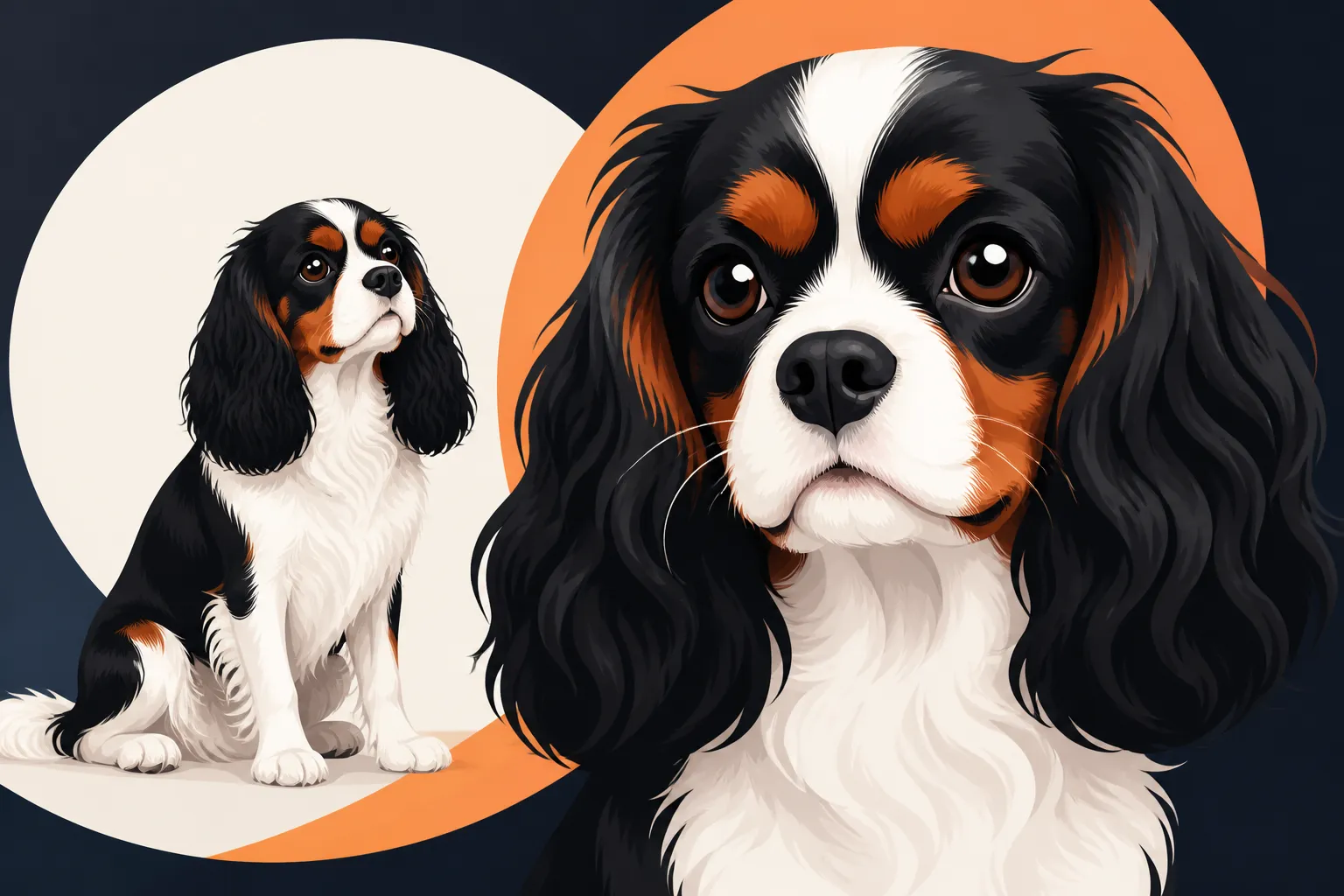
The Tricolor Cavalier
There's something truly striking about a Tricolor Cavalier King Charles Spaniel. That crisp, bold pattern of black, white, and those perfectly placed tan accents just captures your eye, doesn't it? If you're drawn to their distinct charm and want to understand everything from their genetics to their grooming needs, you've come to the right place. This guide will delve deep into what makes the Tricolor Cavalier so special, helping you appreciate their unique beauty and care for them properly.
What Defines a Tricolor Cavalier?
When you first see a Tricolor Cavalier, it's often love at first sight. Their coat isn't just a mix of colors; it's a carefully balanced canvas that gives them a sophisticated yet playful appearance. Unlike some breeds where "tricolor" might mean a muddy blend, in Cavaliers, it's about clear, well-defined patches that make each dog a unique work of art.
The Classic Markings
At its core, a Tricolor Cavalier boasts three distinct colors: a rich, solid black, a bright, pearly white, and warm, fiery tan points. Imagine a canvas of white, generously splashed with large, irregular patches of deep black, often extending over the body and ears. Then, to truly set them apart, strategically placed tan markings appear like little surprises. These tan spots usually grace the eyebrows, providing an expressive arch above their soft eyes, and dot their cheeks, adding warmth to their face. You'll also typically find tan on the inside of their ears and under their tail, almost like hidden treasures. It's this combination that creates the iconic look, distinguishing them from other The Four Cavalier Colors and What They Are Called.
The quality of these markings is more than just aesthetics; it speaks to the breed standard and the genetic blueprint. The black should be as dark and lustrous as possible, standing in stark contrast to the brilliant white. The tan should be a clear, deep reddish-brown, not a faded cream, and it should be well-pigmented without streaking into the white or black. When these three colors come together with such clarity, the result is truly breathtaking, showcasing the breed's elegance.
Placement and Pattern
The beauty of a Tricolor Cavalier often lies in the distribution of its colors. Ideally, the white forms the base, usually covering the chest, belly, and legs. The black patches are then overlaid, often on the back, sides, and across the ears. These patches are rarely symmetrical, which adds to the individual charm of each dog. However, there's a certain expectation for balance – you don't want a dog that looks almost entirely black with just a few white toes, nor one that's predominantly white with only tiny black specks.
The tan points are consistently found in specific areas, almost like a signature. Those adorable tan eyebrows are a hallmark, giving them that perpetually thoughtful or slightly worried expression that Cavalier owners adore. Tan is also typically present on the cheeks, lending a soft blush, and inside the ears, which sometimes causes a fun confusion with very light Blenheims from a distance. A neat tan marking under the tail, just where the plume begins, is another classic feature. These specific placements are not arbitrary; they are part of the breed standard that judges look for in the show ring and that breeders strive for.
Comparison to Other Cavalier Colors
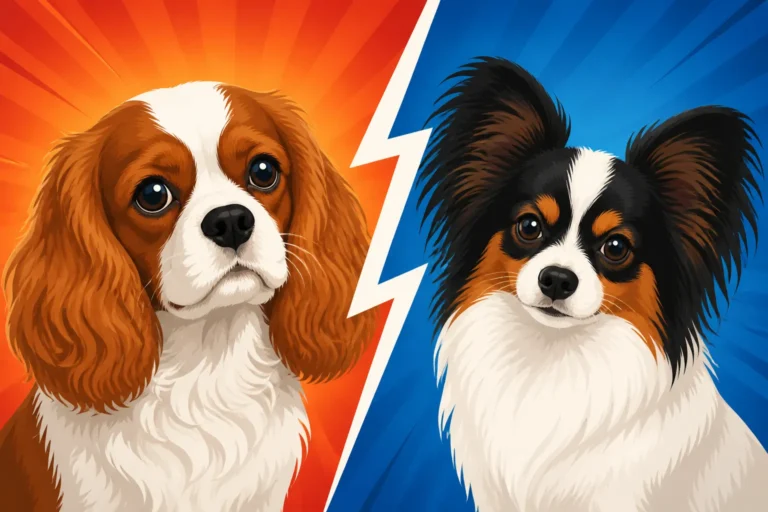
Understanding the Tricolor is often best done by comparing it to its siblings in the Cavalier family. The most common comparison is often made with The Blenheim Cavalier and Its Lozenge, which features chestnut and white, complete with its distinctive "lozenge" or thumbprint on the head. While both are particolor (meaning they have patches of color on a white background), the Blenheim lacks any black and uses a softer chestnut tone, giving it a much different visual appeal.
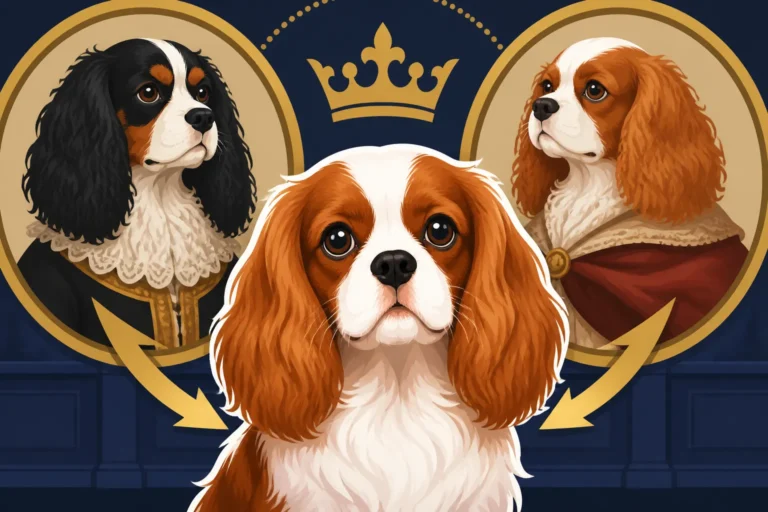
Then you have the whole-color Cavaliers: the What Makes a Ruby Cavalier a Whole Color and The Black and Tan Cavalier. Rubies are a solid rich red, with no white or black markings at all, radiating a uniform warmth. Black and Tans, while sharing the black and tan components of a Tricolor, completely lack the white base. They are solid black with the same tan points on the eyebrows, cheeks, and legs, offering a more somber, elegant look without the playful contrast of white. Each color has its loyal fans, but the Tricolor's distinct, contrasting pattern truly sets it apart in the Cavalier lineup.
Understanding the Tricolor Genetics
The specific combination of black, white, and tan in a Tricolor Cavalier isn't just a random occurrence; it's all thanks to some fascinating genetics. While we don't need to dive into a deep genetics textbook, understanding the basics can help you appreciate why these beautiful patterns appear and how breeders work with them.
The Genes at Play
The Tricolor pattern in a Cavalier is primarily governed by a few key genes. First, there's the gene that dictates whether a dog will be a "particolor" (having patches of color on a white background) or a "whole color" (solid color). Tricolors, like Blenheims, are particolors. Then, there are genes that determine the pigment colors themselves – black (or brown, if they carry that dilution gene) and the tan points. The tan points are a separate genetic expression, often called the "tan point gene," which specifies where those reddish-brown markings will appear on an otherwise black (or brown) dog. So, essentially, a Tricolor Cavalier has the genetic instructions for black pigment, for tan points, and for those colors to appear in patches on a white background. It's a marvelous symphony of genes working together to create that distinctive look.
This genetic dance ensures that the black areas are truly black, the tan areas are distinctly tan, and the white areas are clean. If a Cavalier carried genes for brown instead of black, you'd see a "Tricolor" with chocolate patches instead of black, often referred to as a "Chocolate Tricolor," though this is not a recognized color in the breed standard. The precise interplay of these genes means that responsible breeders understand how to produce these beautiful patterns consistently, ensuring the integrity of the color and the health of the lines.
Predicting Tricolor Pups
For breeders, understanding the genetics behind coat color is crucial. It's not a guessing game; there's a science to predicting which colors a litter might produce. When two Tricolor Cavaliers are bred, they are highly likely to produce more Tricolor puppies, as they both carry the necessary genes for black, tan points, and the particolor pattern. However, if a Tricolor is bred to a Blenheim, for example, the outcome can be more varied. Depending on the hidden recessive genes each parent carries, you might see a mix of Blenheims and Tricolors, or even Ruby and Black and Tan puppies if the parents carry those specific recessive genes.
Ethical breeders utilize genetic testing and pedigree knowledge to make informed breeding decisions. They aren't just breeding for color, of course; health, temperament, and conformation are always paramount. But knowing the color genetics helps them anticipate the puppies' appearances and ensure they are adhering to breed standards. It's a complex puzzle, but a rewarding one when those beautiful Tricolor puppies arrive, each with its unique placement of black, white, and tan.
Does Color Affect Temperament or Health?
This is a question I hear so often, and it's a really important one: does the color of a Cavalier's coat somehow influence their personality or their likelihood of having certain health issues? The simple, resounding answer is no. There is absolutely no scientific evidence or widespread anecdotal observation to suggest that Whether Cavalier Color Affects Temperament. A Tricolor Cavalier is just as likely to be the sweet, affectionate, and gentle companion that the breed is known for as a Blenheim, Ruby, or Black and Tan Cavalier. Their personality is shaped by their individual genetics (independent of coat color genes), early socialization, and the environment they grow up in.
Similarly, coat color has no known correlation with the major health concerns that can affect Cavaliers, such as Mitral Valve Disease, Syringomyelia, or patellar luxation. These health issues are linked to genetic predispositions within the breed as a whole, not to specific coat color genes. When you're looking for a Cavalier, whether Tricolor or any other color, focusing on the health clearances of the parents and the reputable practices of the breeder is infinitely more important than the coat color. A responsible breeder will prioritize health testing regardless of what color puppies they expect to produce.
Caring for a Tricolor's Coat
A Tricolor Cavalier's coat, with its distinct patches of white, black, and tan, requires consistent care to keep it looking its best. The challenge often lies in maintaining the pristine white areas while ensuring the darker colors remain rich and lustrous. It's a labor of love, but oh so worth it when your Cavalier looks like a showstopper.
Maintaining the Pristine White
Those bright white patches on a Tricolor Cavalier are absolutely stunning when they're clean, but they can also be a magnet for dirt, grass stains, and tear stains. Keeping the white parts looking pristine requires a little extra attention. Regular brushing is your first line of defense; it helps remove loose dirt before it gets ground into the fur. For those inevitable muddy adventures, a quick wipe-down with a damp cloth or a pet-safe grooming wipe can do wonders.
Tear staining, especially around the eyes and muzzle, can be particularly noticeable on white fur. Gently cleaning these areas daily with a damp cloth or a specialized tear stain remover can help prevent discoloration. You can find excellent gentle grooming wipes and tear stain solutions on sites like Chewy, which makes it easy to keep on top of things. For deeper cleaning, a whitening shampoo designed for dogs can be used during baths, but always follow the instructions carefully to avoid over-drying the coat or irritating the skin. Remember, consistency is key – a little daily effort goes a long way in preserving that bright, beautiful white.
General Grooming Needs
Beyond keeping the white areas sparkling, a Tricolor Cavalier's coat has general grooming requirements similar to other Cavaliers. Their silky, medium-length coat, complete with luscious feathering on the ears, chest, legs, and tail, needs regular attention to prevent matting and keep it healthy. Brushing a Cavalier's Feathering Three Times a Week is a good rule of thumb, using a slicker brush and a metal comb to gently work through tangles, especially behind the ears, in the armpits, and on the long leg and tail feathering.
Bathing should be done as needed, typically every 2-4 weeks, or whenever your Cavalier manages to find the muddiest puddle in the park! Use a good quality dog shampoo and conditioner to maintain the coat's softness and shine. After bathing, thoroughly dry the coat, paying special attention to the ears and feathering, to prevent dampness from leading to skin issues. A lukewarm blow dryer on a low setting can help fluff up the feathering beautifully. Investing in good grooming tools, perhaps from an online retailer like Chewy, will make these sessions much more effective and enjoyable for both of you.
Protecting the Coat's Luster
To truly protect the overall luster and health of your Tricolor Cavalier's coat, it's not just about brushing and bathing; it's about a holistic approach. A high-quality diet plays a huge role – good nutrition translates to a shiny, healthy coat. Omega-3 fatty acid supplements, if recommended by your vet, can also contribute to coat health and reduce shedding. Remember, Why a Cavalier Has No Undercoat, which means their single coat relies on good health to look its best.
Environmental factors matter too. Regular walks expose their coats to the elements, so being diligent about cleaning after outdoor adventures is important. During colder, drier months, static electricity can make brushing difficult and lead to breakage; a leave-in conditioner or anti-static spray can be very helpful. Finally, consider professional grooming every 6-8 weeks, especially if you struggle with keeping up with the feathering. A skilled groomer who understands Finding a Groomer Who Knows Cavalier Coats can provide sanitary trims, tidy up the feet, and give the coat a thorough conditioning treatment, ensuring your Tricolor Cavalier always looks its absolute best.
Tricolors in the Show Ring and Beyond
For those interested in the world of dog shows, or simply curious about breed standards, the Tricolor Cavalier holds a special place. Their distinct markings are not just beautiful, but they are also a key part of what makes them identifiable within the breed standard.
The AKC Standard for Tricolors
The American Kennel Club (AKC) breed standard for the Cavalier King Charles Spaniel is quite specific when it comes to coat colors, including the Tricolor. For a Tricolor, the standard looks for "black and white with tan markings over the eyes, on cheeks, inside ears, and on underside of tail." The key here is the clear distinction between the colors and the correct placement of the tan points. Judges are looking for rich, well-defined black patches against a clear white background, accented by those unmistakable tan points. A muddy blend where colors bleed into one another, or an absence of tan points, would be considered less than ideal.
While every Cavalier's health and temperament are paramount, in the show ring, the physical appearance, including coat color and markings, is judged against this detailed standard. The goal is to produce dogs that exemplify the breed's ideal characteristics, and a well-marked Tricolor is a stunning example of this. It's a meticulous process, but it ensures the preservation of the Cavalier's unique beauty, as outlined in The AKC Standard for the Cavalier King Charles Spaniel.
Common Variations and Their Acceptance
Even with strict breed standards, variations naturally occur in Tricolor Cavaliers. For instance, some Tricolors might have larger black patches, while others are predominantly white with fewer, smaller black markings. The size and intensity of the tan points can also vary, with some dogs having very subtle tan and others displaying bolder accents. These slight differences usually fall within the acceptable range of the standard. What's generally frowned upon in the show ring would be very mismatched or sparse markings, or a lack of the required tan points altogether.
It's important to remember that these variations in markings rarely impact the dog's health or temperament. A Cavalier with "less-than-perfect" show markings is still 100% Cavalier in heart and soul. For pet owners, these individual quirks often add to the dog's unique charm. Whether your Tricolor has bold, splashy black patches or a more delicate arrangement, they are still a beloved member of your family. The beauty of the breed is that even with standards, each dog retains its individual flair.
Popularity and Availability
Tricolor Cavaliers are quite popular, and for good reason—their striking appearance makes them stand out. They are typically seen with similar frequency to Blenheims, with Rubies and Black and Tans being slightly less common in some areas. Because they are a recognized and admired color, finding a Tricolor puppy from a reputable breeder is usually not overly difficult, though waiting lists are always possible for well-bred Cavaliers of any color.
The price of a Tricolor Cavalier puppy is generally consistent with other colors, as Whether Coat Color Changes a Cavalier's Price is rarely a significant factor for ethical breeders. Instead, price is usually determined by the breeder's reputation, health testing, pedigree, and geographical location. If you're looking for a Tricolor, your best bet is to connect with Cavalier breed clubs and reputable breeders who prioritize health and temperament first, regardless of the puppy's coat color. Finding a healthy, well-socialized puppy should always be the priority, and a responsible breeder will guide you to the perfect companion, Tricolor or otherwise.
| Cavalier Color | Primary Base Color | Secondary Color(s) | Key Distinguishing Features |
|---|---|---|---|
| Blenheim | White | Chestnut Red | Defined chestnut patches on white, often with a "lozenge" thumbprint on the head. |
| Tricolor | White | Black & Tan | Crisp black patches on white, with tan points over eyes, cheeks, inside ears, and under tail. |
| Ruby | Solid Red | None | Uniform, rich reddish-brown all over, no white or black markings. |
| Black and Tan | Solid Black | Tan | Solid black body with distinct tan points over eyes, on cheeks, chest, legs, and under tail. |
Disclaimer
This article is for general informational purposes only and does not constitute professional advice. Laws, prices and regulations vary by location and change over time. Consult a qualified professional for guidance on your specific situation.