Why Ruby Cavaliers Sometimes Show White
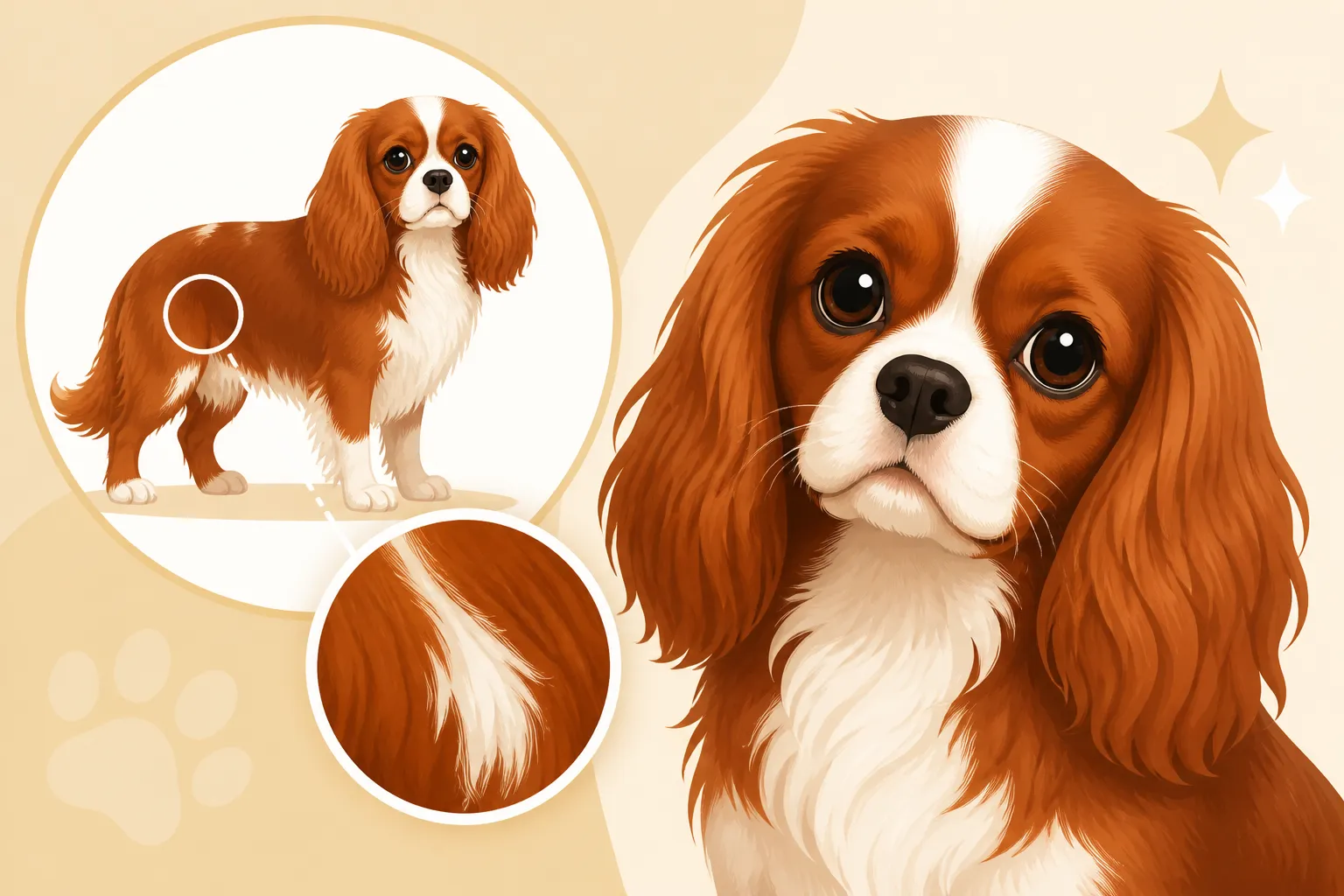
It's quite a common moment for Cavalier King Charles Spaniel owners, especially those who cherish their beautiful Ruby-colored companions: you expect that stunning, solid reddish-brown coat, and then you spot a tiny patch of white on the chest or a few white hairs on a paw. It can be a bit surprising, even confusing, to see these unexpected markings on what's supposed to be a "whole color" dog. This guide will walk you through why some Ruby Cavaliers display these charming little white flashes and what it means for your beloved friend.
Understanding the Ruby Cavalier's "Whole Color" Ideal
When we talk about a "Ruby" Cavalier, we're generally picturing a dog whose coat is a glorious, unbroken shade of reddish-brown. The official breed standards, like those set by the AKC, categorize Ruby as one of the "whole colors," meaning, ideally, there should be no white markings present at all. This is in contrast to the "parti-colors" like Blenheim or Tricolor, where white is not only expected but essential to their pattern.
The Purity of the Ruby Coat
For breeders and enthusiasts who show Cavaliers, the "purity" of a Ruby coat is a significant factor. They strive for a rich, uniform color across the entire body, from head to tail. Imagine a perfectly ripe cherry, or a burnished mahogany table – that's the kind of deep, consistent color they're aiming for. Even a tiny speck of white, sometimes called a "flash marking," can be considered a cosmetic fault in the show ring. It doesn't mean the dog isn't a Cavalier, of course, but it might mean they wouldn't be competitive under strict judging criteria.
It's important to remember that this "fault" is purely aesthetic. For pet owners like you and me, that little white patch often just adds a unique bit of character to our Cavaliers. It doesn't diminish their loving temperament or their health one bit. Your Ruby Cavalier is just as wonderful, whether their coat is completely solid or carries a tiny "star" on their chest. The journey to understand What Makes a Ruby Cavalier a Whole Color helps us appreciate the breeding efforts involved.
Genetic Factors Behind Solid Colors
The beautiful array of Cavalier colors—Blenheim, Tricolor, Black and Tan, and Ruby—are all determined by complex genetic interactions. A Ruby Cavalier, by definition, carries genes that are supposed to result in a solid, non-patterned coat. These are often referred to as "whole color" genes. However, the Cavalier King Charles Spaniel breed, like many others, has a rich and intertwined genetic history.
All Cavaliers, regardless of their visible coat color, carry a genetic heritage that includes parti-colored ancestors. The Blenheim pattern, with its distinct chestnut markings on a pearly white background, is iconic to the breed's origins. Even though a Ruby Cavalier expresses a solid color, they can still carry recessive genes for white spotting. It’s a bit like having blue eyes when both your parents have brown eyes but carry the recessive blue-eye gene. Sometimes, these recessive genes can manifest in a very minor way, leading to those small white patches we occasionally see. Breeders work diligently with genetic lines to strengthen the expression of solid colors, but genetics can be a wonderfully unpredictable thing! Understanding Predicting Cavalier Colors From the Parents involves delving into these fascinating genetic possibilities.
Why White Markings Appear on Ruby Cavaliers
This is the heart of the matter for many Ruby Cavalier owners. It truly boils down to the breed's genetic blueprint and how those genes express themselves. It's not a flaw, nor is it a sign of mixed breeding in a purebred Cavalier. It's simply a small, visible echo of their lineage.
"Flash Markings" and Residual White
The small white patches you might see on a Ruby Cavalier are often referred to as "flash markings" or "residual white." These are typically small, distinct areas of white hair found on certain parts of the body. The most common spots include the chest, especially a small patch that looks like a tiny star, or on the tips of the toes. You might also spot a few white hairs on the chin or a tiny spot on the muzzle.
Think of it as a subtle genetic "leak." While the primary genes are signaling "solid ruby," there's a minor influence from the genes that dictate white spotting. Because Cavaliers were, for centuries, bred with an emphasis on the parti-color patterns, those white-spotting genes are deeply ingrained in the breed's DNA. Even after focused breeding programs to produce solid colors, these small "flashes" can persist. They are completely normal and occur even in puppies from impeccably health-tested and well-bred parents.
The Influence of Parti-Color Genes
As mentioned, every Cavalier King Charles Spaniel, deep down in its genetic code, carries the history of its ancestors. The breed's foundation stock included many parti-colored dogs. Over generations, breeders selectively bred for solid colors like Ruby and Black and Tan. However, it's incredibly difficult, if not impossible, to entirely erase the genetic markers for white spotting from a breed's entire gene pool without introducing entirely new genetic material (which would mean outcrossing, a whole different discussion!).
So, even if a Ruby Cavalier looks entirely solid, they may still carry a recessive gene for white. If two solid-colored Cavaliers (like two Rubies or a Ruby and a Black and Tan) who both carry these recessive white-spotting genes are bred together, there's a chance their offspring might display a small amount of white, even if the parents themselves are completely solid. This is why you sometimes see a little white flash pop up unexpectedly in a litter of otherwise solid-colored puppies. It's a reminder of The Court Spaniels the Cavalier Descends From and their varied coats.
Not a Health Concern, But a Breed Standard Consideration
Let's get one thing crystal clear: those little white flashes on your Ruby Cavalier are absolutely not a health concern. They don't indicate any underlying medical issues, predispositions to disease, or impact their lifespan or quality of life in any way. Your dog is just as healthy, happy, and robust as a Cavalier with a perfectly solid coat. This is a purely cosmetic trait.
The only "concern" comes into play if you were planning to show your Ruby Cavalier in conformation events, where adherence to The AKC Standard for the Cavalier King Charles Spaniel is paramount. In such a scenario, a prominent white marking would likely be considered a fault and might prevent the dog from achieving top honors. However, for the vast majority of Cavalier owners who cherish their dogs as beloved family members, these markings are simply part of what makes their individual dog unique and special. It’s a bit like a beauty mark – it simply adds to their charm.
Common Locations for White Markings
When these "flash markings" do appear on a Ruby Cavalier, they tend to pop up in a few predictable places. Knowing these common spots can help you understand what to look for and also reassure you that what you're seeing is a normal variation, not something unusual or concerning.
Chest Patches and Toes
Without a doubt, the chest is the most frequent location for a small white patch on a Ruby Cavalier. This patch can range from just a few stray white hairs to a distinct, small white "star" or blaze. It's usually located right in the center of the chest, sometimes extending slightly onto the underside of the neck. It's often one of the first things a new puppy owner notices when they bring home their little Ruby bundle of joy.
Another very common spot for residual white is on the feet, specifically the toes. You might see just one or two white toes, or perhaps a small amount of white "tipping" on the very end of their nails, surrounded by a few white hairs. This is often more noticeable on the front paws but can appear on any of the four. These white markings are typically quite symmetrical if they appear on more than one foot. They are remnants of the parti-color genes that would otherwise create the full white 'socks' seen on Blenheim or Tricolor Cavaliers.
Chin and Muzzle "Frosting"
While less common than chest or toe markings, some Ruby Cavaliers might develop a small white spot on their chin or, occasionally, a very light "frosting" around their muzzle. This "frosting" tends to be more subtle than a distinct patch, appearing as a scattering of lighter, almost white, hairs mixed in with the ruby coat. Sometimes, this can be confused with the natural lightening of a dog's muzzle as they age, but in younger dogs, it's another form of a flash marking.
The chin spot is usually quite small and can be easily missed if you're not specifically looking for it. These areas, particularly the chin, are also common spots for white on Black and Tan Cavaliers, another "whole color" variety. It really reinforces the idea that these genetic predispositions for small white markings are present across all the solid-colored varieties of the breed.
What This Means for Ruby Cavalier Owners
If you're considering a Ruby Cavalier or already have one with these little white surprises, it’s helpful to understand the implications, especially when it comes to managing expectations with breeders and appreciating your dog for who they are.
Pet vs. Show Quality
The distinction between a "pet quality" and "show quality" dog is never more apparent than when discussing minor cosmetic faults like white markings on a solid-colored Cavalier. A show-quality Ruby Cavalier, to excel in the conformation ring, would ideally have absolutely no white anywhere on its body. Judges are looking for perfect adherence to the breed standard, which for a Ruby, means a uniformly solid reddish-brown coat. Even a small white patch could mean points deducted or a lower placement.
However, for a cherished family pet, these white markings are utterly meaningless. They do not impact the dog's health, temperament, trainability, or capacity for love. Your "pet quality" Ruby with a white chest flash is just as much a purebred Cavalier as its "show quality" sibling. In fact, many owners find these unique markings endearing, making their dog even more distinctive. When you’re choosing a puppy, unless your ambition is to compete in high-level conformation, a tiny white spot should certainly not be a deal-breaker. Focus on the health and temperament above all else. Whether a Cavalier Is Worth Three Thousand Dollars or any other price point, is ultimately about the whole dog, not just a cosmetic detail.
Discussing with Breeders
When you are looking for a Ruby Cavalier puppy, especially if you have a strong preference for an entirely solid coat, it's always a good idea to have an open conversation with your breeder. Reputable breeders, who prioritize health, temperament, and adherence to the breed standard, will be transparent about their lines. They can tell you if their particular breeding pairs have a history of producing puppies with minor flash markings, even if the parents themselves appear solid. They'll also be able to explain the genetic realities of The Cavalier MVD Breeding Protocol and other health tests they perform.
It's completely fair to ask about the likelihood of white markings. However, also understand that genetics can sometimes throw a curveball. Even the most experienced and dedicated breeders cannot guarantee a 100% white-free Ruby Cavalier every single time, though they strive for it. What they can guarantee is a healthy, well-socialized puppy from health-tested parents. When Buying a Cavalier From a Health-Testing Breeder, remember to ask for all relevant health clearances and to understand the whole picture, not just the coat color. A responsible breeder will be happy to discuss The Heart Testing a Cavalier Breeder Must Do and Whether a Cavalier Breeder Should Show You Heart Papers.
| Characteristic | Ideal Ruby Cavalier | Ruby Cavalier with White Markings |
|---|---|---|
| Coat Color | Uniform, rich reddish-brown, no white. | Predominantly reddish-brown, with small white patches. |
| Breed Standard | Meets "whole color" ideal, no white allowed in show ring. | Considered a minor cosmetic fault in the show ring. |
| Common Locations | Entirely solid. | Chest ("star"), toe tips, chin, occasional muzzle frosting. |
| Health Implications | None. | None whatsoever. |
| Temperament/Personality | Unaffected. | Unaffected. |
| Pet Quality | Excellent. | Excellent – markings often add unique charm. |
| Show Ring Suitability | High, assuming other standard points are met. | Limited for conformation, but suitable for other dog sports. |
Ultimately, a Ruby Cavalier with a little splash of white is just as much a Cavalier as one without. These small markings are a delightful reminder of the breed's rich genetic tapestry and should be embraced as part of what makes your dog uniquely yours. As you explore options for feeding your beautiful Cavalier, remember that Chewy offers a fantastic range of premium foods and treats for all dietary needs, whether your pup is perfectly solid or rocks a little white flash. They have everything from specialized diets to delicious, healthy treats to keep your Cavalier happy and thriving.
Disclaimer
This article is for general informational purposes only and does not constitute professional advice. Laws, prices and regulations vary by location and change over time. Consult a qualified professional for guidance on your specific situation.