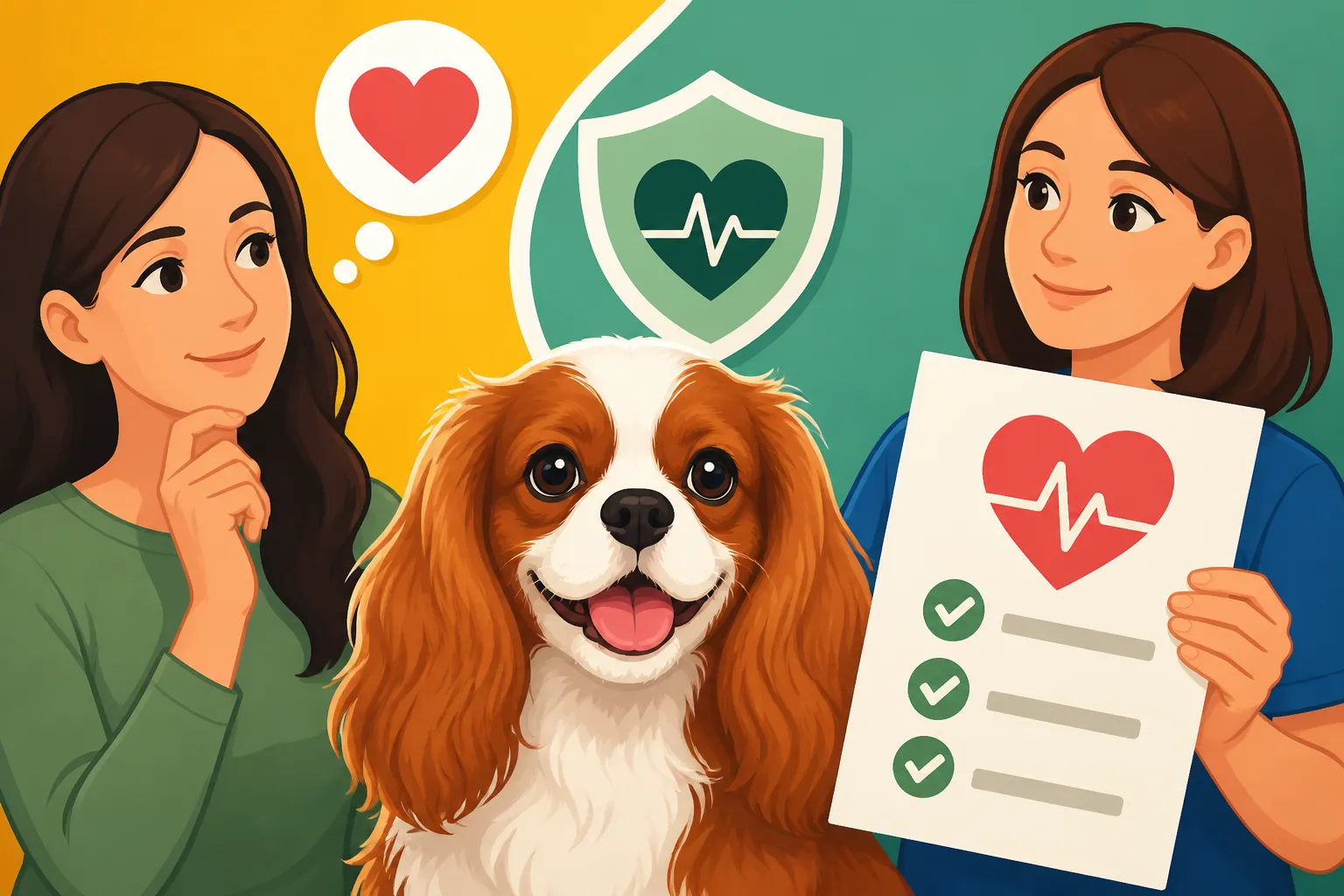
Whether a Cavalier Breeder Should Show You Heart Papers
Bringing a sweet, playful Cavalier King Charles Spaniel puppy into your home is one of life's greatest joys, full of tiny wagging tails and endless snuggles. Yet, a hidden worry often lingers for new owners: the devastating potential of early-onset heart disease. Many people feel overwhelmed trying to navigate breeder claims and health guarantees, often discovering too late that crucial preventative steps were missed. This guide is here to empower you, detailing precisely why and how to demand and understand genuine heart health papers from any Cavalier breeder, helping you choose a puppy with the best possible start in life.
Why Heart Papers Are Absolutely Crucial for Cavaliers
It’s no secret among Cavalier enthusiasts and veterinarians alike: our beloved breed has a heartbreaking predisposition to Mitral Valve Disease, often shortened to MVD. This isn’t just a slight risk or a common ailment that affects a few dogs; it’s an intrinsic challenge to the breed's health, impacting a vast majority of Cavaliers as they age. If you’re considering a Cavalier, understanding this reality is step one in being a responsible owner and making a truly informed choice.
Think of it this way: for many breeds, certain health issues are a lottery. For Cavaliers and MVD, it’s more like a certainty if they live long enough, but the crucial question is when it starts and how quickly it progresses. Mitral Valve Disease is a degenerative condition where the mitral valve in the heart, responsible for preventing blood from flowing backward, slowly thickens and leaks. This leak puts extra strain on the heart, leading to enlargement, fluid buildup in the lungs, and eventually, heart failure. The earlier it starts, the more aggressive it tends to be, and the shorter your precious Cavalier's life will likely be. You can learn more about Mitral Valve Disease in the Cavalier King Charles Spaniel to fully grasp its impact.
The ethical responsibility of a breeder, then, is not just to produce beautiful puppies, but to make every effort to breed dogs that are less likely to develop severe MVD at an early age. This is where heart papers come in. These aren't just pieces of bureaucratic documentation; they are evidence of a breeder's commitment to the health and longevity of their puppies and, by extension, to your future emotional and financial well-being. Imagine falling head over heels for a puppy, only to face a diagnosis of advanced heart disease by age three or four. The emotional toll of watching your young companion struggle, combined with the escalating vet bills, can be truly devastating. This isn't just a hypothetical scenario; it's the lived reality for many who unknowingly purchased puppies from untested lines.
Responsible breeders understand this weight. They know that breeding healthy puppies is a long-term investment in the breed's future and in the happiness of the families who adopt their dogs. They invest time, money, and careful planning into health screenings, not just for MVD, but for other common Cavalier ailments like Syringomyelia and eye conditions. They view heart testing as a cornerstone of their breeding program, a non-negotiable step to ensure they are not inadvertently passing on severe predispositions to their puppies. This commitment directly influences the quality of life your Cavalier will have and how many happy years you get to spend together.
Understanding What "Heart Papers" Actually Mean: Not All Vet Checks Are Equal
When a breeder says their dogs are "vet-checked" or "have a clean bill of health," it sounds reassuring, doesn't it? But for a Cavalier, when it comes to heart health, those phrases can be dangerously misleading. There's a world of difference between a general veterinary check-up and a thorough cardiac examination performed by a board-certified veterinary cardiologist. Understanding this distinction is absolutely paramount in evaluating a breeder's claims.
A routine annual vet visit typically includes listening to your dog's heart with a stethoscope – what's called auscultation. A general practitioner can certainly detect a heart murmur this way, and if they hear one, they'll usually recommend a referral to a specialist. However, a murmur is simply the sound of turbulent blood flow, and while it indicates something is happening, it doesn't tell you the severity, the cause, or how fast it's progressing. More critically, a heart that doesn't have an audible murmur at a young age isn't necessarily a heart free from the early stages of MVD. The disease can be silently progressing long before a murmur becomes detectable by a stethoscope, especially in younger dogs.
This is precisely why a "heart paper" from a reputable Cavalier breeder must originate from a board-certified veterinary cardiologist. These specialists have advanced training and equipment dedicated solely to diagnosing and treating heart conditions. Their examination goes far beyond a stethoscope. The gold standard for assessing MVD in Cavaliers is an echocardiogram – essentially an ultrasound of the heart. What a Cavalier Echocardiogram Shows will give you a deeper dive into this vital diagnostic tool. An echo allows the cardiologist to visualize the heart's structure, measure the thickness of the valves, assess blood flow, detect leaks, and measure the size of the heart chambers. This gives a precise, objective picture of the heart's health and the stage of any MVD present.
Responsible breeders follow a guideline known as The Cavalier MVD Breeding Protocol. This isn't some arbitrary suggestion; it's a carefully developed recommendation by veterinary cardiologists and breed clubs aimed at reducing the incidence and severity of early-onset MVD. A cornerstone of this protocol is that breeding Cavaliers should not be bred until they are at least five years old and have received annual cardiac clearances from a board-certified cardiologist, with no murmur detected. This critical age requirement exists because MVD often doesn't manifest with an audible murmur until a dog is older. Breeding dogs before they've reached this age, even if they have a "clear" stethoscope check, risks passing on the genes for early-onset MVD, simply because the disease might not have had time to become detectable yet. You'll find more information on Why a Cavalier Should Not Be Bred Before Five if you want to understand the science behind this guideline.
So, when a breeder claims their dogs are heart-clear, your next question should always be: "Clear by whom, and with what diagnostic tools?" If the answer isn't "a board-certified veterinary cardiologist, using echocardiograms, and following the MVD breeding protocol," then you need to proceed with extreme caution. This vigilance is your best defense against future heartbreak and significant veterinary expenses.
What to Look For When a Breeder Shows You Papers: Due Diligence is Your Best Friend
Alright, you’ve asked the right questions, and the breeder has agreed to show you their heart papers. Fantastic! This is a good sign, but your job isn't over. Now, you need to know exactly what to look for on those documents to ensure they are legitimate, current, and truly reflect a commitment to health. Just having a piece of paper isn't enough; the content of that paper is everything.
First and foremost, look for official certifications from recognized registries. In the United States, the primary registry for cardiac health clearances is the Orthopedic Foundation for Animals (OFA). A breeder should be able to provide OFA Cardiac clearances for both the sire (father) and dam (mother) of your prospective puppy. These clearances will be listed as "Normal" or "Clear" and will include the specific date of the examination. Ideally, you want to see a CHIC (Canine Health Information Center) number associated with the parent dogs. A CHIC number signifies that a dog has had all the health tests recommended by the parent club for its breed (including hearts, eyes, patellas, and often DNA tests for Episodic Falling and Dry Eye/Curly Coat syndromes) and that those results are publicly available in a centralized database. This level of transparency is a huge green flag.
Next, pay very close attention to the dates of the examinations. According to the Cavalier MVD breeding protocol, parent dogs should ideally have annual heart clearances performed by a board-certified cardiologist, and critically, they should be at least five years old at the time of their most recent "clear" exam for breeding purposes. If the papers show a clearance from when the dog was two or three years old, that's simply not sufficient evidence of a low risk for early-onset MVD. The disease often doesn't show up until later. So, if the sire is six and the dam is five, and their most recent heart clearances are from when they were four and three respectively, those papers are outdated and do not meet the protocol. You need to verify Whether a Cavalier Breeder's Heart Clearance Is Current.
Crucially, the name of the cardiologist should be clearly visible, along with their signature. Don't be shy about looking up their credentials online to ensure they are indeed a board-certified veterinary cardiologist. A general vet's signature on a cardiac clearance might sound good, but it doesn't carry the same weight as a specialist's. The papers should also clearly identify the specific dog by its registered name and often its microchip or tattoo number. Ensure these details match the parent dogs the breeder is presenting to you.
Here’s a handy table to help you distinguish between what you should see and what should raise a red flag:
| Feature | Acceptable Heart Papers | Red Flags to Watch For |
|---|---|---|
| Issuer | Board-certified veterinary cardiologist | General practice veterinarian, breeder's own assessment, no document |
| Certification Body | OFA (Cardiac), CHIC number, or equivalent national registry | No formal registration, just a "vet check" note |
| Parental Age at Exam | Dam and Sire examined after 5 years old (as per MVD Protocol) | Parents under 5 years old at time of heart clearance |
| Date of Exam | Current (within 12 months) and regularly updated | Old, expired, or non-existent papers |
| Type of Exam | Echocardiogram with cardiologist's report | Stethoscope auscultation only, brief general vet check |
| Documentation | Official signed report with specific findings, clear dog ID | Vague verbal assurances, handwritten notes, missing details |
If a breeder is hesitant, offers excuses, or shows you documents that don't meet these standards, it's a major cause for concern. Remember, you have every right to ask for these documents. A truly responsible breeder will be proud to share them and even walk you through what they mean. They understand that this transparency builds trust and helps educate prospective owners. Don't let yourself be rushed or intimidated. This due diligence is a critical step in bringing home a healthy Cavalier. You’ll also want to review The Paperwork a Cavalier Puppy Should Arrive With to ensure you're getting everything you need.
The Risks of Skipping Heart Paper Verification: The Hidden Costs of Uninformed Choices
It’s easy to get swept up in the excitement of a new puppy. Those big, soulful eyes and soft, floppy ears can make anyone melt. But choosing a Cavalier without verifying proper heart health papers from the parents can lead to a host of heartbreaking and expensive consequences down the line. Many people, often through no fault of their own, overlook this critical step and find themselves facing a future they never anticipated.
The emotional toll is arguably the heaviest burden. Imagine bringing home your sweet puppy, watching them grow, only for them to start coughing, tiring easily, or even fainting by the time they are three or four years old. This is often the cruel reality for Cavaliers with early-onset MVD. Watching your beloved companion struggle with a progressive heart condition, knowing their lifespan is significantly shortened, is profoundly upsetting. You wanted a lifelong friend, and instead, you're constantly worried about their next breath. The joy of puppyhood can be overshadowed by the looming specter of chronic illness, and this sadness is a cost that money can’t fix.
Beyond the emotional heartache, there's the significant financial burden. While you absolutely adore your dog and would do anything for them, the costs associated with treating MVD can be substantial. Initially, there are specialist cardiologist visits and repeat echocardiograms to monitor the disease’s progression. Annual Cardiologist Exams for a Cavalier become a regular part of your life. Once medication is needed – and it usually is – those costs become ongoing. Drugs like Pimobendan, Furosemide (a diuretic), and ACE inhibitors are often lifelong requirements. These prescriptions can run into considerable sums each month, adding up over years. Emergency visits for acute heart failure, fluid buildup in the lungs, or needing oxygen therapy can escalate bills rapidly. You can get an idea of What Cavalier Heart Disease Costs to Treat to prepare for potential expenses. Many owners find themselves wishing they had invested in pet insurance early on. Companies like Healthy Paws can offer a lifeline, but critically, insurance needs to be in place before any symptoms or diagnoses appear, otherwise, it's considered a pre-existing condition and won't be covered.
Then there’s the impact on your Cavalier’s quality of life and your own daily routine. A dog with advanced MVD may have limitations on exercise. They might tire quickly on walks, struggle with stairs, or need to avoid strenuous play. Your routine might revolve around precise medication schedules. Special diets, often low in sodium to help manage fluid retention, might be necessary. You can find many specialized foods and supplements on pet supply retailers like Chewy, and even fresh-prepared options from services like Ollie, but these often come at a premium. The whole family's life can revolve around managing the dog's condition, which, while done out of love, is a demanding commitment.
Finally, skipping heart paper verification opens you up to the risk of inadvertently supporting unethical breeding practices, including puppy mills. These operations often prioritize profit over health, churning out puppies with little to no regard for genetic health testing or proper care of the parent dogs. They might offer vague assurances, claim papers were "lost," or even present fake documents. Learning to spot Cavalier Puppy Scams and Fake Heart Certificates is crucial for protecting yourself and avoiding perpetuating a cruel industry. While the immediate price of a puppy from an untested line might seem lower, the long-term emotional and financial costs almost always far outweigh any initial savings. Choosing a breeder who provides clear, verifiable heart papers is not just an investment in your puppy's health; it's an investment in your peace of mind and the ethical future of the Cavalier King Charles Spaniel breed.
Disclaimer
This article is for general informational purposes only and does not constitute professional advice. Laws, prices and regulations vary by location and change over time. Consult a qualified professional for guidance on your specific situation.