Deafness and Hearing Loss in Cavaliers
Discovering your beloved Cavalier isn't responding to their name or the joyful jingle of their leash can be a truly heartbreaking and confusing experience for any owner. It's a silent struggle that often goes unnoticed for too long, leaving us wondering how to best support our furry family members. This comprehensive guide will walk you through everything you need to know about deafness and hearing loss in Cavalier King Charles Spaniels, from spotting the subtle signs to adapting your life together.
Understanding Hearing Loss in Cavaliers
Hearing loss in our Cavaliers isn't always a straightforward "can't hear a thing" situation. It can range from a partial impairment, where certain sounds are missed, to complete deafness. Understanding the different ways hearing can be affected is the first step in providing the best care for our beloved companions.
Congenital Deafness in Cavaliers
Sometimes, a Cavalier is born with little to no hearing capacity, a condition known as congenital deafness. This isn't something that develops over time; it's present from birth. For our Cavaliers, this is often linked to genetic factors, particularly related to pigment. While not as prevalent as in some other breeds like Dalmatians or white Boxers, congenital deafness can still occur in Cavaliers, especially in those with piebald or merle patterns (though merle is not a recognized Cavalier color).
When a puppy is congenitally deaf, the structures within the inner ear responsible for transmitting sound signals to the brain may not have developed correctly. It’s not about an infection or trauma; it’s a foundational issue. Owners might not notice this immediately, especially in a litter where puppies are often playing together and reacting to siblings rather than sound cues from humans. A puppy might seem a little more startled when touched unexpectedly, or they might sleep through loud noises that would rouse their littermates. This is why early testing is so important, as discussed in our article on Congenital Deafness in a Cavalier.
Acquired Hearing Loss Causes
Much more common than congenital deafness is acquired hearing loss, which develops over time due to various factors. Our Cavaliers, with their beautiful, long, drop ears, are particularly susceptible to certain conditions that can lead to a decline in hearing. Chronic ear infections, for instance, are a significant culprit. When left untreated or if they recur frequently, these infections can cause permanent damage to the ear canal and eardrum, hindering sound transmission. You might find more detailed information about why their ears are prone to issues in Why a Cavalier's Drop Ears Trap Infection.
Beyond infections, age-related hearing loss, medically known as presbycusis, is a natural part of aging for many dogs, just like it is for humans. The tiny hair cells in the inner ear that detect sound can wear out over years of use, leading to a gradual decline in hearing. Other causes can include severe head trauma, exposure to certain ototoxic medications (drugs that can damage the ear), or even tumors within the ear canal. It’s a spectrum of possibilities, and identifying the cause is crucial for potential treatment or management.
The Difference Between Deafness and Hearing Impairment
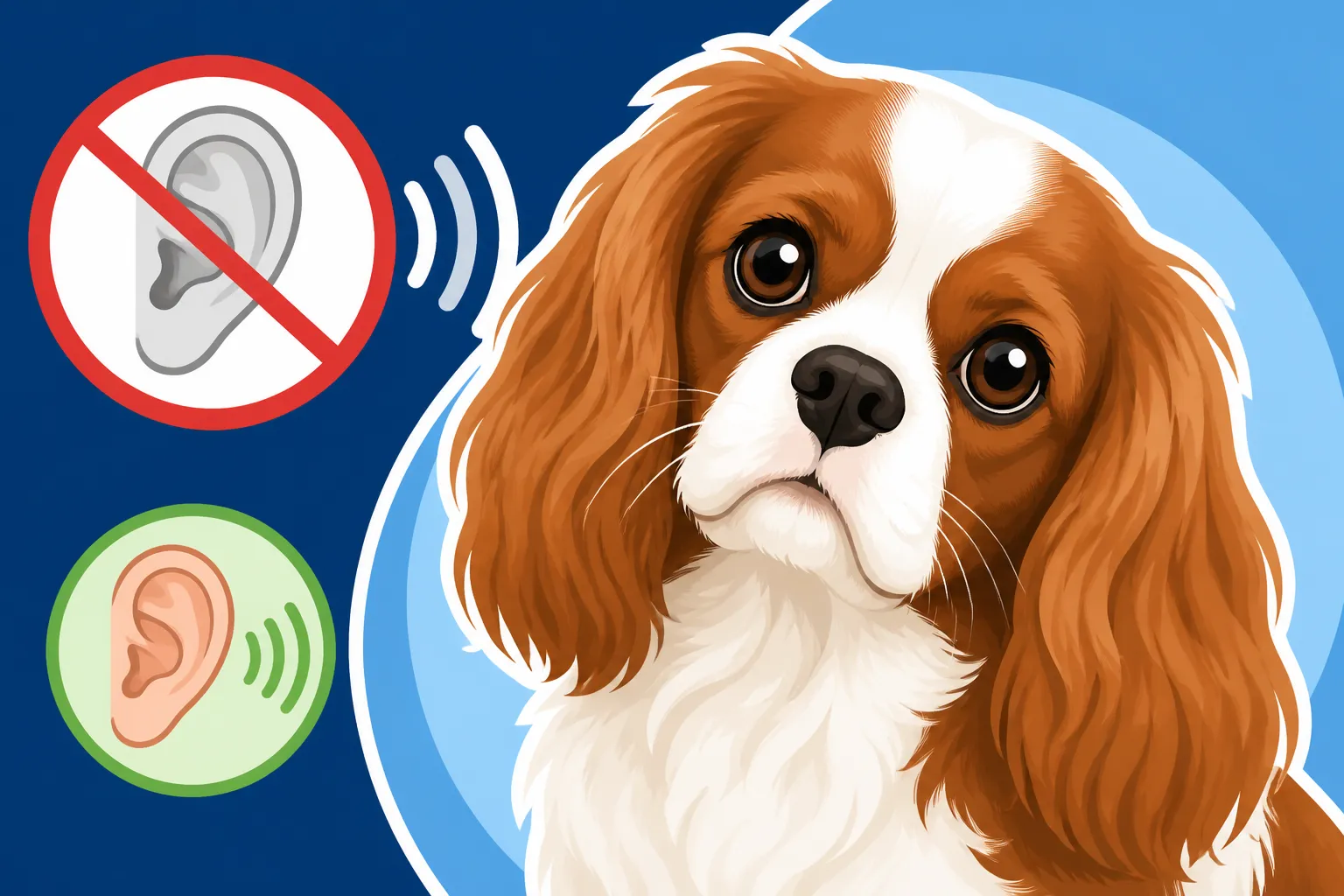
It’s important to distinguish between complete deafness and partial hearing impairment. A deaf Cavalier hears absolutely nothing, existing in a world of silence. They rely entirely on their other senses – sight, smell, and touch – to navigate their environment and interact with you. This requires significant adaptations in how you communicate and ensure their safety.
On the other hand, a Cavalier with hearing impairment might have reduced hearing in one or both ears, or they might struggle to hear certain frequencies. Perhaps they can hear loud claps but not soft whispers, or they respond to the rustle of a treat bag but not their name. This partial loss can be even trickier to detect, as their responses might be inconsistent. They might hear you perfectly well when you’re facing them, but miss commands when your back is turned. This nuanced difference means the approach to management and training will vary, demanding patience and keen observation from their devoted owners.
Recognizing the Signs of Hearing Problems
Spotting hearing loss early can make a world of difference in how you manage your Cavalier's health and daily life. It's not always obvious, especially when their other senses compensate so well. But once you know what to look for, the signs often become clearer.
Subtle Clues in Puppyhood
When you bring home a Cavalier puppy, you're usually wrapped up in all the adorable puppy antics. But sometimes, a puppy might be showing subtle signs of hearing loss that are easy to miss. One common clue is if your puppy is unusually quiet; they might not vocalize as much because they can't hear their own barks. Conversely, some deaf puppies can be louder because they don't have auditory feedback. You might notice they startle easily when approached from behind or touched unexpectedly, because they haven't heard you coming.
Another sign might be a lack of response to sounds that typically excite or engage puppies, like squeaky toys, the vacuum cleaner, or even your voice when you call them from another room. If you clap your hands loudly behind them and they don't twitch an ear or turn their head, that's a red flag. It’s not that they’re ignoring you; they simply haven't registered the sound. These early observations are vital, especially when considering the importance of early intervention and training adaptations.
Behavioral Changes in Adult Cavaliers
As Cavaliers age, or as hearing loss progresses, you might start noticing more definitive behavioral shifts. Perhaps your once-attentive companion now ignores you when you call their name from another room, only responding when you enter their line of sight. They might sleep more soundly and not wake up to noises that used to rouse them, like the doorbell or traffic outside. Sometimes, they might seem confused or disoriented because they’re missing auditory cues from their environment.
One common frustration for owners is when their dog appears to be "ignoring" commands they once knew perfectly. It’s easy to think they’re being stubborn, but often, they simply haven't heard you. This can be especially noticeable if you have a dog with Chronic Ear Disease and Cavalier Hearing Loss, where the deterioration is gradual. They might also bark excessively out of frustration or anxiety because they can't interpret their surroundings as they once did. Keep an eye on how they react to other dogs; they might miss subtle barks or growls, leading to miscommunications in social interactions.
When to Suspect Something is Wrong
It's time to consider a veterinary visit if you consistently observe any of these patterns:
- Your Cavalier stops responding to their name, even when you're close.
- They don't react to familiar sounds like the doorbell, food bowl clinking, or car keys.
- They sleep through loud noises.
- They become more jumpy or easily startled when touched.
- They bark more, or less, than usual.
- They have difficulty locating the source of a sound.
- They tilt their head frequently, as if trying to hear better.
- They frequently have ear infections or shake their head a lot.
If you suspect hearing loss, it's always best to consult your vet. Sometimes, what looks like hearing loss could be related to other health issues, such as pain from Syringomyelia and Chiari Malformation in Cavaliers, which can affect their neurological responses. A thorough check-up is always the first step.
Diagnosing Deafness and Hearing Loss
Once you've noticed the signs, the next step is getting a proper diagnosis. It can be unnerving to realize your Cavalier might be struggling, but pinpointing the issue is crucial for moving forward and providing them with the best quality of life.
Initial Vet Examination and Basic Tests
When you first bring your Cavalier to the vet with concerns about hearing loss, the veterinarian will start with a comprehensive physical examination. They’ll carefully inspect the ears, looking for any obvious blockages, infections, excessive wax buildup, foreign bodies, or signs of inflammation. This initial check is vital because many cases of hearing impairment are temporary and treatable, caused by issues like severe ear infections or impacted earwax. For example, if your Cavalier has been suffering from Cavalier Ear Infections and Why They Recur, addressing the underlying infection might restore some hearing.
The vet might also perform some basic auditory response tests in the examination room. This could involve making various sounds (clapping, squeaking a toy, calling their name) out of sight and observing your Cavalier's reaction. While these tests aren't definitive, they can help gauge the severity of the suspected hearing loss and determine if further, more specialized diagnostics are needed. It’s a starting point to rule out the simpler, more common causes before moving on to advanced testing.
The BAER Test Gold Standard
For a truly accurate and objective assessment of your Cavalier's hearing, the Brainstem Auditory Evoked Response (BAER) test is the gold standard. This sophisticated test is non-invasive and measures the electrical activity in the brainstem in response to auditory clicks delivered through earphones. Essentially, it assesses whether sound signals are reaching the brain. The test is typically performed by a veterinary neurologist or a specialized audiologist, and often requires sedation to ensure the dog remains still.
During a BAER test, small electrodes are placed on your Cavalier's head, which record the brain's activity. The results are displayed as a waveform on a computer screen. A normal waveform indicates that the sound is being processed correctly by the auditory pathway, while an absent or abnormal waveform suggests hearing loss in that ear. The BAER test can detect complete deafness as well as unilateral deafness (deafness in only one ear), which can be particularly hard to spot at home. This test is highly recommended for all Cavalier puppies from breeding lines with any history of deafness, and for any dog where hearing loss is suspected. Understanding these costs upfront can be a bit daunting, but many owners find peace of mind with pet insurance. Companies like Healthy Paws can often cover a significant portion of these diagnostic tests, which can be a huge relief.
Exploring Other Diagnostic Avenues
While the BAER test is definitive for measuring auditory function, other diagnostic tools might be employed to investigate the underlying cause of acquired hearing loss. If an infection is suspected, your vet will likely take a swab from the ear canal for cytology (microscopic examination) and culture to identify the specific bacteria or yeast present. This guides the choice of appropriate medication.
In cases where physical damage or tumors are a concern, advanced imaging techniques like MRI or CT scans might be recommended. These scans can provide detailed images of the internal structures of the ear and surrounding bone, identifying issues that aren't visible during a regular ear exam. If your vet suspects a neurological component to the hearing loss, they might refer you to a veterinary neurologist. Remember, diagnosing the cause of hearing loss is just as important as diagnosing the loss itself, as it dictates whether treatment is possible or if management is the only option. Again, this is where having pet insurance through providers like Healthy Paws can truly help, by offsetting the costs of these specialized consultations and imaging procedures, allowing you to focus on your Cavalier's health.
Here’s a helpful table summarizing common signs and diagnostic approaches:
| Sign of Hearing Loss (Observable) | Potential Cause(s) | Initial Vet Step | Definitive Diagnostic Test |
|---|---|---|---|
| No response to name/loud noises | Congenital deafness, acquired loss | Physical ear exam, auditory response test | BAER test |
| Startling easily when touched | Congenital deafness, acquired loss | Physical ear exam | BAER test |
| Excessive barking or unusual quietness | Congenital deafness, acquired loss, anxiety | Behavioral history, physical exam | BAER test |
| Frequent head shaking, ear scratching | Ear infection, ear mites, foreign body | Otoscopic exam, ear swab cytology/culture | None (if infection is the cause) |
| Disorientation, bumping into objects | Severe hearing loss, neurological issue | Physical exam, neurological exam | BAER test, MRI/CT scan |
| Unresponsive to sounds from behind | Unilateral or bilateral hearing loss | Auditory response test | BAER test |
Managing Life with a Hearing-Impaired Cavalier
Living with a deaf or hearing-impaired Cavalier presents unique challenges, but it also deepens the bond you share. It requires patience, creativity, and a willingness to adapt your routines to their needs.
Communication Strategies and Training Adaptations
One of the biggest adjustments is learning new ways to communicate. Since verbal cues are out, visual cues become paramount. Start by teaching hand signals for basic commands like 'sit,' 'stay,' 'come,' and 'down.' Consistency is key; always use the same signal for the same command. Many resources are available for teaching hand signals, and most Cavaliers pick them up surprisingly quickly because they are so eager to please. Using a strong, positive reinforcement approach, similar to what you'd find in Training a Cavalier With Praise Rather Than Pressure, works wonders.
Another invaluable tool is a vibrating collar (not a shock collar!). This collar delivers a gentle vibration, which acts as a "tap" on the shoulder, signaling your Cavalier to look at you for a visual command. It's incredibly useful for getting their attention when they're not looking at you, especially in larger spaces or outdoors. Introduce it positively with treats, associating the vibration with good things. For puppies, early socialization is still crucial; expose them to different sights, smells, and textures, as their other senses will be heightened.
Ensuring Safety Indoors and Outdoors
Safety is a primary concern for hearing-impaired Cavaliers. Indoors, make sure your home is "deaf-proofed." This means being mindful of your approach so you don't startle them. Use gentle taps on the shoulder or stomping lightly on the floor to create vibrations to get their attention before petting them. Consider a bell on your own shoe so they can "feel" you coming. Keep them on a leash or in a securely fenced yard outdoors, always. A deaf dog cannot hear an approaching car, a bicycle, or another dog, making them incredibly vulnerable. The risks highlighted in Whether a Cavalier Has No Traffic Sense are magnified tenfold for a deaf dog.
Never let a deaf Cavalier roam off-leash in an unfenced area. A long line can be a great training tool for practicing recall with hand signals in a safe, open space. Consider clearly marked collars or vests that say "Deaf Dog" to inform others, especially if your Cavalier is sociable and approaches strangers. This helps people understand why your dog might not respond to their voice and encourages them to approach carefully. Even with careful precautions, unexpected situations can arise. It's during these times, from emergency vet visits to specialist consultations, that having a robust pet insurance plan like those offered by Healthy Paws can provide immense peace of mind, covering a significant portion of unexpected veterinary bills.
Enrichment and Mental Stimulation
Just like any Cavalier, hearing-impaired dogs need plenty of mental and physical enrichment to stay happy and healthy. While they might not engage with squeaky toys, they'll thrive on activities that stimulate their other senses. Scent work, for example, is fantastic. Hide treats around the house or yard and encourage them to sniff them out. Puzzle toys that dispense treats when manipulated are also excellent for mental engagement.
Visual games, like following a laser pointer (with caution not to overdo it) or playing fetch with a brightly colored toy, can keep them physically active. Regular walks in varied environments offer a rich tapestry of smells and sights. Group training classes can still be beneficial, especially those focused on visual cues and body language, though it's wise to find a trainer experienced with deaf dogs. The goal is to provide a full, rich life where their lack of hearing doesn't limit their opportunities for joy and engagement.
Preventing and Mitigating Hearing Issues
While some forms of hearing loss are unavoidable, there are proactive steps Cavalier owners and breeders can take to reduce the risk and impact of hearing problems.
Responsible Breeding Practices
For congenital deafness, the most effective prevention lies in responsible breeding. Breeders should adhere to ethical practices by not breeding any Cavalier that is known to be congenitally deaf, and certainly not breeding two carriers if a genetic link is identified. Dogs from lines with a history of congenital deafness should ideally undergo BAER testing before being bred to ensure they have normal hearing. This diligence helps prevent the passing of genetic predispositions to future generations. Breeders who participate in initiatives like the Cavalier MVD Breeding Protocol often extend their health screening to other potential issues, including hearing.
Purchasing a puppy from a reputable breeder who performs all recommended health clearances, including BAER testing if relevant to their lines, is paramount. Always ask to see the health certificates of the parents and inquire about any history of deafness in the lineage. This transparency is a hallmark of ethical breeding aimed at producing healthy, well-adjusted puppies.
Proactive Ear Health Maintenance
Acquired hearing loss due to chronic ear infections is often preventable or manageable with diligent ear care. Our Cavaliers' long, floppy ears create a warm, moist environment that's perfect for yeast and bacteria to thrive. Regular, routine ear cleaning is crucial. You can learn more about the correct techniques in Cleaning a Cavalier's Ear the Right Way.
Make Daily Ear Checks on a Cavalier a habit. Look for redness, swelling, discharge, or any unusual odor. If you spot any of these signs, consult your vet immediately. Prompt treatment of ear infections is vital to prevent them from becoming chronic and causing irreversible damage to the delicate structures of the inner ear. Neglecting ear infections can lead to serious complications, including not just hearing loss but also pain and discomfort that can significantly impact your Cavalier's quality of life.
Protecting Against Noise-Induced Damage
While less common than other causes, loud noises can potentially contribute to hearing damage in dogs, just as they do in humans. While you can't put earplugs in your Cavalier, you can take steps to protect their sensitive ears from excessively loud or prolonged noise exposure.
Avoid exposing your Cavalier to very loud concerts, fireworks displays (or keep them indoors in a quiet, protected space), or prolonged exposure to loud machinery. If you live in an environment with constant high-decibel noise, creating a quiet retreat for your Cavalier indoors can be beneficial. While the occasional loud bang is unlikely to cause permanent damage, repeated exposure to extreme noise levels can take a toll on those delicate inner ear structures over time. Think about how you protect your own hearing, and extend that same consideration to your Cavalier. It’s a small step that contributes to their overall long-term ear health and comfort.
Disclaimer
The information provided in this article is for general informational purposes only and is not a substitute for professional veterinary advice. Always consult with a qualified veterinarian for any health concerns or before making any decisions related to your pet's care.