Static in a Cavalier Coat in Winter
Winter static in Cavalier King Charles Spaniel coats and how to remove it by restoring moisture to dry fur and home air.
The daily stuff, done right.
Feeding amounts by life stage, coat and skin routines, dental and nail care, exercise needs, and what changes as they age.
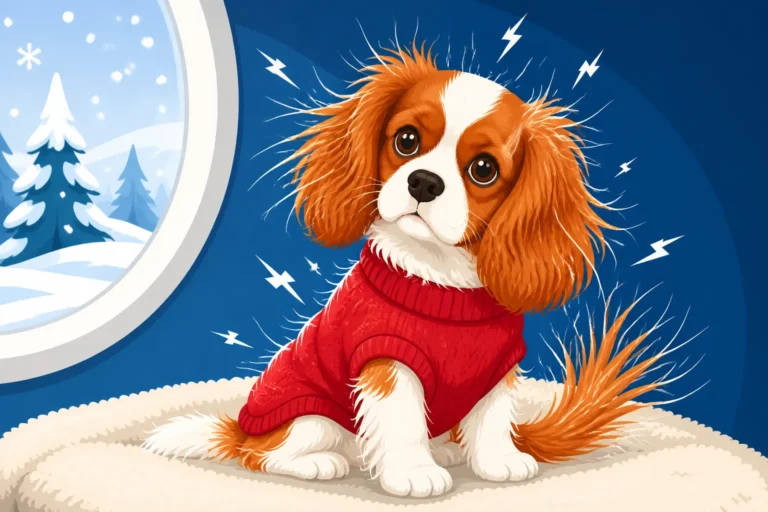
Winter static in Cavalier King Charles Spaniel coats and how to remove it by restoring moisture to dry fur and home air.
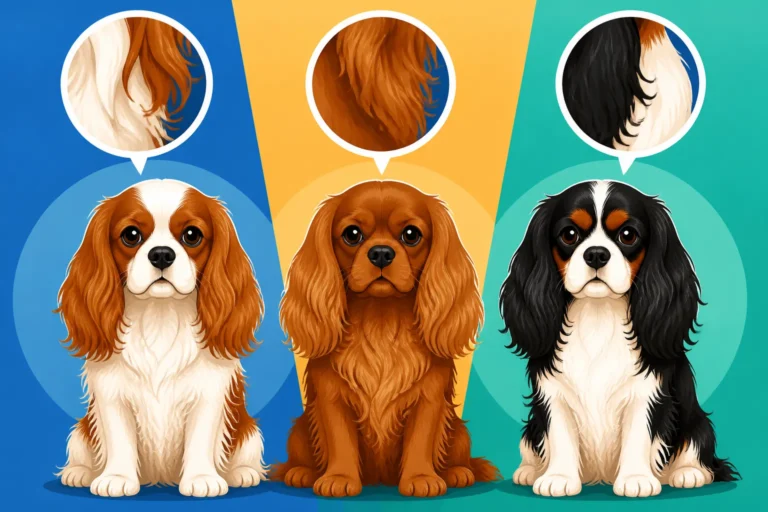
Cavalier King Charles Spaniel feathering differences across Blenheim, Tricolor, Ruby, and Black and Tan coat colors and textures.

Ruby and black and tan Cavalier coats differ in appearance, genetics, and grooming needs, requiring brushing three times weekly.
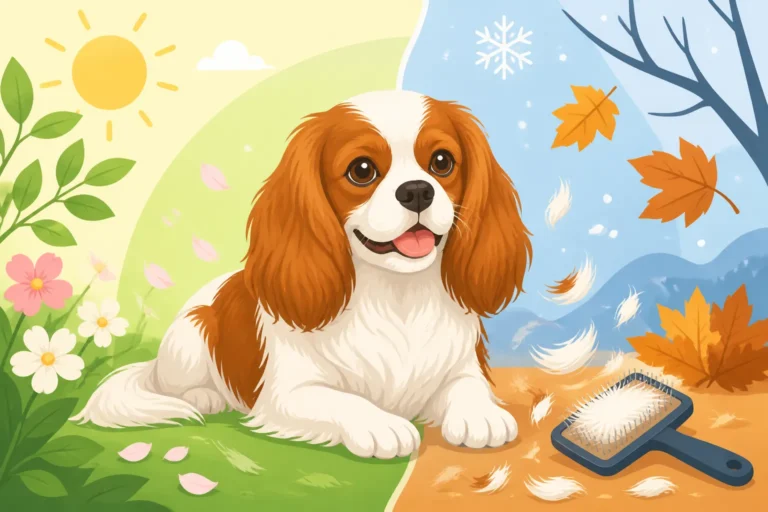
Seasonal shedding in Cavaliers differs from double-coated breeds because these dogs possess a single coat of long guard hairs.
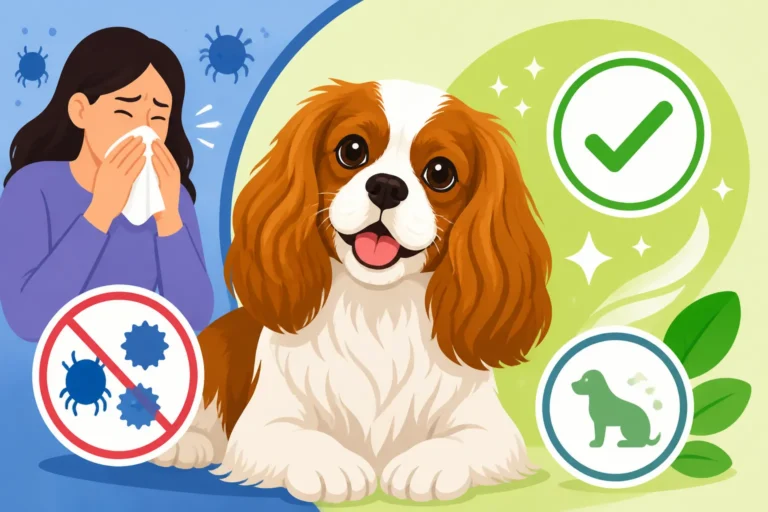
Cavalier King Charles Spaniel dogs produce dander and shed moderately, making them a poor choice for people who battle dog allergies.
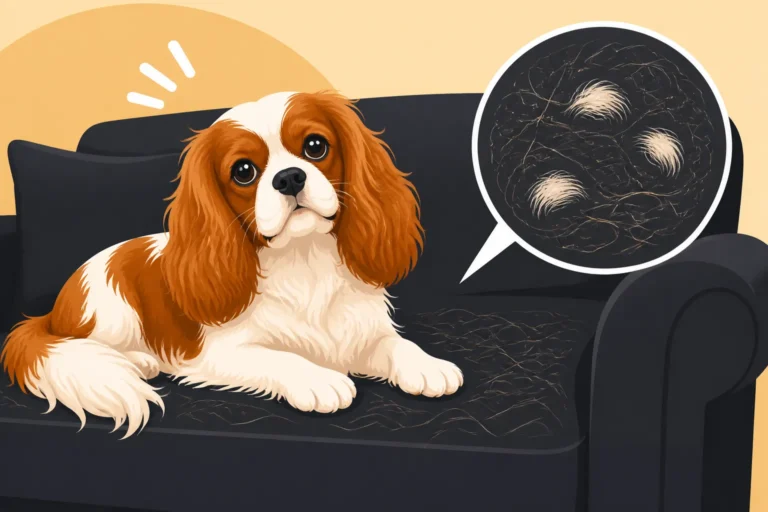
Cavalier King Charles Spaniel shedding patterns and practical strategies manage dog hair on dark upholstery and furniture.
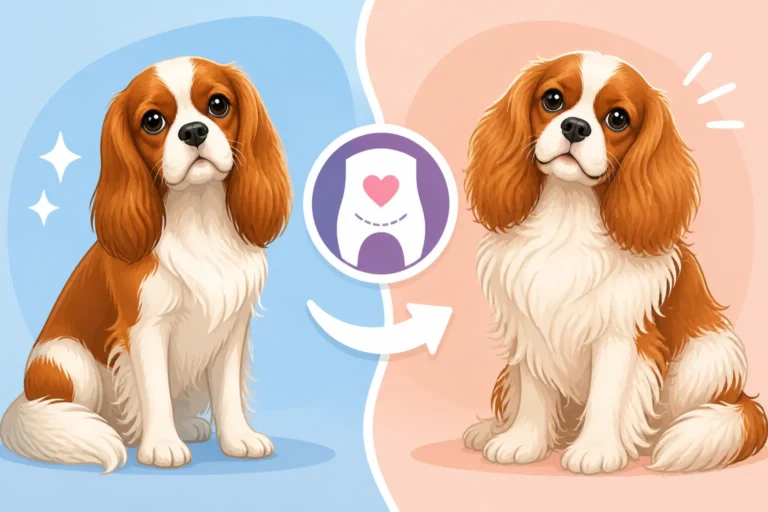
Spayed Cavalier King Charles Spaniel coat changes cause fluffier fur on ears, legs, and chests, explaining why spay coat happens.
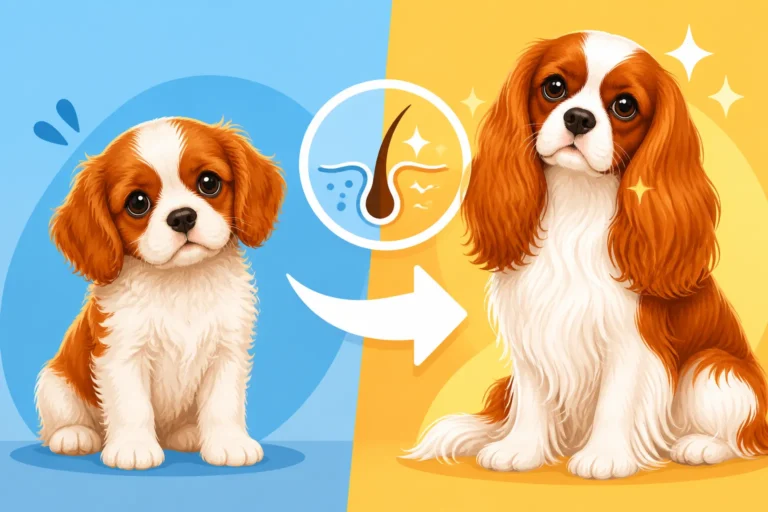
Cavalier King Charles Spaniel coat changes at one year explain the shift from soft puppy fuzz to longer adult feathering and texture.
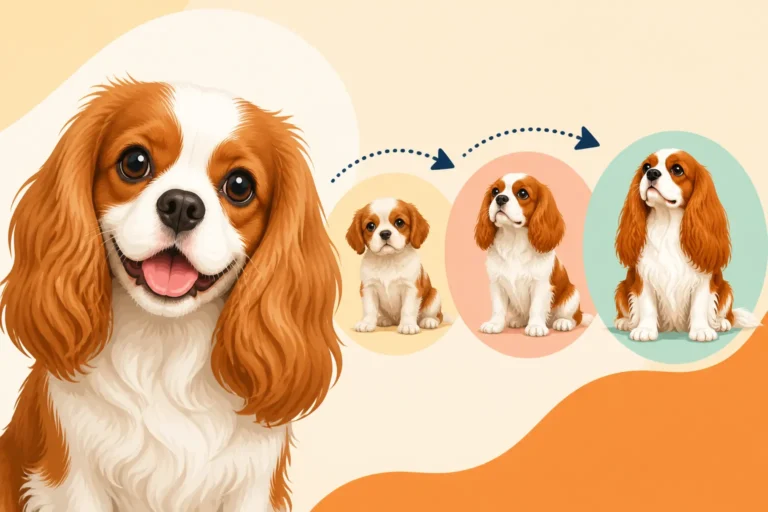
Cavalier King Charles Spaniel coat regrowth depends on age, health, and the anagen, catagen, and telogen hair growth phases.
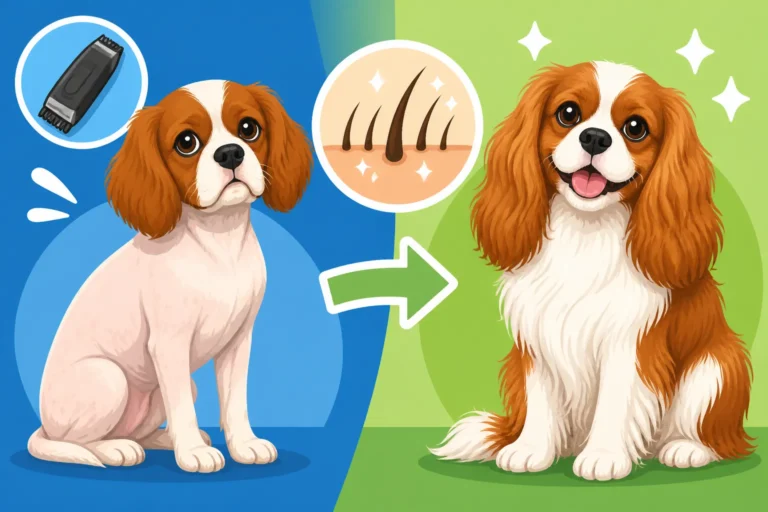
Cavalier King Charles Spaniel coat clipping disrupts silky hair follicles, causing coarser and curlier regrowth that mats faster.