Whether a Cavalier Murmur Always Means Disease
It’s absolutely terrifying to hear your veterinarian utter the words “heart murmur” when examining your beloved Cavalier King Charles Spaniel. Instantly, your mind races to the worst-case scenarios, often fueled by the widespread knowledge that Cavaliers are prone to heart disease. But here's the honest truth: a heart murmur doesn't automatically seal your Cavalier's fate or mean they're in immediate danger. This guide will walk you through what a murmur really is, when it’s serious, and what you need to do next to ensure your furry friend lives their best life.
Understanding What a Heart Murmur Means
When your vet listens to your Cavalier's chest with a stethoscope, they're listening to the rhythm and sounds of blood flowing through the heart. A heart murmur is simply an extra or unusual sound heard during this process. Instead of a clear "lub-dub," there's a whooshing, swishing, or even rumbling sound. This sound is caused by turbulent blood flow, much like how rapids in a river create a different sound than a calm stream.
The Science Behind the Sound
Imagine your Cavalier's heart as a beautifully intricate plumbing system. Blood flows through different chambers and valves, all designed to move it in one direction smoothly. If there's anything that disrupts this smooth flow—a leaky valve, a narrowing of a vessel, or even just thinner-than-normal blood—it can create turbulence. This turbulence is what the vet hears as a murmur. It's a symptom, not a diagnosis in itself. Think of it like a car making a strange noise; the noise tells you something's up, but it doesn't instantly tell you if it's a minor squeak or a major engine problem.
Not All Murmurs Are Created Equal
The intensity and timing of a murmur are key pieces of information your vet uses. Murmurs are typically graded on a scale of I to VI, with I being very faint and VI being very loud and easily felt through the chest wall. A grade I or II murmur might be subtle and hard to detect, while a grade V or VI murmur would be impossible to miss. Additionally, murmurs are classified by when they occur in the heart's cycle (systolic, diastolic, or continuous). Most murmurs associated with Mitral Valve Disease (MVD) in Cavaliers are systolic, meaning they happen when the heart contracts.
A quiet murmur, especially in a young, healthy puppy, might simply be what's called a "physiologic" or "innocent" murmur. These are usually benign and often disappear as the puppy grows. However, in a Cavalier, especially an adult, any murmur should be taken seriously and investigated further due to their genetic predisposition to certain heart conditions. It's truly a breed where "better safe than sorry" applies to heart health.
When a Murmur Does Indicate Mitral Valve Disease (MVD)
For Cavalier King Charles Spaniels, the unfortunate reality is that a newly detected heart murmur often, though not always, signals the onset of Mitral Valve Disease (MVD). This is the most common heart condition in the breed, affecting a staggering number of Cavaliers at relatively young ages compared to other breeds. It’s the elephant in the room that every Cavalier owner dreads discussing.
The Cavalier's Unique Predisposition
Cavaliers are genetically predisposed to developing MVD, with many showing signs by age five, and almost all by age ten. This early onset and high prevalence make it a defining health challenge for the breed. The mitral valve, located between the left atrium and left ventricle, acts like a one-way door, ensuring blood flows forward through the heart. In MVD, this valve degenerates and thickens, preventing it from closing properly. When it doesn't close tightly, a small amount of blood leaks backward into the left atrium with each heartbeat. This backward flow is the turbulence your vet hears as a murmur.
The presence of a murmur, especially in an adult Cavalier, should always prompt a referral to a veterinary cardiologist for further evaluation. It's not just a "wait and see" situation because the disease can progress silently for years before clinical signs like coughing or exercise intolerance become apparent. Understanding the progression of the disease, which you can learn more about in resources like How Cavalier Heart Disease Progresses Stage by Stage, can help you prepare for the journey ahead. The age a murmur usually appears in a Cavalier is often earlier than in other breeds, highlighting the urgency of monitoring.
Correlating Murmur Grade with Disease Severity
While a higher murmur grade generally indicates more severe blood leakage through the mitral valve, it's not a perfect diagnostic tool on its own. A loud murmur doesn't automatically mean your Cavalier is in immediate heart failure, just as a quiet murmur doesn't guarantee the disease is mild. The murmur grade simply reflects the amount of turbulence, which usually correlates with the volume of blood leaking.
For example, a Cavalier with a Grade III or IV murmur might be asymptomatic, meaning they show no outward signs of illness. However, this murmur tells us the valve is definitely leaking, and the disease is present. Conversely, a very high-grade murmur might suggest significant leakage that could eventually lead to cardiac remodeling and heart failure. This is why a thorough cardiac workup is crucial; the murmur is the first clue, but the full picture comes from advanced diagnostics. Ignoring a murmur in a Cavalier is rarely an option, as it’s often the first, and sometimes only, early warning sign of Mitral Valve Disease in the Cavalier King Charles Spaniel.
Other Reasons a Cavalier Might Have a Murmur
While MVD is a major concern for Cavaliers, it's important to remember that not every murmur points to this specific disease. There are several other reasons a murmur might be detected, some benign, and others indicating different cardiac or systemic issues. It's crucial not to jump to conclusions, but rather to follow up with proper diagnostics.
Benign or Physiological Murmurs
Sometimes, especially in puppies, a murmur can be completely harmless. These are often called "innocent" or "physiological" murmurs. They occur due to rapid blood flow, perhaps because the heart is working harder during a growth spurt, excitement, or even when the puppy is slightly anemic. These murmurs are typically low-grade (I or II), heard best over specific areas of the chest, and usually disappear by the time the puppy is around 4-6 months old.
If your young Cavalier puppy has a very faint murmur, your vet might recommend simply monitoring it with rechecks. However, even with an innocent murmur, given the breed's MVD predisposition, it's still wise to remain vigilant and ensure the murmur truly resolves. It’s also important to ensure you’re reading a Cavalier puppy's health certificates and understanding any early findings.
Murmurs Caused by Other Conditions
Beyond MVD, other conditions can lead to a heart murmur in a Cavalier. These can broadly be categorized into non-cardiac issues and other, less common, structural heart problems.
-
Non-Cardiac Causes:
- Anemia: When a Cavalier is anemic, their blood is thinner, which allows it to flow more turbulently, creating a murmur. Treating the underlying cause of anemia usually resolves the murmur.
- Fever or Infection: A high fever or systemic infection can increase heart rate and blood flow, leading to a temporary murmur. Once the infection is cleared, the murmur often disappears.
- Stress or Excitement: Just like in humans, a dog's heart can beat harder and faster when they're stressed or excited, temporarily altering blood flow and causing a murmur. This is less common as a sole cause but can sometimes exacerbate an existing, minor murmur.
- Hypoproteinemia: Low protein levels in the blood can also make blood thinner, similar to anemia, leading to turbulent flow and a murmur.
-
Less Common Structural Heart Issues:
- While MVD is prevalent, other congenital heart defects can also cause murmurs. These might include conditions like patent ductus arteriosus (PDA), a persistent vessel that should have closed after birth, or various types of septal defects (holes in the heart walls). These are far less common in Cavaliers than MVD, but they do occur.
- In some rare instances, narrowing of major blood vessels (like aortic or pulmonic stenosis) can cause murmurs, leading to conditions that are usually more severe and present earlier in life.
The key takeaway here is that a murmur is a sign, not the full story. A thorough diagnostic workup is always warranted to differentiate between these various possibilities and accurately pinpoint the cause in your Cavalier.
Essential Next Steps After a Murmur Diagnosis
Hearing your Cavalier has a heart murmur can be unsettling, but knowing what steps to take next will empower you and give your dog the best possible care. Don't panic; instead, take a deep breath and prepare for a comprehensive approach.
The Critical Role of a Cardiologist Referral
The single most important step after your primary vet detects a heart murmur in your Cavalier is to get a referral to a board-certified veterinary cardiologist. While your general practitioner is excellent for routine care, a cardiologist has specialized training, equipment, and experience in diagnosing and managing heart conditions. They are experts in interpreting complex cardiac diagnostics. An annual cardiologist exam for a Cavalier is highly recommended, especially once a murmur is detected. They can provide insights and guidance that a general vet simply might not have.
Key Diagnostic Tests
Once you’re with a cardiologist, they will typically recommend a series of tests to accurately diagnose the cause and severity of the murmur. These aren't just for confirmation; they're essential for staging the disease and guiding future treatment.
- Echocardiogram: This is the gold standard for diagnosing MVD and other structural heart diseases. An echocardiogram is essentially an ultrasound of the heart. It allows the cardiologist to visualize the heart's chambers, valves, and major blood vessels in real-time. They can see if the mitral valve is thickening or leaking, measure the size of the heart chambers, assess heart muscle function, and determine the velocity of blood flow. This non-invasive test is absolutely crucial, as it will reveal What a Cavalier Echocardiogram Shows regarding the actual state of the heart.
- Chest X-Rays: Often performed in conjunction with an echo, chest X-rays provide an image of the lungs and the overall size and shape of the heart within the chest cavity. They are particularly useful for detecting signs of heart enlargement or fluid accumulation in the lungs (pulmonary edema), which indicates congestive heart failure. X-rays help determine if your Cavalier is symptomatic or nearing a critical stage. You can learn more about Chest X-Rays in a Cavalier Heart Workup to understand their importance.
- Electrocardiogram (ECG): An ECG measures the electrical activity of the heart. While not primary for diagnosing MVD, it can identify arrhythmias (irregular heartbeats) that sometimes accompany advanced heart disease.
- Blood Tests (NT-proBNP): A relatively newer diagnostic tool, the NT-proBNP blood test measures a specific hormone released by the heart when its muscle cells are stretched or under stress. Elevated levels can indicate significant cardiac disease and help predict the risk of developing congestive heart failure. This is not a standalone diagnostic but can be a valuable piece of the puzzle, especially when combined with imaging. More details can be found on A Cavalier Heart Blood Test Called NT-proBNP.
Monitoring, Management, and Financial Planning
After diagnosis, the cardiologist will establish a monitoring schedule. This typically involves regular re-evaluations, often every 6-12 months, which may include follow-up echocardiograms and X-rays to track the disease's progression. Depending on the stage of MVD, medication may be prescribed. For example, if the heart is significantly enlarged but your Cavalier isn't yet showing symptoms of heart failure, drugs like Pimobendan might be started to slow disease progression. If your Cavalier is already coughing due to fluid in the lungs, diuretics and other medications will be necessary.
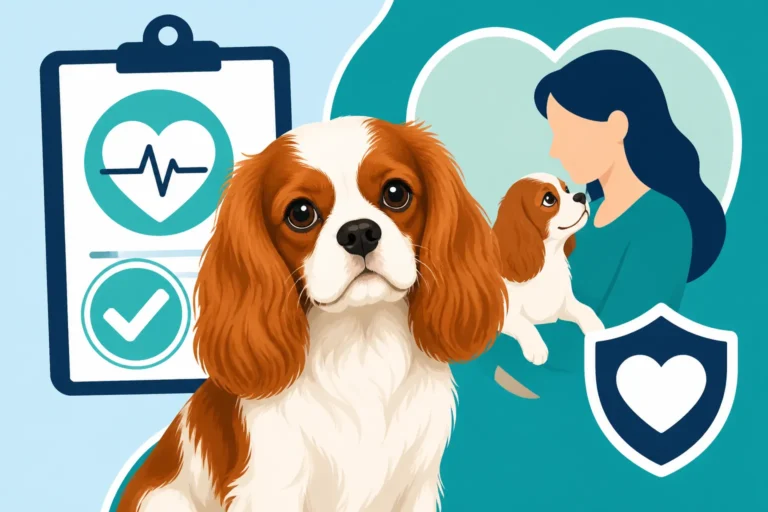
The costs associated with diagnosing and managing heart disease can quickly add up, so having a good pet insurance plan can be a real lifesaver. Many Cavalier owners choose to enroll in pet insurance, and a provider like Healthy Paws often offers comprehensive coverage for diagnostics, specialist visits, and medications once your plan is active. It’s important to note that heart murmurs, once detected, usually become a pre-existing condition, so it’s wise to consider pet insurance while your Cavalier is young and healthy, before any murmurs are detected, as many plans, including those from Healthy Paws, consider pre-existing conditions. Don't wait until you hear the murmur; look into options from reputable providers like Healthy Paws early on to help offset potential future expenses for conditions like MVD. Learning about Insuring a Cavalier Before the Murmur Arrives can help you make an informed decision.
| Murmur Grade | Description | Typical Cavalier Significance | Recommended Action |
|---|---|---|---|
| I | Very faint, difficult to hear | Potentially innocent (especially in puppies), but warrants close monitoring. | Consult primary vet, consider cardiologist referral if persisting or in adult. |
| II | Faint, but consistently audible | Likely MVD in adult Cavaliers, possibly innocent in puppies. | Cardiologist referral for echocardiogram highly recommended. |
| III | Moderately loud, easily heard | Almost certainly MVD in adult Cavaliers, indicates significant leakage. | Urgent cardiologist referral for echo, X-rays. Begin monitoring/medication as advised. |
| IV | Loud, audible over wide area, no thrill | Severe MVD, likely with significant heart remodeling. | Urgent cardiologist workup (echo, X-rays, blood tests). Medication almost certainly indicated. |
| V | Very loud, with a palpable thrill | Advanced MVD, high likelihood of congestive heart failure. | Emergency cardiologist visit. Immediate diagnostic workup and stabilization. |
| VI | Very loud, audible with stethoscope off chest | End-stage MVD, often in overt heart failure. | Emergency stabilization, intensive care, and aggressive medical management. |
This table provides a general guide. Only a veterinary cardiologist can provide an accurate diagnosis and treatment plan for your Cavalier. Understanding What a Heart Murmur Grade Means in a Cavalier can help you interpret the initial findings, but it's the comprehensive diagnostics that provide the true picture. While the journey with a Cavalier with MVD can be long and challenging, with proper care and early intervention, many dogs can live happy, comfortable lives for years after diagnosis. Don't let the word "murmur" paralyze you; let it empower you to take proactive steps for your beloved companion.
Disclaimer
The information provided in this article is for general informational purposes only and is not a substitute for professional veterinary advice. Always consult with a qualified veterinarian or veterinary cardiologist regarding any health concerns or before making any decisions about your Cavalier King Charles Spaniel's medical care.