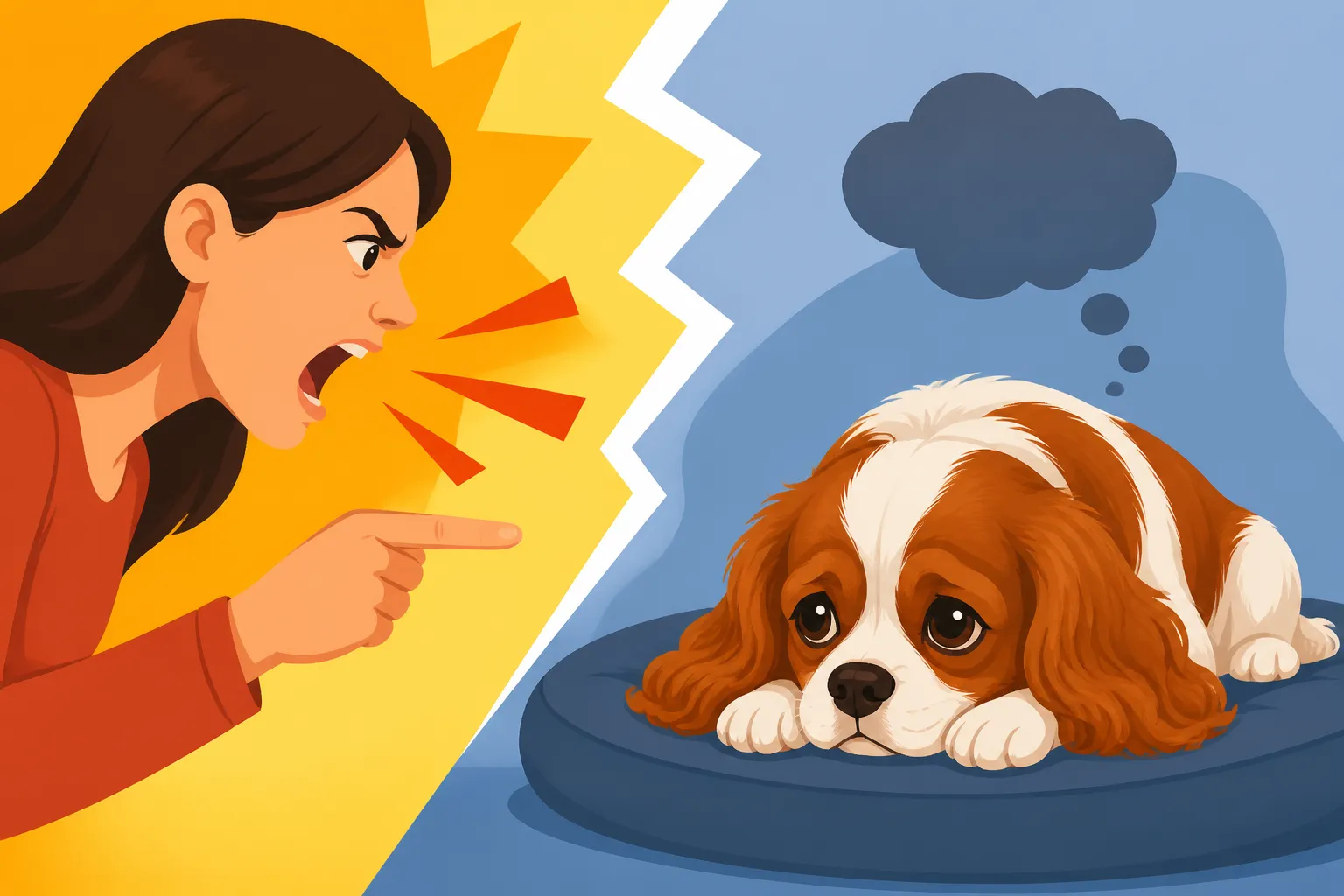
Why Shouting Sets a Cavalier Back Weeks
It’s incredibly frustrating when you’re trying to teach your sweet Cavalier something new, and they just aren’t getting it. You might feel your patience wearing thin, and perhaps, in a moment of exasperation, you raise your voice. We’ve all been there, feeling the pressure to make progress. But with a Cavalier King Charles Spaniel, shouting doesn't just feel bad in the moment; it actively undermines weeks, even months, of training effort and can deeply damage your bond. This guide will explore why Cavaliers are uniquely sensitive, how harsh corrections backfire, and how to build a lasting, positive training foundation that truly works.
The Sensitive Nature of Cavaliers
Cavalier King Charles Spaniels are renowned for their gentle, affectionate, and people-oriented personalities. They are often described as "Velcro dogs" for a reason, thriving on companionship and close connection with their human families. This innate desire to please and bond makes them incredibly receptive to positive reinforcement, but it also means they are profoundly sensitive to perceived harshness or anger. They aren't built for tough love or disciplinary tactics that involve yelling or intimidation.
A Breed Bred for Companionship
Think about the history of the Cavalier. These aren't dogs bred for guarding or working livestock in challenging conditions. They were companions to royalty, bred specifically to sit on laps, offer comfort, and be cherished members of the household. This long history has ingrained in them a delicate temperament and a deep need for a harmonious environment. When a Cavalier is met with shouting, it goes against every fiber of their being, every historical inclination that has been selectively bred into them for centuries. They seek connection, not confrontation. They want to be your shadow, to understand your every cue, and to receive your gentle affection. Yelling disrupts this fundamental expectation they have of their relationship with you. It’s like telling a bird not to fly; it contradicts their very nature. Why Cavaliers Are Called Velcro Dogs elaborates on this intense need for closeness.
Emotional Responses to Stress
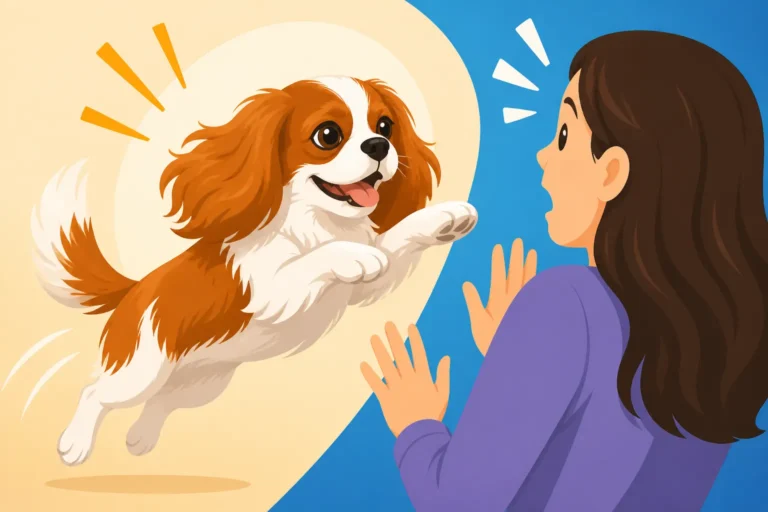
When a Cavalier is subjected to shouting, their emotional response is far from what a human might intend. Instead of understanding it as a correction for a specific behavior, they often interpret it as a general expression of displeasure from their most important person – you. This can lead to a cascade of negative emotional reactions. They might freeze, cower, or try to escape, not because they're being stubborn, but because they're genuinely frightened and stressed. You might see them flatten their ears, tuck their tail, or even roll over and expose their belly, displaying classic signs of appeasement. Over time, consistent shouting can lead to chronic anxiety, making them more timid, less confident, and prone to stress-related behaviors like excessive licking, pacing, or even house-soiling. They internalize the fear, associating it with your presence, rather than connecting it to the specific action you want them to stop. Imagine trying to learn a complex new task while someone is constantly yelling at you; it’s nearly impossible to focus and succeed.
How Shouting Impacts a Cavalier's Learning
It’s tempting to think that a loud, firm "NO!" will get your Cavalier's attention and stop an unwanted behavior immediately. While it might achieve a temporary halt, the cost to their learning and your relationship is incredibly high. Shouting doesn't teach them what to do; it only teaches them what not to do out of fear, which is a poor foundation for any real training.
Fear, Anxiety, and Shutting Down
A Cavalier exposed to shouting frequently will likely develop fear and anxiety around training sessions. Instead of engaging with enthusiasm, they might become hesitant, withdrawn, or even try to avoid you when they sense a training moment coming. They learn that engaging with you carries the risk of being yelled at, which is deeply counterproductive. This fear can cause them to "shut down," meaning their brain literally stops processing information effectively. They become so focused on your tone and body language – searching for cues of anger – that they can't concentrate on the actual command or task. They might physically retreat, or mentally check out, making them seem stubborn or disobedient, when in reality, they're overwhelmed and scared. This can manifest as behaviors like refusing to make eye contact, yawning excessively, lip-licking, or even air scratching, which are all stress signals. The article A Cavalier That Rolls Over and Freezes provides more insight into these fear responses.
Erosion of Trust and Bond
The relationship you have with your Cavalier is built on trust, affection, and mutual respect. Shouting erodes this trust. Your Cavalier sees you as their protector and source of comfort. When that source becomes unpredictable or intimidating, it creates a rift. They learn to associate your presence, or certain situations, with negative experiences, rather than positive ones. This doesn't just affect formal training; it permeates every interaction. They might be less likely to come when called, not because they don't want to, but because they're wary. They might be less inclined to cuddle or seek reassurance, fearing an unexpected outburst. A strong bond is the bedrock of successful training, allowing your Cavalier to feel safe enough to experiment, make mistakes, and learn. When that bond is weakened by fear, their willingness to learn and cooperate diminishes significantly.
Delayed Progress and Learned Helplessness
Ironically, shouting actually slows down your training progress. When a Cavalier is scared or anxious, they're not in an optimal learning state. They might perform the desired action out of fear of punishment, but they don't truly understand why they're doing it or genuinely choose to do it. This means the behavior isn't reliably learned and is less likely to generalize to different environments or situations.
Consider this scenario: you're trying to teach your Cavalier to sit, and every time they don't immediately comply, you yell. They might eventually plop down to avoid your anger, but they haven't made a positive association with the "sit" command itself. They've just learned to avoid the negative consequence. This is a fragile form of learning. In severe cases, constant harshness can lead to "learned helplessness," where a dog simply gives up trying because their actions seem to have no positive outcome, only the potential for punishment. They become passive, showing little initiative or joy in engagement. Instead of the joyful learner you envision, you end up with a fearful, unenthusiastic student.
Positive Reinforcement: The Cavalier's Best Friend
Given their sensitive nature, Cavaliers absolutely flourish with positive reinforcement training. This method focuses on rewarding desired behaviors, making your Cavalier enthusiastic about learning and eager to please. It builds confidence, strengthens your bond, and genuinely makes training a joyful experience for both of you.
Rewards That Resonate
Positive reinforcement means finding what truly motivates your Cavalier. For many Cavaliers, high-value food treats are incredibly effective – small, soft, smelly treats like cooked chicken, cheese, or specialized training treats often work wonders. However, not all Cavaliers are solely food-motivated. Some might prefer a favorite squeaky toy, a quick game of fetch, or even just enthusiastic praise and gentle scratches behind the ears. The key is to deliver the reward immediately after the desired behavior, so your Cavalier clearly understands what they did right.
You can get a wide variety of excellent training treats and engaging toys on platforms like Amazon, making it easy to experiment and find what your particular Cavalier values most. The richer the reward, the faster they'll learn and repeat the behavior. It’s about making learning a really positive, beneficial experience for them. Reward-Based Training With a Cavalier goes into more detail about how to leverage this effectively.
Clear Communication and Consistency
Positive reinforcement thrives on clear, consistent communication. Instead of ambiguous yelling, you use clear, calm cues and predictable rewards. When teaching a new command, break it down into tiny, achievable steps. For example, if you're teaching "down," reward them for looking at the floor, then for lowering their head, then for lying all the way down. This process, called "shaping," builds confidence and reduces frustration.
Consistency is also paramount. Everyone in the household needs to use the same commands and reward systems. If one person uses "sit" and another uses "bottom," or if one person rewards and another doesn't, it confuses your Cavalier. Short, frequent training sessions – think five minutes, several times a day – are much more effective for a Cavalier's attention span than one long, grueling session. This is especially true for puppies and adolescents, whose focus can wander. The article Five-Minute Training Sessions With a Cavalier offers practical tips for these quick, impactful sessions.
Building a Stronger Relationship
The greatest benefit of positive reinforcement is the deep, trusting relationship it fosters. When your Cavalier sees you as the source of all good things – treats, praise, games, and comfort – they become even more devoted and eager to engage. Training becomes a collaborative effort, a language you both understand and enjoy speaking. You're not just teaching commands; you're building a foundation of mutual respect and understanding.
This strong bond is invaluable, especially as your Cavalier ages or if they encounter health challenges. A dog that trusts you implicitly will be more cooperative during vet visits, grooming, or when needing medication. This kind of relationship ensures that your Cavalier feels secure, loved, and happy, which is ultimately what we all want for our companions.
Practical Strategies for a Calm Training Environment
Knowing that shouting is detrimental is one thing; actually stopping it when frustration bubbles up is another. It takes conscious effort and a shift in mindset, but it's entirely achievable. Creating a calm, structured training environment benefits both you and your Cavalier, leading to faster learning and a more harmonious home.
Managing Your Own Frustration
Let's be honest, even the most patient person can get frustrated when a Cavalier isn't performing as expected. The key is to recognize these feelings before you reach the shouting point. If you feel your temper rising, take a deep breath and a step back. It's okay to end a training session early if you're both getting stressed. Remember, your Cavalier isn't deliberately being difficult; they might be confused, tired, or simply not understanding what you're asking.
Consider what might be triggering your frustration. Is it unrealistic expectations? Are you trying to train in a distracting environment? Are you tired? A quick break can reset both of you. You might even find it helpful to take a walk, make a cup of tea, or engage in a calming activity. Sometimes, simply knowing that your Cavalier is so sensitive to your tone can be enough motivation to regulate your own emotions. Think about it from their perspective: your gentle companion is trying their best, and they need a patient guide, not a drill sergeant.
Short, Frequent Sessions
Cavaliers, like many small breeds, have relatively short attention spans, especially when they are young. Trying to force a long training session is a recipe for frustration for everyone involved. Instead, aim for multiple short sessions throughout the day – think 2 to 5 minutes at a time. This keeps training fun, prevents boredom, and allows your Cavalier to process information more effectively.
For example, you could do a quick "sit" and "stay" before breakfast, practice recall in the yard for a few minutes midday, and work on "down" during a commercial break in the evening. This distributed practice reinforces learning without overwhelming your Cavalier. It also makes training a regular, positive part of your daily routine rather than a stressful event. These brief, positive bursts are far more effective than one long, exasperating session where both of you end up feeling defeated.
| Aspect of Training | Shouting/Aversive Methods | Positive Reinforcement |
|---|---|---|
| Cavalier's Emotional State | Fearful, anxious, stressed | Happy, engaged, confident |
| Impact on Learning | Suppresses behavior out of fear; causes shutdown | Encourages active participation; builds understanding |
| Trust & Bond | Erodes trust; creates distance; fosters wariness | Strengthens bond; builds mutual respect; fosters devotion |
| Behavioral Outcomes | Temporary cessation; potential for aggression/avoidance; learned helplessness | Reliable, enthusiastic performance; self-confidence |
| Long-Term Progress | Slow, inconsistent, requires constant intervention | Fast, consistent, enduring |
| Enjoyment for Owner | Frustrating, guilt-inducing, stressful | Rewarding, joyful, strengthens connection |
When to Seek Professional Help
If you're finding yourself consistently frustrated or struggling to make progress with positive reinforcement, don't hesitate to seek help from a qualified professional. A certified professional dog trainer or a veterinary behaviorist can provide invaluable guidance, tailored to your Cavalier's individual needs and your household's dynamics. They can help identify underlying issues, teach you effective techniques, and provide strategies for managing challenging behaviors without resorting to harshness.
Resources like BAXTER & Bella offer online puppy and dog training programs that emphasize positive reinforcement, providing structured guidance and support from the comfort of your home. Sometimes, an outside perspective and expert advice are all you need to get back on track and foster a happy, well-behaved Cavalier. Remember, asking for help isn't a sign of failure; it's a commitment to your Cavalier's well-being and your shared future. Trainer Rates for Cavalier Separation Anxiety can give you an idea of the kind of support available.
Ultimately, your Cavalier King Charles Spaniel wants to please you, to be your best friend, and to be a happy, secure member of your family. By committing to kind, patient, and positive training methods, you'll not only achieve your training goals more effectively but also deepen the incredible bond you share with your beloved companion.
Disclaimer
This article is for general informational purposes only and does not constitute professional advice. Laws, prices and regulations vary by location and change over time. Consult a qualified professional for guidance on your specific situation.