A Cavalier That Will Not Give Up a Sock
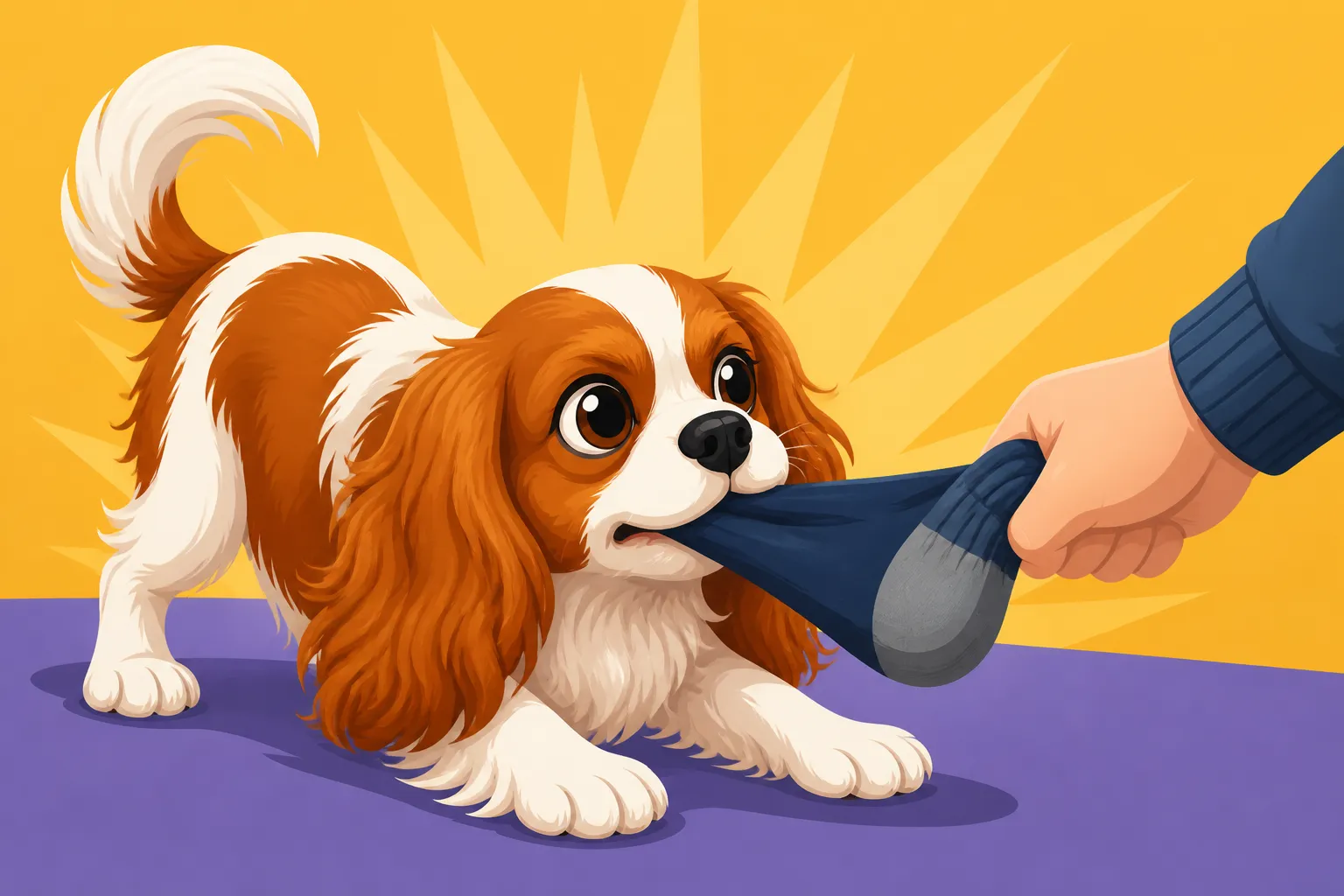
Oh, the infamous sock heist! If you're reading this, you probably know the scene all too well: you turn your back for a second, and suddenly your adorable Cavalier has vanished with one of your best socks, darting away with a mischievous gleam in their eye. It's frustrating, often a little gross, and can even be dangerous if they decide to ingest the fabric. This guide is here to help you understand why your Cavalier turns into a furry, four-legged kleptomaniac when it comes to your laundry and, more importantly, how to teach them to graciously give up their prized textile treasures.
Understanding Why Your Cavalier Won't Let Go
It’s easy to feel like your Cavalier is just being stubborn or deliberately naughty when they refuse to drop a forbidden item. But more often than not, their behavior stems from a mix of natural instincts, learned associations, and sometimes, even a bit of insecurity. Understanding the root cause is the first step toward a more peaceful coexistence with your sock-obsessed companion.
The Instinctual Drive to Keep Prized Possessions
Despite their cuddly, lapdog reputation, Cavaliers are still dogs, and dogs have an inherent instinct to guard resources they deem valuable. A crumpled sock might seem like trash to us, but to a Cavalier, it can be a trophy, a comfort item, or simply something wonderfully stinky that smells exactly like you. They don't necessarily want to destroy it; they just want to have it. This isn't usually full-blown resource guarding where they might snap or bite to protect their item, but it’s a milder form of "possession aggression" or, more accurately, "possession retention."
Think about it: in the wild, holding onto valuable resources (like prey or desirable scraps) is crucial for survival. While our pampered Cavaliers don't need to hunt for socks, that ancient programming still whispers in their ears. It’s not about defiance; it’s about their canine nature. They're not trying to upset you; they’re just trying to secure something they believe is important.
Attention-Seeking and Play Behavior
Let's be honest: when your Cavalier snatches that sock, what's your immediate reaction? Most likely, you leap up, exclaim "No!", and chase after them. From your Cavalier's perspective, they've just initiated a fantastic game! They got your full, undivided attention, a fun chase sequence, and maybe even some excited squeaks (from you!). This becomes a self-reinforcing cycle. The more you chase and fuss, the more they learn that "stealing" an item is a surefire way to get you to engage. They crave connection with you, and if sock-stealing is the most effective way to spark a game, they’ll keep doing it.
This is especially true for young Cavaliers or those who might not be getting enough mental and physical stimulation. A bored Cavalier is a creative Cavalier, and finding ways to get their human's attention is a high-reward activity. They quickly associate the sight of a sock with the fun game that follows, cementing the behavior even further.
Anxiety and Insecurity Behind the Grip
While often playful, sometimes a Cavalier's reluctance to give up an item can stem from a deeper place of anxiety or insecurity. This is less common with just a sock, but if it extends to toys, food bowls, or even their bed, it's worth considering. A dog that feels insecure might cling to possessions as a coping mechanism. This could be due to past experiences, a lack of confidence, or even general anxiety. For instance, a rescue Cavalier who perhaps had to compete for resources in a previous home might be more prone to holding onto things tightly.
It's also possible that the item itself provides comfort. A sock that smells like you can be a soothing presence for a Cavalier experiencing Living With a Cavalier That Panics When Alone or general separation distress. In these cases, simply forcing the item away doesn't address the underlying emotional state. Instead, it can deepen their anxiety and make them even more determined to hold onto whatever small comfort they’ve found.
Implementing a "Drop It" and "Give" Protocol
Teaching your Cavalier to willingly release items is a fundamental skill that builds trust and prevents potential issues. It's all about making "dropping" or "giving" a positive experience, showing them that letting go leads to something even better, not punishment. This approach aligns perfectly with Training a Cavalier With Praise Rather Than Pressure.
Starting With High-Value Trades
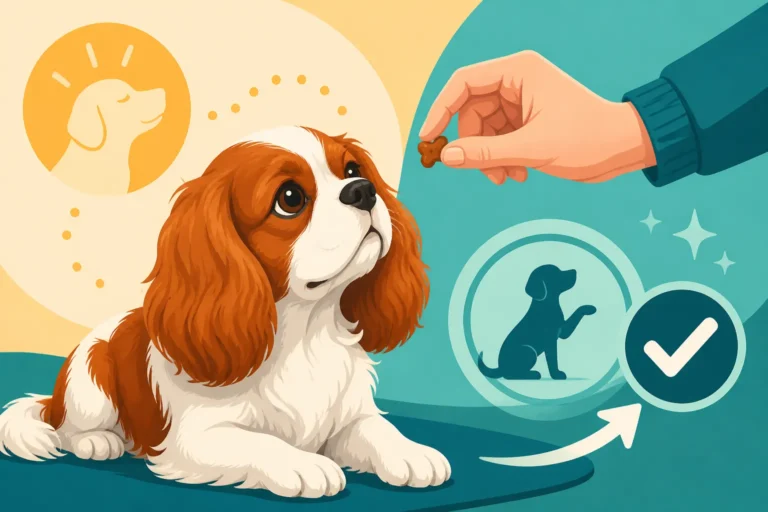
The key to successful "drop it" and "give" training is the "trade." You want your Cavalier to think, "Oh, giving up this thing means I get that amazing thing instead? Deal!" This means your "amazing thing" needs to be something your Cavalier absolutely adores – something they don't get all the time. Think small, soft, super-stinky, high-value treats that are easy to swallow, like tiny pieces of cooked chicken, cheese, or specialized training treats. The idea is to make the trade so irresistible that the sock (or whatever they have) suddenly seems less appealing.
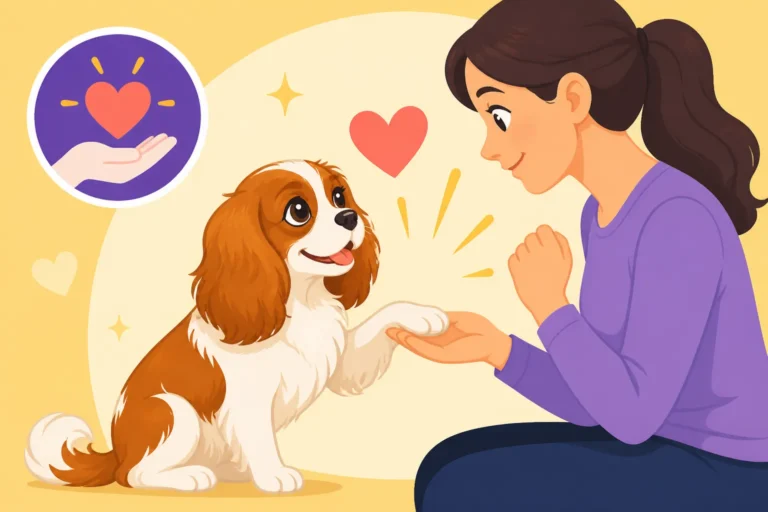
Start in a calm environment with an object that isn't too exciting, maybe one of their own toys. Hold a high-value treat close to their nose. The moment they open their mouth or release the item, say "Drop It" (or "Give," choose one and stick to it) and immediately give them the treat. If they drop the item and then look back at it, pick up the item before they can snatch it again. Over time, they’ll learn the verbal cue means "release this for something better." This method uses Reward-Based Training With a Cavalier to its fullest potential.
Here's a step-by-step approach:
- Prepare your treats: Have them ready and easily accessible.
- Offer a low-value item: Give your Cavalier a toy they like but aren't obsessed with.
- Present the trade: Hold a high-value treat near their nose.
- Mark and Reward: The instant they drop the item, say your cue ("Drop It!" or "Give!"), and give the treat.
- Retrieve: Calmly pick up the dropped item.
- Repeat: Practice several times in short sessions.
| Step | Action for Owner | Cavalier's Expected Response | Goal |
|---|---|---|---|
| 1: Initiate | Offer a desirable toy or chew (not the forbidden sock yet). | Engages with the item. | Establish a starting point for the exercise. |
| 2: Present High-Value | Hold a truly irresistible treat near their nose. | Orients towards the treat, may sniff. | Create immediate interest in the "trade." |
| 3: Cue & Reward | As they release the toy, say "Drop It!" and give the treat. | Drops the toy to take the treat. | Link the verbal cue to the act of releasing. |
| 4: Retrieve Item | Calmly pick up the toy they just dropped. | Focuses on eating the treat. | Prevent them from re-grabbing the original item. |
| 5: Repeat & Progress | Practice frequently in short sessions (2-3 minutes). | Quicker, more confident release over time. | Generalize the "Drop It!" cue to various items. |
Remember, consistency is key. Every time they give something up willingly, it reinforces the positive association. Treats a Cavalier Will Trade Anything For is a great resource for figuring out what motivates your particular pup.
Practicing with Lower-Stakes Items
Once your Cavalier understands the concept with their own toys, gradually introduce slightly higher-value items – but still not the forbidden sock. Perhaps an old, clean towel, a paper roll, or a slightly more interesting toy. Continue to use your high-value treats for trades. The goal here is to generalize the "drop it" command across a range of items.
You want them to understand that "drop it" applies to anything they have, and that listening to you always results in a positive outcome. If you only practice with items you don't care about, they might not make the connection when they have something truly valuable (like that expensive leather glove they just found). Always ensure you're using a treat that is more appealing than the item they possess. If the item is super exciting, your treat needs to be even more super exciting.
The "No Chase, No Fuss" Rule
This is perhaps the hardest rule for many owners to follow, but it's critical. If your Cavalier grabs a forbidden sock, your immediate instinct is to panic, yell, and chase. But as we discussed, this often just makes the "game" more fun for them. Instead, adopt a "no chase, no fuss" policy. If they grab a sock:
- Do not chase them. This reinforces the game.
- Do not yell or scold them. This can create fear or make them guard the item more intensely.
- Immediately grab your high-value treats.
- Calmly approach and initiate a trade. If they are too excited and running away, try moving away from them. Many Cavaliers are Why a Cavalier Follows You Room to Room, and if you walk into another room and act like you're about to do something interesting (like open the treat jar), they might follow you, dropping the item in the process.
- Make the trade, praise, and remove the item.
- If a trade isn't immediately working, ignore the behavior (if safe). If it's just a sock and they aren't destroying it or trying to eat it, turn your back and walk away. Often, a Cavalier will eventually get bored or bring the item to you, at which point you can calmly try the trade again. This takes immense patience, but it breaks the cycle of rewarding the "game."
It's really tough to fight that instinct to react, but remember, every time you chase, you're essentially cheering them on. You're inadvertently telling them, "Yes! You found a great toy, and now we're going to play!" Breaking this pattern is vital for the "drop it" cue to truly stick.
Prevention Strategies and Environmental Management
While training is crucial, the easiest way to prevent your Cavalier from snatching socks is to make sure they can’t get them in the first place. Environmental management is your first line of defense against the "sock bandit." This isn't just about socks; it's about keeping them safe from things they shouldn't chew on and saving you a lot of headache.
"Puppy-Proofing" Your Home (Even for Adults!)
Many people think puppy-proofing is just for puppies, but an adult Cavalier can be just as opportunistic! Go through your home room by room and identify potential "forbidden fruit." This means:
- Secure laundry hampers: Replace open baskets with hampers that have secure lids or are kept behind closed doors.
- Close all closet and bedroom doors: Keep areas with clothes inaccessible.
- Put shoes away immediately: Don't leave them scattered.
- Keep floors clear: Pick up anything small and chewable – remote controls, children's toys, glasses, medication, and, of course, socks!
- Consider baby gates: If there are rooms that are particularly hazardous or difficult to secure (like a craft room or home office), use baby gates (readily available on Amazon, for example) to block access. This is especially helpful if your Cavalier has tendencies to chew on things they shouldn't due to teething Why Cavalier Puppy Teeth Feel Like Needles or boredom.
Think like a Cavalier: what smells interesting? What's at mouth height? What's easily snatched? By removing the temptation, you remove the opportunity for them to practice the undesirable behavior, making your training efforts much more effective.
Providing Appropriate Chews and Toys
A Cavalier with an urge to chew or carry things needs appropriate outlets for that behavior. If they don't have suitable options, they'll invent their own – and that's usually your socks! Invest in a variety of engaging, safe chew toys and interactive toys.
- Chew toys: Look for durable rubber chews, dental chews, or even natural chews that are appropriately sized for a Cavalier's mouth. Rotate them to keep them interesting.
- Puzzle toys: These are fantastic for mental stimulation and food motivation. Fill them with a portion of their kibble or a safe treat. This keeps them engaged and thinking, reducing boredom-induced mischief.
- Soft toys: Many Cavaliers love soft, plush toys to carry around. If they have their own soft toys, they might be less inclined to steal yours. Just make sure they're not easily destructible, as ingesting stuffing can be dangerous.
The goal is to provide sanctioned items that fulfill their natural desire to chew, carry, and investigate. This redirects their energy away from your belongings and onto items that are safe and appropriate for them.
Enrichment and Mental Stimulation
A bored Cavalier is a mischievous Cavalier. Cavaliers might be small, but they are intelligent and need mental stimulation just like any other dog. If they aren't getting enough, they'll find ways to entertain themselves, and that often involves things they shouldn't have.
- Short, frequent training sessions: Even 5-10 minutes a day of positive reinforcement training, teaching new tricks or refining existing commands, can tire a Cavalier's brain. Consider online resources like BAXTER & Bella which offer extensive puppy training programs and cover many behavioral aspects.
- Scent games: Hide treats around the house and encourage your Cavalier to sniff them out. Their keen noses love this type of work, and it's a great low-impact mental exercise.
- Interactive play: Engage in structured playtime with appropriate toys. Tug-of-war (with rules for dropping on command), fetch, or even just rolling a ball around can be incredibly satisfying for them.
- Walks with sniffing opportunities: Don't just walk for exercise; let them sniff and explore. The mental engagement from processing all those smells is surprisingly tiring.
By providing plenty of appropriate outlets for their energy and intelligence, you reduce the likelihood that they'll turn to sock-stealing out of sheer boredom or a need for attention. This proactive approach supports a well-adjusted and well-behaved Cavalier.
When to Seek Professional Guidance
For most Cavaliers, a combination of consistent "drop it" training and thorough environmental management will resolve the sock-stealing problem. However, there are times when the behavior escalates or persists, and it's important to recognize when you might need to call in the cavalry – a professional dog trainer or veterinary behaviorist.
Escalation to Aggression or Biting
While most Cavaliers will playfully run off with a sock, some might show signs of more serious resource guarding if you try to take it from them. This could include:
- Growling: A low, rumbling sound meant as a warning.
- Snapping: A quick bite in the air, not necessarily connecting, but a clear threat.
- Biting: Actually making contact with your hand or arm.
- Stiffening or freezing: Their body language becomes rigid, indicating tension.
- Hard stare: Direct eye contact with a tense expression.
If your Cavalier exhibits any of these behaviors when you approach an item they have, it's crucial to stop trying to take the item yourself and seek professional help immediately. This isn't just about a sock anymore; it's about a safety concern for you and your family. A certified professional dog trainer specializing in positive reinforcement or a veterinary behaviorist can help you address this behavior safely and effectively. Trying to "dominate" or punish a dog for resource guarding can actually make it much worse and more dangerous.
Persistent Problem Despite Training Efforts
You've tried everything: consistent "drop it" training, high-value treats, meticulous puppy-proofing, and plenty of mental stimulation. Yet, your Cavalier still manages to find socks, and still refuses to give them up without a major struggle. If you feel like you're hitting a wall and the problem isn't improving, or perhaps it's even spreading to other undesirable items (like prescription glasses or important documents), then it's a good time to consult with a professional.
A certified professional dog trainer can observe your Cavalier's behavior in your home environment, identify subtle triggers you might be missing, and develop a customized training plan. They can teach you more advanced techniques, help you refine your timing and cues, and provide strategies for managing particularly stubborn cases. Sometimes, an outside perspective is exactly what's needed to break through a plateau in training. If you suspect an underlying anxiety component, you might also look into Calming Supplements for an Anxious Cavalier or discuss behavioral medication options with your veterinarian or a veterinary behaviorist. Resources like BAXTER & Bella also offer personalized coaching sessions, which can be immensely helpful when you feel stuck.
Remember, seeking help isn't a sign of failure; it's a sign of a responsible pet owner committed to their dog's well-being and a harmonious household. The cost of professional guidance, which you can look into by researching Trainer Rates for Cavalier Separation Anxiety (which often includes general behavioral consultations), is often a worthwhile investment for peace of mind and a better relationship with your Cavalier.
Disclaimer
This article is for general informational purposes only and does not constitute professional advice. Laws, prices and regulations vary by location and change over time. Consult a qualified professional for guidance on your specific situation.