Blenheim Palace and the Cavalier’s Chestnut Color
Many people adore the Cavalier King Charles Spaniel, especially those beautiful chestnut and white ones, often called "Blenheims," but few truly know the rich history behind that distinctive color and its regal name. It’s not just a fancy label; it’s a direct link to centuries of aristocratic patronage and a pivotal moment in the breed's development. This guide will delve into the captivating story of how Blenheim Palace became synonymous with this beloved Cavalier color, tracing its origins and celebrating its enduring charm.
The Historical Roots of the Cavalier King Charles Spaniel
To understand the Blenheim Cavalier, we first need to appreciate the long and storied history of these charming little dogs. They weren't always called Cavaliers, and their appearance has certainly evolved over the centuries, but their role as cherished companions to royalty and nobility has remained constant.
Court Spaniels Before the Cavalier's Time
Before the Cavalier King Charles Spaniel as we know it today was formally recognized, small spaniels were the darlings of European aristocracy. These weren't necessarily a standardized "breed" in the modern sense, but rather a type of small, affectionate dog favored for their gentle nature and lap-warming capabilities. They were often depicted in paintings snuggled on the laps of queens and princesses, enjoying a life of luxury and companionship. Their job was, quite simply, to be adorable and devoted, a role they filled with aplomb.
These early spaniels were known for their soft coats, expressive eyes, and generally docile temperaments. They were integral to court life, offering comfort and amusement in times of both peace and political intrigue. When you look at old portraits, you can see the ancestors of our modern Cavaliers, varying in appearance but always unmistakably spaniel-like, with their long ears and sweet expressions. They were an indispensable part of daily life for the privileged few, a symbol of status and a source of genuine affection. To learn more about their predecessors, you can explore The Court Spaniels the Cavalier Descends From.
King Charles II and His Beloved Companions
The breed's very name, King Charles Spaniel (and later, Cavalier King Charles Spaniel), is a direct nod to one of their most ardent historical admirers: King Charles II of England. This monarch, who reigned from 1660 to 1685, was famously inseparable from his small spaniels. It was said he never went anywhere without at least two or three of them trailing behind him, even to official state functions. There's a well-known decree attributed to him that states King Charles Spaniels should be allowed in any public place, including Parliament, a testament to his profound attachment.
His passion for these dogs was so strong that they became fashionable throughout England and beyond. They were more than just pets; they were living extensions of the King's personal brand, embodying loyalty, elegance, and comfort. The King's influence helped solidify the image of these spaniels as the ultimate companion dogs, beloved by the monarchy and admired by all. The enduring legacy of these little dogs and their royal namesake is fascinating, and you can read more about it in How a King's Name Ended Up on the Cavalier.
Blenheim Palace's Enduring Legacy
While King Charles II established the breed's foundational popularity, the distinctive "Blenheim" color pattern has its own captivating origin story, inextricably linked to one of England's most magnificent country estates.
The Marlborough Family and Their Spaniels
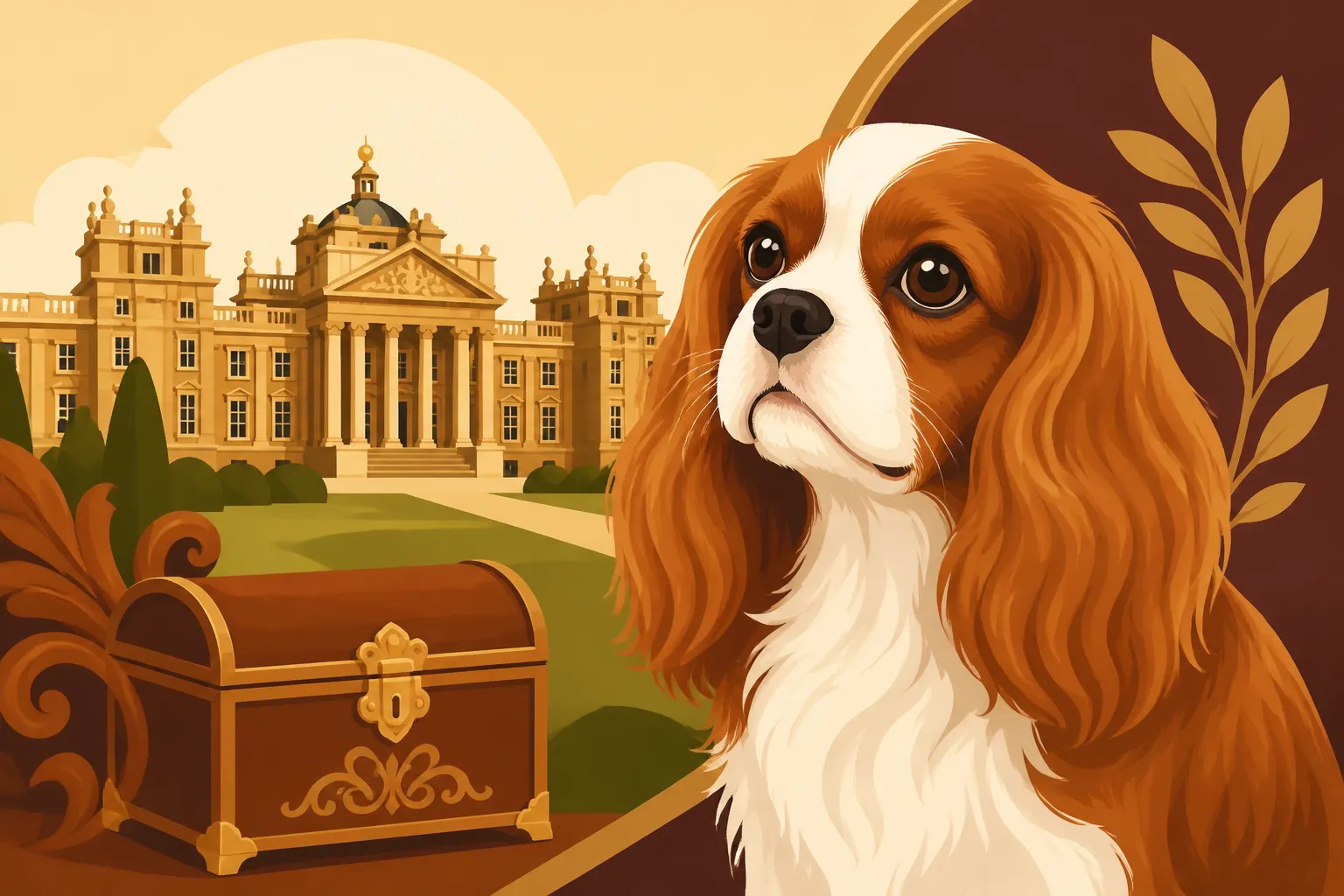
Fast forward a few generations from King Charles II, and we arrive at Blenheim Palace, the ancestral home of the Dukes of Marlborough. The most famous Duke, John Churchill, was a brilliant military commander, and his wife, Sarah Churchill, was a formidable figure in her own right, a close friend and confidante of Queen Anne. It was within the grandeur of Blenheim Palace, and under the watchful eyes of the Marlborough family, that a specific line of these small spaniels was developed and cherished.
These dogs were often kept as companions, particularly by the ladies of the household, and were bred selectively for their sweet dispositions and attractive markings. The family's preferred color pattern for their spaniels became a beautiful combination of pearly white with rich chestnut red patches. This distinct color combination wasn't just admired; it became an intrinsic part of the Blenheim heritage, cultivated with care over many generations at the palace.
The Origin of the Blenheim Spot and Markings
The most romantic and famous legend associated with the Blenheim Cavalier concerns the distinctive thumb-sized chestnut spot found on the top of many Blenheim Cavaliers' heads. This spot, often referred to as the "lozenge" or "Duchess thumbprint," is steeped in lore. The story goes that during the Battle of Blenheim in 1704, Sarah Churchill, the Duchess of Marlborough, was anxiously awaiting news of her husband, the Duke. She spent her time stroking the head of a pregnant spaniel, pressing her thumb to its forehead in her distress. When the puppies were born, they all bore a chestnut spot on their heads, precisely where the Duchess had pressed her thumb.
While a charming anecdote, it's more likely a delightful piece of folklore than historical fact. Scientifically, the spot is simply a characteristic genetic marking that was selected for during the breeding program at Blenheim Palace. Regardless of its true origin, the legend adds a layer of magic to the Blenheim Cavalier, connecting each individual dog back to a grand historical narrative and the devotion of a worried Duchess. This tale highlights how deeply these dogs were woven into the lives and affections of their aristocratic owners.
The Blenheim Cavalier: A Signature Color
The Blenheim color quickly became iconic, not just for its historical connections but for its sheer beauty. It's a hallmark of the breed, instantly recognizable and deeply cherished by enthusiasts worldwide.
Defining the Chestnut and White Pattern
A true Blenheim Cavalier is defined by its striking pattern of rich chestnut markings on a pearly white background. The chestnut should be a warm, vivid reddish-brown, not too dark or muddy, and ideally well-broken up over the white coat. The markings typically appear on the ears, around the eyes, and on patches across the body. The face usually has a white blaze running between the eyes, with chestnut patches over each eye and covering the ears. This gives the Blenheim a wonderfully expressive face, where the eyes often appear framed by the darker color.
The overall impression should be balanced and attractive, with no solid patches of color that are too large or uneven. The white should be pure and clear, providing a lovely contrast to the warm chestnut. This beautiful pattern is one of the four recognized colors in the Cavalier King Charles Spaniel breed standard, and it's certainly one of the most popular, thanks in no small part to its historical pedigree. When you look closely at the distribution, you can truly appreciate the artistry of nature and selective breeding combining to create such a charming aesthetic.
The Importance of the "Lozenge" or "Kissing Spot"
While not mandatory for a Blenheim to be considered correct by the breed standard, the "lozenge" or "kissing spot" remains a highly prized and distinctive feature. This small, clear chestnut spot on the center of the white blaze between the ears is what many people immediately look for in a Blenheim. It’s a genetic fluke that has been celebrated for centuries, giving each dog a little crown of color.
For many breeders and fanciers, the presence of a well-defined lozenge is a sign of classic Blenheim heritage and adds a certain undeniable charm to the dog. It’s a little historical wink, a nod to the Duchess of Marlborough and the legend of the Battle of Blenheim. Whether a dog has one or not, the overall chestnut and white pattern is what defines the Blenheim, but that little dot truly sets it apart for many admirers. You can delve deeper into this fascinating marking in The Blenheim Cavalier and Its Lozenge.
The Resurgence and Modern Recognition
The Cavalier King Charles Spaniel, including the Blenheim, faced a period where its distinctive appearance was almost lost. However, dedicated fanciers worked tirelessly to bring back the "old type" and solidify its place in the modern dog world.
Roswell Eldridge and the Revival of the "Old Type"
By the late 19th and early 20th centuries, the small King Charles Spaniel (often called the English Toy Spaniel in the US) had undergone significant changes in appearance. Breeders, influenced by the popularity of breeds like the Pug, had started breeding for much flatter faces, domed skulls, and shorter noses. The long-nosed, flatter-skulled spaniel beloved by Charles II and the Marlboroughs was becoming increasingly rare. This shift in aesthetics meant that the classic look of the Blenheim, too, was in danger of being diluted.
Enter Roswell Eldridge, an American admirer of the original King Charles type. In the 1920s, he offered prize money at Crufts Dog Show for spaniels "of the old type… with long faces, no stop, flat skulls, not inclined to be domed, and with the spot in the centre of the skull." His efforts sparked a dedicated movement among British breeders to revive the original, longer-nosed spaniel. This was a critical moment, leading directly to the establishment of the Cavalier King Charles Spaniel as a distinct breed, separate from the shorter-faced King Charles Spaniel. His vision ensured the survival of the Blenheim as we know it today. If you're curious about this pivotal moment, The 1926 Advertisement That Revived the Cavalier offers more details.
The Blenheim's Place in the Breed Standard
Thanks to the dedicated work of breeders following Eldridge's vision, the Cavalier King Charles Spaniel gained formal recognition, and with it, a breed standard that described its ideal appearance. The Blenheim color, with its characteristic chestnut and white, was proudly included as one of the four recognized patterns. The AKC Standard for the Cavalier King Charles Spaniel explicitly details the preferred markings and color distribution for a Blenheim.
Today, when you see a Blenheim Cavalier at a dog show, judges are looking for that classic rich chestnut on a pearly white ground, with a clear blaze and ideally, the lozenge. It’s a testament to the enduring appeal of this color that it remains a cornerstone of the breed's identity. While all four Cavalier colors are beautiful, the Blenheim holds a special place, connecting our modern companions directly to their regal past at Blenheim Palace. It’s a living piece of history, walking around our homes.
Living with a Blenheim Cavalier
Bringing a Blenheim Cavalier into your home means welcoming a loving companion with a beautiful, distinct coat. Understanding their specific care needs and appreciating their temperament will help you ensure a happy life together.
Care Considerations for Their Coat
The Blenheim Cavalier's coat is typically long, silky, and flowing, especially the feathering on their ears, chest, legs, and tail. While undeniably gorgeous, this luxurious coat does require regular maintenance to keep it in top condition and prevent matting. The white areas, in particular, can show dirt more readily, so a diligent grooming routine is essential.
You'll want to brush your Blenheim at least three times a week, paying special attention to areas prone to tangles, like behind their ears, in their armpits, and along their "feathering." A good slicker brush and a metal comb are your best friends here. Detangling spray can also be a huge help, especially if you encounter a stubborn knot. Regular brushing not only keeps their coat looking pristine but also helps distribute natural oils, keeping their skin healthy. Don't forget their ears are very much a part of their overall beauty, and you can learn more about specific care in Brushing a Cavalier's Feathering Three Times a Week. For all your grooming needs, including brushes, combs, and detangling sprays, online retailers like Chewy offer a wide selection to keep that beautiful Blenheim coat shining.
It's also worth noting that while professional grooming is an option, many Blenheim owners handle routine brushing and bathing at home. However, if mats become severe, a professional groomer who understands the Cavalier coat is invaluable. A skilled groomer knows what to trim (like paw pads and sanitary areas) and, more importantly, what not to cut, preserving that natural, flowing look. You can read more about this in What a Cavalier Groomer Should and Should Not Cut.
Temperament Traits Often Associated with Blenheims
While coat color doesn't scientifically dictate temperament, many Blenheim owners anecdotally report that their Blenheims possess a particularly sweet, gentle, and affectionate nature. Cavaliers, in general, are known for being incredibly loving and eager to please, often referred to as "Velcro dogs" due to their desire to be close to their people. This affectionate disposition seems to be particularly pronounced in many Blenheims, making them wonderful family pets and therapy dogs.
They thrive on human companionship and are typically very adaptable to various living situations, as long as they get plenty of attention and love. They are generally good with children and other pets, making them excellent additions to bustling households. Their gentle nature and desire to be near you mean they'll often be found curled up on the sofa next to you, or following you from room to room. Their charming personalities are a big part of their appeal, making them not just beautiful to look at, but truly joyful companions to have in your life. You can explore more about their general disposition in Cavalier Temperament and the Sporting Spaniel Beneath It.
It’s important to remember that every dog is an individual, and while breed characteristics provide a general guideline, individual personalities will vary. Proper socialization and consistent, positive reinforcement training from a young age are key to nurturing a well-adjusted and happy Cavalier, regardless of their color.
Understanding Cavalier Color Genetics
It's interesting to consider how the different Cavalier colors are passed down through generations. While Blenheims are distinctive, they share a common genetic blueprint with the other recognized colors.
The four recognized Cavalier colors are:
- Blenheim: Chestnut and white
- Tricolor: Black, white, and tan
- Ruby: Solid rich red
- Black and Tan: Solid black with tan markings
These colors are determined by specific gene combinations. For example, a Blenheim is a "particolor" because it has both white and a color (chestnut). Tricolors are also particolors. Ruby and Black and Tan Cavaliers are "whole colors," meaning they are solid with no white markings (though a tiny splash of white on the chest can sometimes occur in whole colors, it's generally considered a fault in the show ring).
Breeders carefully consider the color genetics of the parents when planning a litter, not just for aesthetics but also to maintain breed standards and genetic diversity. It's fascinating how different gene expressions result in such beautiful and varied coats within the same breed. Learning about What Makes a Ruby Cavalier a Whole Color can give you more insight into how different colors develop.
Grooming Tools for the Blenheim's Distinctive Coat
Maintaining the Blenheim's silky, flowing coat is a labor of love that is made much easier with the right tools. Because their feathering is so prominent, specific brushes and combs are particularly effective.
Firstly, a slicker brush is essential for removing loose hair and small mats, especially from the longer feathering. Use it gently, working through sections of the coat, particularly around the ears, legs, and tail. Follow up with a metal comb with both wide and narrow teeth. The wide teeth are great for initial detangling, while the narrow teeth can get closer to the skin and ensure all tangles are removed from areas like behind the ears, which are notorious for matting.
Don't forget a detangling spray, which can be a lifesaver for working out those tougher knots without causing discomfort to your Cavalier. And for cleaning tear stains, particularly on the white areas of their face, a soft damp cloth or specialized tear stain wipes are helpful. You can often find comprehensive grooming kits or individual tools at pet supply stores or online through retailers like Chewy, ensuring you have everything you need to keep your Blenheim looking their best. Regular grooming sessions aren't just about appearance; they're also a great opportunity for bonding and checking your dog for any skin issues or parasites. For a detailed guide on routine grooming, check out How Often a Cavalier Needs Brushing.
| Cavalier Color | Primary Color | Secondary Color(s) | Distinctive Markings | Lozenge (Kissing Spot) |
|---|---|---|---|---|
| Blenheim | White | Chestnut (Reddish-Brown) | Patches on ears, eyes, body; white blaze | Often present, a small chestnut spot on forehead |
| Tricolor | White | Black, Tan | Black patches, tan points on face, legs | No |
| Ruby | Solid Red | None | No white, no other colors | No |
| Black & Tan | Solid Black | Tan | Tan points on face, chest, legs | No |
Conclusion
The Blenheim Cavalier King Charles Spaniel is more than just a beautiful dog with striking chestnut and white markings; it's a living piece of history, carrying the legacy of royal courts and grand English estates. From King Charles II's devotion to the dedicated breeding efforts at Blenheim Palace and the passionate revival by Roswell Eldridge, this particular color variant has a story as rich and appealing as its appearance. Understanding this heritage only deepens the affection we feel for these charming companions. Whether they're gracing our laps or charming us with their gentle antics, the Blenheim Cavalier stands as a testament to centuries of loyalty, beauty, and unwavering companionship.
Disclaimer
This article is for general informational purposes only and does not constitute professional advice. Laws, prices and regulations vary by location and change over time. Consult a qualified professional for guidance on your specific situation.