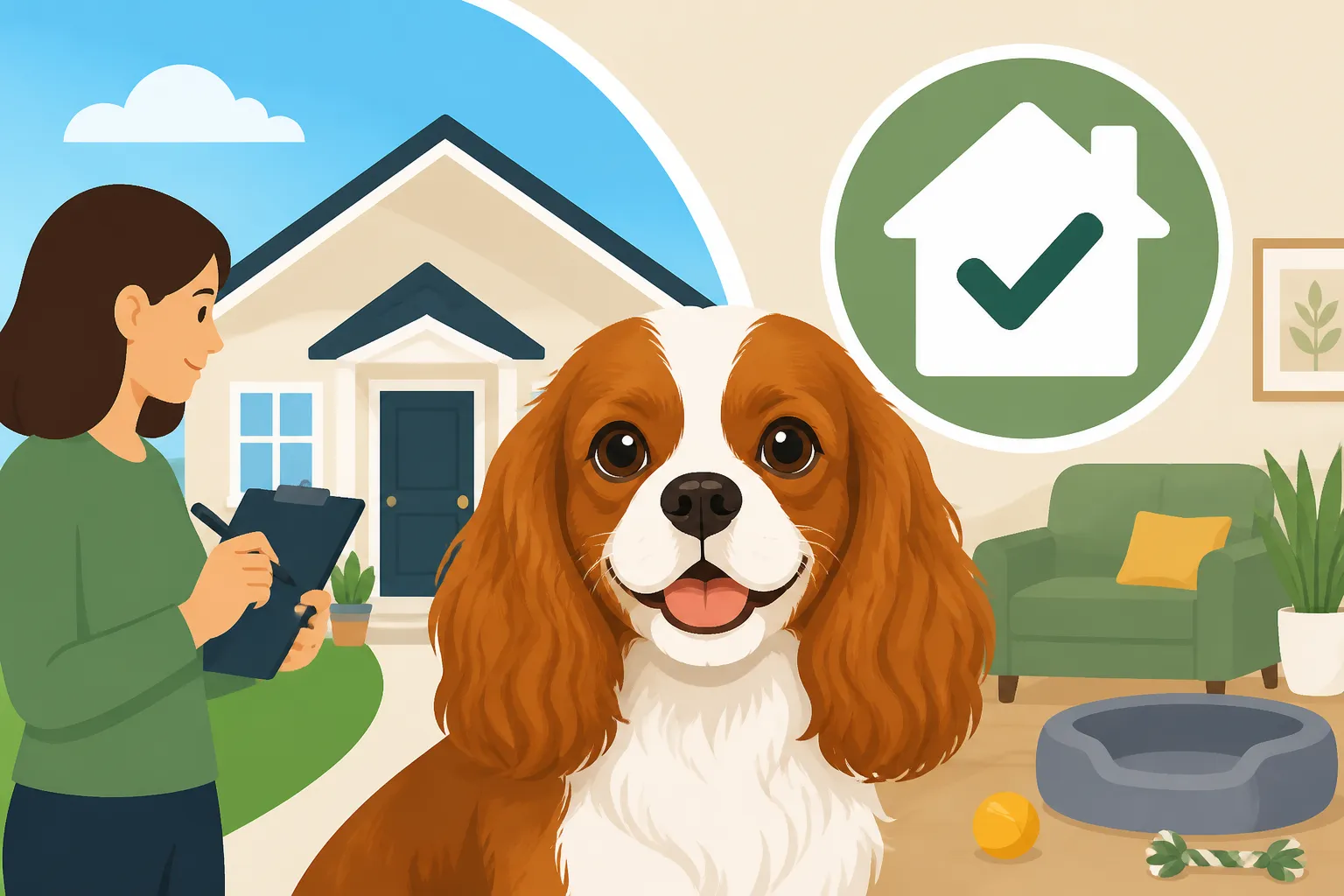
Whether a Cavalier Rescue Will Home Check You
A Cavalier rescue home check can feel like a judgment of your housekeeping, finances, or lifestyle, especially when you are already nervous about being turned down. In most cases, the rescue is trying to understand whether a particular dog can settle safely into your home. This guide explains what a home check may involve, how to prepare, and what to ask if something needs attention.
Why Cavalier rescues may conduct home checks
Rescue groups want to match each dog with a home that can meet its needs—not simply approve the tidiest house or the biggest yard. A home check gives volunteers a chance to discuss daily routines, identify safety concerns, and make sure the dog’s known medical or behavioral needs are understood.
Policies differ. Some organizations conduct an in-person visit, while others use a video call, photographs, a questionnaire, or a conversation with a foster volunteer. A home check may be one step in an application process that also includes references, a household interview, and a meeting with the dog. To understand the range of places a dog might come from, you can also read Where People Actually Get Their Cavaliers.
What the rescue is trying to learn
The visitor or interviewer may ask where the Cavalier will sleep, how long the dog will be alone, who will provide daily care, and whether everyone in the household agrees with the adoption. They may also ask about past pet experience, other animals, children, and plans for veterinary care. These questions are about fit and preparation, not a test of whether you have owned a Cavalier before.
For example, a Cavalier who is unsettled when left alone may be a difficult match for a household where everyone is out for long stretches. A different dog, perhaps one already comfortable with a predictable routine and some quiet time, could be a better fit. Being candid about your work schedule gives the rescue a chance to discuss suitable options rather than discovering a mismatch after the dog has moved in.
Health considerations can shape the conversation, too. Cavaliers may need ongoing veterinary attention, and an individual rescue dog may already have a diagnosis or treatment plan. You do not need to be an expert before applying, but it is sensible to ask what the organization knows about the dog and what follow-up care may be recommended. For a useful perspective on the questions to ask, see Whether a Rescue Cavalier Comes With Health History.
What a home check is not
A home check is not usually a formal building inspection, a judgment of your decorating, or a requirement that your home look untouched by everyday life. A dog bed, a few toys, and a lived-in kitchen are not problems by themselves. The practical question is whether the dog can live safely and comfortably in the space you have.
A fenced yard may help in some situations, but it is not automatically required for every rescue. Plenty of dogs live well in apartments or homes without private yards when their caregivers can provide regular walks, toilet breaks, enrichment, and supervision. A rescue may have particular requirements for a specific dog, so ask why a feature matters rather than assuming every applicant needs the same setup.
Nor does a home check guarantee an approval or a particular dog. A rescue may decide that another candidate is a closer match, or that the dog’s needs are not compatible with your circumstances. That can be disappointing, but it is not necessarily a judgment of your worth as an owner. A careful organization should be able to explain its decision in practical terms.
What happens during the application and home check
The sequence varies by rescue. Some groups speak with applicants before arranging a visit; others may first ask for an application and references. A home check could be a relaxed conversation in your living room, a video tour, or a short visit focused on the areas the dog will use. Ask what format to expect so you can prepare without guessing.
| Home check format | What it may involve | Helpful preparation |
|---|---|---|
| In-person visit | Conversation about routines and a look at the dog’s likely living areas | Tidy obvious hazards and have household members available if requested |
| Video call | A guided look at rooms, entryways, or outdoor areas | Check your camera and be ready to show the spaces the rescue asks about |
| Photos or questionnaire | Written answers or pictures of relevant areas | Answer accurately and ask what details the rescue needs |
| Foster or reference conversation | Discussion of your experience, schedule, and expectations | Be consistent and specific about how you will care for the dog |
Questions you may be asked
Expect practical questions rather than obscure breed trivia. The rescue may ask whether you rent or own, whether your landlord allows dogs, how the household will share care, and what you would do if the dog needs medication or a veterinary appointment. They may ask whether you have other pets and how you would introduce them gradually.
The questions may become more specific when a dog has a known need. If the dog has a heart condition, for instance, the rescue may want to know whether you are prepared to follow veterinary instructions and attend recommended rechecks. If a dog is nervous around unfamiliar people, they may ask how you would manage visitors during the adjustment period. Understanding likely costs can also help you prepare; What a Cavalier Rescue Asks Adopters to Pay can help you think through the financial side of adoption.
It is fine to say, “I don’t know yet, but I would ask the veterinarian and the rescue for guidance.” A thoughtful answer is more useful than pretending you have every detail settled. If something is unclear—such as the dog’s alone-time tolerance or medication schedule—write it down and ask before agreeing to adopt.
Who should be involved
If you live with other adults, it helps to make sure everyone understands the adoption plan. A rescue may ask to speak with other household members or want them present during part of the visit. This can prevent a common and painful problem: one person assumes the dog will sleep in the bedroom, another expects the dog to stay off furniture, and the household only discovers the disagreement after the adoption.
Children may also be part of the conversation. The rescue could ask how they will be taught to give the dog space, handle toys gently, and avoid disturbing the dog while eating or sleeping. If a child is too young to follow those rules consistently, an adult needs to supervise closely. The goal is a safe relationship, not to label a family as unsuitable because children live in the home.
Other pets deserve a realistic plan. Tell the rescue about their temperament, routines, and any history of conflict. A home check is a good time to discuss introductions through barriers, separate feeding areas, and quiet spaces. Do not assume that a friendly dog will immediately accept a new dog, or that a sweet Cavalier will automatically feel comfortable with every cat.
How to prepare without staging your home
You do not need to transform your home into a showroom. Focus on demonstrating that you have considered the dog’s everyday safety and care. If the home check is virtual, be ready to show the areas the rescue asks about, but do not hide a concern that may affect the adoption. An honest conversation gives the rescue a chance to suggest a workable solution.
Make the important areas safe
Look at the home from a small dog’s point of view. Check for open doors that lead directly outside, loose cords, accessible cleaning products, small objects that could be swallowed, and places where the dog could become trapped. If you have stairs, a balcony, or a busy entrance, explain how you plan to manage access. The right solution depends on the dog and the layout.
Prepare a calm place where the Cavalier can rest without being crowded. It might be a bed in a quiet corner, a pen, or a crate if the dog is comfortable with one. Do not assume that a newly adopted dog will want to use a crate immediately; ask the rescue what the dog already knows and what tends to help them settle.
A secure harness and leash, food and water bowls, and a plan for identification are useful basics. You do not need to buy everything before the rescue has confirmed the dog’s needs. If you are making a shopping list, Chewy can be one place to compare everyday supplies such as bowls, beds, or gates; confirm that any item suits the dog’s size and the rescue’s recommendations. For broader first-week planning, The First Two Weeks With a Rescued Cavalier covers the adjustment period.
Be ready to discuss your routine and backup plan
Think through an ordinary weekday, not just the first exciting weekend. Who will take the dog out in the morning? What happens if a meeting runs late? Who can help in an emergency? If you work outside the home, describe the expected schedule and any support you can arrange. A dog walker, trusted neighbor, or family member may be part of the plan, but only mention help that is genuinely available.
Consider travel, illness, and unexpected schedule changes. If you live alone, identify someone who could step in if you were unable to care for the dog temporarily. If several people share responsibilities, agree on who handles feeding, walks, appointments, and medication. For an individual dog who requires regular treatment, ask the rescue to explain the routine before you commit.
You can also explain how you plan to handle the first days at home: a quieter schedule, predictable meals and walks, and time to let the dog explore gradually. A rescue may suggest specific steps based on the dog’s background. Chewy may help you compare practical items such as an appropriately sized bed or travel carrier, but purchases are secondary to understanding the dog’s routine and any care instructions.
Handling concerns, delays, or a declined application
A home check can reveal a concern that is fixable, needs clarification, or means the particular dog is not a good match. Try to separate those possibilities. A missing baby gate is different from a landlord who does not permit dogs, and both differ from a dog whose known needs cannot be met by your schedule.
Common concerns and reasonable responses
If you rent, the rescue may ask for confirmation that dogs are permitted. Check your lease or contact the property manager before applying if you are unsure. If there are restrictions on size, number of pets, or outdoor access, explain them clearly. A verbal assumption that a dog will be allowed is less reassuring than knowing what your housing agreement says.
If you have an unfenced yard, explain how toilet breaks and outdoor exercise will work. A leash, secure harness, and supervised outings may be appropriate for some homes, though the rescue may have a different requirement for a particular dog. If the rescue asks for a fence, ask whether that rule applies to every adoption or reflects the needs of the dog you are discussing.
If you have limited experience, be honest about it and explain how you will seek help. You might ask about the dog’s established habits, veterinary follow-up, and what support the rescue provides after adoption. Some groups can offer guidance; others may have limited volunteer capacity. The important point is not to assume a particular level of support without asking.
What to do if the rescue says no
Ask politely whether the decision was about your home generally or about the needs of that specific dog. A rescue may be willing to explain whether a concern can be addressed—for example, by confirming landlord permission or adding a barrier near an entryway. If the reason is a mismatch that cannot be changed, ask what traits or care needs might be more compatible with your household.
Avoid changing facts or making promises just to get approved. Saying you will be home all day when you will not be, or claiming that a landlord has approved a dog when that is uncertain, can put both you and the dog in a difficult position. A suitable match is more valuable than a quick approval.
You may also decide to consider an adult dog, a different temperament, or a dog whose care needs fit your household more comfortably. For some adopters, an older dog can be a rewarding choice, but it is worth learning about that dog’s individual history and health rather than relying on age alone. See Whether an Older Cavalier Bonds With New Owners and Adopting an Older Cavalier With a Heart Diagnosis for related considerations.
If you are approved, keep asking questions before the dog comes home. Confirm what food the dog eats, which veterinary records are available, how medications are given, and who to contact if the first days are difficult. Chewy may be useful for comparing routine supplies once you know what the dog actually needs; there is no need to order a full set of products before you have those details. For breed-specific health questions, The Cavalier Heart and MRI Papers to Ask For offers a starting point for understanding records that may come up in a rescue conversation.
Disclaimer
This article is for general informational purposes only and does not constitute professional advice. Laws, prices and regulations vary by location and change over time. Consult a qualified professional for guidance on your specific situation.