The Six Grades of a Cavalier Heart Murmur
Hearing your veterinarian mention a "heart murmur" during your beloved Cavalier's check-up can send a chill down your spine. It’s a moment filled with anxiety, leaving you wondering what it means for your sweet companion's future. This comprehensive guide is here to demystify the system veterinarians use to grade heart murmurs, helping you understand the severity of what's been heard and what steps might come next.
Understanding What a Heart Murmur Really Is
When you hear the term "heart murmur," it's easy to picture something inherently wrong and terrifying. But let's take a deep breath together. A heart murmur isn't a disease in itself; it's an abnormal sound heard when listening to the heart, indicating turbulent blood flow. Think of it like a river that's usually smooth and calm, suddenly encountering rocks or a narrowing, causing the water to swirl and make noise. In the context of your Cavalier, that "whooshing" or "swishing" sound is the blood not flowing as smoothly as it should through the heart's chambers or valves.
This turbulent flow can be caused by various factors, but in Cavaliers, the overwhelming majority of murmurs point to something called Mitral Valve Disease. You can learn more about this specific condition in our detailed article, Mitral Valve Disease in the Cavalier King Charles Spaniel. The mitral valve is a small, parachute-like structure between the left atrium and left ventricle of the heart, designed to prevent blood from flowing backward when the heart pumps. When this valve starts to leak, often due to thickening and degeneration, it creates that tell-tale murmur.
The Sound Behind the Murmur
When your vet places their stethoscope on your Cavalier's chest, they're listening for the distinct "lub-dub" sound of the heart. This sound is created by the closing of the heart valves. The "lub" is the closing of the mitral and tricuspid valves, and the "dub" is the closing of the aortic and pulmonic valves. A murmur is an extra sound, a "whoosh" or "swish," that interrupts or accompanies these normal sounds.
The intensity, location, and timing of this extra sound provide crucial clues about its origin and severity. For instance, a murmur heard loudest over the left side of the chest, particularly where the mitral valve is located, immediately raises a red flag for MVD in a Cavalier. This careful listening is the first, but very important, step in diagnosing potential heart issues.
Why Cavaliers Are So Prone to Heart Murmurs
It’s an unfortunate reality that Cavaliers are disproportionately affected by Mitral Valve Disease. In fact, it's so common that it's often considered a breed-specific trait rather than an anomaly. The numbers are sobering: studies show that Why Half of Cavaliers Have a Murmur by Five, and nearly all will develop one by the age of ten. This genetic predisposition means that even well-bred Cavaliers from health-tested lines can develop MVD, although responsible breeding aims to delay its onset.
The issue stems from a genetic weakness in the mitral valve tissue itself, which tends to degenerate and thicken prematurely in Cavaliers. This process causes the valve flaps to no longer seal tightly, allowing blood to regurgitate or leak backward. This leakage stresses the heart, making it work harder, and eventually, if left unchecked, can lead to heart enlargement and congestive heart failure. Understanding this underlying vulnerability helps explain why a murmur in a Cavalier is almost always taken seriously, even if it's currently a low grade.
Decoding the Six-Grade Murmur System
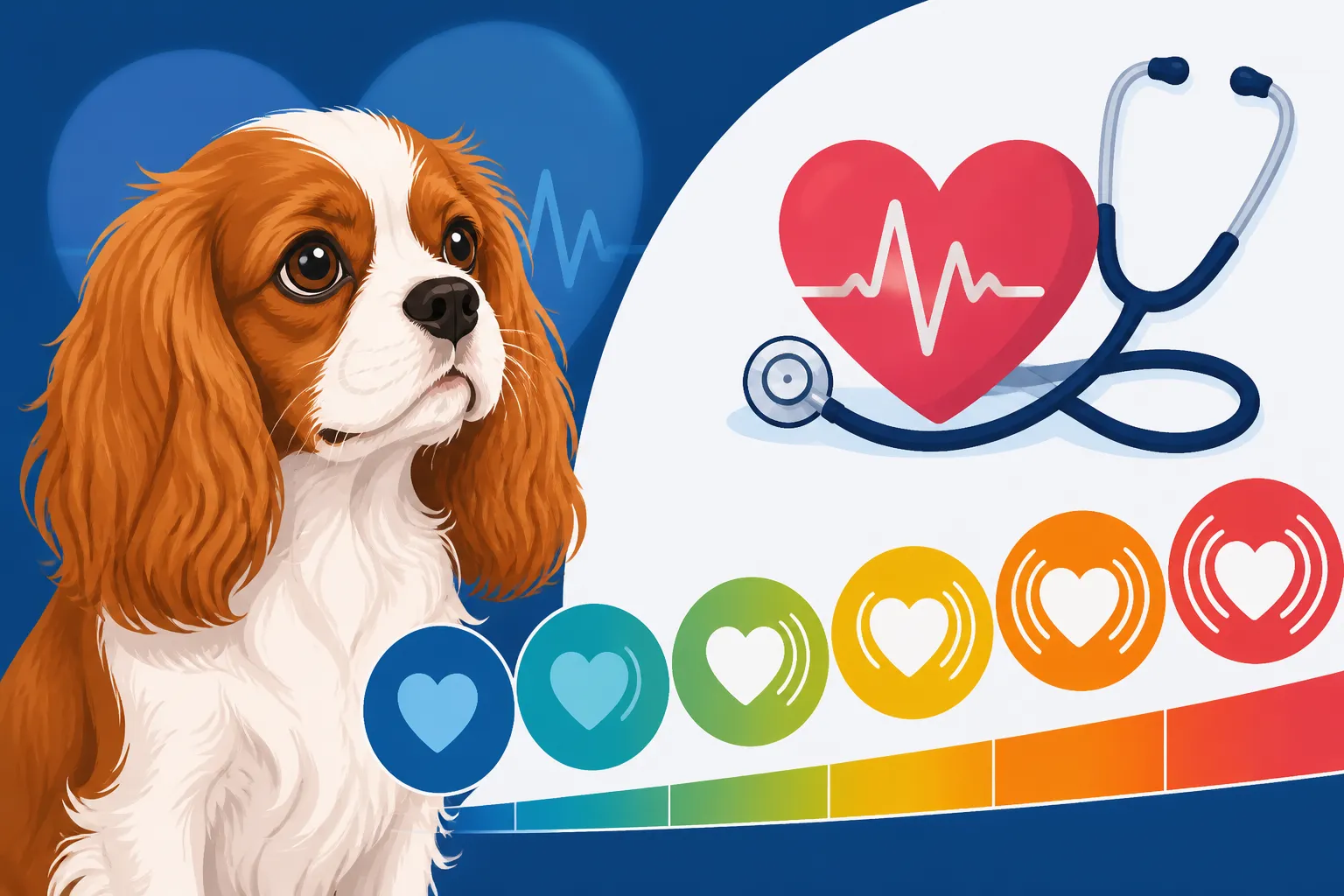
When your vet tells you your Cavalier has a heart murmur, they'll usually follow it up with a grade, typically on a scale of I to VI. This grading system is incredibly important because it gives a standardized way to describe the intensity of the murmur, offering insights into how much blood is flowing backward and, by extension, the likely progression of the disease. It's not just about how "loud" it sounds, but what that loudness implies about the underlying heart changes.
Let's break down what each of these grades means for your Cavalier. It’s important to remember that this grading is often subjective to the listener, but it provides a very good starting point for understanding your dog’s condition and determining the next diagnostic steps, such as those discussed in What a Cavalier Echocardiogram Shows.
From Barely There to Clearly Audible: Grades I and II
Grade I: The Faintest Whisper
A Grade I murmur is extremely soft, often intermittent, and can be really challenging for even an experienced vet to detect. You might hear it described as "barely audible." It usually requires a quiet room and careful listening, sometimes only becoming apparent after your Cavalier has been active or is positioned in a certain way. For many Cavaliers, a Grade I murmur might be the very first subtle sign of Mitral Valve Disease beginning its slow progression.
At this stage, the valve leakage is minimal, and the heart is typically not yet showing signs of enlargement or stress. It's a "listen closely, you might miss it" kind of murmur. While it might sound reassuringly faint, in a Cavalier, even a Grade I murmur warrants future monitoring, given the breed's predisposition to MVD. It’s a warning flag, not an immediate crisis, but certainly a signal to be vigilant.
Grade II: Soft, But Consistent
A Grade II murmur is soft, but it's consistently audible every time the vet listens. It's still not loud enough to make the stethoscope vibrate (a phenomenon called a "palpable thrill," which we'll get to), but it's definitely there. This is a murmur that a vet will confidently identify during a routine exam.
For many Cavalier owners, discovering a Grade II murmur is often the first tangible sign of their dog's heart disease. While still considered a mild murmur, it indicates that the mitral valve is leaking more consistently than with a Grade I. At this point, your vet might recommend a referral to a veterinary cardiologist for a baseline echocardiogram to assess the heart's structure and function and to establish where your Cavalier is in terms of How Cavalier Heart Disease Progresses Stage by Stage. This early diagnostic step is critical for proactive management.
The Moderate Murmurs: Grades III and IV
Grade III: Moderately Loud, No Palpable Thrill
Moving into Grade III, the murmur is now distinctly louder and more easily heard. It's prominent, but crucially, it's still not associated with a palpable thrill. This means that if you were to gently place your hand over your Cavalier's chest where the murmur is loudest, you wouldn't feel a vibration. This distinction is important because the presence of a thrill usually indicates more significant turbulence.
A Grade III murmur often signifies that the mitral valve leakage is becoming more substantial, and the heart might be starting to remodel or enlarge to compensate for the inefficiency. This is often the point where a veterinary cardiologist will be highly recommended, if not already seen. They can use an echocardiogram to measure heart chamber sizes, assess valve integrity, and determine if the heart is beginning to struggle, which might necessitate starting certain medications, like those detailed in Medication for a Cavalier With Heart Disease.
Grade IV: Loud, With a Palpable Thrill
A Grade IV murmur is impossible to miss. It's loud and unmistakable, and this is where the palpable thrill makes its appearance. If you place your hand on your Cavalier's chest, you will distinctly feel a vibration, similar to holding a purring cat or touching a garden hose with high-pressure water running through a kink. This thrill is direct evidence of intense turbulent blood flow, a clear indicator of significant valve leakage.
The presence of a palpable thrill with a Grade IV murmur often suggests that the heart is already experiencing considerable stress due to the severity of the mitral valve regurgitation. At this stage, it's very likely that your Cavalier's heart has begun to enlarge, and they might be nearing or already experiencing the early signs of heart failure. Regular follow-ups with a cardiologist and potentially starting medication become crucial to manage the condition and improve your Cavalier's quality of life. This is also a stage where the financial implications of managing the disease can become substantial, making good pet insurance, like policies from Healthy Paws, invaluable if enrolled early.
Loud and Unmistakable: Grades V and VI
Grade V: Very Loud, Strong Palpable Thrill, Audible with Stethoscope Barely Touching
Now we're talking about a murmur that's not just loud, but very loud. The palpable thrill associated with a Grade V murmur is strong and easily felt. What's truly remarkable about this grade is that the murmur can often be heard even if the stethoscope is barely touching your Cavalier's chest wall – sometimes even lifted slightly off. This indicates extremely vigorous and turbulent blood flow.
A Grade V murmur signals advanced Mitral Valve Disease, where the mitral valve is severely compromised, and there's a significant amount of blood leaking backward. The heart will almost certainly be enlarged, and your Cavalier might already be showing clinical signs of heart failure, such as coughing, lethargy, or reduced exercise tolerance. Aggressive medical management, often involving multiple medications, will be necessary to control symptoms and support heart function.
Grade VI: Extremely Loud, Audible Without a Stethoscope
This is the highest and most severe grade of heart murmur. A Grade VI murmur is so loud and powerful that it can literally be heard without a stethoscope, simply by placing your ear against your Cavalier's chest. The palpable thrill is exceptionally strong and unmistakable.
Reaching Grade VI signifies end-stage Mitral Valve Disease. At this point, the heart is severely enlarged and struggling tremendously. Cavaliers with a Grade VI murmur are almost certainly in significant congestive heart failure, experiencing severe symptoms and requiring intensive medical care to maintain comfort and quality of life. This is a critical stage, and owners will be working closely with their veterinary cardiologist to manage the advanced symptoms and make difficult decisions about their Cavalier's care, often requiring careful consideration of their comfort and prognosis, as outlined in Knowing When a Cavalier's Heart Has Run Out. The costs associated with such advanced care can be overwhelming, another reason comprehensive pet insurance can be a lifeline for many families.
Here's a quick summary table of the heart murmur grades:
| Murmur Grade | Description | Palpable Thrill | General Implication for MVD Progression |
|---|---|---|---|
| Grade I | Very faint, intermittent | Absent | Very early, minimal leakage |
| Grade II | Soft, but consistently audible | Absent | Mild leakage, consistent |
| Grade III | Moderately loud | Absent | Moderate leakage, heart adapting |
| Grade IV | Loud | Present | Significant leakage, heart under stress |
| Grade V | Very loud, audible off chest | Strong & easily felt | Severe leakage, early failure signs |
| Grade VI | Extremely loud, audible without stethoscope | Very strong & obvious | End-stage disease, advanced failure |
What a Murmur Grade Tells You About Your Cavalier's Heart Health
A murmur grade, while not a complete diagnosis on its own, is a vital piece of the puzzle. It gives your vet a strong indication of how far along your Cavalier's heart disease might be and helps guide the next steps. It's the initial assessment that pushes for further investigation, especially for a breed so genetically susceptible to MVD.
The higher the grade, the more likely it is that the mitral valve leakage is significant, and the heart is struggling to cope. However, it's crucial to remember that a murmur grade is about the sound of the turbulence, not necessarily the stage of the heart disease. A dog with a very loud murmur (high grade) might not yet be in heart failure, but the loud sound indicates a high volume of blood regurgitation, suggesting they are closer to that point or have significant structural changes already. Conversely, a faint murmur might still warrant careful attention, especially if other symptoms are present or if an echocardiogram reveals more than the stethoscope could tell.
When a Murmur Requires Further Investigation
Regardless of the grade, if a murmur is detected in your Cavalier, it's always a good idea to discuss further diagnostics with your vet. For a Grade I or II murmur, especially in a younger Cavalier, your general practitioner might recommend monitoring for a few months or a year, coupled with an annual heart check. However, many vets, knowing the breed's history, will suggest a referral to a board-certified veterinary cardiologist for an echocardiogram. This specialized ultrasound of the heart is the gold standard for accurately assessing heart function and structure.
For Grade III murmurs and above, a cardiology referral and an echocardiogram become even more critical. These tools can definitively tell you the extent of the mitral valve's deterioration, the size of your Cavalier's heart chambers, the blood flow dynamics, and whether the heart has started to enlarge or shows signs of failure. These measurements and images are far more precise than a stethoscope alone and are essential for staging the disease and creating a tailored treatment plan. Early diagnosis and monitoring are key to extending your Cavalier's healthy years. Sometimes, even blood tests like A Cavalier Heart Blood Test Called NT-proBNP can provide additional information.
Living with a Graded Murmur and Future Steps
Once your Cavalier has a graded murmur, whether low or high, your journey shifts to management and monitoring. It’s not a one-and-done situation. For milder murmurs, this might simply mean careful observation at home and regular vet check-ups. You'll want to be attuned to any changes in their breathing, energy levels, or appetite. Checking their Counting a Cavalier's Resting Breaths at home can be a valuable indicator.
For higher-grade murmurs, or if the echocardiogram reveals significant heart changes, medication will likely be prescribed. These medications aim to improve heart function, reduce fluid retention, and alleviate symptoms. This is where the long-term commitment and financial planning come into play. It's a journey, and you'll become a keen observer of your Cavalier's daily well-being. Keeping up with regular vet appointments and adhering strictly to medication schedules are paramount. Having pet insurance, perhaps from a provider like Healthy Paws, can significantly ease the financial burden of ongoing specialist visits, medications, and potential emergency care.
The Role of Regular Vet Checks and Specialist Care
Regular veterinary check-ups are always important, but they become absolutely non-negotiable for a Cavalier with a heart murmur. Your general vet can track the murmur's progression, listen for new sounds, and monitor your dog's overall health. However, for a Cavalier, having an Annual Cardiologist Exams for a Cavalier is often the best course of action once a murmur is detected, especially if it’s Grade II or higher.
A veterinary cardiologist specializes in heart health and has advanced diagnostic tools and expertise specific to conditions like MVD. They can interpret complex echocardiogram results, determine the precise stage of your Cavalier's heart disease, and fine-tune medication dosages as the disease progresses. They are your best partner in managing this common Cavalier condition, helping you to potentially extend your beloved pet's lifespan and improve their quality of life. Proactive care, informed by accurate grading and specialist consultation, truly makes a difference.
Disclaimer
This article is intended for informational purposes only and does not constitute veterinary advice. Always consult with a qualified veterinarian or a board-certified veterinary cardiologist regarding your Cavalier King Charles Spaniel's specific health concerns and treatment options. The information provided here should not be used as a substitute for professional medical advice, diagnosis, or treatment.