Whether Dental Disease Reaches a Cavalier’s Heart
It's a worry shared by countless Cavalier King Charles Spaniel owners: that persistent bad breath, those yellowing teeth, and inflamed gums might somehow be silently harming their beloved dog's heart. We pour so much love into these little companions, and the thought that something as common as dental disease could compromise their already delicate cardiac health is truly frightening. This guide will explore the truth behind the connection between your Cavalier's oral health and their heart, offering clarity and actionable steps to protect them.
The Alarming Link Between Oral Health and Systemic Disease in Cavaliers
It’s easy to dismiss bad breath as just “dog breath,” but for Cavaliers, it’s often the first warning sign of a much deeper problem that extends beyond their mouth. Dental disease isn't just about plaque; it's an inflammatory condition that can open the door to systemic issues throughout their body.
How Bacteria Travel from Mouth to Body
Think about it: your Cavalier's mouth, especially when dental disease is present, is a bustling metropolis of bacteria. When plaque and tartar build up, they irritate the gums, leading to gingivitis (inflamed gums). If left unchecked, this progresses to periodontitis, where the inflammation and infection spread deeper, attacking the bone and tissues supporting the teeth.
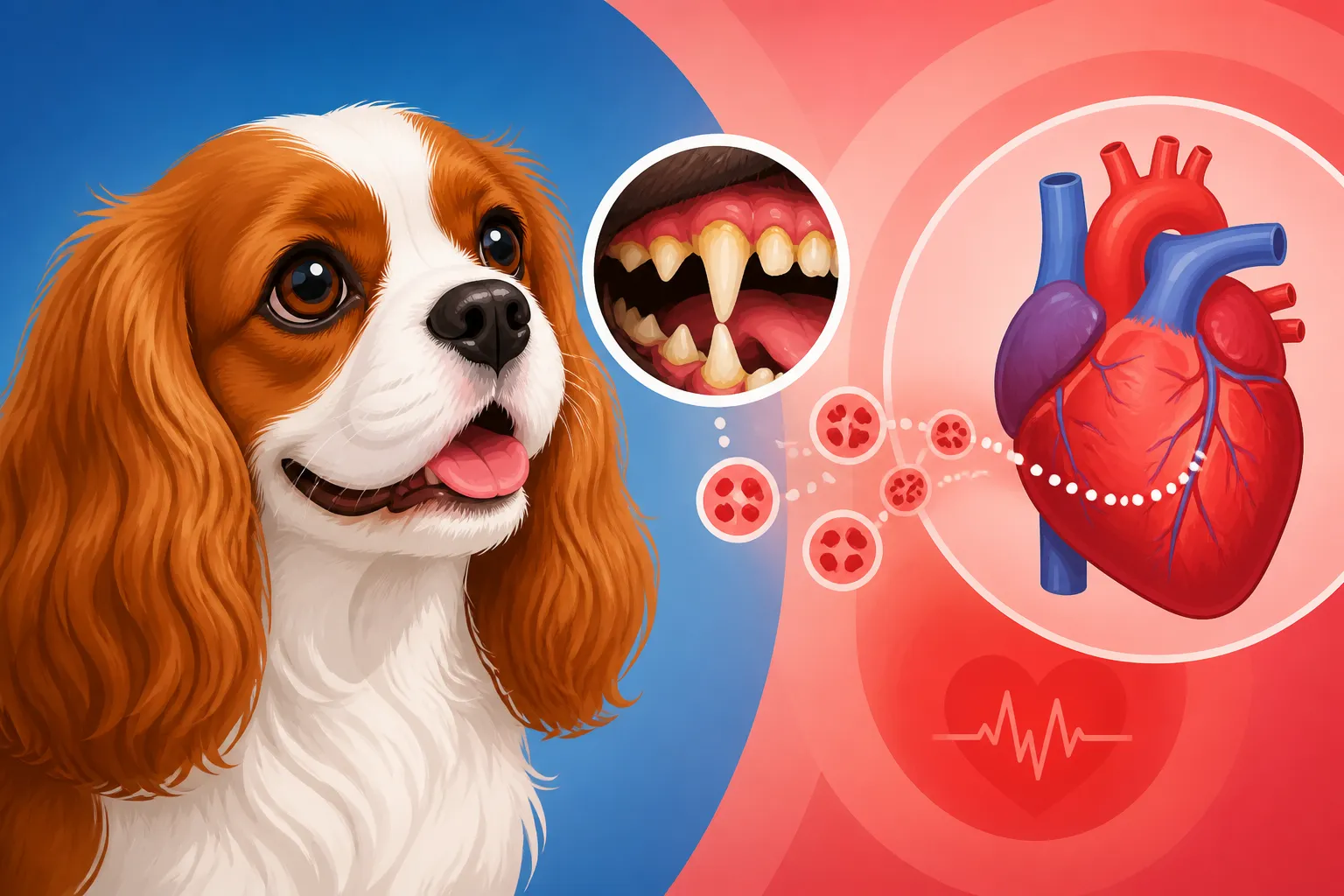
Here’s the critical part: those inflamed gums are a direct gateway to the bloodstream. The mouth is incredibly vascular, meaning it has a rich supply of blood vessels. Every time your Cavalier chews, plays, or even just exists with periodontal disease, bacteria can enter the bloodstream through these compromised gum tissues. Once in the bloodstream, these bacteria can travel anywhere in the body. While the body's immune system usually tries to clear these invaders, a constant barrage can overwhelm it, potentially leading to inflammation and infection in distant organs. It’s a bit like having an open wound that's constantly being reinfected, but it’s happening inside their mouth where we often don't see the full extent of the battle.
Why Cavaliers Are Especially Vulnerable to Dental Issues
Cavalier King Charles Spaniels, for all their charming qualities, are unfortunately predisposed to dental problems. Their adorable, somewhat flattened faces and relatively short muzzles mean they have less space in their mouths than dogs with longer snouts. This often leads to crowded teeth, especially among the incisors and sometimes the premolars.
When teeth are crowded, they don't align perfectly, creating nooks and crannies where food particles and bacteria can easily get trapped. This makes it incredibly difficult for owners to clean effectively, even with diligent brushing. The overcrowding also means that teeth might rub against each other abnormally, leading to wear or further gum irritation. Because of this inherent anatomical challenge, Cavaliers tend to accumulate plaque and tartar much faster than many other breeds, sometimes starting even in their puppyhood. The combination of genetics and their unique oral structure means that without proactive and consistent dental care, almost all Cavaliers will develop some form of dental disease by the time they are a few years old.
Unpacking the "Heart Disease" Connection in Cavaliers
The question on every Cavalier owner's mind, particularly concerning dental health, is often about the heart. Given that Cavaliers are famously prone to mitral valve disease, it's natural to wonder if one problem directly causes the other. Let's get clear on what the science says.
Understanding Mitral Valve Disease MVD in Cavaliers
First and foremost, it’s absolutely vital to understand this: Mitral Valve Disease (MVD) in Cavalier King Charles Spaniels is a largely genetic, degenerative condition. It is not caused by dental disease. MVD is a progressive process where the mitral valve, one of the main valves in the heart, thickens and degenerates over time. This prevents the valve from closing properly, leading to a leakage of blood back into the left atrium with each heartbeat. This leakage is what your vet hears as a heart murmur.
As the disease progresses, the heart has to work harder to pump blood, often leading to enlargement of the heart chambers and, eventually, congestive heart failure. Most Cavaliers will develop a murmur by the age of five, and the vast majority will eventually succumb to this condition. If you want to dive deeper into the specifics, you can learn more about Mitral Valve Disease in the Cavalier King Charles Spaniel or understand How Cavalier Heart Disease Progresses Stage by Stage. The key takeaway here is that MVD is an unfortunate, inherited predisposed condition, not a direct result of oral hygiene.
The Impact of Dental Bacteria on an Already Compromised Heart
While dental disease doesn't cause MVD, it would be incorrect to say there's absolutely no connection to overall heart health. The true concern lies in how persistent bacterial infection from the mouth can impact a Cavalier who already has a compromised heart due to MVD.
The primary worry is a condition called bacterial endocarditis. This is when bacteria from the bloodstream attach to the heart valves, leading to an infection of the heart lining and valves. In a healthy dog, the immune system would typically clear these transient bacteria. However, in a dog with a damaged heart valve, like those seen in MVD, the roughened or abnormal valve surface provides a perfect spot for bacteria to latch onto and colonize. This is a serious, life-threatening condition, though thankfully, it is relatively rare in dogs, even those with MVD. When it does occur, it can cause rapid deterioration of heart function and severe systemic illness.
Beyond the rare but serious risk of bacterial endocarditis, chronic dental infection contributes to a state of systemic inflammation throughout the body. Imagine your Cavalier's immune system constantly fighting off bacteria leaching from its gums. This chronic inflammatory load puts stress on the body and requires energy. For a Cavalier whose heart is already working harder due to MVD, this additional burden, even if subtle, is not ideal. It can potentially make them more vulnerable to other health issues or simply add to the overall stress on their system. While it won't cause the MVD to worsen directly, it adds another layer of health challenge to an already delicate situation. Understanding Why Half of Cavaliers Have a Murmur by Five often helps owners grasp the prevalence of this genetic condition.
Recognizing and Preventing Dental Disease in Your Cavalier
The good news is that while MVD is largely out of our control, managing your Cavalier's dental health is very much within your power. Being proactive can make a huge difference, not just for their comfort, but for their overall systemic health too.
Common Signs of Dental Trouble
It can be easy to miss the early signs of dental disease, especially since many dogs are incredibly stoic. However, knowing what to look for can prompt timely intervention. The most obvious, and often first, sign is truly foul breath, also known as halitosis. This isn't just "dog breath"; it's a pungent, unpleasant odor that signals a bacterial overgrowth in the mouth.
As the disease progresses, you might notice visible plaque (a yellowish film) and tartar (a hard, brownish crust) building up on their teeth, especially along the gumline. Their gums might appear red, swollen, or even bleed easily when touched or brushed. Some Cavaliers might show more direct signs of pain: dropping food, chewing only on one side of their mouth, pawing at their face, or becoming hesitant to eat hard kibble or chews they once loved. They might even become withdrawn or irritable if they're experiencing chronic oral pain. Regularly lifting your Cavalier’s lips to inspect their teeth and gums can help you catch these issues early. Many owners are surprised to learn just how crowded a Cavalier's jaw can be, as discussed in Cavalier Dental Disease in a Crowded Jaw.
Proactive Steps for Optimal Oral Health
Taking a proactive approach to your Cavalier's dental health is the best defense against progression. Here’s what you can do:
- Daily Brushing: This is the absolute gold standard for preventing plaque and tartar buildup. Using a soft-bristled dog toothbrush and veterinary toothpaste (never human toothpaste!) can remove plaque before it hardens into tartar. Even if you can't manage daily, aiming for several times a week is far better than nothing. It can be a challenge to introduce, but starting early with a puppy, or slowly introducing it to an adult, can make a big difference. For tips, check out Brushing a Cavalier's Teeth Without a Struggle.
- Dental Chews and Diets: Look for products approved by the Veterinary Oral Health Council (VOHC). These products have been scientifically proven to reduce plaque and/or tartar. Be cautious with extremely hard chews (like antlers or real bones) as they can fracture teeth. Specific dental diets are also available from your vet that have a unique kibble design to scrub teeth as your Cavalier chews.
- Regular Professional Dental Cleanings: Just like humans, Cavaliers need professional cleanings. This procedure is done under general anesthesia, allowing your vet to thoroughly clean above and below the gum line, polish teeth, and extract any diseased teeth. The frequency depends on your Cavalier's individual needs, but many will benefit from a cleaning every 1-3 years. Your vet will assess their oral health during annual check-ups to recommend a schedule. You might wonder The Age a Cavalier Needs Its First Dental, and it’s often sooner than you think.
A good pet insurance policy can be a huge help here. While most standard pet insurance plans, like those offered by Healthy Paws, generally don't cover routine preventative care like dental cleanings (unless you have a specific wellness add-on), they will typically cover the costs associated with treating dental disease once it's diagnosed, such as extractions, antibiotics for infection, or other advanced treatments. This can be a huge relief when faced with unexpected veterinary bills related to dental pathology.
Making Informed Decisions About Dental Procedures
Once dental disease has taken hold, a professional cleaning under anesthesia becomes necessary. For many Cavalier owners, the thought of their dog going under anesthesia is anxiety-inducing, especially if they have a heart murmur. This is a perfectly valid concern, and it's essential to discuss it thoroughly with your veterinary team.
Weighing Anesthesia Risks for a Cavalier with a Murmur
It’s true that any anesthetic procedure carries a degree of risk, and for a Cavalier with a heart murmur, that risk needs to be carefully managed. However, modern veterinary anesthesia has come a long, long way. Ignoring severe dental disease can actually pose a greater risk to your Cavalier's overall health than a carefully managed anesthetic event.
Your veterinary team will take specific precautions for a Cavalier with a murmur. This usually involves comprehensive pre-anesthetic testing, which may include bloodwork to assess organ function, a chest X-ray to check for any signs of fluid accumulation or heart enlargement, and sometimes an electrocardiogram (ECG) to evaluate heart rhythm. In many cases, especially if the murmur is moderate to severe, your vet might recommend a consultation with a board-certified veterinary cardiologist. A cardiologist can perform an echocardiogram (an ultrasound of the heart) to accurately stage the heart disease and provide specific recommendations for anesthetic protocols tailored to your Cavalier's cardiac health. They can advise on specific medications to use or avoid, and ensure the safest possible plan is in place. You can learn more about general anesthetic considerations in Anesthesia Risk in a Cavalier With a Murmur and the importance of Pre-Surgery Testing for an Older Cavalier. Remember, the goal is always to balance the risks of anesthesia with the risks of allowing the dental disease to continue unchecked.
Financial Considerations and Pet Insurance
Let's be real, professional dental cleanings and any necessary extractions aren't cheap. The cost can range from a few hundred dollars for a basic cleaning to well over a thousand if multiple extractions or advanced diagnostics are needed. This financial burden can be a major source of stress for Cavalier owners.
This is where pet insurance can really shine, though it's important to understand the nuances. While routine dental cleanings are often not covered by standard insurance (they might be part of a separate "wellness" add-on), most comprehensive pet insurance policies, such as those from Healthy Paws, will cover the costs of treating dental disease once it's diagnosed. This means if your Cavalier needs extractions due to severe periodontitis, or antibiotics for a dental abscess, those costs would typically be covered, subject to your deductible and reimbursement rate.
The crucial caveat is "pre-existing conditions." If your Cavalier already has a diagnosed heart murmur or advanced dental disease before you enroll in insurance, those specific conditions might be excluded from coverage. This highlights the importance of enrolling your Cavalier in pet insurance when they are young and healthy, ideally as a puppy. You can find more details on Insuring a Cavalier Before the Murmur Arrives. Thinking ahead and understanding What a Cavalier Policy Costs Monthly and Setting a Deductible Against Cavalier Heart Bills can save you a lot of heartache (and money!) down the road.
| Dental Health Practice | Pros | Cons | Cost Implication |
|---|---|---|---|
| Daily Tooth Brushing | Most effective for plaque removal, cost-effective ongoing care | Requires daily commitment, can be challenging to introduce to some dogs | Low initial cost (brush, toothpaste), negligible ongoing |
| VOHC-Approved Dental Chews/Diets | Convenient, can help reduce plaque/tartar, some dogs enjoy them | Less effective than brushing alone, can add calories, some products are expensive | Moderate ongoing cost (daily chews, special food) |
| Professional Dental Cleaning (Anesthetized) | Thorough cleaning, addresses issues below gumline, extractions if needed | Requires general anesthesia (risk, especially with MVD), higher upfront cost | High upfront cost (can be hundreds to over a thousand), potential for pet insurance help |
Disclaimer
The information provided in this article is for general informational purposes only and is not a substitute for professional veterinary advice. Always consult with a qualified veterinarian regarding any health concerns or before making any decisions about your Cavalier King Charles Spaniel's care.