What the Cavalier Heart Protocol Asks of Parents
It's absolutely heartbreaking to watch your beloved Cavalier King Charles Spaniel struggle with heart disease, especially when it strikes far too young. Many of us know the crushing feeling of a vet diagnosing a heart murmur in a seemingly healthy young dog. This guide dives deep into the Cavalier MVD Breeding Protocol, a vital tool that dedicated breeders use to try and give these sweet dogs a longer, healthier life, and what it truly asks of everyone involved.
Understanding the Cavalier MVD Breeding Protocol's Purpose
The reality for Cavalier King Charles Spaniels is that they are prone to certain health issues, and Mitral Valve Disease (MVD) is perhaps the most prevalent and devastating among them. For years, responsible breeders have grappled with how to combat this pervasive genetic problem. The MVD breeding protocol isn't a quick fix or a guarantee, but it's the most effective strategy we currently have to push back the average age of MVD onset, hopefully giving our Cavaliers many more healthy years.
The Dire Reality of Mitral Valve Disease in Cavaliers
If you're a Cavalier owner, you've likely heard of MVD, or perhaps even experienced it firsthand. It's a progressive heart condition where the mitral valve, located between the left atrium and left ventricle of the heart, deteriorates and fails to close properly. This leads to a leakage of blood back into the atrium, causing a characteristic "murmur" that vets can hear with a stethoscope. As the disease progresses, the heart works harder, eventually enlarging and leading to congestive heart failure.
The frustrating truth is that MVD affects an alarmingly high percentage of Cavaliers. Studies have shown that over half of Cavaliers develop a heart murmur by age five, and nearly all will have one by age ten. This isn't just a "senior dog" problem; it often starts in middle age, drastically shortening their lifespans and diminishing their quality of life. The emotional toll on owners is immense, watching their active, loving companions slow down, cough, and struggle to breathe. If you're looking for a more in-depth understanding, you might want to read about Mitral Valve Disease in the Cavalier King Charles Spaniel. It really helps to grasp the full scope of what we're up against.
How the Protocol Aims to Delay Disease Onset
Unlike some genetic diseases caused by a single, identifiable gene, MVD in Cavaliers is considered polygenic, meaning it's influenced by multiple genes. This makes it incredibly complex to breed out entirely. The MVD breeding protocol, developed by veterinary cardiologists and breed experts, operates on a very practical principle: if you breed dogs that remain free of a heart murmur for a longer period, their offspring are statistically more likely to develop MVD later in life, if at all. It's about shifting the odds in favor of longevity.
Think of it like this: if you have a line of Cavaliers where murmurs consistently appear by age three, and you continue to breed those dogs, you're likely perpetuating that early onset. However, if you only breed Cavaliers who are still murmur-free at, say, five years old, you're selecting for genes that contribute to delayed onset. This strategy aims not to eliminate MVD—which, given its prevalence and polygenic nature, is a huge challenge—but to significantly delay its impact. This gives our beloved companions more time to live life to the fullest, free from debilitating heart symptoms, and that's a goal worth fighting for.
Key Requirements for Breeding Cavaliers Under the Protocol
Implementing the MVD breeding protocol isn't a casual endeavor; it requires significant commitment, patience, and financial investment from breeders. It’s a deliberate, scientific approach to improving the health of future generations, and it places specific, non-negotiable demands on the parent dogs.
Age Requirements for Breeding Parents
This is arguably the cornerstone of the entire protocol. The MVD breeding protocol stipulates that a Cavalier should not be bred until it has reached a certain age and, critically, has remained murmur-free. The widely accepted minimum age is 2.5 years (30 months), but the ideal standard for breeding is to wait until a Cavalier is at least five years old.
Why such an emphasis on age? Because this is when heart murmurs typically begin to appear in the breed. If a Cavalier reaches five years of age without developing a murmur, it indicates a strong genetic predisposition for delayed onset of MVD. Breeding dogs at this age who are still clear significantly increases the chances of their puppies also having a later onset of the disease. It’s a huge ask for breeders, as it means fewer breeding opportunities over a dog's lifetime, but it's a sacrifice for the greater good of the breed. Waiting to breed a Cavalier until they're five years old, or even older, is a clear sign of a breeder's dedication, as discussed in Why a Cavalier Should Not Be Bred Before Five. Understanding The Age a Cavalier Murmur Usually Appears further underscores why these age requirements are so crucial.
The Importance of Clear Cardiac Health Certificates
It's not enough for a breeder to say their dog is murmur-free. The protocol demands rigorous, documented proof. Both prospective parent Cavaliers must undergo annual cardiac examinations performed by a board-certified veterinary cardiologist. Not just any vet, mind you, but a specialist who has the advanced training and equipment to accurately assess heart health.
During these examinations, the cardiologist will perform an auscultation, listening carefully to the heart for any signs of a murmur. If any murmur is detected, the dog fails the clearance. A "clear" certificate means the cardiologist has heard no murmur. Often, breeders will also get an echocardiogram (a heart ultrasound) at a certain age, sometimes before breeding, to establish a baseline and ensure there are no underlying structural abnormalities, even without a murmur. These clearances are typically dated and signed, providing irrefutable proof of the dog's cardiac status at the time of examination. Regular Annual Cardiologist Exams for a Cavalier are non-negotiable for anyone following the protocol. For a deeper dive into what happens during these visits, you can check out What a Cavalier Cardiologist Visit Involves.
Why Both Parents Must Meet the Criteria
The MVD breeding protocol isn't a pick-and-choose situation; it’s an all-or-nothing deal. For the best chance of producing healthier offspring, both the sire (father) and the dam (mother) must meet the protocol's strict requirements. This means both must be of the appropriate age, and both must have current, clear cardiac certificates from a board-certified cardiologist.
If a breeder uses one parent who is clear but the other has an early-onset murmur, they are effectively undermining the entire purpose of the protocol. Because MVD is polygenic, both parents contribute to the genetic makeup that determines when, or if, a puppy might develop the disease. Using even one non-compliant parent introduces higher risk genes into the litter, which could negate the benefits of the healthy parent. Responsible breeding is about stacking the genetic deck in favor of health for every single puppy, and that means being uncompromising with both sides of the pedigree.
The Practicalities and Challenges for Dedicated Breeders
Following the Cavalier MVD breeding protocol is not a simple undertaking. It demands a level of dedication, financial commitment, and patience that sets truly ethical breeders apart from those simply looking to make a quick profit. These challenges are a testament to their love for the breed and their commitment to improving its health.
The Financial Investment in Health Testing
Let's be real: quality health testing isn't cheap. A board-certified veterinary cardiologist exam, especially with an echocardiogram, can cost hundreds of dollars each time. Since the protocol requires annual clearances, and breeders must wait years before a dog is eligible for breeding, these costs add up significantly. Breeders might invest thousands of dollars in health testing a single potential breeding dog before it ever produces a litter. This doesn't even account for the initial cost of acquiring a well-bred puppy with strong lineage, or the costs of DNA testing for other common Cavalier conditions.
This substantial financial outlay directly impacts the price of a well-bred Cavalier puppy. When you see a higher price tag from a reputable breeder, a significant portion of that cost reflects their responsible health testing practices. They're investing in the future health of your puppy long before it's even conceived. It's truly an investment in preventing heartbreak down the line. You can learn more about the various tests involved in The Heart Testing a Cavalier Breeder Must Do and the associated expenses in What a Cavalier Cardiology Referral Costs.
The Time Commitment and Smaller Breeding Programs
Beyond the money, there's the invaluable commodity of time. Waiting until a female Cavalier is 2.5 years old, and ideally 5 years old, to breed means she will produce significantly fewer litters in her lifetime compared to a breeder who starts breeding earlier. This impacts the size of a breeding program and the number of puppies available. A breeder committed to the protocol might only have a litter every few years from a specific female, rather than every year.
This extended waiting period also means that the breeder is dedicating years of care, feeding, and daily life to a dog before it contributes to the next generation. It's a true labor of love, requiring immense patience and a long-term vision for the breed. It means making tough decisions to retire a dog from a breeding program if it develops a murmur before reaching the protocol's age requirements, even after years of investment. These breeders are passionate custodians of the breed, not puppy producers.
Educating Prospective Puppy Buyers
Another crucial aspect of the protocol is transparency and education. Ethical breeders spend considerable time explaining the MVD protocol to prospective puppy buyers, detailing why these health clearances matter, what they signify, and how to interpret the documentation. They don't just hand over a puppy; they provide a comprehensive education.
Buyers need to understand that simply being told "the parents are healthy" isn't enough. They should ask to see the physical, dated health certificates from a board-certified veterinary cardiologist for both parents, proving they were murmur-free at the appropriate age. A breeder should be happy to provide this proof, often proudly displaying copies of the certificates. Knowing Whether a Cavalier Breeder's Heart Clearance Is Current is vital. It's also incredibly helpful to understand Reading a Cavalier Puppy's Health Certificates so you can verify everything yourself. This transparency is a hallmark of a responsible, protocol-following breeder.
| Requirement for Breeding Cavalier | Minimum Standard (Good) | Ideal Standard (Excellent) |
|---|---|---|
| Age of Parents at Breeding | 2.5 years (30 months) | 5 years or older |
| Cardiac Clearance Source | Board-certified Vet Cardiologist | Board-certified Vet Cardiologist |
| Clearance Frequency | Annually before breeding | Annually before breeding |
| Evidence of Clearance | Written, dated certificate for both parents, indicating no murmur. | Written, dated certificate for both parents, indicating no murmur, often with baseline echocardiogram results. |
| Disease Status | Murmur-free at time of breeding | Murmur-free at time of breeding |
How Owners Can Support the Protocol (Even Without Breeding)
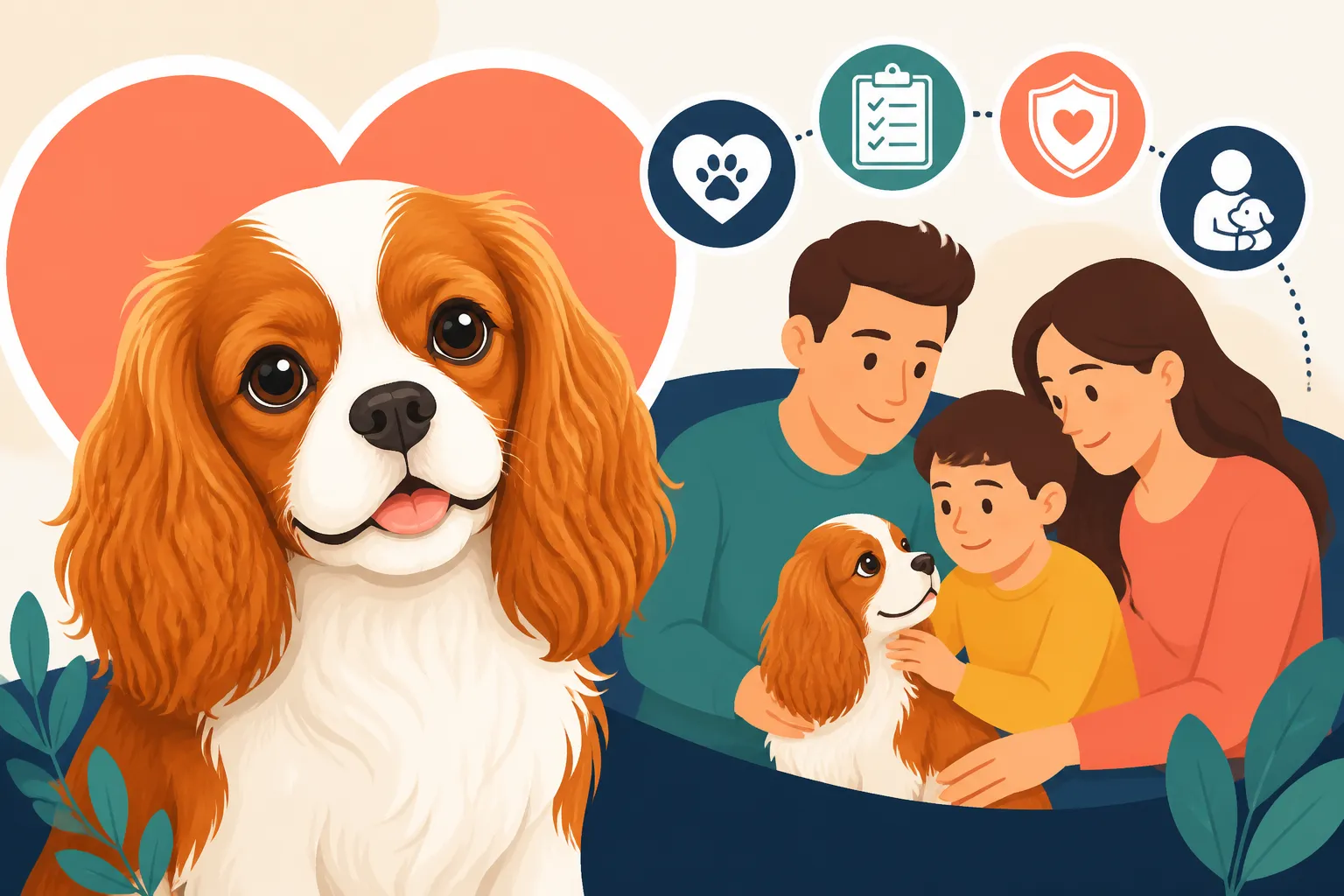
You might not be a breeder, but as a Cavalier owner, you play a vital role in supporting and perpetuating the goals of the MVD breeding protocol. Your choices and actions directly contribute to the future health of the breed, and your advocacy matters immensely.
Choosing a Breeder Who Follows the Protocol
The single most impactful thing you can do as a prospective owner is to choose a breeder who rigorously adheres to the MVD breeding protocol. This means doing your homework, asking probing questions, and verifying all health clearances. Don't be swayed by lower prices or immediate availability if it means compromising on health testing. A truly reputable breeder will be transparent, educate you, and provide all necessary documentation.
By supporting these ethical breeders, you're not just getting a puppy with a better chance at a long, healthy life; you're also incentivizing responsible breeding practices. Your demand for health-tested puppies helps drive the market towards better standards. Conversely, buying from breeders who don't follow such protocols, like those found in puppy mills or backyard operations, indirectly supports the continued proliferation of MVD and other health issues in the breed. This is why it's so important to really research and understand Buying a Cavalier From a Health-Testing Breeder.
Advocating for Healthier Breeding Practices
Beyond your personal choices, you can become an advocate for healthier breeding practices within the Cavalier community. Share what you learn about the MVD protocol with other owners. Support breed clubs and organizations that prioritize health research and implement strict breeding guidelines. Attend breed-specific health seminars or webinars.
The more informed owners there are, the greater the collective pressure on the breeding community to uphold and improve health standards. This isn't about shaming anyone, but about empowering owners with knowledge and fostering a community that collectively strives for the best possible future for our beloved Cavaliers. Every conversation, every shared piece of reliable information, contributes to a stronger, healthier breed.
Pet Insurance for New Puppies
Even with the most dedicated breeders following the MVD protocol to the letter, there's never a 100% guarantee that a Cavalier will remain free of heart disease. The protocol significantly reduces the risk and delays onset, but MVD is still a pervasive genetic challenge. This is why, as a new puppy owner, investing in pet insurance is one of the smartest decisions you can make.
Enroll your Cavalier puppy in a comprehensive pet insurance plan, like those offered by Healthy Paws, as early as possible. Ideally, this should be done before their first vet visit after coming home, and definitely before any murmur is detected. Once a murmur is heard, even if it's benign, MVD typically becomes a pre-existing condition, and future treatment for it won't be covered. Having robust insurance in place from the start can be a lifesaver, covering a significant portion of diagnostic tests, medications, and even specialist care should your Cavalier develop MVD or other health issues later in life. It provides invaluable peace of mind. To learn more about securing coverage, explore Insuring a Cavalier Before the Murmur Arrives and consider the importance of The Age to Insure a Cavalier for your new family member.
Disclaimer
The information provided in this article is for general informational purposes only and does not constitute veterinary advice. Always consult with a qualified veterinary professional for any health concerns or before making any decisions about your pet's health or treatment.