Why a Cavalier Murmur Becomes Pre-Existing
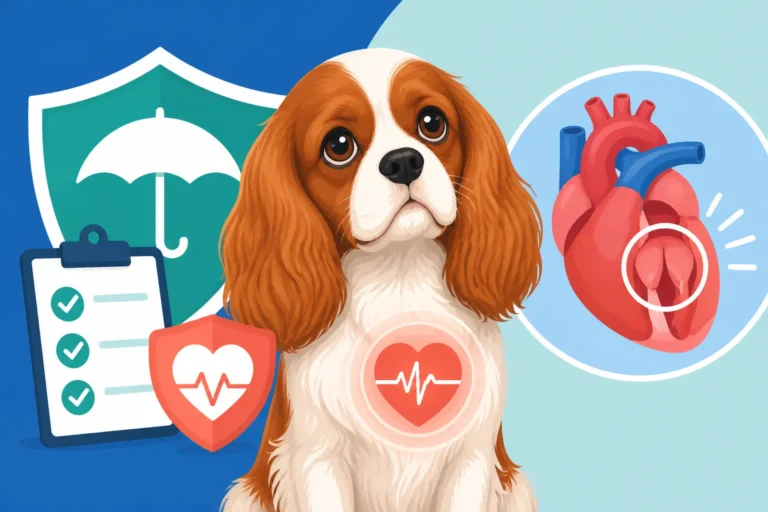
Bringing a Cavalier King Charles Spaniel into your life is an absolute joy, filled with cuddles and unwavering companionship. But it also comes with the looming shadow of mitral valve disease (MVD), a heartbreaking reality for our beloved breed. One of the biggest financial heartbreaks occurs when an inevitable heart murmur is diagnosed, only to find out your pet insurance considers it a "pre-existing condition," leaving you to shoulder massive vet bills alone. This guide will walk you through exactly why this happens and what you can do about it.
Understanding What "Pre-Existing Condition" Truly Means for Your Cavalier
The phrase "pre-existing condition" can feel like a punch to the gut when you're facing a diagnosis for your beloved Cavalier. It's a term that gets thrown around a lot in pet insurance circles, and it essentially means that your insurance company won't cover treatment for an illness or injury that showed signs or symptoms before your policy started or during its waiting period. For Cavalier owners, this often comes into play with the breed's notorious predisposition to heart disease. You might think, "My dog was healthy when I got the policy," but the nuances of MVD can make things incredibly complicated.
The Insurance Company's Perspective
From an insurance company's point of view, a pre-existing condition is any ailment or injury that was diagnosed, treated, or for which symptoms were observed by you or a veterinarian prior to your policy's effective date and the expiration of any waiting periods. They’re not trying to be malicious, but rather to protect themselves from covering conditions that already exist or are clearly on their way. Imagine if you could buy car insurance after having an accident – it wouldn't make sense, right? Pet insurance operates on a similar principle. Many policies have a "look-back" period, which means they'll review your pet's vet records for a certain amount of time (often 6 to 12 months) before your policy started. If any signs of heart disease, even a subtle cough or lethargy, are noted in those records during the look-back period, a subsequent MVD diagnosis will likely be deemed pre-existing. This is why thorough veterinary records are so incredibly important, even if your Cavalier seems perfectly healthy.
The definitions can vary significantly between providers like Healthy Paws, Embrace, or Lemonade, so understanding the specific terms of your policy is paramount. Some insurers might distinguish between "curable" and "incurable" pre-existing conditions, which can offer a tiny glimmer of hope for some ailments, but unfortunately, MVD is a chronic, progressive condition that is almost always considered incurable in this context. It's a tough pill to swallow, knowing that once that murmur is noted, the clock starts ticking not just on your dog's health, but on your financial responsibility for their ongoing care.
Why Cavaliers Are Particularly Vulnerable to This Label
Cavalier King Charles Spaniels are, heartbreakingly, almost synonymous with mitral valve disease. It's not a question of if they will get it, but when and how severely. This breed has one of the highest incidences of MVD among all dog breeds, with over 50% of Cavaliers developing a heart murmur by age five and nearly all by age ten. This genetic predisposition means that even if your Cavalier puppy seems perfectly healthy, the underlying genetic factors are already at play.
This inherent vulnerability makes Cavaliers uniquely susceptible to the "pre-existing condition" trap. A subtle murmur, even one so faint your vet can barely hear it (a low What a Heart Murmur Grade Means in a Cavalier), can be the very first sign. It's not like a sudden injury where the timing is clear. MVD progresses slowly, sometimes silently, for years. Many loving Cavalier owners don't even realize their dog has a murmur until a routine annual check-up, perhaps at age three or four. If you've enrolled your Cavalier in pet insurance shortly before that check-up, or even a few months after, the insurer's look-back period might catch an earlier, unrecorded hint of the murmur, or the diagnosis itself, immediately rendering it pre-existing. It's a frustrating situation because, unlike other breeds, the expectation of MVD is almost baked into the Cavalier's genetic code, making prevention of its "pre-existing" label a race against time.
The Timeline of a Cavalier Heart Murmur's Appearance
Understanding when a heart murmur typically appears in a Cavalier is crucial for grasping the pre-existing condition dilemma. It's not a uniform event; rather, it's a spectrum that often begins subtly and progresses over time. This slow progression is precisely what makes it so difficult to get ahead of with pet insurance.
When a Murmur Typically Develops
As we discussed, mitral valve disease is rampant in Cavaliers. Most often, the first detectable murmur shows up between the ages of three and five years old. However, it's not uncommon for some Cavaliers to develop a murmur even younger, sometimes as early as one or two years old, particularly if they come from lines with early-onset MVD. Conversely, some Cavaliers might not develop a murmur until they are six, seven, or even eight years old, thanks to good genetics and responsible breeding practices. Unfortunately, these later-developing murmurs are increasingly rare. The average age for a murmur to appear has been creeping earlier in the breed, making the window for full insurance coverage even narrower.
For example, imagine your sweet Cavalier, Charlie, is two years old. He seems vibrant and full of energy, chasing squirrels and demanding belly rubs. You take him for his annual vet visit, and the vet listens to his heart carefully. She notes a very faint, Grade 1 murmur – barely audible, and often described as "innocent" or benign in other breeds, but a red flag in a Cavalier. If you had enrolled Charlie in a pet insurance policy just a few months prior, with a typical 14-day or 30-day waiting period for illness, this new finding immediately puts you in a bind. Even if the murmur is low grade and doesn't require immediate medication, it's now a documented pre-existing condition, and all future MVD-related costs will be excluded. This is why The Age a Cavalier Murmur Usually Appears is such a critical piece of information for Cavalier owners.
The Subtlety of Early Signs
One of the most insidious aspects of MVD in Cavaliers is how incredibly subtle the early signs can be. A heart murmur isn't always accompanied by obvious symptoms like coughing, lethargy, or exercise intolerance right away. In its early stages, MVD is often asymptomatic, meaning your Cavalier might appear completely normal, happy, and active, even with a detectable murmur. This makes it impossible for an owner to know that something is amiss without a veterinarian listening to the heart with a stethoscope.
Consider Lucy, a three-year-old Blenheim Cavalier. Her owner, Sarah, describes Lucy as a typical Cavalier – a "velcro dog" who loves to snuggle and go for short walks. Sarah diligently takes Lucy for her Annual Cardiologist Exams for a Cavalier, and at one such exam, the cardiologist detects a very soft murmur. Prior to this, Lucy had shown no outward signs of heart trouble. No coughing, no slowing down, nothing. If Sarah had just purchased a pet insurance policy for Lucy a month before this routine check-up, that murmur would likely be flagged as a pre-existing condition. The insurance company would argue that the "symptom" (the murmur) existed during the waiting period or before the policy started, even though Lucy showed no clinical signs and Sarah had no way of knowing. This underscores the need for proactive health management and, crucially, early pet insurance enrollment. The disease progresses through stages, and an early murmur doesn't mean immediate crisis, but it does signal the start of How Cavalier Heart Disease Progresses Stage by Stage.
The Critical Window for Insuring Your Cavalier
Given the high prevalence and often early onset of MVD in Cavaliers, the timing of when you enroll your dog in pet insurance is perhaps the most critical financial decision you'll make. Miss this window, and you could be looking at tens of thousands of dollars in out-of-pocket expenses throughout your Cavalier's life.
The "Catch-22" of Puppyhood Insurance
The single best time to insure your Cavalier is as a young puppy, ideally between 8 to 12 weeks of age, before their first veterinary check-up where a murmur could potentially be detected. This creates a "clean slate" from the insurance company's perspective. Most pet insurance policies, including popular ones like those from Healthy Paws or Trupanion, have waiting periods for illnesses (typically 14-30 days) and sometimes longer for orthopedic conditions (like 6 months for hip or knee issues). If you enroll your puppy before any vet has ever noted a murmur, and the waiting periods pass without incident, then any future diagnosis of MVD should be covered, provided it's not excluded by other policy terms.
However, this presents a "catch-22" for many new owners. When you bring home a fluffy, bouncy Cavalier puppy, heart disease is often the last thing on your mind. You're focused on potty training, finding the right food (perhaps from a reputable brand like Ollie or Chewy that offers tailored puppy formulas), and enjoying those adorable puppy antics. It feels like a lifetime away. But that’s precisely the point: the window is before any signs emerge. If you wait until your puppy's 6-month check-up, or even their first birthday, and a vet happens to hear a very faint murmur – which is entirely possible for a Cavalier – then that murmur immediately becomes pre-existing. This is why financial advisors and seasoned Cavalier owners often emphasize Insuring a Cavalier Before the Murmur Arrives. It might feel premature, but it's an investment in your future peace of mind and your Cavalier's long-term health.
What Happens If You Wait Too Long
If you delay getting pet insurance for your Cavalier until they're older, and a heart murmur is subsequently diagnosed, you'll likely find yourself in a challenging financial situation. Once a heart murmur is documented in your Cavalier's vet records, it will almost certainly be considered a pre-existing condition by any pet insurance provider you try to enroll with afterward. This means that none of the significant expenses associated with MVD management – cardiology consultations, echocardiograms, chest X-rays, blood tests, and life-saving medications like pimobendan and diuretics – will be covered.
Imagine you adopt a lovely 4-year-old Cavalier, Daisy, from a rescue. She's sweet and gentle, but her previous owner's records show she had a Grade 2 murmur noted at age 3. You try to get insurance, but every company you approach will review those records. Daisy's murmur, and therefore her MVD, will be excluded from coverage. This leaves you completely responsible for potentially thousands of dollars in treatment costs over her remaining years. What Cavalier Heart Disease Costs to Treat can be substantial, easily reaching into the thousands annually in later stages. This stark reality is why many experienced Cavalier owners stress the importance of thinking ahead. While it’s always worth investigating accident-only plans or looking into wellness packages for routine care, the core MVD treatment costs will remain uninsured if you've missed that critical early enrollment window.
Navigating Pet Insurance Policies and Pre-Existing Conditions
Understanding the nuances of pet insurance policies, especially when it comes to pre-existing conditions, can feel like trying to decipher an ancient text. It's often complex and filled with jargon, making it difficult to know what's truly covered and what isn't.
Defining "Cured" vs. "Pre-Existing"
A common point of confusion is whether a condition can ever shed its "pre-existing" label if it appears to resolve. For some ailments, particularly acute, short-term issues, an insurance company might classify a condition as "curable pre-existing." This means if your pet goes for a certain period (e.g., 6-12 months) without any symptoms or treatment for that specific condition, it might no longer be considered pre-existing for future recurrences. For example, if your Cavalier had a one-off ear infection before you got insurance, and then remained symptom-free for over a year, a new ear infection might be covered.
However, this rarely applies to chronic, progressive diseases like MVD. Mitral valve disease is, by its very nature, an incurable, lifelong condition. Once a murmur is detected, even if it's low grade and stable for years, it's a permanent feature of your Cavalier's health profile. There is no "cured" status for MVD. Therefore, if a heart murmur is deemed pre-existing, it will almost certainly remain an exclusion for the lifetime of that insurance policy. This fundamental difference between curable and incurable conditions is critical for Cavalier owners to understand, as it solidifies the importance of early enrollment. Trying to find an insurer who will cover an already-diagnosed murmur is like trying to find a needle in a haystack – it's virtually impossible. This is why many people focus on Saving Ahead of a Cavalier Heart Diagnosis if they haven't been able to secure early insurance.
The Importance of a Full Health History and Vet Records
Pet insurance companies rely heavily on your Cavalier's complete medical history to determine what is and isn't a pre-existing condition. When you submit a claim or even when you first apply for a policy, the insurer will request your dog's veterinary records from previous clinics, sometimes going back several years. They’re looking for any mention of symptoms, diagnoses, or treatments that occurred before your policy's effective date and waiting periods.
This means every single visit, every subtle note in the vet's chart, every cough, every instance of lethargy, even if seemingly minor at the time, becomes part of that health history. For instance, if your vet notes "mild cough, owner suspects allergies" during a routine visit six months before you enroll your Cavalier in insurance, and then a year later MVD is diagnosed, the insurer might link that earlier cough to the developing heart disease, denying coverage. This isn't always fair, as many symptoms can be vague and indicative of multiple issues, but it's how the system often operates. Therefore, maintaining clear, comprehensive, and continuous vet records is paramount. Ensure your vet is diligent in their notes, and ask questions if you're unsure about anything being recorded. When you're ready to get insurance, be prepared to provide all these records promptly to avoid delays or disputes. It's also a good idea to discuss the implications of your Cavalier's health history with your vet before selecting a policy, as they may have insights into how different conditions are typically viewed by insurers.
| Scenario | Cavalier's Age at First Murmur Detection | Age at Insurance Enrollment | MVD Coverage Status | Why |
|---|---|---|---|---|
| Ideal Enrollment | 3 years (documented) | 10 weeks (no murmur) | Covered | Murmur detected after policy effective date & waiting periods. |
| Late Enrollment | 3 years (documented) | 2 years (no murmur noted) | Pre-existing (likely) | Murmur detected during policy's waiting period or shortly after, and insurer's look-back period flags previous subtle symptoms or a low-grade murmur missed by previous vet. |
| Post-Diagnosis Enrollment | 3 years (documented) | 4 years (known murmur) | Pre-existing (definite) | Murmur already diagnosed and documented before policy enrollment. All MVD-related costs excluded. |
| Rescue with Unknown History | Unknown (diagnosed at rescue) | 5 years (adopted) | Pre-existing (definite) | Even if you just adopted, if a murmur is already present/diagnosed, it's pre-existing. |
Strategies to Mitigate Financial Risk When a Murmur Is Present
So, what if you've missed that critical early enrollment window, and your Cavalier already has a documented heart murmur? It’s certainly not ideal, and it means traditional comprehensive pet insurance won't cover MVD. But don't despair! There are still proactive steps you can take to protect your finances and ensure your beloved companion receives the best possible care. It simply requires a different approach to financial planning.
Considering Accident-Only or Wellness Plans
If your Cavalier's heart murmur is already considered pre-existing, a comprehensive accident & illness plan won't cover MVD. However, that doesn't mean pet insurance is entirely useless. You might still consider enrolling in an accident-only plan. These policies are generally much more affordable than full coverage and can provide a vital safety net for unexpected injuries – a broken leg, a swallowed toy, or an emergency visit after being hit by a car. These incidents are not related to MVD, so they would typically still be covered, preventing another large, unforeseen expense on top of your ongoing heart care costs. While it won't help with the heart, it can shield you from other common veterinary emergencies.
Additionally, some pet insurance providers and even some veterinary clinics offer wellness plans. These are not insurance in the traditional sense but rather discount programs or prepayment plans for routine care. They typically cover things like annual check-ups, vaccinations, parasite prevention, and sometimes even dental cleanings. While a wellness plan won't cover MVD treatment, it can help you budget for and manage the cost of regular preventative care, ensuring your Cavalier stays as healthy as possible in other respects. Brands like Chewy and some local vet groups have various options that bundle these routine services. This ensures that while you're managing heart care, you're not neglecting other crucial aspects of your Cavalier's overall well-being. Keeping your Cavalier at a healthy What an Adult Cavalier Should Weigh and providing appropriate exercise can also indirectly support their heart health and prevent other issues.
Building a Dedicated "Cavalier Heart Fund"
Perhaps the most practical and empowering strategy if your Cavalier has a pre-existing murmur is to proactively build a dedicated "Cavalier Heart Fund." This is essentially a savings account specifically earmarked for your dog's MVD-related medical expenses. Think of it as self-insurance. Start putting away money regularly, even if it's a small amount each week or month. The goal is to build a substantial reserve that you can draw upon when cardiology visits, echocardiograms, chest X-rays, and Medication for a Cavalier With Heart Disease become necessary.
To determine a realistic goal for this fund, research the typical costs for various MVD treatments in your area. What a Cavalier Cardiology Referral Costs and repeat echo scans, for example, can be several hundred dollars each. Daily medications will add up monthly, and emergency visits for fluid overload can be extremely expensive, often running into the thousands. By actively setting aside funds, you gain control and reduce the stress of unexpected bills. Consider setting up an automatic transfer from your checking account to your dedicated savings account each payday. Even $50-$100 a month can build a significant buffer over a few years. This approach empowers you to provide the best possible care without being caught off guard by the financial burden, truly embodying Budgeting a Cavalier From Puppy to Senior with a focus on their specific health needs.
The Ethical Breeder's Role in Early Detection
While the focus here has been on managing the financial implications of a pre-existing murmur, it’s vital to acknowledge that responsible breeding plays a huge role in delaying the onset and reducing the severity of MVD in future generations. An ethical breeder is your first line of defense against early-onset heart disease.
The Value of Health Testing Parents
A truly responsible Cavalier breeder invests heavily in the health of their breeding stock. This includes regular, comprehensive heart screenings by board-certified veterinary cardiologists. These aren't just quick stethoscope checks by a general vet; they involve echocardiograms and careful grading of murmurs, adhering to strict breeding protocols such as those outlined by the Cavalier King Charles Spaniel Club, USA. The goal is to breed only from Cavaliers who are clear of murmurs at a more advanced age (ideally five years or older, sometimes even older for the sire). This rigorous screening helps to reduce the likelihood of passing on genes that contribute to early-onset MVD.
By carefully selecting breeding pairs with late-onset or clear hearts, ethical breeders are working to improve the breed's health over generations. While MVD may never be entirely eliminated from the Cavalier population due to its polygenic nature, responsible breeding can significantly push back the age at which a murmur first appears and slow its progression. This, in turn, can extend the "clean slate" window for pet insurance for puppies from these lines. Choosing a puppy from a breeder who adheres to The Cavalier MVD Breeding Protocol is one of the most proactive steps you can take to give your Cavalier the best chance at a longer, healthier life and to potentially secure full pet insurance coverage.
What to Ask Your Breeder About Heart Clearances
When you're looking for a Cavalier puppy, asking the right questions about heart health is paramount. Don't be shy or feel like you're prying; a reputable breeder will welcome your questions and be transparent with all health documentation. Here's what you should ask:
- "Can I see the heart clearances for both parents?" Specifically, ask for OFA (Orthopedic Foundation for Animals) or equivalent certification numbers for heart exams performed by a board-certified veterinary cardiologist. These should include echocardiograms, not just stethoscope exams.
- "How old were the parents when their last heart clearance was done?" Ideally, both parents should have been clear of murmurs at age 2.5 years or older, with the sire (father) being even older, ideally 5 years or more. A younger clearance on a parent isn't enough; MVD often develops with age. Why a Cavalier Should Not Be Bred Before Five is a key indicator of a responsible breeder's adherence to MVD protocols.
- "What is the history of MVD in the parents' lines?" A good breeder will be knowledgeable about the health of their lines for several generations back. They should be able to discuss the average age of murmur onset in their dogs.
- "Will my puppy come with a health guarantee regarding MVD?" While no breeder can guarantee a Cavalier won't get MVD, many reputable breeders will offer a health guarantee for a certain period against severe, early-onset genetic conditions. This demonstrates their commitment to producing healthy puppies.
If a breeder seems evasive, cannot provide clear documentation from a board-certified cardiologist, or claims their general vet's stethoscope check is sufficient, it's a major red flag. Your careful selection of a puppy from a health-tested line is a crucial step not just for your Cavalier's health, but also for increasing the chances that pet insurance will be there when you truly need it.
Disclaimer
The information provided in this article is for informational purposes only and does not constitute veterinary or financial advice. Always consult with a qualified veterinarian for any health concerns regarding your pet and a licensed insurance professional for advice on pet insurance policies. Pet insurance terms, conditions, and coverage can vary significantly between providers and individual policies.