Why a Cavalier’s Platelet Count Reads Falsely Low
It's incredibly unsettling to get a call from your vet saying your beloved Cavalier King Charles Spaniel has a low platelet count. Your mind immediately races to worst-case scenarios, imagining internal bleeding or serious illnesses. However, for many Cavalier owners, this alarming news often turns out to be a harmless laboratory quirk, known as pseudothrombocytopenia. This guide will walk you through exactly why your Cavalier's platelet count might appear falsely low and what steps you and your vet can take to get a clear, accurate picture of your dog's health.
Understanding Platelets and Their Importance
When you hear "low platelet count," it's natural to feel a surge of panic. Platelets are vital for your dog's well-being, so understanding their basic function is the first step in demystifying these lab results.
What Platelets Do for Your Cavalier
Think of platelets as tiny, sticky little cells in your Cavalier's blood that are always on standby, ready to spring into action. Their primary job is to help the blood clot and stop bleeding. If your dog gets a cut, bumps themselves, or even experiences minor internal bruising, platelets rush to the site of injury. They stick together, forming a plug that seals the wound and prevents excessive blood loss. Beyond just stopping bleeds, they also play a role in maintaining the integrity of blood vessels.
A healthy supply of functional platelets ensures that your Cavalier can recover from minor injuries, undergo routine procedures like dental cleanings, or even manage a sudden trauma without excessive blood loss. Without enough platelets, or if the platelets aren't working correctly, your Cavalier would be at a much higher risk of spontaneous bleeding, bruising easily, or prolonged bleeding from even a small scratch. This is why a truly low platelet count, known as thrombocytopenia, is a serious concern that warrants immediate investigation.
The Normal Range for Cavalier Platelet Counts
Typically, a healthy dog's platelet count falls within a fairly wide range, usually somewhere between 150,000 to 500,000 platelets per microliter of blood. However, it's worth noting that reference ranges can vary slightly between different veterinary laboratories, so your vet will always compare your dog's results to the specific reference range provided by their lab. When a count drops significantly below that 150,000 mark, it raises a red flag.
A truly low count can indicate various underlying health issues, from autoimmune diseases where the body attacks its own platelets, to certain infections, bone marrow problems, or even some types of cancer. That's why when your vet mentions a low platelet count, it's a call to action. The concern is always about distinguishing a genuine problem from a benign anomaly. For more information on other common Cavalier health concerns, you might want to read about A Cavalier Heart Blood Test Called NT-proBNP or Pre-Surgery Testing for an Older Cavalier as part of a comprehensive health workup.
The Phenomenon of Pseudothrombocytopenia in Cavaliers
Now, let's dive into the fascinating, and often reassuring, reason why your Cavalier's platelet count might look low without actually being a medical issue. It’s all about a scientific quirk that affects some dogs, particularly our Cavaliers.
Why Cavalier Platelets Clump in Blood Samples
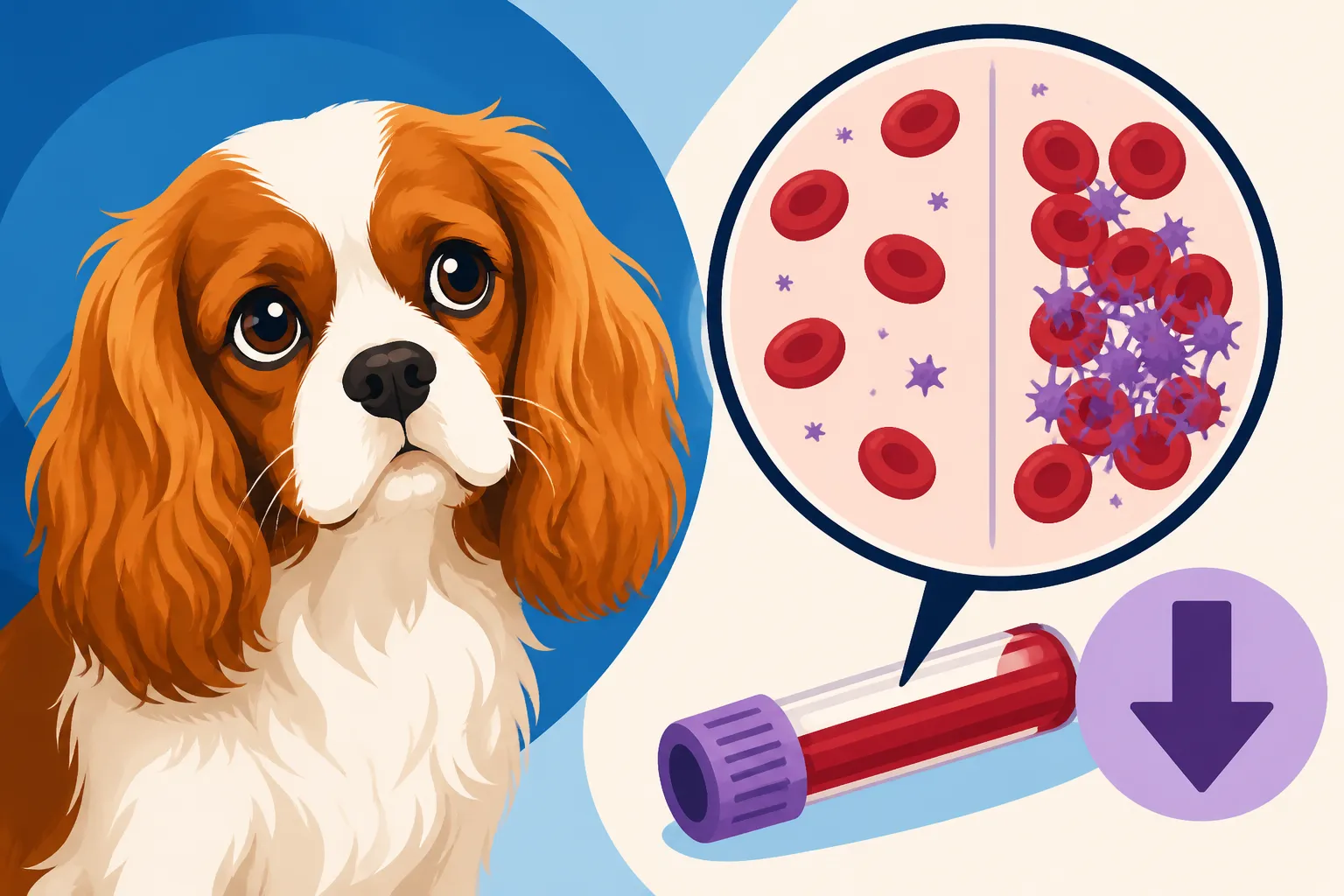
The key to understanding a falsely low platelet count in Cavaliers lies in how their blood reacts to the anticoagulant, EDTA (ethylenediaminetetraacetic acid), which is commonly used in purple-top blood collection tubes. EDTA is crucial because it stops blood from clotting inside the tube, allowing the lab to accurately count individual cells. However, in some dogs, especially Cavaliers, platelets have a unique tendency to clump together when exposed to EDTA. This isn't a sign of disease; it's simply a physiological reaction.
Imagine millions of tiny, independent platelets floating in the blood. When EDTA is added to a Cavalier's sample, these platelets, for reasons still not fully understood but believed to be genetically linked in certain breeds, decide to hold hands and form little clusters. These clumps can be microscopic or quite large, and they essentially hide individual platelets from view during automated analysis. It's not that your Cavalier has fewer platelets; it's that they've decided to stick together in groups, making them hard to count accurately by standard lab equipment. This specific trait is why the term "pseudothrombocytopenia" (meaning "false low platelet count") is so relevant for our furry friends.
How This Clumping Leads to a Falsely Low Reading
Most veterinary laboratories use automated analyzers to perform complete blood counts (CBCs). These sophisticated machines are designed to rapidly count different types of blood cells based on their size and other characteristics. When a Cavalier's platelets clump together in an EDTA tube, these automated counters encounter a problem. They are programmed to count individual platelets. A clump, no matter how small, is registered as a single, larger particle or, more often, as something other than an individual platelet. The machine simply can't "see" or differentiate the many individual platelets within the clump.
Consequently, the analyzer reports a much lower number of platelets than are actually present in the blood sample. It's like trying to count apples in a basket, but half of them are stuck together in pairs or triples; the machine might count fewer "items" than there are individual apples. This leads to the "falsely low" reading that can cause so much worry. The true number of platelets is there, happily doing their job in your Cavalier’s body; it’s just that the lab test, using a standard method, can't count them accurately due to this clumping artifact. Knowing this distinction can provide immense relief when faced with an initial alarming result.
Recognizing and Confirming a Falsely Low Platelet Count
If your vet informs you of a low platelet count, don't hesitate to discuss the possibility of pseudothrombocytopenia, especially with a Cavalier. There are clear indicators and subsequent steps to take to ensure you get an accurate diagnosis.
When to Suspect Pseudothrombocytopenia
The strongest indicator that you might be dealing with pseudothrombocytopenia, rather than true thrombocytopenia, is your Cavalier's overall health and lack of clinical signs. If your dog is acting completely normal – energetic, eating well, no unusual bruising, nosebleeds, blood in urine or stool, or prolonged bleeding from minor cuts – then a mysteriously low platelet count on a routine blood test should immediately raise the possibility of a false reading.
Another clue can be the magnitude of the "low" count. If the count is slightly low (e.g., 80,000-120,000) and your dog shows no symptoms, it's more likely to be artifactual. Extremely low counts (e.g., below 20,000-50,000) are more concerning and typically would present with clinical signs of bleeding, even in a Cavalier. If your vet does a routine blood panel, perhaps for Routine Vet Bills for a Cavalier or as part of an annual check-up, and that low number appears out of the blue, but your dog is otherwise thriving, you've got good reason to suspect a false alarm. It's always best to be vigilant about your Cavalier’s behavior and physical condition.
Steps Your Vet Will Take to Confirm
Once pseudothrombocytopenia is suspected, your vet will typically recommend a few confirmatory steps to rule out a genuine problem:
-
Manual Platelet Count (Blood Smear Review): This is often the first and most crucial step. A veterinary technician or pathologist will manually examine a drop of your Cavalier's blood under a microscope. They can visually identify platelet clumps, which will be visible as aggregates of platelets rather than evenly dispersed individual cells. If clumps are seen, and the individual platelets within those clumps look normal, they can estimate a more accurate platelet count or at least confirm that the low automated count is due to clumping. This direct observation is key to seeing what the machine missed.
-
Repeat Blood Test with a Different Anticoagulant (Citrate Tube): If clumping is strongly suspected, your vet might recommend drawing a second blood sample using a different type of collection tube, typically one with sodium citrate (a light blue-top tube, often used for coagulation tests). Citrate acts as an anticoagulant by binding calcium, but it generally does not induce platelet clumping in the same way EDTA does. A subsequent platelet count from a citrate tube will often yield a normal, accurate result if the original low count was indeed pseudothrombocytopenia. This side-by-side comparison provides strong evidence.
-
Visual Confirmation by the Vet: Sometimes, the vet themselves will quickly review the blood smear if they are comfortable doing so. Their observation, combined with the lack of clinical signs, can be enough to confidently say it's a false reading.
Here's a quick comparison of the common blood collection tubes:
| Tube Color | Anticoagulant | Primary Use | Platelet Clumping Risk in Cavaliers |
|---|---|---|---|
| Purple | EDTA | Complete Blood Count (CBC) | High |
| Light Blue | Sodium Citrate | Coagulation Studies, Alternative Platelet | Low |
| Red/Gold | Clot Activator/Gel | Serum Chemistry, Endocrine Tests | None (platelets clot out) |
This methodical approach ensures that an owner's initial worry about a low platelet count is either confirmed as a benign artifact or correctly diagnosed as a true medical condition needing attention. If you're discussing potential diagnostic costs with your vet, remember that pet insurance providers like Healthy Paws can be incredibly helpful for covering unexpected testing, whether it's for a true illness or simply confirming a false positive.
Addressing the Underlying Causes and Management
Getting to the bottom of a low platelet count is essential, not just for peace of mind, but for your Cavalier's health. It’s crucial to understand how to differentiate between a false reading and a real problem, and how to manage your Cavalier’s care going forward.
Distinguishing True Thrombocytopenia from Pseudothrombocytopenia
The biggest hurdle for vets and owners is telling the difference between pseudothrombocytopenia and true thrombocytopenia. The crucial distinction lies in the presence of clinical signs and the results of confirmatory tests.
-
True Thrombocytopenia: This is a genuine, medically significant low platelet count. Cavaliers with true thrombocytopenia would likely show symptoms related to impaired clotting. These can include:
- Bruising: Easy or unexplained bruising on the skin, gums, or abdomen.
- Petechiae: Tiny, pinpoint red or purple spots on the skin or mucous membranes (gums, inside the ears). These are little hemorrhages.
- Nosebleeds (Epistaxis): Spontaneous bleeding from the nose.
- Blood in urine or stool: Indicating internal bleeding.
- Prolonged bleeding: After a minor injury, nail trim, or even routine blood draws.
- Lethargy and weakness: If blood loss is significant.
If these symptoms are present alongside a low platelet count, then further diagnostic workup is imperative to find the cause. This might involve additional blood tests to check for infectious agents, autoimmune markers, or even bone marrow biopsies. Learning about Whether Big Platelets Mean a Cavalier Is Ill can also help understand other platelet-related nuances.
-
Pseudothrombocytopenia: As discussed, this is a lab artifact. The Cavalier will appear perfectly healthy, showing none of the clinical signs mentioned above. The only "symptom" is the low number on the automated lab report. Confirmatory tests (manual smear review, citrate tube re-test) will reveal normal or near-normal platelet counts, or visible clumping in the EDTA sample.
The bottom line is: if your Cavalier is clinically normal and has no bleeding tendencies, a "low platelet count" is almost certainly pseudothrombocytopenia. If they are unwell or showing any signs of bleeding, then it's a true medical emergency that needs immediate attention.
Managing a Cavalier with a History of False Lows
Once your Cavalier has been diagnosed with pseudothrombocytopenia, it's not a condition that requires treatment, as it isn't an actual health problem. However, it does require a specific approach to future veterinary care and blood tests.
-
Inform All Vets and Clinics: Make sure this information is prominently noted in your Cavalier's medical record. If you ever switch vets or visit an emergency clinic, immediately inform them about your dog's history of EDTA-induced pseudothrombocytopenia. This prevents unnecessary panic, expensive re-testing, or even potentially harmful treatments for a non-existent condition.
-
Request Specific Blood Tube Usage: For any future blood tests where a platelet count is critical, ask your vet if they can draw a sample directly into a citrate tube (light blue top) in addition to, or instead of, an EDTA tube. Some vets might prefer to run the EDTA sample first and then, if it reads low, follow up with a citrate sample. Discuss their protocol, and ensure they are aware of the Cavalier's predisposition.
-
Consider a Manual Review as Standard: For routine blood work, especially if your Cavalier needs Annual Cardiologist Exams for a Cavalier or other preventative screenings, you might request that the lab technician always performs a manual platelet count via blood smear review if the automated count is low. This adds a small cost but provides peace of mind.
-
Stay Calm but Observant: While pseudothrombocytopenia is harmless, it's still good practice to be observant of your Cavalier's health. If, at any point, they do start showing signs of bruising, bleeding, or illness, then a truly low platelet count would need to be re-evaluated promptly, regardless of past false readings.
Understanding this quirk can save you a lot of stress and unnecessary veterinary visits. It also highlights why comprehensive pet insurance, like a policy from Healthy Paws, can be incredibly valuable. Even for what turns out to be a "false alarm," the initial diagnostic tests – blood draws, lab fees, manual smears, and repeat tests – can add up, and having coverage for these unexpected situations provides a huge layer of financial security. Being prepared for these kinds of scenarios, and even budgeting for The Emergency Fund a Cavalier Owner Needs, ensures you can always provide the best care for your beloved companion.
The Role of Pet Insurance in Diagnostic Costs
Dealing with any health concern for your Cavalier can be financially daunting, and diagnostic tests are often the first step in getting answers. Even for something that turns out to be a false alarm, like pseudothrombocytopenia, those initial investigations come with costs.
Navigating Diagnostic Expenses with Pet Insurance
When your vet suggests a blood test and the results come back with a "low platelet count," the natural response is to investigate further. This can involve multiple blood draws, specialized lab tests like manual smear reviews, and potentially even follow-up visits. Each of these steps incurs a cost. For example, a routine CBC might cost $50-$100, while a manual blood smear review could add another $20-$50. If repeat tests with different tubes are needed, those are additional expenses. These costs, while necessary, can quickly add up, especially if you have an older Cavalier or one with other ongoing health concerns.
This is where pet insurance can be a game-changer. Policies from providers like Healthy Paws are designed to help alleviate the financial burden of unexpected veterinary care, including diagnostics. If you've enrolled your Cavalier in a policy, especially when they were young and healthy, these diagnostic tests would typically be covered, subject to your deductible and reimbursement level. This means you can say "yes" to the necessary tests without having to stress about the immediate impact on your wallet. For more on this, you might explore Insuring a Cavalier Before the Murmur Arrives or Whether Pet Insurance Is Worth It for a Cavalier to understand the long-term benefits of early enrollment.
Making Informed Decisions for Your Cavalier's Health and Your Budget
Having pet insurance means you can focus solely on your Cavalier's well-being and making the best medical decisions, rather than being swayed by the price tag of each test. In a situation like pseudothrombocytopenia, where an initial alarming result is often benign, insurance can cover the costs of confirming that benign nature. This allows your vet to thoroughly investigate without you having to worry about paying out-of-pocket for multiple rounds of testing.
Even if you have to pay upfront and then submit a claim for reimbursement, knowing that a significant portion of the cost will be returned to you offers immense peace of mind. For a Cavalier that may face significant health challenges throughout their life, such as Mitral Valve Disease in the Cavalier King Charles Spaniel or Syringomyelia and Chiari Malformation in Cavaliers, having a robust pet insurance plan in place is a proactive step that protects both your dog and your financial stability. It empowers you to always opt for the most accurate diagnosis and best course of action, knowing that a trusted partner like Healthy Paws is there to support you through the journey.
Disclaimer
This article is for general informational purposes only and does not constitute professional advice. Laws, prices and regulations vary by location and change over time. Consult a qualified professional for guidance on your specific situation.