Why a Cavalier Cannot Be Left All Day
One of the hardest parts of being a Cavalier owner in today's busy world is knowing you can't just leave your sweet, shadow-loving companion home alone for eight, nine, or even ten hours a day. It feels awful, doesn't it? That deep-seated worry about how they're coping, what they're doing, and whether they're suffering in silence. This guide is here to shed light on exactly why extended alone time is so challenging for our Cavaliers and to offer realistic, actionable strategies to manage it better for their well-being and your peace of mind.
The Emotional Core of a Cavalier: Why They Crave Company
Cavalier King Charles Spaniels were quite literally bred to be companions. Their history isn't one of working in fields or guarding property; it's one of sitting on laps, warming beds, and being constant, devoted shadows to royalty and nobility. This isn't just a cute quirk; it's deeply ingrained in their genetic makeup, shaping their temperament and their profound need for connection. When we bring a Cavalier into our homes, we're not just adopting a pet; we're inviting a little heart-on-paws that thrives on interaction and emotional presence.
"Velcro Dogs" for a Reason: Their Breeding and Temperament
If you own a Cavalier, you've probably heard them called "Velcro dogs" – and you know exactly why. They stick to you like glue, following you from room to room, settling at your feet the moment you sit down, and often trying to climb into your lap the second there's an opening. This isn't coincidence; it's hundreds of years of selective breeding for companionship. Their ancestors were known as "comforter spaniels," bred specifically to provide warmth, solace, and constant company. Imagine a dog whose entire purpose in life was to be with its person. That's your Cavalier.
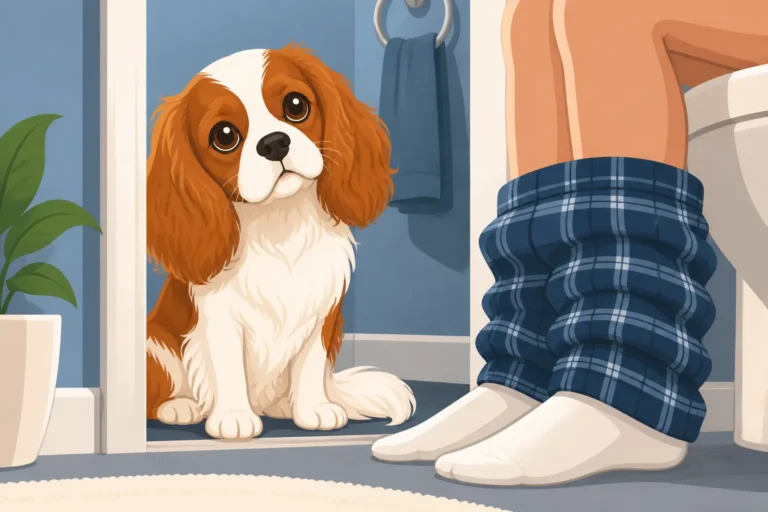
This historical purpose means they haven't developed the independent streak you might find in some working breeds, or even the casual indifference of some other companion breeds. Their happiness is intrinsically linked to their human family. They literally feel safest and most content when they are physically close to you. This profound need for attachment means that prolonged absence from their primary caregivers isn't just a bit boring for them; it can be genuinely distressing. It's not about them being "spoiled" or "needy" in a negative sense; it's simply how they are wired. When they follow you to the bathroom or watch you from the kitchen doorway, it's not a demand for attention; it's an expression of their deepest genetic programming. We explore this more in Why Cavaliers Are Called Velcro Dogs.
The Impact of Being Alone on a Highly Social Breed
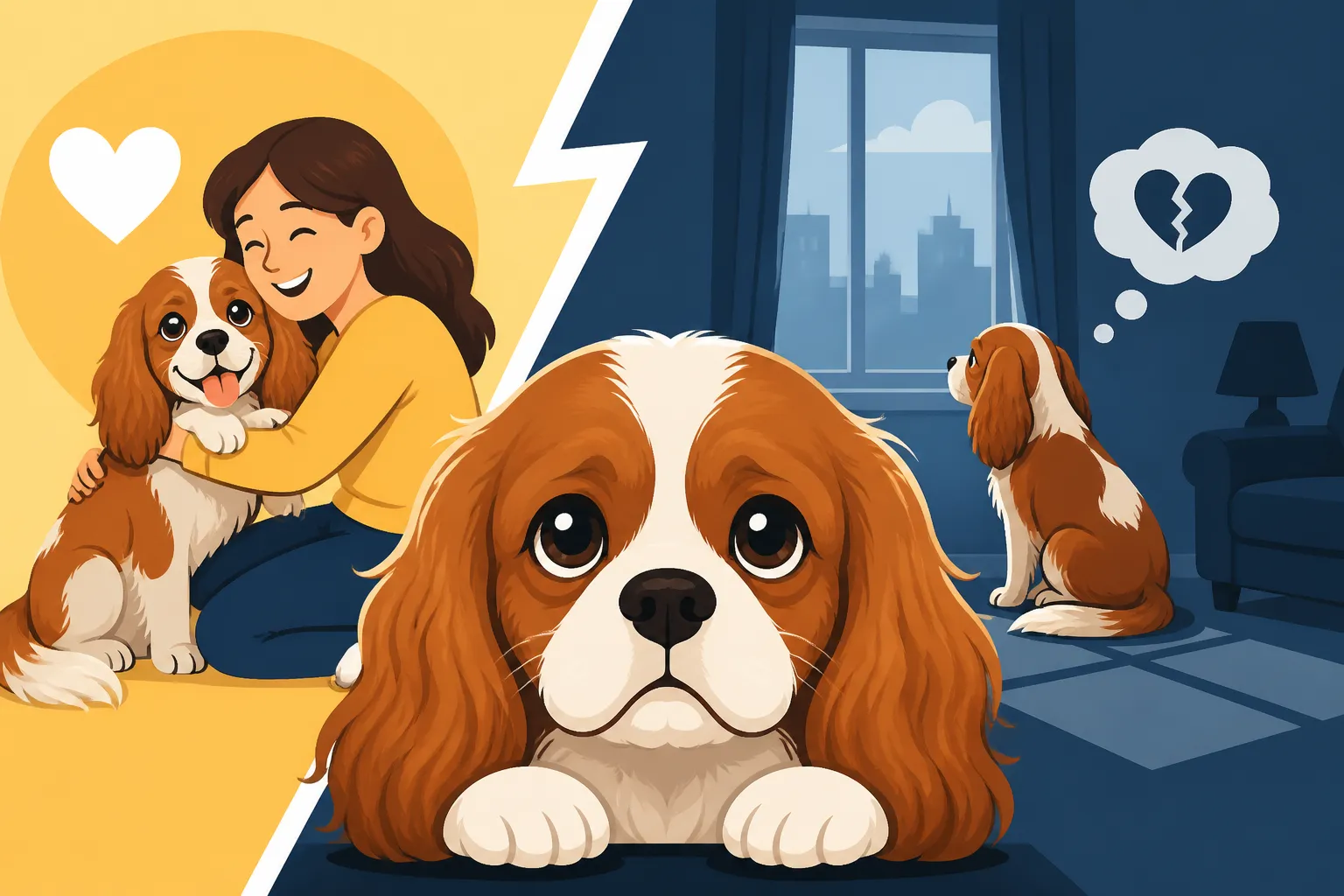
For a breed so deeply reliant on human interaction, being left alone for long stretches can be profoundly impactful. It's not just a matter of feeling lonely, although that's certainly a part of it. It can lead to a sense of abandonment or insecurity. Think about it from their perspective: their world revolves around you. When you suddenly vanish for hours on end, without understanding why or when you'll return, it creates immense confusion and anxiety.
This impact isn't just emotional; it can manifest physically too. Stress can suppress their immune system, making them more susceptible to illness. Persistent anxiety can affect their digestion, leading to upset stomachs or changes in appetite. A Cavalier isn't built to be a solitary creature. They are pack animals, and their "pack" is you. When the pack leader (you!) disappears, it can leave them feeling vulnerable and adrift. This is why understanding Hours a Cavalier Can Cope With Alone is so vital for their overall well-being. It helps us manage our expectations and make informed decisions about their daily routine.
Common Behavioral Issues from Excessive Alone Time
When a Cavalier is left alone for too long, their distress can't always be communicated in words. Instead, it comes out in behaviors that often frustrate us, but are, in fact, desperate pleas for help. These aren't acts of malice or disobedience; they're symptoms of underlying anxiety and discomfort rooted in their profound need for companionship. Understanding this distinction is the first step toward finding solutions that truly address their needs.
Anxiety and Distress: More Than Just "Missing You"
It’s easy to think your Cavalier just "misses you" when you're gone, but for many, it escalates to genuine anxiety. This isn't a fleeting sadness; it's a state of heightened arousal and worry that can be quite debilitating for them. Signs of anxiety can range from subtle to overt. They might pace constantly, pant excessively even when it's cool, or tremble. Some Cavaliers might become fixated on the door you left through, whining quietly for hours. Others might seem perfectly fine when you return, but a quick check of a pet camera will reveal a frantic, unhappy dog the moment you step out.
This level of distress isn't just unpleasant for them; it can impact their long-term mental health. They might develop separation anxiety, a more severe condition where being alone becomes a genuine phobia. This can make even short absences agonizing for both you and your dog. It's crucial to recognize the Signs a Cavalier Is Distressed When Alone early on, as early intervention can prevent the problem from escalating into a more serious behavioral issue. Addressing the root cause – their need for companionship – is always the most effective strategy.
Destructive Chewing and Inappropriate Toileting
One of the most common and frustrating manifestations of alone-time anxiety is destructive chewing. You come home to find your favorite throw pillow ripped to shreds, or the corner of your baseboard gnawed down to the wood. Your first thought might be anger, but from your Cavalier's perspective, this chewing is often a self-soothing behavior. The act of chewing can release endorphins, helping them to cope with overwhelming stress and anxiety. It's their way of trying to calm themselves down when they're feeling abandoned or panicked.
Similarly, inappropriate toileting indoors, even in a perfectly house-trained Cavalier, is frequently a sign of stress, not a lack of training. A dog who is anxious or panicked might lose control of their bladder or bowels. It's not an act of defiance, but a physical manifestation of their emotional state. They aren't trying to "get back at you"; they're simply too overwhelmed to maintain control. Punishing them for these behaviors will only increase their anxiety and make the problem worse. Instead, understanding What a Cavalier Does When Left Too Long can help you interpret these behaviors as calls for help rather than deliberate misdeeds.
Vocalizations: Howling, Whining, and Barking
Many Cavaliers who are left alone for too long will express their distress through vocalizations. This can range from persistent whining, a mournful howl that carries through the neighborhood, or continuous barking at every perceived sound outside. A Cavalier That Howls the Moment You Leave is often telling you, quite literally, that they are unhappy and looking for you. For neighbors, this can be incredibly disruptive, leading to complaints and adding another layer of stress for you as an owner.
Again, these vocalizations are not typically signs of a "naughty" dog. They are often distress calls, an attempt to get attention, to signal their presence, or to simply express the overwhelming anxiety they feel. They might bark at shadows, the wind, or even just at the silence, because they are constantly on edge. It's their way of trying to cope with the empty house and the absence of their beloved person. Addressing the underlying anxiety, rather than just trying to suppress the barking, is key to helping them find peace when you're not around.
Practical Solutions for Cavalier Owners Who Work
It's clear that leaving a Cavalier alone for extended periods isn't ideal, but for many of us, working outside the home is a necessity. The good news is that there are many strategies you can implement to mitigate the stress and make alone time more tolerable for your beloved companion. It requires thoughtfulness, consistency, and sometimes, a little extra help, but it's entirely possible to create a routine that works for both of you.
Building Alone-Time Tolerance Gradually
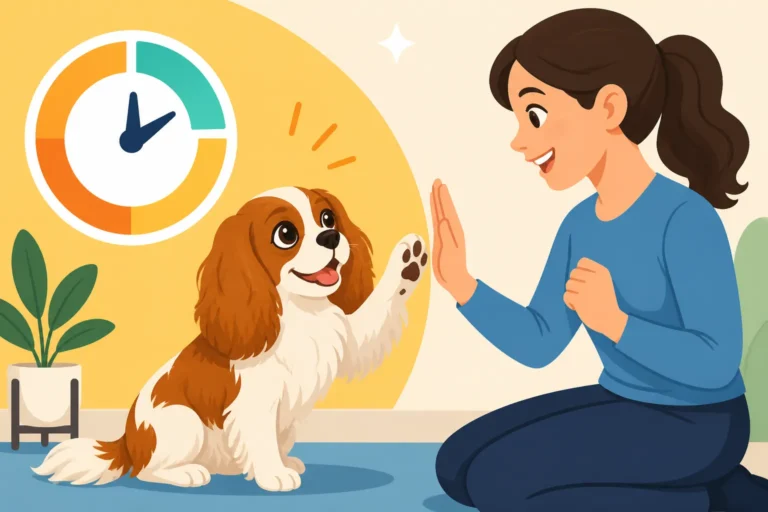
One of the most effective ways to help your Cavalier cope with being alone is to teach them that your departures are not permanent and that they can be safe and calm in your absence. This isn't something that happens overnight, especially with such a clingy breed. It's a gradual process, often referred to as "desensitization" and "counter-conditioning." Start small: leave the room for a few seconds, then return, quietly rewarding calm behavior. Gradually increase the duration.
Consider these steps:
- Practice Short Absences: Start by leaving them alone for just a minute or two, gradually building up the time. Walk out the door, wait a minute, then come back in as if nothing happened. Don't make a big fuss.
- Vary Your Departure Cues: Dogs pick up on pre-departure cues like grabbing your keys, putting on your shoes, or picking up your bag. Practice these actions without actually leaving. Sit down with your keys, put on your coat, then go sit on the sofa. This helps them associate these actions with not leaving, reducing anticipatory anxiety.
- Provide Engaging Distractions: Before you leave, give them a high-value, long-lasting chew or a puzzle toy stuffed with treats. This can occupy them for the initial period of your absence, which is often the most anxious time. You can find excellent puzzle toys and long-lasting chews on sites like Amazon, specifically designed to keep dogs engaged.
- Create a Safe Space: Ensure they have a comfortable, den-like space where they feel secure, such as a crate (if properly introduced and loved) or a cozy bed in a quiet room. Many owners find success with crate training, which provides a sense of security for dogs, especially when they are alone. Make sure it's a positive, inviting space.
- Consider Calming Aids: For some Cavaliers, a diffuser that releases dog-appeasing pheromones can help create a calmer environment. Others might benefit from calming music specifically designed for dogs, or even just leaving the radio on a talk show station, as this can create the illusion of company. Whether Leaving the Radio On Helps a Cavalier is a common question, and for many, a little background noise can indeed make a difference.
This gradual approach is detailed further in Building a Cavalier's Tolerance for Being Left. Remember, consistency is key, and celebrate every small step forward.
Enlisting Help: Dog Walkers, Sitters, and Daycare
If your work schedule demands long hours away, you absolutely don't have to go it alone. There are fantastic resources available to ensure your Cavalier gets the attention and potty breaks they need.
- Dog Walkers: A mid-day dog walker can be a lifesaver. Even a 30-minute visit allows your Cavalier to stretch their legs, relieve themselves, and get some much-needed human interaction. This breaks up their day and prevents them from holding their bladder for too long, which can lead to discomfort and potential health issues. Many local services offer flexible scheduling.
- Pet Sitters: For those who prefer their Cavalier to stay at home but need more than just a walk, a pet sitter can come to your house for longer visits, playing with your dog, offering cuddles, and reinforcing their routine. This is particularly beneficial if your Cavalier is older or has specific medical needs, as discussed in Leaving a Cavalier on Heart Medication With Someone.
- Doggy Daycare: For highly social Cavaliers who thrive on the company of other dogs and people, doggy daycare can be an excellent option. They get to play, socialize, and are supervised all day, returning home tired and happy. However, it's not for every Cavalier. A shy or anxious dog might find daycare overwhelming. It's worth researching Whether Daycare Suits an Anxious Cavalier before committing. Many daycares offer trial days to see if it's a good fit.
- Family/Friends: If you have trusted family or friends nearby, they might be willing to pop in for a visit or even have your Cavalier over at their home for the day. This is often the most cost-effective and comforting option, as your dog is with someone familiar.
Consider creating a schedule for your Cavalier's day, whether you're using professional help or relying on friends.
| Time Slot | Action/Activity | Purpose |
|---|---|---|
| 6:00 AM – 7:00 AM | Morning walk, breakfast, play | Physical exercise, mental stimulation, potty |
| 7:00 AM – 8:00 AM | Owner prepares for work | Gradual alone time prep, quiet chew toy |
| 8:00 AM – 12:00 PM | Alone time | Puzzle toys, calming sounds |
| 12:00 PM – 1:00 PM | Mid-day visit (walker/sitter) | Potty break, short walk, human interaction |
| 1:00 PM – 5:00 PM | Alone time | Nap, quiet chew |
| 5:00 PM onwards | Owner returns, evening walk, dinner, play, cuddle | Reconnection, mental/physical stimulation |
This kind of structure ensures your Cavalier isn't left in limbo for too long.
Enrichment and Management for Alone Time
Beyond just scheduling breaks, think about enriching your Cavalier's environment to make their alone time more positive. This isn't about simply "tolerating" your absence, but about providing activities that engage their minds and instincts.
- Puzzle Toys and Food Dispensers: Instead of just putting food in a bowl, use toys that require them to work for their meal. This mental stimulation can be surprisingly tiring and satisfying. Brands like BAXTER & Bella often recommend enrichment toys to keep puppies and adult dogs engaged, which can be particularly useful during alone time.
- Chew Toys: Always provide safe, appropriate chew toys. Make sure they are durable and won't splinter or be swallowed whole. Chewing is a natural dog behavior, and offering good outlets can redirect them from destructive chewing on your furniture.
- Interactive Cameras: Modern pet cameras allow you to check in on your Cavalier remotely. Some even let you dispense treats or speak to them through a speaker. While not a substitute for physical presence, it can offer peace of mind and occasionally soothe an anxious dog.
- Rotate Toys: Don't leave all their toys out all the time. Rotate them, so a "new" toy appears every few days. This keeps their interest piqued and prevents boredom.
- Safe Space with Familiar Scents: Ensure their safe space (crate, bed) has a blanket or an old t-shirt that smells like you. Familiar scents can be incredibly comforting for an anxious dog.
- Morning Rush Management: Believe it or not, how you manage your morning can affect their day. A frantic, stressful departure can heighten their anxiety. Try to keep your departures calm and low-key. Give them their special chew toy, a quick reassuring pat (not a big, emotional goodbye), and then quietly leave.
Remember, every Cavalier is an individual. What works for one might not work for another. Be patient, observe your dog's reactions, and be willing to adjust your strategies. Ultimately, ensuring your Cavalier feels secure and loved, even when you're not physically present, is the goal. This approach can make a world of difference to their happiness and your relationship.
Disclaimer
This article is for general informational purposes only and does not constitute professional advice. Laws, prices and regulations vary by location and change over time. Consult a qualified professional for guidance on your specific situation.