Signs a Cavalier Is Distressed When Alone
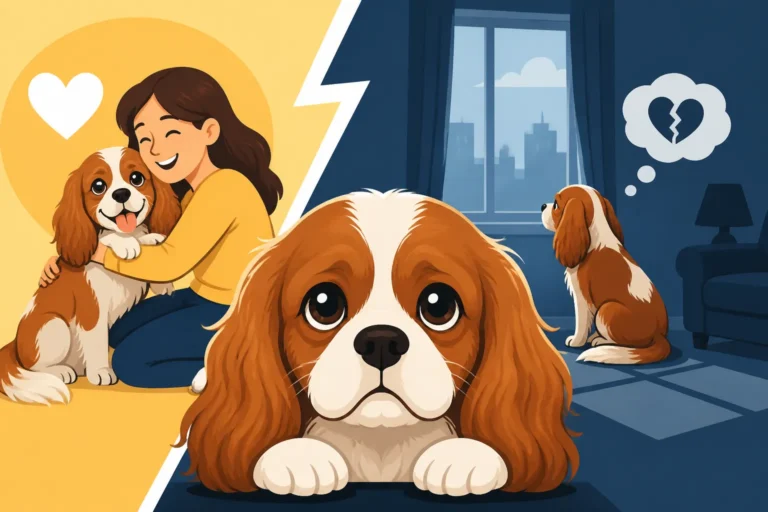
It’s a heartbreaking sight to come home to a distressed Cavalier King Charles Spaniel, or perhaps you've heard the complaints from neighbors about incessant barking while you're away. Cavaliers are renowned for their loving, companionable nature, which unfortunately makes them prone to intense distress when left alone. This guide will help you identify the common, and sometimes subtle, signs that your Cavalier is struggling with solitude and offer insights into how to address these anxieties.
Understanding Cavalier Separation Sensitivity
Cavalier King Charles Spaniels were bred specifically to be companion dogs, literally "lap warmers" for royalty. Their entire purpose revolves around human connection, so it's no surprise that being separated from their beloved people can be deeply unsettling for them. It's not about being "naughty" or "stubborn"; it's a genuine anxiety response.
Why Cavaliers Struggle with Solitude
Their inherent desire for closeness is a double-edged sword. While it makes them wonderful, affectionate pets, it also predisposes many Cavaliers to what's often referred to as separation anxiety or, more broadly, separation-related distress. This isn't just a puppy phase; adult Cavaliers, even those who seemed fine before, can develop this issue. A change in routine, a new home, or even a sudden shift in the family dynamic can trigger it. For many Cavalier owners, the question isn't if their dog will struggle with alone time, but when and to what extent. It’s deeply ingrained in their breed's history and temperament to be with their humans, making alone time a truly unnatural state for them. This intense need for companionship is often why they are called Why Cavaliers Are Called Velcro Dogs. They thrive on being part of your every moment, from watching TV to following you to the bathroom.
The Spectrum of Alone Time Behaviors
Not all distress looks the same. Some Cavaliers will perform dramatic acts of destruction, while others suffer in silence, their anxiety manifesting in less obvious ways. It's a spectrum, ranging from mild unease to full-blown panic attacks. A Cavalier might simply pace a bit and whine for a few minutes before settling, which is normal for many dogs learning to be alone. However, a Cavalier with true separation distress will escalate their behaviors quickly, and these actions often begin the moment you leave or even during your departure routine. It’s crucial for owners to understand this range so they can accurately assess their dog's experience. What might seem like minor mischief to a human could be a desperate cry for help from a dog experiencing intense fear and panic. Ignoring early signs can allow the problem to fester and become much harder to manage.
Common Visible Signs of Distress
These are the behaviors most people associate with a dog struggling when left alone. They're often the reason owners realize there's a problem, as they tend to be destructive or noisy.
Destructive Chewing and Property Damage
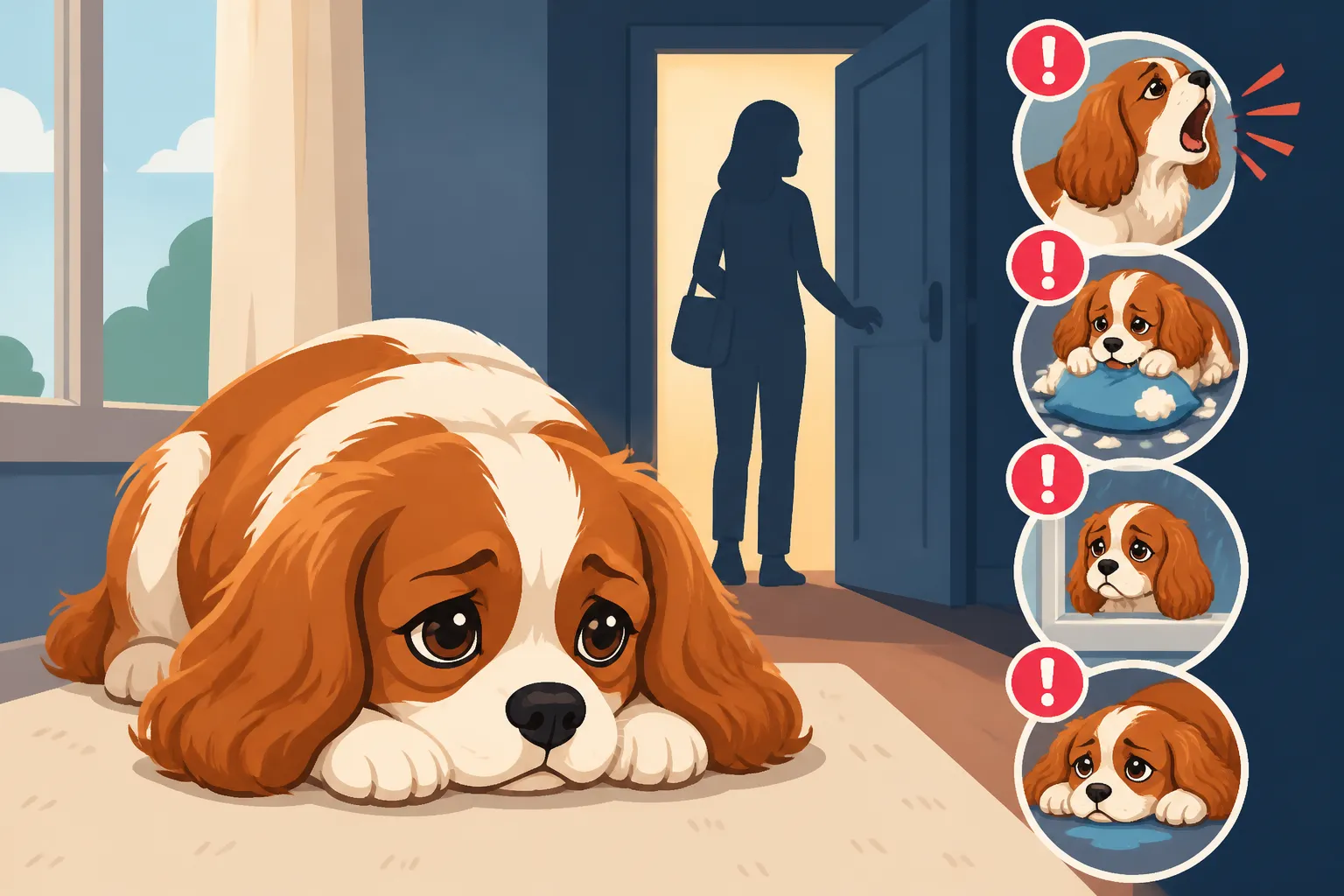
One of the most common and frustrating signs of separation distress is destructive chewing. A Cavalier who is anxious about being alone isn't just being naughty; they're often trying to self-soothe or release pent-up energy from their panic. They might target items that smell strongly of you, like your slippers or a remote control, or they might go after exit points, like doorframes and window sills, in an attempt to escape. I’ve heard countless stories of Cavaliers chewing through furniture legs, gnawing on baseboards, or even tearing apart their dog beds. It's not just "bad behavior"; it’s a symptom of underlying anxiety. If you find your Cavalier has been systematically destroying parts of your home, especially near doors or windows, it’s a strong indicator of distress. You might come home to find a chewed up doorframe, which is a classic A Cavalier That Chews Doorframes When Alone symptom.
Excessive Vocalization
The constant barking, howling, or whining is another hallmark of a Cavalier struggling with solitude. This isn't just a few barks at the mailman; it's persistent, often high-pitched, vocalization that starts shortly after you leave and can continue for extended periods. Your neighbors might be the first to alert you to this issue, or you might hear it yourself if you step outside for a moment. This vocalization is often a desperate attempt to call you back or express their panic. It's not done out of spite or to annoy you; it's a genuine expression of profound loneliness and fear. A typical scenario might involve your Cavalier starting to whine the moment they realize you're putting on your shoes, escalating to a full-blown howl once the door closes. This kind of sustained noise is a clear A Cavalier That Howls the Moment You Leave signal.
Inappropriate Urination or Defecation
Finding puddles or piles inside when your house-trained Cavalier has been left alone is incredibly disheartening, but it's important not to view it as a spiteful act. Inappropriate elimination is a common physiological response to extreme stress and anxiety. When a dog is truly panicking, they can lose control of their bladder and bowels, much like a human might under severe duress. This is very different from a dog who simply couldn't hold it because they were left for too long. If your Cavalier typically has excellent bladder control but consistently has accidents only when you leave them alone, it’s a strong sign of emotional distress. They are not trying to get back at you; their body is simply reacting to overwhelming fear.
Subtle and Internal Indicators of Anxiety
Not all signs of distress are as overt as chewing through a door. Many Cavaliers suffer quietly, and their anxiety manifests in more subtle, internal, or self-directed behaviors. These can be harder to spot but are equally important to recognize.
Pacing, Drooling, and Panting
While you might not witness these behaviors directly unless you're filming your Cavalier (which, by the way, is a fantastic idea, as we'll discuss later), they are critical indicators of distress. A Cavalier suffering from anxiety might pace incessantly, walking the same path back and forth, unable to settle. This restless movement expends nervous energy. Excessive drooling, far beyond what's normal for your dog, is another physical manifestation of stress, as is persistent panting even when the temperature is cool and they haven't exerted themselves. These are involuntary physical responses, much like how a human might sweat or feel their heart race during a panic attack. If you return home to a dog who is soaked in drool or whose breath smells distinctly of stress, these are clear indicators they had a rough time.
Self-Mutilation and Obsessive Licking
In more severe cases, an anxious Cavalier might turn their distress inward, engaging in self-mutilating behaviors. This can include excessive licking of their paws, legs, or other body parts, often to the point of creating raw spots, hot spots, or even open wounds. The licking is a self-soothing mechanism, similar to how some humans might bite their nails or twirl their hair when nervous. They might also pull out clumps of their own fur. These behaviors are not only painful for your Cavalier but also signal a very high level of internal stress and discomfort. If you notice new bald patches or skin irritation that coincides with your absence, it's definitely something to pay close attention to. These desperate acts show just how much a Cavalier is suffering when alone.
Loss of Appetite or Refusal to Eat
Many dogs, when stressed, will lose their appetite. If you leave food or a treat-filled toy for your Cavalier when you depart, and you return hours later to find it untouched, it could be a sign of distress. A truly anxious dog is often too overwhelmed by their fear to engage in normal behaviors like eating. This is particularly telling if your Cavalier is typically food-motivated and usually devours anything you offer. For them, the anxiety of your absence overrides even the most basic physiological drives. It's a stark contrast to a dog who might simply eat their meal immediately and then wait impatiently for your return. Finding uneaten food or treats is a clear indication, as discussed in A Cavalier That Refuses Food Until You Return.
Here's a quick summary of signs to look for:
| Category | Common Signs | Implications |
|---|---|---|
| Destructive | Chewing on furniture, doors, personal items | Attempt to escape or self-soothe |
| Vocalization | Barking, howling, whining (prolonged) | Crying out for attention, expressing panic |
| Elimination | Urinating/defecating indoors (house-trained) | Loss of control due to extreme stress |
| Physiological | Pacing, panting, drooling (excessive) | Involuntary physical responses to anxiety |
| Self-Directed | Licking/chewing paws, body, fur pulling | Self-soothing, turning anxiety inward |
| Behavioral | Refusal to eat, hiding, trembling, hyper-vigilance | Overwhelmed by fear, unable to relax or engage normally |
What to Do If You See These Signs
Recognizing the signs is the first crucial step, but what comes next is equally important. Addressing separation distress requires patience, consistency, and often professional guidance.
Gathering Evidence and Consulting a Professional
If you suspect your Cavalier is struggling when left alone, the absolute best thing you can do is set up a camera. An inexpensive pet camera or even an old smartphone can work wonders. Position it to capture your Cavalier's behavior once you leave. You might be surprised by what you see. Often, owners underestimate the severity or type of behaviors occurring. Watching the footage will give you invaluable insight into when the distress starts, how long it lasts, and what specific behaviors your Cavalier engages in. This evidence is critical for discussing the issue with your veterinarian or a certified professional dog trainer. A qualified professional can help differentiate true separation anxiety from boredom or other behavioral issues. They can also rule out any underlying medical conditions that might be contributing to the behavior. Don't be afraid to Filming a Cavalier While You Are Out as this really is the gold standard for understanding the problem. You can even check out options on Amazon for affordable pet cameras.
Creating a Calming Environment
While working on the underlying issues, you can implement strategies to make your Cavalier's alone time feel safer and more comfortable. This involves creating a calm, predictable environment.
- Predictable Departure Routines: Try to make your departures less of a "big deal." Avoid overly emotional goodbyes. Instead, develop a calm, consistent departure routine. This might involve giving a specific treat, playing soothing music, or using an aromatherapy diffuser with dog-safe scents. These Departure Routines That Calm a Cavalier can help signal that your leaving is a normal, non-threatening event.
- Safe Space: Ensure your Cavalier has a designated safe space, like a comfortable crate (if they are crate-trained and don't panic in it) or a cozy bed in a quiet room. This should be a place they associate with positive experiences, not just where they go when you leave. For some Cavaliers, Crate Training a Cavalier That Panics can actually exacerbate anxiety, so assess your dog's comfort carefully.
- Calming Aids: Some owners find success with calming supplements or pheromone diffusers. While these aren't cures, they can sometimes take the edge off the anxiety for mild cases. Always discuss any supplements with your vet first to ensure they are safe and appropriate for your Cavalier. You might explore options for Calming Supplements for an Anxious Cavalier after consulting your vet.
- Environmental Enrichment: Leave your Cavalier with appropriate chew toys or puzzle feeders to distract them and provide a positive outlet for their energy. Just be sure they are safe for your dog to be left with unsupervised.
Gradual Desensitization Training
The most effective long-term solution for separation distress is gradual desensitization, often guided by a professional. This involves slowly increasing your Cavalier's tolerance for being alone, starting with very short durations and building up over time. It's a methodical process that can be frustratingly slow, but it's essential for retraining your dog's emotional response.
- Start Small: Begin by practicing departures that last only a few seconds, literally walking out the door and immediately returning. The goal is to return before your Cavalier shows any signs of distress. Gradually, very gradually, increase the duration. There’s an entire process of Building From Thirty Seconds With a Cavalier that can take weeks or months.
- False Departures: Practice "false departures" where you go through all your leaving rituals (picking up keys, putting on shoes) but then simply sit back down. This helps desensitize your Cavalier to the triggers of your leaving.
- Professional Help: For moderate to severe cases, a certified professional dog trainer or veterinary behaviorist is invaluable. They can create a tailored training plan and guide you through the process, which often involves behavior modification protocols. Some online training platforms, like BAXTER & Bella, offer resources and guidance for managing common behavioral issues, including alone time training, though severe cases may need one-on-one expert help. In some situations, especially severe panic, your vet might discuss Medication for Cavalier Separation Anxiety as a temporary aid to help your dog learn new coping mechanisms.
Remember, addressing separation distress is a marathon, not a sprint. Your Cavalier relies on you to understand their struggles and help them feel secure. With patience, consistency, and the right approach, you can help your beloved companion feel much more comfortable when you're not by their side. Many Cavalier owners also find that enrolling their dogs in daycare for some days can alleviate anxiety, so considering Whether Daycare Suits an Anxious Cavalier is another option worth exploring.
Disclaimer
This article is for general informational purposes only and does not constitute professional advice. Laws, prices and regulations vary by location and change over time. Consult a qualified professional for guidance on your specific situation.