A Cavalier That Chews Doorframes When Alone
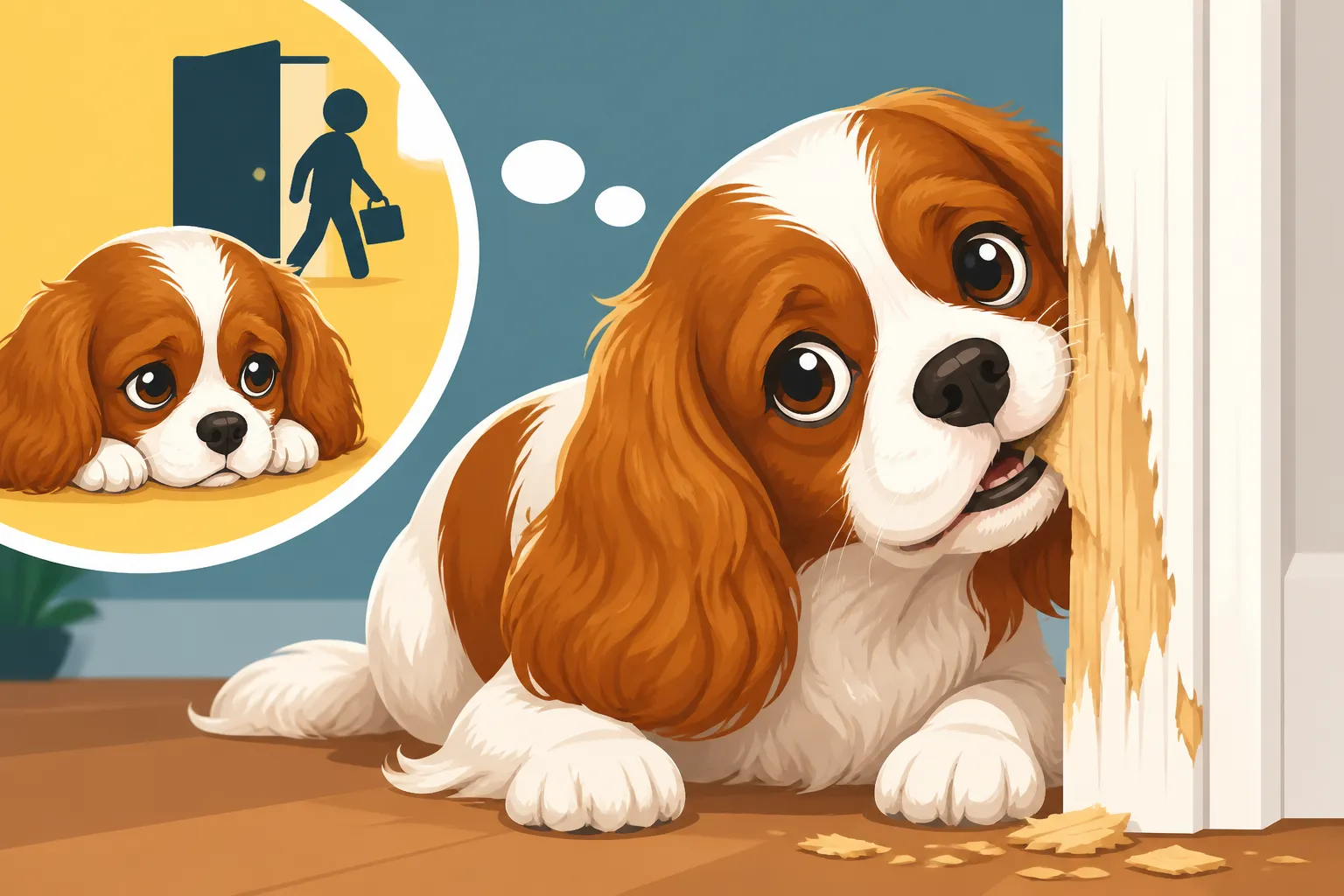
It’s utterly disheartening to come home, already tired from your day, only to discover your sweet Cavalier has waged war on your doorframes, leaving behind tell-tale tooth marks and splintered wood. This isn't just a minor nuisance; it's a clear sign your furry friend is struggling deeply with being left alone, and it signals a problem far greater than simple naughtiness. This guide will walk you through understanding why your Cavalier resorts to such destructive chewing, how to address the underlying distress, and practical steps to safeguard your home and soothe your beloved companion.
Understanding Why Your Cavalier Chews Doorframes When Alone
When a Cavalier King Charles Spaniel chews on doorframes, it’s rarely about being "bad" or defiant. Cavaliers are inherently affectionate, companion-loving dogs, often dubbed "Velcro dogs" for their intense desire to be close to their people. This strong bond, while wonderful, can lead to significant distress when they find themselves separated from their human family. Destructive chewing on doorways or window sills is almost always a symptom of this underlying anxiety or, at the very least, a profound lack of stimulation.
Separation Anxiety as the Root Cause
The most common reason for a Cavalier to target doorframes is separation anxiety. This isn't just missing you; it's a panic response. Imagine feeling trapped, alone, and overwhelmed with fear, and the only way you can express it or try to cope is by trying to get out or engaging in a repetitive, self-soothing behavior. For a Cavalier, especially one with a strong attachment, being left alone can trigger this intense fear. The doorframe, representing the barrier between them and you, becomes the focal point of their desperate attempt to escape or a place to channel their nervous energy.
This anxiety often manifests in other ways too, which we'll touch on later. It's a complex issue, not something they can simply "get over." Their world revolves around connection, and when that connection is severed, even temporarily, it can feel like a profound threat. Living With a Cavalier That Panics When Alone delves deeper into these panic responses.
Boredom and Lack of Mental Stimulation
While separation anxiety is a major player, sometimes destructive chewing can stem from sheer boredom and a lack of appropriate mental and physical outlets. Cavaliers are toy breeds, yes, but they still have intelligence and a need for engagement. If a Cavalier is left alone for Hours a Cavalier Can Cope With Alone without anything stimulating to do, or without enough exercise before you leave, they might invent their own "fun." And for many dogs, chewing is a natural, instinctual behavior that helps relieve stress, strengthen jaws, and keep teeth clean.
If there aren't acceptable chew toys or activities available, or if the available toys aren't engaging enough, your doorframe suddenly looks like a perfectly acceptable, albeit highly undesirable, alternative. It's readily accessible, offers a satisfying texture, and provides a way to pass the long, quiet hours until you return.
Stress and Displacement Behaviors
Beyond explicit separation anxiety or boredom, general stress can also lead to destructive chewing. Perhaps there's been a change in routine, a new sound in the neighborhood, or an unfamiliar smell. Dogs are sensitive creatures, and subtle shifts in their environment or routine can cause them unease. Chewing can be a displacement behavior – an activity performed to relieve frustration or anxiety when direct action isn't possible.
Think of it like us biting our nails or tapping our foot when we're stressed. For a Cavalier, working on a doorframe provides an outlet for that pent-up energy and stress. It's a way for them to "do" something with their overwhelming feelings when they're alone and feeling vulnerable. Understanding this nuance is key to addressing the behavior effectively, as simply punishing them for chewing won't resolve the underlying emotional state.
Recognizing the Type of Chewing and Other Distress Signals
It's important to differentiate between typical puppy chewing, which is often exploratory and related to teething, and the more distressed, destructive chewing indicative of deeper issues. The context in which the chewing occurs, and other behaviors your Cavalier exhibits, can give you vital clues.
Distinguishing Puppy Chewing from Anxiety-Driven Destruction
Puppy chewing is generally broad-based – they'll chew on various items, exploring textures and relieving teething discomfort. This might include toys, furniture legs, shoes, and sometimes, yes, even a doorframe if it's within reach and provides an interesting sensation. It's usually less frantic and more experimental. They might chew a bit, stop, wander off, and come back. The damage might be superficial at first, like small nicks.
Anxiety-driven destruction, however, is often focused and intense. The doorframe might be severely damaged, with large chunks missing, splintered wood, and deep gouges. This chewing typically occurs only when the dog is left alone. If your Cavalier is a relaxed, calm chewer when you're home, but a whirlwind of destruction the moment you leave, that's a huge red flag for anxiety. The sheer intensity and the specific timing point away from simple puppy exploration.
Other Signs of Distress When Alone
Destructive chewing on doorframes is rarely an isolated incident when anxiety is at play. Your Cavalier will likely exhibit a suite of other behaviors when left alone, which are crucial indicators of their distress. What a Cavalier Does When Left Too Long can paint a broader picture of these behaviors. Keep an eye out for these:
- Excessive Vocalization: Barking, howling, or whining persistently when you're gone.
- Pacing and Restlessness: Observed via a pet camera, your Cavalier might pace continuously, unable to settle.
- House Soiling: Urinating or defecating indoors, even if perfectly house-trained, which isn't due to a physical inability to hold it, but rather a stress response.
- Excessive Salivation/Drooling: Puddles of drool can appear even if your dog isn't actively drinking or panting from heat.
- Self-Harm: In severe cases, they might lick or chew excessively at their paws or other body parts.
- Refusal to Eat: Some anxious Cavaliers will refuse high-value treats or even their regular meal until their owner returns.
- Over-the-Top Greetings: When you come home, they might greet you with an exaggerated, frantic intensity, even if you were only gone for a short time.
To truly understand what happens when you're not there, setting up a pet camera (many affordable options are available on Amazon) is invaluable. It removes the guesswork and allows you to accurately assess the situation, helping you tailor your approach more effectively.
Practical Steps to Prevent and Manage Destructive Chewing
Addressing doorframe chewing requires a multi-pronged approach that tackles both the symptom (the chewing) and the underlying cause (anxiety or boredom). It's a process that requires patience, consistency, and empathy for your Cavalier's emotional state.
Environmental Management and Chewing Deterrents
The first step is to prevent your Cavalier from continuing the destructive behavior. Every time they chew the doorframe, they are practicing and reinforcing the behavior, even if it's due to anxiety. You need to make the doorframe inaccessible or undesirable.
- Physical Barriers: Baby gates or a sturdy ex-pen can physically block access to the doorframe. If the chewing is focused on the door itself, a thin sheet of plywood or even heavy-duty cardboard can be temporarily affixed to the lower portion of the door and frame.
- Taste Deterrents: There are bitter-tasting sprays designed to make surfaces unappealing to chew. Products containing bitter apple or similar compounds can be effective. Always test a small, inconspicuous area first to ensure it doesn't stain. Reapply frequently, as the taste fades over time. You can find these at most pet supply stores or readily available on Amazon.
- Coverings: Some owners have had success covering the chewed area with heavy-duty tape, tin foil, or even motion-activated air sprayers that emit a harmless burst of air when triggered, startling the dog away. This might work for some, but if anxiety is severe, it could just shift the chewing to another spot or heighten their distress.
Remember, these are management tools to buy you time while you work on the root cause. They are not solutions in themselves.
Building Alone Time Tolerance Gradually
This is where the real work happens, especially if separation anxiety is suspected. The goal is to gradually desensitize your Cavalier to your departures and build their confidence in being alone. This process is often called "graduated departures" or "counter-conditioning."
- Start Small: Begin with incredibly short absences. Just walk out the door, wait a few seconds, and come back in before your Cavalier shows any signs of distress. Don't make a fuss when you leave or return. The aim is for your absence to be a non-event.
- Increase Duration Slowly: Over days and weeks, very gradually increase the time you are out of sight. A few seconds becomes a minute, then five, then fifteen, always ensuring you return before your dog gets anxious. If they start to show signs of stress, you've gone too far, too fast. The next session, dial it back.
- Practice Departure Cues: Desensitize your Cavalier to your "leaving cues" – picking up keys, putting on shoes, grabbing your bag. Do these actions frequently without actually leaving, so they lose their predictive power.
- Provide a High-Value Distraction: Just before you leave, give your Cavalier a special, long-lasting chew toy or a puzzle toy filled with delicious treats (like a KONG stuffed with peanut butter or wet food and frozen). This creates a positive association with your departure. The idea is they should be engrossed in their treat before you even walk out the door.
- Avoid Making a Big Deal: Don't say long goodbyes or overly enthusiastic hellos. Keep your departures and arrivals calm and low-key. This prevents inadvertently reinforcing their anxiety or excitement.
Training programs like BAXTER & Bella often have structured lessons on building alone time tolerance and managing separation anxiety, which can be incredibly helpful for owners needing guidance through this delicate process. The key is never to push your Cavalier past their comfort zone during these exercises. Building a Cavalier's Tolerance for Being Left offers more detailed strategies.
Enrichment and Mental Stimulation Before You Leave
A tired Cavalier is often a good Cavalier. Ensuring your dog gets adequate physical exercise and mental stimulation before you leave can significantly reduce the likelihood of destructive behavior.
- Morning Walk: A good, brisk walk or a lively play session in the yard can help burn off excess energy. Remember, even though they're small, Cavaliers enjoy a good romp!
- Mental Games: Engage their brains with puzzle toys, scent games, or a short training session before you depart. This mental exertion can be just as tiring as physical activity. Teaching your Cavalier simple commands or tricks using positive reinforcement also builds confidence and strengthens your bond. Check out Reward-Based Training With a Cavalier for ideas.
- Interactive Toys: Provide a variety of safe, appropriate chew toys and interactive toys that can keep them occupied for a while when you're gone. Rotate these toys so they stay novel and interesting. Some toys dispense treats slowly, making them more engaging. Ensure the toys are durable enough for a strong chewer and safe for unsupervised use.
Crate Training and Safe Spaces
For many Cavaliers, a properly introduced crate can become a den, a safe haven where they feel secure. If your Cavalier is Crate Training a Cavalier That Panics, it’s crucial to do it gently and positively, never as a punishment.
- Positive Association: The crate should be associated with good things – treats, favorite toys, comfortable bedding. Feed meals in the crate, and occasionally toss a high-value treat inside.
- Gradual Introduction: Start with short periods, with the door open, then closed for brief moments, always building up slowly. Never force your Cavalier into a crate.
- Comfort and Security: Make the crate cozy with a soft bed. Covering it with a blanket can provide a den-like feel, reducing visual stimulation that might trigger anxiety.
- Not a Punishment: If your Cavalier associates the crate with being left alone and feeling anxious, it won't be helpful. It needs to be a place of calm and safety.
If your Cavalier's anxiety is severe, even a crate might not prevent chewing or other distressed behaviors. In such cases, they might try to chew their way out of the crate, potentially causing injury. This underscores the need to address the underlying anxiety, rather than just containing the behavior. For some dogs, a secure, puppy-proofed room with no access to tempting chewables like doorframes might be a better temporary solution than a crate.
| Strategy Type | Description | Example Products / Actions |
|---|---|---|
| Environmental Control | Physically prevent access to chew targets or make them unappealing. | Baby gates, ex-pens, bitter apple spray (check Amazon), temporary plywood covers on doorframes. |
| Behavior Modification | Gradually teach your Cavalier to tolerate being alone and associate it with positive experiences. | Graduated departures, desensitization to departure cues, providing high-value chew toys only when leaving. |
| Enrichment & Exercise | Ensure physical and mental needs are met before alone time to reduce boredom and excess energy. | Morning walks, interactive puzzle toys, scent games, short training sessions, chew toys (e.g., KONG, bully sticks, available on Amazon). |
| Safe Space Creation | Provide a secure, comfortable area where your Cavalier feels safe when left unsupervised. | Positively introduced crate, puppy-proofed room, soft bedding, calming music/scents. |
| Professional Support | Seek expert guidance for persistent or severe anxiety and destructive behavior. | Certified Professional Dog Trainer, Veterinary Behaviorist, online programs like BAXTER & Bella. |
When to Call in the Professionals
While many cases of mild destructive chewing can be managed with consistent effort at home, some situations warrant professional intervention. It’s crucial to recognize when your Cavalier's distress is beyond what you can handle alone.
Recognizing Severe Separation Anxiety
If your Cavalier exhibits multiple, intense signs of distress every time you leave – frantic barking, howling, destructive chewing that causes significant damage, house-soiling, or self-harm – it's likely severe separation anxiety. Simply put, they are in a state of panic. Medication for Cavalier Separation Anxiety might even be a necessary component, in conjunction with behavior modification, to help them cope.
Do not ignore these signs, or hope your Cavalier will "grow out of it" or "get used to it." Without proper intervention, severe separation anxiety can worsen over time, causing immense suffering for your dog and significant stress for you. If you've tried the gradual steps outlined above for weeks or months with little to no improvement, or if the behavior is escalating, it's definitely time to reach out for help. Remember, Why a Cavalier Cannot Be Left All Day is often rooted in this deep attachment and potential for anxiety.
Working with a Certified Professional Dog Trainer or Behaviorist
The best course of action for severe or persistent doorframe chewing and separation anxiety is to consult a qualified professional. This isn't a sign of failure on your part, but rather a responsible step towards helping your Cavalier.
- Certified Professional Dog Trainer (CPDT): A good trainer, especially one specializing in anxiety or separation issues, can provide personalized strategies, help you implement desensitization protocols, and guide you through the process of building your dog's confidence. They can offer practical, hands-on advice and adjust the training plan as needed. Look for trainers who use positive, force-free reinforcement methods, as harsh corrections will only exacerbate anxiety in a Cavalier.
- Veterinary Behaviorist (Dip ACVB): For very severe cases, or when medication might be considered, a veterinary behaviorist is the ideal specialist. These are veterinarians who have gone on to complete extensive residency training in animal behavior. They can diagnose underlying medical conditions that might contribute to anxiety and prescribe appropriate medications to help manage the panic, allowing the behavioral modification work to be more effective.
They might recommend Calming Supplements for an Anxious Cavalier or other interventions. A professional can help you truly understand what your dog is experiencing and provide a structured, compassionate plan to alleviate their distress. They can also help you interpret the footage from your home camera, providing objective feedback on your Cavalier's behavior when you're not there. Getting outside perspective is crucial because it's hard to be objective when you're emotionally invested in your furry family member.
Taking the time and effort to address this behavior from a place of understanding and patience will not only save your doorframes but, more importantly, will significantly improve your Cavalier's quality of life and strengthen the wonderful bond you share.
Disclaimer
This article is for general informational purposes only and does not constitute professional advice. Laws, prices and regulations vary by location and change over time. Consult a qualified professional for guidance on your specific situation.