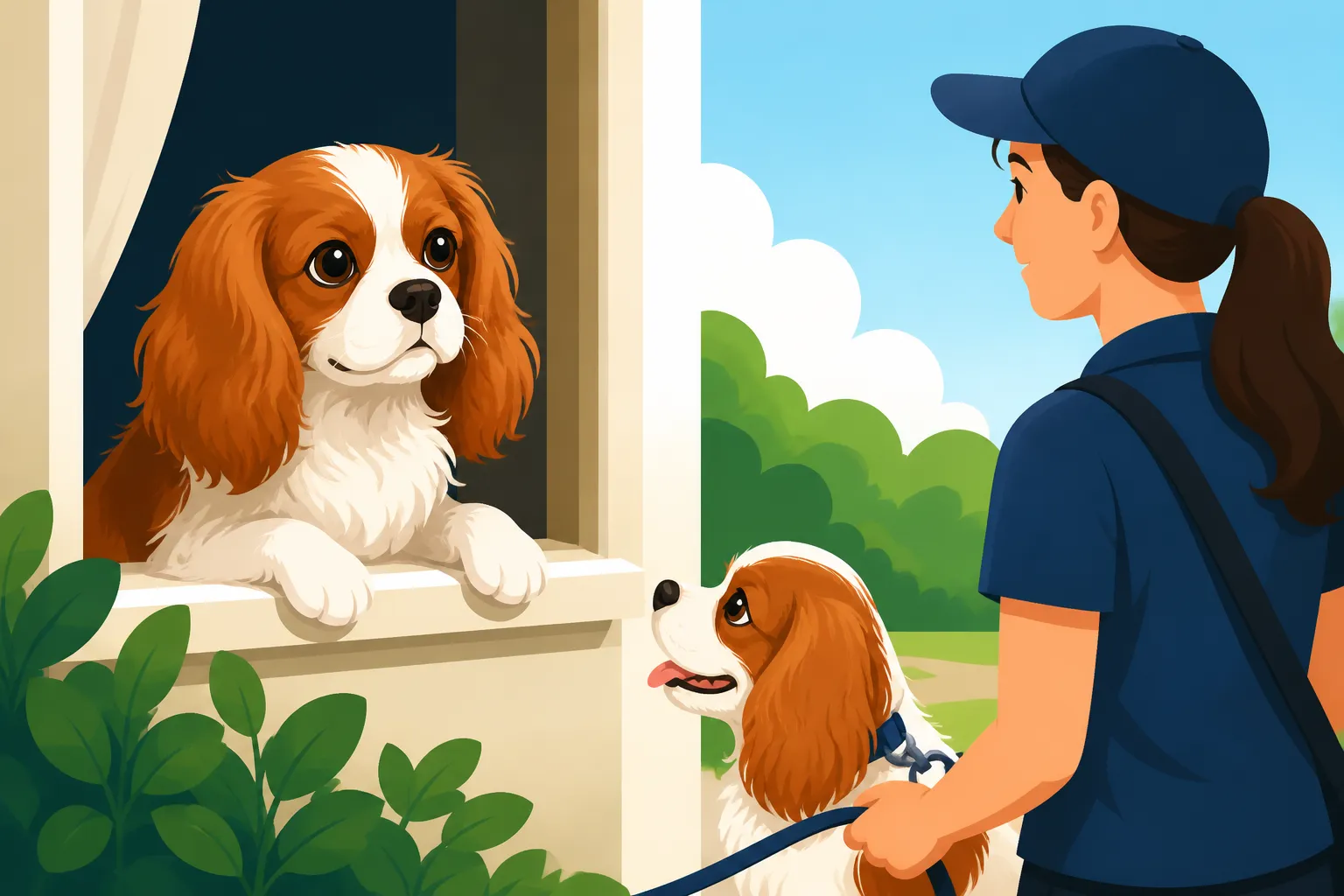
Getting a Cavalier Used to a Dog Walker
Leaving your beloved Cavalier King Charles Spaniel with someone new, even for a short walk, can feel like a monumental task. You worry about their sensitive nature, their potential for separation anxiety, and whether a stranger can truly understand their quirks. This guide is here to walk you through the process of introducing your Cavalier to a dog walker, focusing on gentle methods that prioritize your dog's comfort and build their confidence.
Understanding Why Your Cavalier Might Struggle with a Dog Walker
Cavaliers are truly special dogs, known for their sweet dispositions and their unwavering devotion to their families. But these very qualities can make the idea of a new person taking them out for a walk a bit daunting, both for you and for your furry friend. It's not that they're being difficult; it's simply how their beautiful little minds work.
The Cavalier's Deep Attachment and Separation Anxiety Tendencies
Cavalier King Charles Spaniels earned the nickname "Velcro dogs" for a reason. They thrive on companionship and genuinely prefer to be wherever you are, often following you from room to room as if they're afraid they might miss something vital. This deep attachment is one of their most endearing traits, but it also means they can be particularly prone to separation anxiety. The thought of you leaving, even if it's just for a few hours, can be a source of genuine distress for some Cavaliers.
When a new person, a dog walker, enters the picture, it introduces a potential disruption to this cherished bond and routine. Your Cavalier might see the dog walker not as a fun new friend, but as a temporary replacement for you, and that can trigger feelings of insecurity or abandonment. They might show their anxiety by pacing, whining, refusing to eat, or even having accidents indoors, which are all heartbreaking signs that they're feeling overwhelmed. Understanding that this isn't defiance, but genuine emotional distress, is the first step in approaching the situation with the empathy your Cavalier deserves. For a deeper dive into their clingy nature, you might find our article Why a Cavalier Follows You Room to Room insightful.
Sensitivity to Strangers and New Routines
While many Cavaliers are naturally friendly and outgoing, their gentle nature also makes them quite sensitive. Sudden changes, loud noises, or unfamiliar faces can sometimes be unsettling. They aren't generally a breed that embraces change with gusto; instead, they often prefer the comfort and predictability of their established routine and familiar surroundings.
A dog walker represents a new person with a new scent, new mannerisms, and a new way of interacting with the world. For a sensitive Cavalier, this can be a lot to process. They might react by being shy, hesitant, or even retreating. Their initial shyness isn't a sign of aggression, but rather a need for time and gentle reassurance to assess the situation and decide if this new individual is trustworthy. Rushing this introduction or forcing interaction can lead to a negative association with the dog walker, making future encounters even more challenging. Think about how a young child might react to a new babysitter – a Cavalier's emotional landscape isn't so different.
Previous Experiences and Their Impact
Just like us, a Cavalier's past experiences heavily shape their current behavior. If your Cavalier had a less-than-ideal experience with strangers, perhaps in a previous home or during a critical socialization period as a puppy, they might naturally be more wary of new people. Even something as subtle as a well-meaning but overly boisterous greeting from a stranger in the past could have left a lasting impression.
Similarly, if your Cavalier hasn't been exposed to many different people or situations, especially during their crucial puppy months, they might lack the confidence to comfortably interact with new individuals. A lack of diverse experiences can lead to a dog who finds the unfamiliar intimidating rather than intriguing. It’s also important to consider if they’ve had positive experiences with others. If your Cavalier has always been with you, the idea of being walked by someone else might be entirely foreign and therefore frightening. This is why Socializing a Cavalier Puppy Gently is so important from a young age.
Finding the Right Dog Walker for Your Sensitive Cavalier
When it comes to finding someone to care for your Cavalier, it's not just about finding any dog walker; it's about finding the right dog walker. Your Cavalier deserves someone who understands their unique personality and can provide the gentle, reassuring care they need. This isn't a task to rush, but rather an important selection process.
Qualities to Look for in a Cavalier-Friendly Dog Walker
A truly great dog walker for a Cavalier will possess a specific set of qualities that go beyond just loving dogs. First and foremost, patience is paramount. A Cavalier might not immediately bound up to a new person, and a good walker will understand this, allowing the dog to approach on their own terms, without pushing or hovering. Experience with small or sensitive breeds is also a huge plus. Someone who has worked with breeds similar to Cavaliers will already be familiar with their common anxieties, their physical vulnerabilities (like delicate necks that require a harness), and their need for positive reinforcement over harsh corrections. They should speak in calm tones, move gently, and understand how to read a dog's subtle body language.
Look for someone who is genuinely passionate about positive reinforcement training. This means using treats, praise, and gentle encouragement to reward desired behaviors, rather than relying on punishment or intimidation. A dog walker who carries high-value treats and knows how to use them to build positive associations with themselves and the walking experience is a treasure. Reliability and strong communication skills are also non-negotiable. You need someone who will show up when promised and who will provide clear, honest feedback about how your Cavalier's walk went. For more on positive methods, check out Reward-Based Training With a Cavalier.
Interviewing and Vetting Potential Candidates
Once you have a few potential dog walkers in mind, it's time to get down to brass tacks. Don't be afraid to ask plenty of questions. Start with their experience: How long have they been dog walking? Do they have references, especially from clients with small or sensitive dogs? What's their philosophy on handling a shy or anxious dog? Ask about their emergency protocols – what happens if your Cavalier gets sick or injured on a walk? Are they insured and bonded? These details are incredibly important for your peace of mind.
Beyond the formal questions, pay attention to their demeanor during the interview. Do they seem genuinely interested in your Cavalier's specific needs and personality? Do they listen attentively to your concerns? A good dog walker will ask you questions about your Cavalier's routine, preferences, and any anxieties they might have. They should also be open to a trial period, allowing them to meet your Cavalier several times before taking them out alone. Think of it as a mutual interview process, ensuring a good fit for everyone involved. For help with the questions to ask, consider our table below:
| Quality | What to Ask/Look For | Red Flags |
|---|---|---|
| Patience & Temperament | "How do you handle a shy or nervous dog?" Observe their interaction with your Cavalier. | Rushing the dog, loud voice, forcing interaction, showing impatience. |
| Experience | "What breeds have you walked? Any small or sensitive ones?" Ask for specific examples. | Only experience with large, boisterous breeds; vague answers. |
| Training Philosophy | "What methods do you use? Do you use treats?" Look for positive reinforcement. | Mentions "correcting" or "dominating" dogs; uses choke/prong collars. |
| Emergency Protocols | "What's your plan if my dog gets sick or injured?" Ask about vet contacts. | No clear plan; seems unprepared or dismissive of the possibility. |
| Insurance & Bonding | "Are you insured and bonded?" Ask for proof. | No insurance; can't provide documentation. |
| References | "Can I speak to some of your current clients, especially those with similar dogs?" | Reluctance to provide references; only offers friends/family as refs. |
| Communication | "How do you provide updates?" Assess their responsiveness and clarity. | Poor communication during the vetting process; vague responses. |
Gradual Introductions
This is perhaps the most critical step for a Cavalier. You wouldn't expect your child to immediately bond with a new caregiver; the same goes for your dog. Start with a series of short, supervised "meet and greet" sessions. The first few times, the dog walker should simply come to your home, perhaps sit on the floor, and allow your Cavalier to approach them at their own pace. Have the walker offer high-value treats and speak in soft, soothing tones. During these initial visits, you should be present and calm, showing your Cavalier that this new person is safe.
As your Cavalier becomes more comfortable, these visits can gradually lengthen. Perhaps the dog walker can toss a toy or engage in a gentle play session while you're still in the room. The goal is to build a positive association with the dog walker, so your Cavalier starts to see them as a source of good things (treats, playtime, gentle petting), not a threat. Only once your Cavalier is showing clear signs of comfort – wagging their tail, approaching willingly, accepting treats – should you move to the next stage of allowing the walker to take them out for a very short walk with you present, then eventually, alone. Remember, consistency and patience here are key. Getting a Cavalier Used to a Dog Walker is a process, not a single event.
A Step-by-Step Plan for Acclimation
Once you've chosen a fantastic dog walker, the real work begins: helping your Cavalier feel genuinely comfortable and even excited about their walks. This acclimation process needs to be gentle, consistent, and always centered around your Cavalier's emotional well-being.
Starting Small
The biggest mistake you can make is expecting your Cavalier to go from zero to sixty overnight. Instead, break down the process into tiny, manageable steps. After those initial successful meet-and-greets where your Cavalier showed comfort with the walker while you were home, the very first "solo" interaction shouldn't be a full hour-long walk around the neighborhood. It should be something much shorter, perhaps just ten or fifteen minutes, possibly even just a potty break in the yard or a quick loop around the block.
The goal of these initial outings is simply for your Cavalier to have a positive, non-stressful experience with the dog walker. Short durations prevent them from getting overwhelmed or anxious, and ending on a good note leaves them with a positive memory. It's about building a foundation of trust, one successful interaction at a time. The dog walker should focus on praise, treats, and keeping the interaction light and positive. They aren't trying to achieve a marathon walking session; they're aiming for a happy, calm connection. For Cavaliers with strong separation anxiety, this gradual approach is non-negotiable.
Establishing a Consistent Routine
Cavaliers thrive on routine. They find comfort and security in knowing what to expect, and predictability can be a powerful antidote to anxiety. Work with your dog walker to establish a consistent schedule for walks. This means trying to have walks at the same time of day, on the same days of the week, if possible. The more predictable the schedule, the more quickly your Cavalier will understand that the dog walker's arrival signals a fun outing, not an unexpected disruption.
Beyond the timing, try to keep the departure and return routines consistent as well. Does the walker always enter through the same door? Do they always offer a specific treat upon arrival? Is there a particular phrase they use before heading out? Small rituals, consistently applied, can become powerful cues for your Cavalier, signaling that everything is under control and that this is a normal, safe part of their day. This consistency extends to how your Cavalier is Crate Training a Cavalier That Panics or even how you manage Departure Routines That Calm a Cavalier.
Reinforcing Positive Behavior (and not reinforcing anxiety)
Positive reinforcement is your best friend when getting your Cavalier used to a dog walker. Every time your Cavalier shows a calm, confident, or curious interaction with the walker, whether it's sniffing their hand, taking a treat, or walking a few steps willingly, that behavior should be lavishly rewarded. High-value treats (like small pieces of chicken or cheese), cheerful praise, and gentle petting are all excellent forms of reinforcement. The dog walker should come armed with a treat pouch full of things your Cavalier will go nuts for.
It's equally important not to accidentally reinforce anxious behavior. If your Cavalier is whining, cowering, or trying to hide, rushing to pick them up, coddle them excessively, or shower them with worried attention can inadvertently teach them that being anxious gets your focus. Instead, remain calm and reassuring, but avoid making a big deal out of their anxiety. Let the dog walker calmly try to engage them with a treat or a gentle invitation to explore. If your Cavalier is truly distressed, it might be a sign that you need to go back a step in the acclimation process. Sometimes, structured training programs, such as those offered by BAXTER & Bella, can provide owners with tools and techniques for positive reinforcement that benefit everyone involved in your Cavalier's care. They focus on building confidence and positive associations, which is exactly what a sensitive Cavalier needs.
Tools and Tips for a Smoother Transition
Beyond the behavioral strategies, there are practical tools and thoughtful considerations that can make a huge difference in helping your Cavalier feel safe and secure with a dog walker. These small details can add up to a much more positive experience.
Comfort Items and Familiar Scents
When your dog walker arrives, having certain comfort items available can make your Cavalier feel much more at ease. This could be their favorite bed or blanket, a cherished toy, or even an old t-shirt that smells like you. The familiarity of these items, especially those carrying your scent, can be incredibly reassuring to an anxious dog. Your dog walker can use these items strategically, perhaps placing the blanket near them during the initial meet-and-greets, or even bringing the favored toy on the walk to provide a sense of continuity and comfort.
Consider leaving a puzzle toy or a long-lasting chew filled with something delicious for your Cavalier just before the walker arrives. This can help distract them from your departure and create a positive association with the walker's arrival, as they become the bringer of good things. A Cavalier who is happily engaged with a treat might be less focused on the anxiety of you leaving, easing the transition for both of you. You might find our advice on Whether Leaving the Radio On Helps a Cavalier also applies to calming background noise.
Appropriate Walking Gear
A Cavalier's delicate neck and propensity for tracheal issues mean that a standard neck collar is often not the best choice for walks, especially if they tend to pull or lunge. A well-fitting harness is almost always preferable. It distributes pressure across their chest and shoulders, preventing strain on their throat and neck. Make sure the harness is comfortable, secure, and doesn't chafe or restrict their movement. There are many excellent options available, and you can find a great selection of comfortable, well-fitting harnesses on platforms like Amazon, reading reviews to ensure it's suitable for small breeds.
The leash itself should also be appropriate. A standard 6-foot nylon or leather leash is usually ideal. Avoid retractable leashes, as they offer less control and can be dangerous, especially with a small dog who might dart into traffic. A sturdy, reliable leash gives the dog walker the necessary control and confidence, which in turn helps your Cavalier feel secure on their walk. A proper harness is vital for Harnesses Suited to a Cavalier's Neck to prevent injury.
Communication is Key
Open and honest communication between you and your dog walker is paramount. Before the first solo walk, provide the dog walker with a detailed list of your Cavalier's quirks, preferences, and any commands they know. This includes things like: Do they stop suddenly to sniff everything? Are they afraid of loud trucks? Do they prefer to potty in a specific type of area? What are their favorite treats?
After each walk, encourage the dog walker to provide feedback. A quick text or a short note detailing how the walk went can be incredibly helpful. Did your Cavalier seem happy? Did they pull on the leash? Did they encounter any challenging situations? This feedback loop allows you to track progress, identify any new anxieties, and adjust the strategy as needed. It also helps you feel connected to your Cavalier's experience, even when you're not there. If your Cavalier ever develops an unusual behavior, such as A Cavalier That Yelps When Picked Up, good communication can alert you early to potential pain.
Disclaimer
This article is for general informational purposes only and does not constitute professional advice. Laws, prices and regulations vary by location and change over time. Consult a qualified professional for guidance on your specific situation.