Fencing a Yard a Cavalier Will Not Leave
It’s a real headache, isn’t it, trying to create a safe space for your beloved Cavalier King Charles Spaniel where they can roam freely without you having a heart attack every five seconds? Many of us wrestle with the fear of them wandering off, chasing a squirrel into harm's way, or simply greeting a stranger and disappearing down the street. This guide is here to walk you through everything you need to know about fencing your yard effectively, ensuring your Cavalier stays safe and sound within your property lines.
Why a Cavalier King Charles Spaniel Needs a Truly Secure Yard
Cavaliers are charming, affectionate, and utterly devoted to their people. They're also, let's be honest, not always the sharpest tools in the shed when it comes to self-preservation, especially when something exciting catches their eye. Their sweet, trusting nature and curious spirit, combined with a surprising prey drive for a lapdog, can lead them into precarious situations faster than you can say "squirrel!"
The Lure of Adventure and Lack of Street Smarts
Think about your Cavalier for a moment. They live for connection, for following you from room to room, for being part of the action. But step outside, and that connection can sometimes be overshadowed by a compelling scent or the flutter of a bird's wing. It’s not that they don't love you; it's that their instincts, combined with a genuine lack of understanding about dangers like cars or unfamiliar people, can kick in. A Cavalier seeing a rabbit dart across the street might just follow it, convinced it's a grand adventure, completely oblivious to traffic. Their small size makes them particularly vulnerable in these scenarios, easily overlooked by drivers or perceived as an easy target by less scrupulous individuals. This isn’t a breed known for its innate caution or street savviness; they’re more likely to wag their tail at a stranger than run from them.
Their Sociable Nature and Potential for Wandering
One of the most endearing qualities of a Cavalier is their friendliness. They truly do love everyone – children, other dogs, cats, and yes, even strangers. While this makes them wonderful companions, it also means they're not natural guard dogs and certainly not inclined to stay put if someone, anyone, offers a friendly hand or a kind word. If a gate is accidentally left ajar, or if they find a small gap in the fence, they won't hesitate to explore the great wide world, often trotting right up to the first person they see. This isn't naughtiness; it's just who they are – little social butterflies eager for interaction. Imagine the horror of a well-meaning neighbor taking your Cavalier home, thinking it's lost, while you're frantically searching the neighborhood. It's a very real concern for Cavalier owners. Why a Cavalier Follows You Room to Room touches on their need for proximity, but outdoors, that translates to a need for secure boundaries.
Physical Fencing: Your First Line of Defense
When it comes to keeping your Cavalier safe, a physical barrier is almost always the gold standard. It provides a tangible, visible boundary that both you and your dog can understand. There are several types of physical fences, each with its own benefits and considerations specific to a small, curious dog like a Cavalier.
Traditional Fencing Materials and Cavalier-Specific Concerns
Choosing the right material isn't just about aesthetics; it's about security.
- Wood Fencing: A classic choice, wood fences offer privacy and can be quite sturdy. However, gaps can form between pickets over time as the wood shrinks or warps. A small Cavalier could potentially squeeze through surprisingly narrow openings. You'll need to regularly check for these gaps, especially near the ground. Also, keep in mind that wood can be chewed, so a determined Cavalier might find a weakness if they’re prone to gnawing.
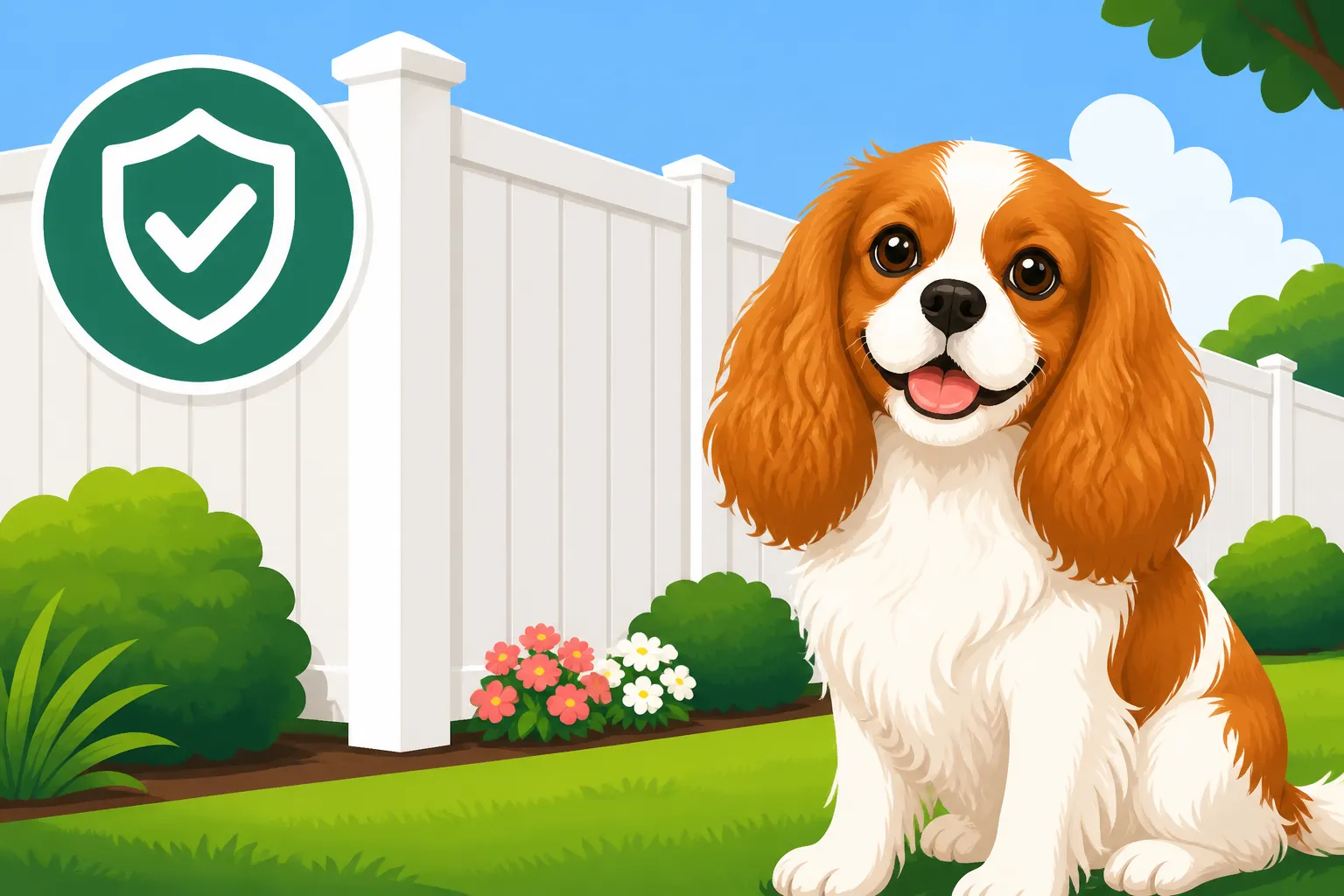
- Vinyl Fencing: Similar to wood in appearance, vinyl fences are low maintenance and won't warp or rot. They typically have tightly fitted panels, reducing gaps. However, ensure the panels go all the way to the ground, or consider burying a small section to prevent digging underneath. Vinyl is also less prone to chewing than wood, which is a plus.
- Chain Link Fencing: Economical and durable, chain link fences allow your Cavalier to see the world, which can be a pro or a con depending on your dog's reactivity. The main concern here is the mesh size. While a standard chain link might be too small for an adult Cavalier to squeeze through, a determined puppy or a very petite adult might get their head stuck or try to push through larger gaps. More importantly, it's very easy for dogs to climb chain link, and a motivated Cavalier could potentially scale it if it's not tall enough. Whether a Cavalier Can Ever Be Off Leash really emphasizes the need for physical barriers.
- Ornamental Iron Fencing: Visually appealing and very strong, iron fences offer excellent security if properly installed. The key is the spacing between the vertical pickets. These gaps must be narrow enough that your Cavalier cannot get their head through, let alone their body. Think about how easily a small dog can slide through what looks like a tight spot. Also, the bottom of the fence needs to be flush with the ground or set into concrete to prevent digging.
No matter the material, aim for a fence that is at least four feet tall. While a Cavalier isn't typically a high jumper, a solid four-foot barrier makes it less appealing to try, especially if there are no easy footholds. For a truly escape-proof solution, you can find various fence extensions on sites like Amazon that can add extra height to existing fencing, giving you peace of mind.
Electronic Fencing: A Different Approach
Electronic fences, often called invisible fences, use a buried wire to create a boundary, delivering a static correction if your dog attempts to cross it. On the surface, they sound appealing – no visual obstruction, seemingly less expensive. However, for a Cavalier, they come with significant caveats.
- The "Push Through" Problem: An electronic fence deters a dog from leaving, but it doesn't physically stop them. If your Cavalier is highly motivated by a squirrel, a passing person, or another dog, they might push through the static correction. The real danger? Once they've received the correction and are outside the boundary, they're often reluctant to come back across it to return home, fearing another shock. This can leave them stranded and scared outside your yard.
- No Protection From Outside Dangers: An electronic fence only works one way – it keeps your dog in. It does absolutely nothing to keep other animals (stray dogs, coyotes, local wildlife) or people out. Your small, friendly Cavalier could be vulnerable to aggressive dogs or snatched by someone walking past.
- Training and Temperament: Successful electronic fencing relies heavily on consistent, careful training and a dog with a robust temperament that responds well to correction. While Cavaliers are intelligent and generally eager to please, some can be quite sensitive. The static correction could cause anxiety or fear, particularly if not introduced correctly. For a highly motivated or sensitive Cavalier, this system might not be effective or humane. Instead of relying solely on an electronic fence, consider tools like the BAXTER & Bella online puppy school, which offers comprehensive training programs that can help your Cavalier learn strong recall and boundary awareness within a securely fenced physical space. This kind of positive, reinforcement-based training is far more suitable for their sensitive nature.
| Fence Type | Cavalier Suitability | Pros | Cons |
|---|---|---|---|
| Wood Picket | Good | Privacy, classic look | Can warp/gap, chewable, requires maintenance |
| Vinyl Panel | Excellent | Low maintenance, no warping, durable | Can be expensive, needs proper ground installation to prevent digging |
| Chain Link | Moderate | Economical, durable | Climbed easily, mesh size can be a risk, no privacy, can be unsightly |
| Ornamental Iron | Good | Strong, attractive, good visibility | Expensive, gaps must be very narrow, needs ground installation |
| Electronic/Invisible | Low | Aesthetically pleasing, flexible layout | Doesn't physically stop escape, no outside protection, training intensive, ethical concerns for sensitive dogs |
Addressing Common Escape Routes and How to Thwart Them
Even with a seemingly robust fence, Cavaliers have a knack for finding the path less guarded. You need to think like a small, determined dog with a mission.
Digging Under the Fence: The Houdini Plan
Many dogs are diggers, and while Cavaliers aren't typically known as avid excavators like terriers, a compelling scent or a desire to explore can make them surprisingly effective. They're small enough to make a significant dent in the earth under a fence quickly.
- Solutions for Digging:
- Burying the Fence Line: The most effective method is to bury the bottom of your fence line. For wooden or vinyl fences, extend the material 6-12 inches into the ground. For chain link or ornamental iron, you can attach a section of hardware cloth or chicken wire along the bottom, burying it vertically or bending it into an "L" shape outwards underground. This creates an invisible barrier they hit if they try to dig.
- Concrete Kickboards: Pouring a concrete footer along the fence line is a permanent and highly effective solution. It stops digging dead in its tracks.
- Rock or Paver Skirting: If burying isn't an option, you can lay down heavy rocks, pavers, or a concrete slab along the inside perimeter of the fence. This creates a deterrent at ground level.
- Regular Patrols: Make it a habit to walk your fence line regularly, especially after rain, looking for fresh digs or loose soil. Fill any holes immediately.
Squeezing Through Gaps: The Tiny Tank Maneuver
Cavaliers are small, and what looks like a tight squeeze to you might be an open invitation to them. They can flatten themselves and wriggle through surprisingly small spaces.
- Solutions for Gaps:
- Measure Everything: Don't just eyeball gaps. If a gap is wider than about 2-3 inches, your Cavalier might be able to get through.
- Hardware Cloth or Mesh: For chain link, or to reinforce gaps in other fences, you can attach hardware cloth with zip ties or screws. Ensure the mesh size is small enough that your Cavalier cannot get their head through. This is particularly useful for ornamental iron fences where the vertical bar spacing might be too wide. Products easily found on Amazon can help here.
- Reinforce Loose Sections: Over time, sections of fence can become loose, creating unintended gaps. Regularly check posts and panels, tightening screws or adding braces as needed.
- Check Gates and Latches: Gates are often the weakest point. Ensure the gap under the gate is minimal, and the latch is secure. A spring-loaded gate that closes automatically is ideal, but always double-check it.
Jumping and Climbing: The Aspiring Mountaineer
While Cavaliers aren't typically known as Olympic high jumpers, they can be surprisingly agile, especially if motivated. A short fence, or one with easy footholds, can be an invitation to escape.
- Solutions for Jumping/Climbing:
- Adequate Height: As mentioned, a minimum of 4 feet is recommended. For very determined Cavaliers, or if you have any doubts, 5 feet is even better.
- Smooth Surfaces: Fences with smooth surfaces (like vinyl or solid wood panels) are harder to climb than those with horizontal slats or chain link.
- Fence Extensions: If replacing your fence isn't an option, consider adding fence extensions. These often consist of angled mesh or poles that make climbing over the top extremely difficult.
- Remove Climbing Aids: Don't inadvertently provide your Cavalier with a boost. Keep trash cans, woodpiles, lawn furniture, or anything else they could use as a launchpad far away from the fence line.
- A Cavalier That Refuses Stairs might seem like an odd comparison, but it highlights that while they might struggle with certain movements, their determination can sometimes override perceived limitations when escape is on their mind.
Training and Supervision: The Human Element of Yard Safety
Even the most impenetrable fence isn't a substitute for smart training and attentive supervision. Your Cavalier might be physically contained, but a well-trained dog is a happier, safer dog, whether inside or out.
Practicing Recall Within the Fenced Space
A strong recall is paramount for any dog, and it's especially important even within a fenced yard. What if a gate is accidentally left open? What if your dog slips out during a delivery? Knowing they will come when called is a lifesaver.
- Positive Reinforcement is Key: Cavaliers respond beautifully to positive reinforcement. Use high-value treats and enthusiastic praise when they come to you. Start practicing recall in a quiet, distraction-free part of your yard, gradually adding more distractions.
- Make Coming to You a Game: Don't just call them when it's time to go inside or if they're doing something "wrong." Call them, reward them, and then release them to play again. This makes coming to you a positive experience, not just the end of their fun.
- The "Emergency Recall" Word: Consider having a special, unique word for emergency recall – one you never use unless it's an absolute critical situation. Train this word with the highest value rewards and only use it when it's truly an emergency. BAXTER & Bella's training courses often include modules on building a bulletproof recall, which can be invaluable. This complements The Recall Word a Cavalier Learns Fastest by providing a structured program.
Supervision: Your Eyes and Ears
No fence is 100% foolproof, and things can happen. A tree branch might fall, a gate could be damaged, or someone might leave it open. Active supervision is your ultimate safety net.
- Never Leave Unattended for Long: Even in a securely fenced yard, avoid leaving your Cavalier unattended for extended periods. Things can change quickly – a sudden thunderstorm, an unexpected visitor, or a determined squirrel can all create problems.
- Regular Checks and Observation: While your Cavalier is outside, keep an eye on them. Are they sniffing suspiciously along the fence line? Are they trying to squeeze through a shrub near the fence? Catching these behaviors early can prevent a successful escape.
- Know Your Dog's Motivations: Understanding what might tempt your Cavalier to escape (e.g., chasing birds, greeting neighbors, exploring new smells) allows you to be more proactive in your supervision. If you know they're bird-obsessed, be extra vigilant when a flock lands nearby. Why a Cavalier Chases Birds Into the Road highlights this very real danger.
Additional Deterrents and Training Aids
Sometimes, a little extra help can go a long way in reinforcing boundaries.
- Sprinkler Systems or Motion-Activated Deterrents: For persistent diggers or explorers, motion-activated sprinklers or air deterrents can be effective at creating an unpleasant, but harmless, surprise near the fence line. These can be particularly useful for areas your Cavalier consistently tries to breach. Many options are available through retailers like Amazon.
- "Leave It" Command: Teach your Cavalier the "leave it" command. This can be useful if they start to focus too intently on something outside the fence that might tempt them to try and escape.
- Enrichment in the Yard: Make your yard an engaging place for your Cavalier. Provide toys, a comfortable spot in the shade, and maybe even a puzzle feeder. A bored dog is often a destructive or escape-prone dog. If their yard time is fun and fulfilling, they'll be less motivated to seek entertainment elsewhere.
By combining a well-chosen, securely installed physical fence with consistent training and watchful supervision, you can create a yard where your Cavalier can safely enjoy the outdoors, and you can enjoy true peace of mind.
Disclaimer
This article is for general informational purposes only and does not constitute professional advice. Laws, prices and regulations vary by location and change over time. Consult a qualified professional for guidance on your specific situation.