How Cavalier Heart Disease Progresses Stage by Stage
Hearing that your beloved Cavalier has a heart murmur can feel like a punch to the gut. The uncertainty, the fear of what's to come, and the sheer volume of information can be overwhelming. This guide is here to walk you through the journey of Mitral Valve Disease (MVD) in Cavaliers, explaining each stage of progression so you can better understand what to expect and how to support your furry family member.
Understanding Mitral Valve Disease (MVD) in Cavaliers
Mitral Valve Disease, often simply called MVD, is the most common heart condition in our sweet Cavalier King Charles Spaniels. It’s not just a disease; it’s practically a hallmark of the breed, something many of us wrestle with sooner or later. It's a progressive degenerative condition, meaning it gets worse over time, and it specifically affects the mitral valve, one of the crucial "doors" in your dog's heart.
What is MVD and Why is it So Common in Cavaliers?
Imagine your dog's heart as a beautifully designed house with four main rooms and several doors that open and close to keep the blood flowing in one direction. The mitral valve is one of these doors, located between the left atrium and the left ventricle. In a healthy heart, this door opens wide to let blood flow from the atrium to the ventricle, and then snaps shut tightly when the ventricle contracts to pump blood out to the body. This tight closure prevents blood from flowing backward into the atrium.
With MVD, this delicate valve starts to thicken and degenerate. It becomes lumpy and irregular, losing its ability to seal completely. When the left ventricle contracts, instead of all the blood being pumped forward, some of it leaks backward into the left atrium through the faulty mitral valve. This backflow is what veterinarians hear as a "murmur." The degree of the leak directly relates to the loudness of the murmur and, often, the severity of the disease. Unfortunately, Cavaliers have a significant genetic predisposition to this condition, far more so than almost any other breed. This is why it feels like almost every Cavalier owner eventually asks, "Why Half of Cavaliers Have a Murmur by Five?"
The Genetic Predisposition and Early Onset
It's a harsh reality that Cavaliers are predisposed to MVD, and it often appears much earlier in their lives compared to other breeds. While many small breeds might develop MVD in their golden years, it's not uncommon for a Cavalier to be diagnosed with a murmur by the age of five, sometimes even earlier. This early onset and high prevalence are directly linked to genetics within the breed's history. Despite efforts by responsible breeders to follow the MVD breeding protocol, the gene pool for Cavaliers is relatively small, making it a persistent challenge.
This genetic vulnerability means that even if you do everything "right" – feed them the best food, ensure they get exercise, keep their weight perfect – your Cavalier still has a high chance of developing MVD. This isn't a reflection of your care, but rather a tragic characteristic of the breed we adore. Understanding this predisposition helps us prepare, monitor, and manage the disease proactively, rather than being caught completely off guard. Regular vet check-ups are paramount, especially those focused on listening to the heart, which is usually the first sign something is amiss.
The Asymptomatic Stages of Cavalier Heart Disease (Stages A & B1)
When a veterinarian talks about heart disease, they often refer to stages. These stages, developed by the American College of Veterinary Internal Medicine (ACVIM), help categorize the severity of the disease and guide treatment decisions. The earliest stages, A and B1, are often "silent," meaning your Cavalier might not show any outward signs of illness, even though the disease process has begun.
Stage A: At Risk, No Disease Present
Stage A is essentially a precautionary stage. It means your Cavalier is a part of a breed known to be at high risk for developing MVD, but they don't actually have the disease yet. Their heart is structurally normal, and there's no murmur present. Every Cavalier King Charles Spaniel automatically falls into Stage A from the day they're born due to their breed's notorious predisposition to MVD.
For owners, Stage A is about awareness and prevention. It means being vigilant about annual vet checks, maintaining a healthy lifestyle, and knowing what to look out for. While you can't prevent MVD entirely due to the genetic component, keeping your Cavalier at a healthy weight and ensuring they get appropriate exercise can contribute to overall cardiovascular health. This is the stage where you might consider "Insuring a Cavalier Before the Murmur Arrives" to prepare for future potential costs.
Stage B1: Disease Present, No Clinical Signs or Heart Enlargement
This is often where the journey truly begins for many Cavalier owners. In Stage B1, your veterinarian has detected a heart murmur, meaning the mitral valve has started to leak. You might be completely floored, because your dog seems perfectly fine – playing, eating, and acting like their usual happy self. That's because, at this stage, the heart has not yet enlarged significantly to compensate for the leakage, and there are no outward clinical signs of heart failure like coughing or lethargy.
The murmur is typically discovered during a routine physical exam. Your vet will classify the murmur, usually on a scale of I to VI. A low-grade murmur (I-II) is common in Stage B1. Even a mild murmur is a signal to begin monitoring. At this point, your vet might recommend a referral to a veterinary cardiologist for an echocardiogram, which is an ultrasound of the heart. This specialized scan can confirm the MVD, assess the severity of the leak, and determine if there are any signs of heart remodeling or enlargement, which would push your Cavalier into the next stage. Knowing "What a Heart Murmur Grade Means in a Cavalier" can help you understand the initial diagnosis.
The Importance of Early Detection and Baseline Checks
Early detection in Stage B1 is absolutely critical for Cavaliers. It provides a baseline. Without an initial echocardiogram, you won't know the exact starting point of the disease. This baseline allows your cardiologist to track the progression more accurately over time. Think of it like a photograph of their heart's health. Future echocardiograms can then be compared to this baseline to see how much the disease has progressed and if the heart has begun to enlarge.
This proactive approach allows for early intervention, even if that simply means closer monitoring. It's also an opportunity to establish a relationship with a veterinary cardiologist. They are specialists in heart conditions and will have the most up-to-date knowledge on MVD management specifically for Cavaliers. These "Annual Cardiologist Exams for a Cavalier" become a crucial part of your Cavalier's long-term health plan, even before symptoms appear.
The Pre-Clinical Stages with Heart Enlargement (Stage B2)
The progression from Stage B1 to Stage B2 is a significant milestone in MVD, marking the point where the heart begins to change structurally in response to the leaky valve. While your Cavalier might still not show obvious signs of illness, the internal work of the heart is definitely ramping up.
Stage B2: Disease Present, Heart Enlargement, No Clinical Signs
This stage is defined by two key factors: a significant heart murmur (usually Grade III or higher), and echocardiographic evidence of heart enlargement. Even though the heart is enlarging, it's still managing to compensate for the leaking valve effectively enough that your Cavalier isn't showing any symptoms of heart failure. They're still running, playing, and living life to the fullest. However, the heart is working harder, and the chambers are dilating or thickening to try and maintain efficient blood flow. This compensatory mechanism, while helpful initially, can eventually become detrimental if left unchecked.
The diagnosis of Stage B2 relies heavily on an echocardiogram. Your regular vet might hear a louder murmur and suspect enlargement, but only an ultrasound performed by a specialist can definitively confirm the structural changes. They'll measure chamber sizes, valve function, and blood flow velocity. It's during this stage that many veterinarians, often upon the recommendation of a cardiologist, will suggest starting medication. The goal of starting medication at Stage B2 is to delay the onset of clinical signs of heart failure (Stage C) and improve the long-term prognosis. This is where you'll hear discussions about "Pimobendan for a Cavalier With an Enlarged Heart".
Monitoring and Proactive Management in Stage B2
Once your Cavalier is diagnosed with Stage B2 MVD, monitoring becomes more frequent and comprehensive. Regular follow-up appointments with your cardiologist, typically every 6-12 months, are essential. These visits usually involve repeat echocardiograms to track the heart's size and function, ensuring that the medication is effective and adjusting doses as needed. Your vet might also recommend a chest X-ray to assess lung fields and further confirm heart size, although the echo remains the gold standard for detailed heart structure.
Proactive management in Stage B2 extends beyond medication. It involves careful observation at home for any subtle changes in behavior or activity level. While they are asymptomatic, being aware of their usual energy, breathing patterns, and appetite can help you spot the very first hint of progression. Maintaining a healthy weight is paramount, as extra pounds put additional strain on an already compromised heart. Consider feeding a low-sodium diet, though full prescription cardiac diets are typically reserved for later stages. This is a time to work closely with your veterinary team to create a personalized plan.
What an Echocardiogram Reveals at this Stage
An echocardiogram is truly invaluable in Stage B2. It's more than just a picture; it's a dynamic, real-time view of your Cavalier's heart in action. The cardiologist can observe the mitral valve's leaflets, seeing how thickened and irregular they've become. They can measure the exact amount of blood regurgitating back into the left atrium (the "jet" of blood flow) and assess the pressures within the heart chambers.
Critically, the echo quantifies the degree of heart enlargement, particularly of the left atrium and left ventricle. These measurements are crucial for staging. For example, a left atrial to aortic root ratio (LA:Ao) above a certain threshold, along with other parameters, is what officially moves a Cavalier from B1 to B2. The cardiologist also assesses the contractility of the heart muscle. Even though the heart is enlarged, it might still be contracting powerfully. The goal of treatment at this stage is to support that function and prevent further enlargement for as long as possible. Understanding "What a Cavalier Echocardiogram Shows" provides immense clarity on the diagnosis.
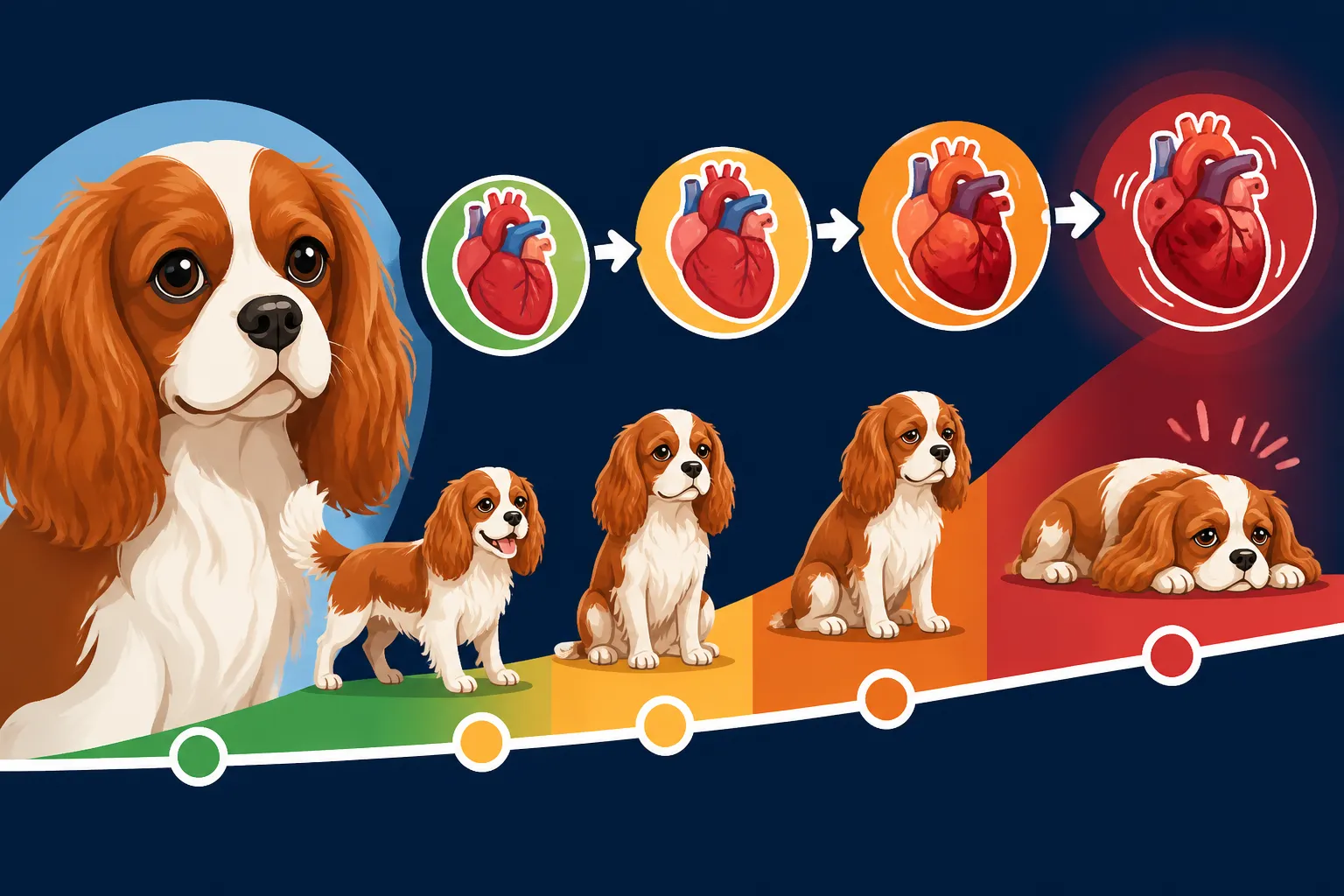
| MVD Stage | Key Characteristics | Clinical Signs | Typical Management |
|---|---|---|---|
| A | At risk, no disease | None | Awareness, healthy lifestyle |
| B1 | Murmur present, no heart enlargement | None | Regular vet checks, echocardiogram for baseline |
| B2 | Murmur present, significant heart enlargement | None | Cardiologist follow-ups, echocardiograms, medication (often Pimobendan) |
| C | Heart failure, fluid accumulation | Coughing, difficulty breathing, lethargy | Multiple medications, symptom management, emergency care |
| D | Refractory heart failure | Severe, unresponsive symptoms | Aggressive symptom management, comfort care |
The Onset of Clinical Signs (Stage C)
Stage C is often the point where MVD becomes undeniably real for owners. This is when the heart can no longer compensate for the leaky valve and starts to "fail," leading to noticeable and often distressing symptoms. This transition can be frightening, but with proper management, many Cavaliers can still enjoy a good quality of life.
Stage C: Clinical Signs of Heart Failure Present
When your Cavalier moves into Stage C, it means they are now showing clinical signs of congestive heart failure (CHF) due to their MVD. This happens when the pressure inside the heart becomes too high, causing fluid to back up into the lungs (pulmonary edema) or, less commonly in MVD, into the abdomen. The symptoms you observe are a direct result of this fluid accumulation and the heart's inability to pump blood effectively. This can be a very anxious time, especially as you see your once-vibrant companion struggling.
The most common signs are a persistent cough, especially at night or when resting, difficulty breathing, reduced exercise tolerance, restlessness, and sometimes fainting episodes. That nagging cough that starts innocently might gradually become more frequent and wet-sounding. Your dog might seem more tired after short walks, or completely uninterested in play. These are all signals that the heart is no longer able to keep up with the body's demands and fluid is building up where it shouldn't be. Recognizing these changes is crucial for timely intervention.
Recognizing the Subtle Warning Signs
It’s easy to miss the early warning signs of Stage C because they can be subtle and mimic other conditions. For instance, a cough might be dismissed as kennel cough or allergies initially. However, a cough associated with heart failure is typically a soft, moist cough, often exacerbated by lying down or excitement. A decrease in stamina might be attributed to aging, but if your five-year-old Cavalier suddenly can't manage a walk they used to love, it's a red flag. Pay close attention to their breathing. Are their breaths faster than usual when they're resting? Are they breathing with more effort? A normal resting respiratory rate is usually less than 30 breaths per minute. Learning how to count "Counting a Cavalier's Resting Breaths" can provide vital information to your vet.
Other signs can include a reduced appetite, weight loss (despite eating), or even a distended abdomen if fluid is accumulating there. Some Cavaliers might be more restless at night, pacing or struggling to find a comfortable position. These aren't just minor quirks; they're your Cavalier telling you something is wrong. Trust your instincts. If something feels off, contact your veterinarian immediately. Early recognition and treatment can make a significant difference in outcomes.
Treatment Strategies and Lifestyle Adjustments in Stage C
Once a Cavalier is in Stage C, the treatment regimen typically expands significantly. The primary goal is to manage the symptoms of heart failure and improve quality of life. This often involves a cocktail of medications working synergistically. Diuretics, like Furosemide, are critical to remove excess fluid from the lungs, easing breathing and stopping the cough. ACE inhibitors, such as Enalapril or Benazepril, help relax blood vessels and reduce the heart's workload. Pimobendan, which may have been started in Stage B2, is continued and is a cornerstone of treatment as it strengthens heart contractions and dilates blood vessels. Other medications, like Spironolactone, may also be added.
Lifestyle adjustments are equally important. Strict sodium restriction in the diet is usually recommended to help control fluid retention. Your vet will likely prescribe a prescription cardiac diet, or guide you on how to prepare low-sodium meals at home. Exercise might need to be modified, shifting from strenuous activities to gentle, shorter walks, ensuring your Cavalier isn't "A Cavalier That Tires on Short Walks". Monitoring their resting respiratory rate at home becomes a daily routine, providing an early warning system for fluid buildup. Your vet will explain that managing Stage C is often about finding the right balance of medications to keep your Cavalier comfortable and enjoying life for as long as possible. The aim is not just to extend life, but to ensure that life is filled with joy, even with the added challenges.
Advanced Heart Failure (Stage D)
Stage D represents the most advanced form of MVD, where the heart failure has become resistant, or "refractory," to standard treatments. This is a very challenging stage for both the Cavalier and their human family, demanding intense management and a focus on comfort.
Stage D: Refractory Heart Failure
In Stage D, your Cavalier's heart failure is no longer adequately controlled by the typical combination and dosages of medications used in Stage C. This means despite increasing doses of diuretics, adding new drugs, or making aggressive lifestyle changes, fluid continues to accumulate in the lungs or other parts of the body, and clinical signs persist or worsen. It's a heartbreaking realization that the treatments that once worked so well are losing their effectiveness. The heart has reached a point where its ability to function is severely compromised, and the body's systems are struggling under the strain.
This can manifest as recurring episodes of severe difficulty breathing, even with high doses of diuretics, a constant wet cough, profound lethargy, loss of appetite, and significant muscle wasting. Hospitalization may become frequent for oxygen therapy and more potent intravenous medications to stabilize them. It is a period of intense vigilance, where you are often making hour-by-hour decisions about their comfort and well-being. This stage is tough, both emotionally and financially, highlighting the importance of planning ahead.
Managing Symptoms and Maintaining Quality of Life
The focus in Stage D shifts strongly towards palliative care – managing symptoms and maximizing comfort and quality of life for your Cavalier. This might involve higher doses of diuretics, or adding stronger diuretics like hydrochlorothiazide. Other medications may be explored to try and provide some relief, even if for a short period. For instance, sometimes an additional medication to reduce coughing or improve appetite might be considered. The goal is no longer necessarily to prolong life at all costs, but to ensure that the remaining time is as free from distress as possible.
This often means accepting that your Cavalier won't return to their Stage A or B2 self. Their energy will be lower, their breathing might always be a bit faster, and they may need frequent, small meals. Creating a peaceful, comfortable environment at home becomes paramount. Minimizing stress, providing soft bedding, and ensuring easy access to water are small but important ways to support them. Your veterinary team, particularly your cardiologist, will work with you to make these difficult decisions and provide guidance. You might discuss "Hospice Care for a Cavalier in Heart Failure" to help manage expectations and resources during this time.
End-of-Life Considerations
Facing the end-of-life journey with a beloved pet is one of the hardest experiences an owner can endure. In Stage D MVD, this conversation becomes a central part of the care plan. While it's incredibly painful to consider, understanding the progression of the disease helps you recognize when your Cavalier's suffering outweighs their joy. Your veterinary team can help you assess their quality of life using objective criteria, but ultimately, it's a deeply personal decision. They can also explain the process for "Knowing When a Cavalier's Heart Has Run Out".
Signs that quality of life is severely diminished might include persistent difficulty breathing despite medication, refusing to eat or drink, constant restlessness or discomfort that can't be alleviated, or an inability to enjoy any activities they once loved. It’s important to remember that choosing euthanasia is a final act of love, sparing your Cavalier from prolonged suffering. Having honest conversations with your vet, family, and support network during this time is crucial. Many clinics offer in-home euthanasia to provide a peaceful transition in a familiar environment.
The Journey Ahead: Living with a Cavalier with MVD
Living with a Cavalier diagnosed with MVD is a journey that requires commitment, vigilance, and a whole lot of love. It’s not just about managing medication; it’s about adapting your life to support their needs, finding resources, and preparing for the emotional and financial challenges ahead.
Support Systems and Resources for Owners
You are not alone in this journey. Thousands of Cavalier owners around the world are navigating the complexities of MVD. Online communities, such as breed-specific forums and social media groups, can be invaluable resources for shared experiences, emotional support, and practical tips. Connecting with others who truly understand what you're going through can provide immense comfort and reduce feelings of isolation. Your veterinary team, including your general practitioner and cardiologist, are your primary clinical support. Don't hesitate to ask questions, no matter how small they seem. They are there to guide you through every stage.
Beyond online groups, consider local pet support groups or even grief counseling services if needed. The emotional toll of caring for a chronically ill pet, especially one with a progressive disease like MVD, can be significant. Prioritizing your own well-being allows you to be a better caregiver for your Cavalier. Remember, the love and care you provide are immeasurable, and seeking support for yourself is part of that loving care.
Financial Considerations and Pet Insurance
Managing MVD, particularly from Stage B2 onwards, can incur significant costs. The diagnostic tests, like echocardiograms and chest X-rays, specialist consultations, and ongoing daily medications can add up quickly. A single cardiology visit with an echo might cost several hundred dollars, and these visits become regular. Daily medications, such as Pimobendan and diuretics, can range from $50-$200+ per month, depending on your Cavalier's weight and the specific drugs. Emergency visits for acute heart failure can be thousands of dollars.
This is why pet insurance, if acquired before any murmur is detected, can be an absolute lifesaver. Providers like Healthy Paws can offer comprehensive coverage for accidents and illnesses, including MVD, as long as it's not considered a pre-existing condition. If your Cavalier already has a murmur, it will almost certainly be excluded from coverage, making early enrollment crucial for any future puppy. For those without insurance, setting up an emergency fund specifically for veterinary care is a wise decision. Many veterinary clinics also offer payment plans, and there are charitable organizations that provide financial assistance for pet owners in need. Budgeting for these potential costs is an important aspect of Cavalier ownership.
Advocating for Your Cavalier
As your Cavalier's primary caregiver, you are their strongest advocate. This means being observant of subtle changes, asking informed questions of your veterinary team, and ensuring they receive the best possible care. Don't be afraid to seek a second opinion if you're uncertain about a diagnosis or treatment plan. Research reputable sources and stay informed about the latest advancements in MVD treatment.
Advocating also means making decisions that are truly in your Cavalier's best interest, even if they are difficult. It means prioritizing their comfort and quality of life above all else, especially in the later stages of the disease. Your dedication and vigilance can significantly impact their journey with MVD, ensuring they live as full and happy a life as possible despite the challenges. You are their voice, and their well-being rests in your caring hands.
Disclaimer
The information provided in this article is for general informational purposes only and is not a substitute for professional veterinary advice. Always consult with a qualified veterinarian or veterinary cardiologist regarding any health concerns or before making any decisions about your Cavalier's medical care.