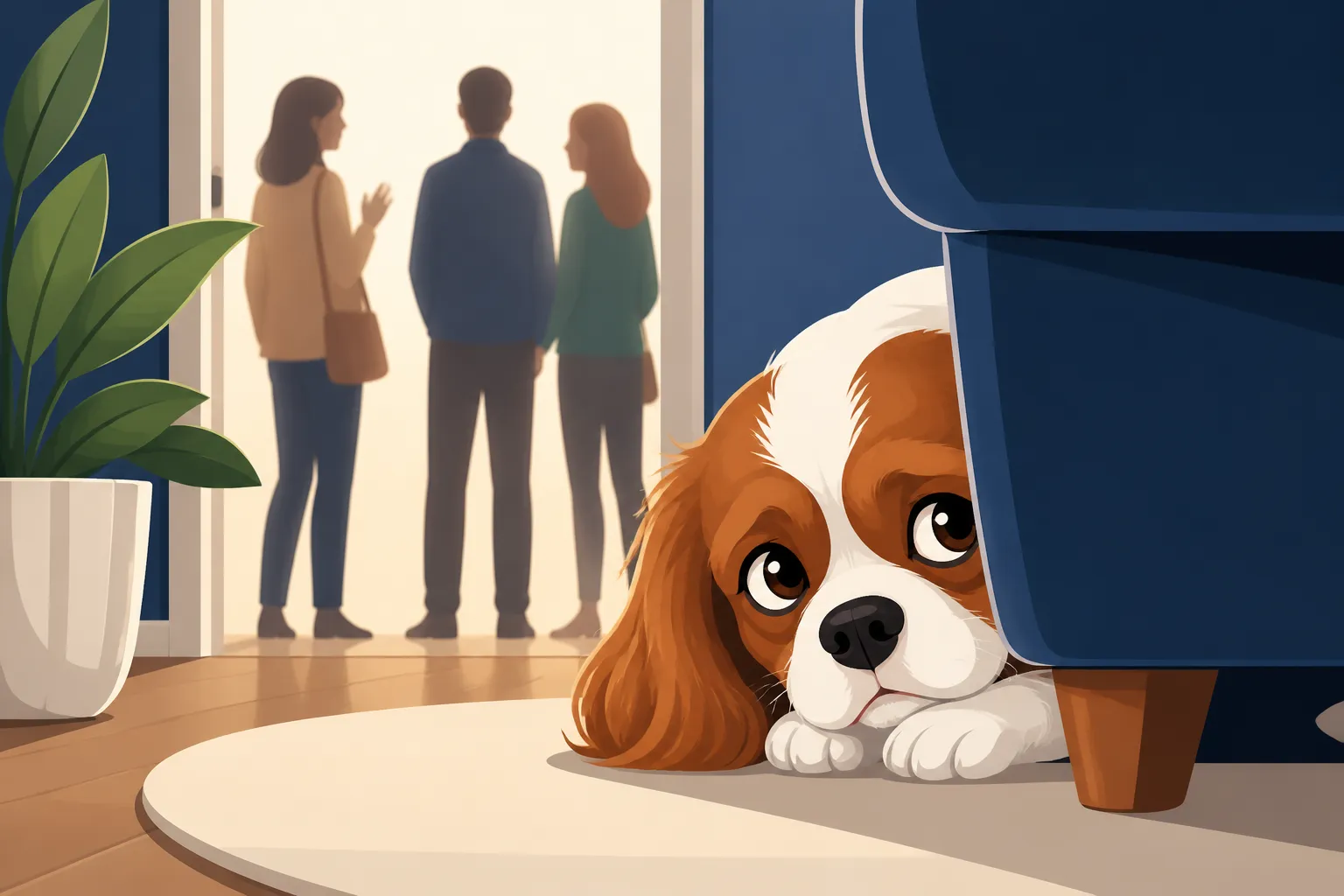
A Timid Cavalier That Hides From Visitors
It can be incredibly disheartening, and frankly, a little embarrassing, when you have guests over and your beloved Cavalier King Charles Spaniel disappears the moment the doorbell rings. You want to show off your sweet, cuddly companion, but instead, they’re hiding under the bed or cowering behind the sofa, sending signals that they’re completely overwhelmed. This guide is here to help you understand why your Cavalier might be so timid around visitors and, more importantly, how you can gently build their confidence to transform those stressful encounters into calm, even enjoyable, interactions.
Understanding Cavalier Timidity and Its Roots
When your sweet Cavalier hides from visitors, it’s rarely out of naughtiness or spite. More often than not, it stems from a place of fear, anxiety, or simply being overwhelmed. Understanding the root cause is the first step toward helping your little friend.
Why Some Cavaliers Develop Shyness
Timidity in Cavaliers can be a complex mix of genetics and early life experiences. Some Cavaliers are born with a more sensitive or nervous disposition, making them naturally more prone to shyness. It's not a fault in their character, but rather a part of their individual wiring. Think of it like people – some of us are naturally more outgoing, while others prefer quieter settings. Your Cavalier might just be one of the latter. On the other hand, early experiences play a monumental role. A puppy that wasn't exposed to a variety of people, sounds, and environments during its critical socialization period (roughly 3 to 16 weeks of age) might grow up to be fearful of new situations. If a Cavalier puppy had a negative encounter with a stranger, or if their early home environment was chaotic or neglectful, it can leave a lasting impact on their confidence. Even if you've done everything right, sometimes a dog can still develop shyness due to an unforeseen event or simply an inherent predisposition. It’s important not to blame yourself or your dog, but rather to focus on compassionate solutions. For more on early development, read Socializing a Cavalier Puppy Gently.
Early Socialization: The Critical Window
The period when a Cavalier puppy is between 3 and 16 weeks old is often referred to as a "critical socialization window." During this time, puppies are like sponges, absorbing information about their world and forming associations. Positive and varied exposures to different types of people (men, women, children, people with hats, glasses, beards), sounds (doorbells, vacuums, traffic), and environments can build a resilient, confident adult dog. If a puppy misses out on these crucial experiences, or if they have negative experiences during this period, they can become wary of the unfamiliar. Imagine a Cavalier puppy raised in a very isolated home with only one or two people; suddenly, being introduced to a bustling household with strangers coming and going can be utterly terrifying for them. This isn't to say that older Cavaliers can't learn, but it does highlight why prevention through proper early socialization is so vital. If your Cavalier didn't get these early experiences, don't despair – it just means your path will require more patience and understanding as you work to fill in those gaps. Thinking about Sounds a Cavalier Puppy Should Meet Early can help even adult dogs get used to new noises.
Recognizing the Subtle Signs of Fear in a Cavalier
Cavaliers are masters of subtle communication. They don't always bark or growl when they're scared; often, their signs are much more nuanced. A dog that hides is an obvious indicator, but there are many other cues that your Cavalier is feeling uneasy before they retreat. These can include:
- Lip licking: Often a quick flick of the tongue.
- Yawning: Not because they're tired, but as a stress signal.
- Head turning or averting gaze: Avoiding direct eye contact.
- Ears back or flattened: Tucked tight against their head.
- Tail tucked: Held low or between their legs.
- Body lowered or hunched: Making themselves smaller.
- Freezing: Becoming very still, sometimes with a wide-eyed stare. This is particularly important to recognize; a frozen dog isn't a calm dog, it's a dog that's too scared to move. You might also see A Cavalier That Rolls Over and Freezes in a show of appeasement.
- Trembling or shaking: Even if the room isn't cold.
- Panting: Without exertion or heat.
- Excessive shedding: You might notice more hair floating around after a stressful interaction.
Learning to read these early warning signs is crucial. It allows you to intervene before your Cavalier feels the need to hide, giving you the opportunity to create space or redirect the interaction in a positive way. By noticing these signals, you can protect your Cavalier from escalating fear and begin to build their trust that you will keep them safe.
Here's a quick comparison of body language signals:
| Sign of Fear/Discomfort | Sign of Comfort/Relaxation |
|---|---|
| Tail tucked low | Tail carried naturally, wagging loosely |
| Ears flattened/back | Ears relaxed, soft, may be slightly back |
| Body lowered, hunched | Body relaxed, natural stance |
| Lip licking, yawning | No excessive lip licking or yawning |
| Averting gaze, head turn | Soft eyes, may make eye contact |
| Freezing, trembling | Fluid movement, no trembling |
| Hiding | Engaged, exploring, soliciting attention |
| Excessive panting | Relaxed breathing |
Creating a Safe Space and Managing Visitor Interactions
Helping a timid Cavalier isn't about forcing them to be brave; it's about empowering them to feel safe and in control. This often starts with setting up their environment to minimize stress and carefully managing how visitors interact with them.
Designing a "Cavalier Cave" for Retreat
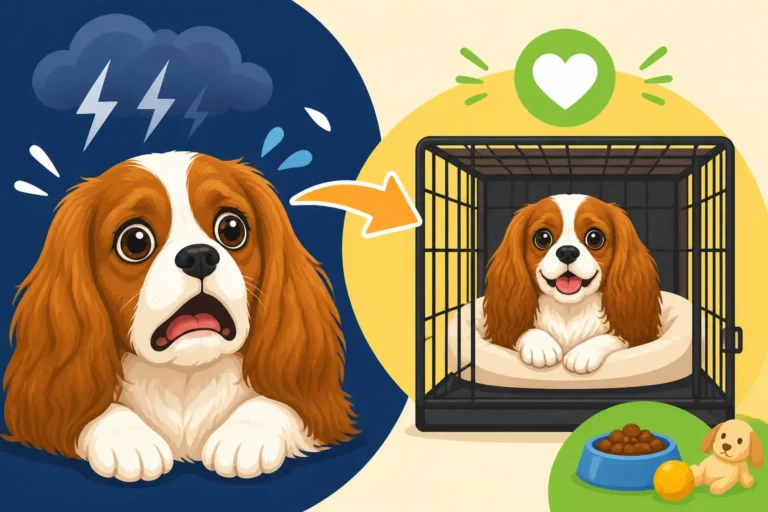
Every shy Cavalier needs a sanctuary – a designated "Cavalier cave" where they can retreat and feel completely secure when things get overwhelming. This isn't a punishment; it's a personal safe zone. This might be a crate covered with a blanket, a cozy bed under a table in a quiet room, or even a designated corner of a bedroom that guests don't typically enter. The key is that this space should be comfortable, accessible, and consistently available.
Fill it with soft bedding, a favorite toy, and perhaps a long-lasting chew or a puzzle toy to provide a positive association with being in this safe spot. When visitors are expected, you can encourage your Cavalier to go to their cave before guests arrive. You can even practice this regularly, rewarding them for settling in their spot, so it doesn't become associated only with scary events. The goal is for your Cavalier to view this space as their personal haven, a place where they choose to go when they need to decompress, not somewhere they are banished. For good options, check out covered beds or crates on Amazon, which can really help create that den-like feel.
Pre-Visitor Prep: Setting the Stage for Success
Before your guests even ring the doorbell, you can take several steps to prepare your Cavalier and reduce their anxiety.
First, ensure your Cavalier has had adequate exercise and a potty break. A tired dog is often a calmer dog, and an uncomfortable bladder only adds to stress.
Second, decide on your Cavalier's level of interaction. Will they be in their crate for the duration? Will they be on a leash near you? Having a plan helps you manage the situation.
Third, gather high-value treats. These aren't just any treats; these are the absolute favorites, the ones your Cavalier will do anything for. Small, soft, smelly treats work best.
Fourth, consider a calming aid if your Cavalier is particularly anxious. This could be a pheromone diffuser, a calming chew, or even background music specifically designed for dogs.
Finally, communicate with your guests before they arrive. Let them know your Cavalier is shy and that you're working on building their confidence. Give them instructions on how to behave (more on this below). It makes a huge difference if everyone is on the same page. You can even set up a webcam to monitor your Cavalier's behavior in their safe space if you are worried about leaving them alone. Brands like BAXTER & Bella offer online resources that can guide you through these preparatory steps.
Guiding Visitor Behavior to Support Your Cavalier
This is perhaps one of the most crucial, yet often overlooked, aspects. Your visitors, no matter how well-meaning, can inadvertently make things worse if they don't understand how to interact with a timid dog.
Here are some rules you can politely ask your guests to follow:
- Ignore the dog initially: This sounds counterintuitive, but for a shy dog, direct attention (staring, reaching, talking in a high-pitched voice) can be terrifying. Ask guests to completely ignore your Cavalier when they first enter. No eye contact, no talking to them, no reaching out.
- Let the Cavalier approach: The golden rule for timid dogs is to let them make the first move. They need to feel safe enough to initiate contact on their own terms.
- Offer treats gently: If your Cavalier does approach, ask your guests to toss a treat gently near the dog, not directly at them, and not from their hand at first. This creates a positive association with the visitor without demanding direct interaction.
- Speak softly and calmly: Loud voices or sudden movements can be startling.
- Avoid bending over the dog: Standing over a small dog can feel incredibly intimidating. Ask guests to sit down, making themselves less imposing.
- No forced interaction: Absolutely no picking up, chasing, or cornering your Cavalier. If your Cavalier retreats, that's their choice, and it should be respected.
By having these conversations with your guests, you're not being rude; you're being a responsible and caring pet parent. Most people will be happy to comply once they understand it's for your dog's well-being. This approach helps build confidence, as your Cavalier learns that visitors are not a threat and that they have agency in the interaction.
Gentle Desensitization and Counter-Conditioning Techniques
Once you've established a safe environment and laid down some ground rules for visitors, you can start actively working on your Cavalier's comfort level with new people through gentle training methods. The goal isn't to force them, but to gradually change their emotional response from fear to anticipation or even enjoyment.
The Power of Positive Association: Treats and Praise
Desensitization and counter-conditioning are fancy terms for a simple concept: gradually exposing your Cavalier to what they fear (visitors) while simultaneously creating a positive experience (with high-value treats and praise). The goal is to change their emotional response. Instead of seeing a visitor and feeling dread, your Cavalier should learn to see a visitor and think, "Yay, treats!"
Start small. If your Cavalier hides when the doorbell rings, simply practice the doorbell sound without anyone actually entering. Ring the bell, immediately give your Cavalier a fantastic treat, then ring it again, treat again. Repeat this many times. The bell is no longer a warning of danger, but a signal for yummy things. Reward-Based Training With a Cavalier is incredibly effective for this. You can find excellent high-value training treats on Amazon, often in bulk, which you'll need a lot of!
Gradual Exposure: Baby Steps to Bravery
Once your Cavalier associates the doorbell with good things, you can move to very gradual exposures. This is where "baby steps" are crucial.
- "Ghost" visitors: Have a friend come to the door, ring the bell, and stand outside. You open the door, act calm, and immediately give your Cavalier treats for staying calm. Don't let your friend enter yet. Your friend can then leave. Repeat this until your Cavalier is no longer hiding and perhaps even looking expectantly at the door.
- Brief appearances: Next, your friend can step just inside the door, stand still, ignore your Cavalier, and you deliver treats. After a few seconds, they step back outside. This is about incredibly short, positive interactions.
- Sitting calmly: When your Cavalier is comfortable with brief appearances, your friend can come in, sit down (making themselves less imposing), and still ignore your Cavalier. As long as your Cavalier is calm, you continue to feed treats. If your Cavalier starts to show signs of fear, the "visitor" moves further away or leaves.
This process can take weeks, even months. You always want to stay below your Cavalier's "fear threshold." If they are showing strong signs of fear, you've gone too fast, and you need to dial it back. Never force interactions. Remember, the goal is to change their feeling about visitors, not just their behavior. For guidance on how much positive reinforcement to use, check out Treats a Cavalier Will Trade Anything For.
Enlisting Help: Controlled Practice Sessions
It's nearly impossible to do this alone. You'll need reliable friends or family members who understand the process and are willing to act as "practice visitors." It's essential that these individuals are patient and follow your instructions precisely.
These controlled sessions are ideal because you can manage every aspect:
- The duration: Keep it short at first, maybe just 5-10 minutes.
- The environment: Start in a neutral, calm space in your home, gradually introducing more typical living areas.
- The guest's behavior: Remind your friend to move slowly, speak softly, and keep their body language open and non-threatening.
- The rewards: Have a stash of those high-value treats ready and praise your Cavalier calmly for any sign of comfort or curiosity.
Think of these as training exercises, not social gatherings. The friend isn't there to socialize with you primarily, but to help your dog. With consistent, positive, and controlled practice, your Cavalier will slowly start to associate visitors with good things and realize they are not a threat. If you’re really struggling to get started, online training platforms like BAXTER & Bella offer structured courses and professional advice that can guide you through setting up these practice sessions effectively. They can also teach you Handling Exercises for a Cavalier Puppy which can be adapted for adult dogs to get them comfortable with being touched by new people.
When to Seek Professional Help and What to Expect
Sometimes, despite your best efforts, your Cavalier's timidity might be too deeply ingrained or intense for you to handle alone. This is not a failure on your part; it simply means you need specialized guidance.
Recognizing When Timidity Becomes a Behavior Problem
While a little shyness is normal, there are times when it escalates into a genuine behavior problem that requires professional intervention. Here are some signs that it might be time to call in the experts:
- Extreme panic reactions: If your Cavalier is not just hiding, but also trembling uncontrollably, urinating/defecating from fear, attempting to bolt, or even showing defensive aggression (growling, snapping) when approached by visitors, these are red flags.
- No improvement despite consistent training: If you've been diligently working on desensitization and counter-conditioning for several weeks or months without seeing any progress, or if your Cavalier's fear seems to worsen, it's time for help.
- Impact on quality of life: If your Cavalier is constantly stressed by the anticipation of visitors, or if their fear prevents them from enjoying normal activities (like going for walks because they might see new people), then it's significantly impacting their well-being.
- Risk of harm: If their fear makes them a bite risk, even defensively, or if they might injure themselves trying to escape, professional help is essential.
It’s crucial to act before these behaviors become deeply entrenched. A professional can assess the situation objectively and tailor a plan specifically for your Cavalier's needs. Remember, a timid Cavalier who hides from visitors might also be a nervous Cavalier that hides from visitors from other things in their environment.
Consulting with a Certified Professional Dog Trainer or Behaviorist
The first step when you realize you need help is to consult with a qualified professional. Look for someone who is certified and uses positive, force-free training methods. They should have experience with fear-based behaviors.
- Certified Professional Dog Trainers (CPDT-KA): These trainers can help implement behavior modification plans, teach you effective techniques, and guide you through the desensitization and counter-conditioning process. They focus on teaching your dog new, positive associations and behaviors.
- Certified Dog Behaviorists (CDBC) or Veterinary Behaviorists (DACVB): For more severe cases of fear, especially those involving aggression or extreme panic, a behaviorist is often the best choice. Veterinary behaviorists are veterinarians who have specialized in animal behavior, meaning they can also prescribe medication if necessary, working from both a behavioral and medical standpoint.
When choosing a professional, ask about their philosophy, experience with fearful dogs, and their methods. They should observe your Cavalier, ask detailed questions about their history and behavior, and create a custom plan. They’ll likely involve you heavily in the process, as much of the work happens at home. They can also help you understand if your Cavalier’s overall confidence needs to be built up, beyond just visitor interactions, by working on things like Whether a Nervous Cavalier Can Be Built Up through various exercises.
Exploring Veterinary Options
In some cases, a veterinarian, especially a veterinary behaviorist, might suggest medical intervention alongside behavior modification.
- Rule out underlying medical issues: Sometimes, pain or an undiagnosed illness can contribute to a dog's fear or irritability. A thorough vet check-up is always a good starting point to ensure there's no physical cause for the behavior.
- Anti-anxiety medication: For dogs with severe anxiety or panic attacks, medication can be a game-changer. It doesn't "cure" the fear, but it can lower their anxiety levels enough for them to be receptive to training and behavior modification. Think of it like a human taking medication for severe anxiety – it helps them cope better so they can engage with therapy. This is usually a short-term solution to facilitate learning, not a lifelong crutch.
- Calming supplements: There are various over-the-counter supplements, pheromone products, and specialized diets that may help some dogs with mild anxiety. While often less potent than prescription medication, they can be a useful tool in a comprehensive approach.
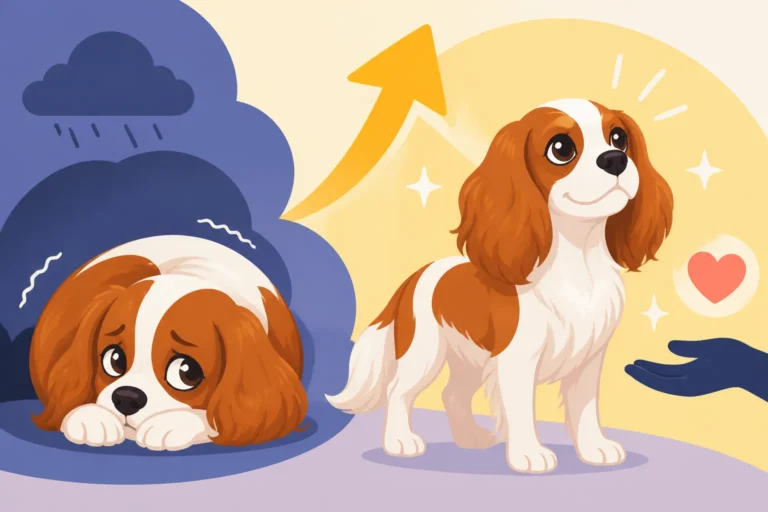
Working with a team (your veterinarian, a trainer, and potentially a behaviorist) can provide the most comprehensive support for your timid Cavalier. The journey to a more confident dog can be long, but with patience, consistency, and the right guidance, it's incredibly rewarding to see your Cavalier blossom and feel secure in their own home, even with visitors present. Living With a Cavalier That Has Syringomyelia talks about chronic pain, which can sometimes manifest as behavioral changes like timidity, so ruling out physical discomfort is always important.
Disclaimer
This article is for general informational purposes only and does not constitute professional advice. Laws, prices and regulations vary by location and change over time. Consult a qualified professional for guidance on your specific situation.