The Four Cavalier Colors and What They Are Called
One of the most exciting parts of bringing a Cavalier King Charles Spaniel into your life is imagining what they'll look like. Will they have those beautiful rich chestnut patches, or perhaps a striking black and tan? It can be a little confusing when you first start looking, especially with all the different terms you hear bandied about. This guide is here to clear up any mystery around the official, recognized Cavalier colors, explaining exactly what each one looks like and what makes them so special according to the breed standard.
The Foundation: Understanding Cavalier Breed Standards for Color
Before we dive into the gorgeous palette of Cavalier coats, it's really important to understand that not all colors you might see advertised are officially recognized. The Cavalier King Charles Spaniel is a breed with a long, rich history, and part of preserving that history means adhering to a specific breed standard. This standard isn't just about good looks; it's about maintaining the health, temperament, and defining characteristics that make a Cavalier, well, a Cavalier. When you're dreaming of your future furry family member, knowing these standards helps you understand what a truly well-bred Cavalier should look like.
The AKC Standard for Color
The American Kennel Club (AKC) sets the standard for the Cavalier King Charles Spaniel in the United States, and color is a crucial part of that. According to the AKC, there are precisely four recognized colors for a Cavalier. This isn't just a preference; it's a guide for breeders and judges, ensuring consistency within the breed. These four colors are Blenheim, Tricolor, Ruby, and Black and Tan. Any other color combination, no matter how "rare" or "unique" it might be marketed as, falls outside of the established breed standard. This doesn't necessarily mean a dog of an unrecognized color isn't a loving pet, but it does mean it wouldn't be able to compete in conformation shows and often indicates a lack of adherence to ethical breeding practices focused on the preservation of the true breed type. You can learn more about the specifics of the breed by reading The AKC Standard for the Cavalier King Charles Spaniel.
Why Color is More Than Just Pretty
While a Cavalier's color is undeniably beautiful, it's more than just an aesthetic choice. For ethical breeders, adhering to the standard colors is part of a larger commitment to the breed's integrity. When breeders start introducing non-standard colors, it often involves bringing in outside lines or breeding practices that may not prioritize health or temperament. Reputable breeders focus on health testing and improving the overall quality of the breed, including maintaining the correct coat colors and patterns. They understand that a departure from the standard can sometimes signal a less responsible approach to breeding. Moreover, some patterns, like the Blenheim's famous "lozenge," are deeply ingrained in the breed's lore and history, connecting today's Cavaliers back to their aristocratic ancestors.
The Blenheim Cavalier: A Nod to History and the Famous Spot
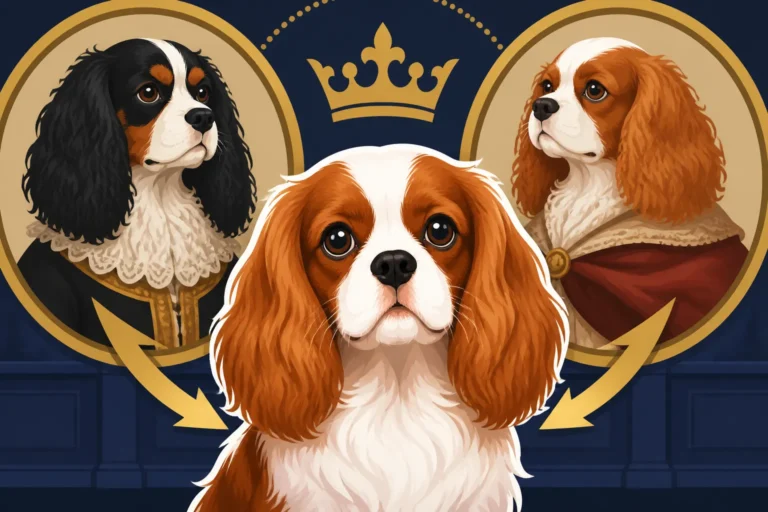
Ah, the Blenheim! For many, this is the quintessential Cavalier. Its warm, inviting appearance, with those distinctive patches of rich chestnut on a pearly white background, is instantly recognizable and utterly charming. There's something so classic and timeless about a Blenheim, and it carries with it a story that dates back centuries. If you've ever seen a painting of a spaniel from the court of King Charles II, chances are it was a Blenheim-type dog.
The Iconic Chestnut and White Pattern
The Blenheim pattern features clearly broken-up patches of a rich chestnut color on a ground of clear, pearly white. The key here is "clearly broken-up." You want to see distinct patches, not a mottled or heavily ticked coat. The chestnut should be a warm, vibrant reddish-brown, not a faded or muddy hue. These patches are typically found on the head, ears, and back, often extending down the flanks. The face usually has a white blaze running up the muzzle and between the eyes, separating the chestnut patches on either side of the head. It's this combination of striking color and gentle white space that gives the Blenheim its beloved appearance. There's a certain elegance in the contrast, making each Blenheim Cavalier feel like a little work of art. The feathering on the ears, legs, and tail will also be chestnut and white, beautifully blending with the main body color.
The Blenheim Lozenge: Fact or Fiction?
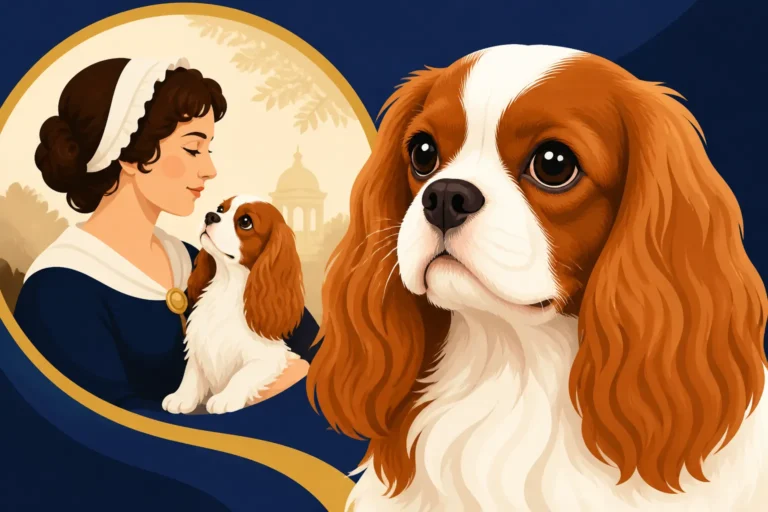
Perhaps the most talked-about feature of the Blenheim Cavalier is the "lozenge" or "Duchess thumbprint." This refers to a distinct, chestnut-colored thumb-shaped spot on the top of the white blaze, typically right between the ears. Legend has it that Sarah Churchill, Duchess of Marlborough, anxious about her husband fighting at the Battle of Blenheim, pressed her thumb to the heads of her pregnant spaniels, creating the mark. While a charming story, it's purely anecdotal. In reality, the lozenge is simply a desirable, though not mandatory, marking within the Blenheim pattern. Some Blenheims have it, some don't, and both are equally acceptable within the breed standard. It's a lovely touch if present, adding to the individuality of each dog. You can delve deeper into this specific marking by checking out The Blenheim Cavalier and Its Lozenge.
Blenheim Palace and the Cavalier's Chestnut Color
The name "Blenheim" itself is steeped in history. It comes from Blenheim Palace, the ancestral home of the Duke of Marlborough. These small spaniels were highly favored by the dukes and duchesses, who specifically bred for the chestnut and white coloration. The dogs would even accompany hunting parties, hence their sporting spaniel roots, although today they are primarily cherished as companions. The original name for the King Charles Spaniel, from which the Cavalier was later distinguished, was often "Blenheim Spaniel" due to its association with the estate and the prevalence of this color pattern within their kennels. This historical connection lends an air of aristocratic charm to every Blenheim Cavalier.
The Tricolor Cavalier: Bold Markings with a Classic Look
If the Blenheim is a gentle watercolor, the Tricolor Cavalier is a bold, striking oil painting. With its crisp black and white base accented by rich tan points, the Tricolor offers a truly regal and distinctive appearance. There’s a wonderful depth to this color pattern, making it a favorite for those who appreciate sharp contrasts and clear definitions in their dog’s coat. It’s a classic combination that really highlights the Cavalier's expressive face.
Black, White, and Tan: The Defined Markings
The Tricolor Cavalier’s coat is a striking combination of jet black and clear white, broken up into distinct patches, much like the Blenheim. However, the addition of tan markings sets it apart. The white should be clean and bright, separating the larger areas of black. The black patches are typically found on the ears, back, and often around the eyes, sometimes forming a distinctive mask. What truly completes the Tricolor look are the rich tan markings. These tan points appear over the eyes, on the cheeks, inside the ears, and often under the tail. Sometimes you’ll see tan penciling on the white parts of their legs, too. The tan should be a warm, deep shade, not a pale cream or washed-out yellow, providing a beautiful accent to the dominant black and white. For a full picture of this stunning coloration, take a look at The Tricolor Cavalier.
The Importance of Clear Breaks and Placement
For a Tricolor Cavalier to meet the breed standard, the various colors should have clear, well-defined breaks. You don't want to see "roaning" (scattered colored hairs in the white areas) or muddied transitions between the black and white. The tan points should also be distinctly placed and not bleed into the other colors in an indistinct way. Think of it as a meticulously painted canvas, where each color has its own space. For example, the tan spots above the eyes should look like little eyebrows, sharply contrasting with the black surrounding them. The placement of the black patches, particularly on the head and ears, helps frame the face and highlight the Cavalier's soft, soulful expression. This crisp definition is what makes the Tricolor so eye-catching and adheres to the historical appearance of these beautiful dogs.
The Ruby Cavalier: A Solid, Rich Statement
The Ruby Cavalier is a vision of pure, unadulterated color. Imagine a warm, glowing ember, or the deepest sunset, captured in fur – that’s the Ruby. There's an understated elegance to this solid red coat that speaks volumes without needing elaborate patterns. For many, the Ruby is a surprising discovery, as it's less common than the Blenheim or Tricolor, but once you see one, you understand its unique appeal.
Solid Red, No White Allowed
The defining characteristic of a Ruby Cavalier is its solid color. The coat should be a rich, whole-color red. This means no white markings whatsoever. Not a speck on the chest, not a white toe, not a single white hair. This complete absence of white is what truly makes a Ruby a Ruby according to the breed standard. The color itself can range from a lighter, golden red to a deep, mahogany red, but it should be consistent throughout the coat. Any hint of white would disqualify it as a true Ruby in the show ring, as it would indicate a deviation from the specified standard. This solid hue often makes the Cavalier's beautiful dark eyes and nose stand out even more.
The Richness of a True Ruby
A well-bred Ruby Cavalier possesses a coat that is not just red, but richly red. We're talking about a vibrant, lustrous color that shines in the sunlight. It shouldn't be faded, dilute, or appear washed out. This depth of color contributes significantly to the Ruby's striking appearance. Sometimes, you might encounter discussions about how to get the deepest red, and while genetics play a primary role, proper nutrition and coat care certainly help maintain its natural vibrancy. Products available at places like Chewy can help keep their coats healthy and shining. The single, unbroken color creates a uniform, velvety appearance that is incredibly appealing. It’s a testament to the beauty that can be found in simplicity, allowing the Cavalier's gentle disposition and beautiful conformation to truly take center stage. You can explore more about this beautiful solid color by reading What Makes a Ruby Cavalier a Whole Color.
The Black and Tan Cavalier: Elegance in Two Tones
Rounding out the quartet of recognized Cavalier colors is the sophisticated Black and Tan. This color combination exudes a classic elegance, reminiscent of a refined old-world painting. It’s a striking pairing that highlights the Cavalier’s delicate features with its deep, glossy black and contrasting warm tan accents.
Sleek Black with Distinct Tan Points
A Black and Tan Cavalier should have a rich, glossy jet-black coat as its dominant color. This black should be deep and even, without any rustiness or fading, which can sometimes occur in coats not properly cared for or with certain genetic predispositions. Against this stunning black, there are distinct tan markings. These tan markings are very similar in placement to those seen on a Tricolor, but without any white background. You’ll find the tan over the eyes (those famous "eyebrows" again!), on the cheeks, inside the ears, on the chest, on the legs, and, crucially, under the tail. The tan should be a vibrant, warm color, providing a beautiful contrast to the black, and should not be a pale cream or a washed-out fawn.
Where the Tan Markings Should Appear
The precise placement and clear definition of the tan points are vital for a Black and Tan Cavalier to meet the breed standard. Imagine a meticulously designed pattern, where each tan patch is exactly where it should be. The tan spots above the eyes are particularly endearing, giving the Cavalier an even more soulful and expressive gaze. The tan on the chest often forms a lovely "butterfly" pattern, while the tan on the legs provides a subtle accent to their dainty paws. It’s this careful arrangement of colors that gives the Black and Tan Cavalier its distinguished look. Any smudging or lack of definition between the black and tan, or the appearance of white, would be considered a fault. It's a color combination that truly showcases the Cavalier's refined beauty, and you can learn more about its specific features in The Black and Tan Cavalier.
Understanding the Genetics of Cavalier Coat Colors
While we admire the beautiful external appearance of our Cavaliers, the magic of their colors truly lies in their genetics. Understanding a little bit about how these colors are inherited can be fascinating, especially if you're curious about how puppies get their coats or if you're trying to read a pedigree. It's a complex science, but at its heart, it explains why we see these four specific patterns and not a rainbow of other options.
Basic Color Genes in Cavaliers
Cavalier King Charles Spaniel coat colors are primarily determined by a few key genes. Without getting too deep into complex genetic codes, we can simplify it. The main gene that determines whether a Cavalier will be a "whole color" (Ruby or Black and Tan) or a "particolor" (Blenheim or Tricolor) is the S (spotting) locus. Dogs with two copies of the "ss" gene will be particolor, meaning they have white patches. Dogs with at least one "S" allele will be whole color.
Then, there's the K locus, which influences black and tan patterning. Dogs with the "kyky" genotype at the K locus will show tan points if they also carry the "at" allele at the A locus. The A locus determines whether the tan points are expressed. So, a Black and Tan Cavalier would have the genetic makeup for solid color and tan points. A Ruby Cavalier would have the solid color genes but not the tan point genes, resulting in a solid red. A Tricolor has the particolor gene and the black and tan point genes, creating black, white, and tan. And finally, a Blenheim has the particolor gene but not the tan point genes, leading to chestnut and white. It's a fascinating interplay!
Predicting Puppy Colors from Parents
If you're buying a puppy from a reputable breeder, they should have a good understanding of the genetics behind their dogs' colors, especially if they breed multiple color varieties. Knowing the colors of the parent dogs can give you a strong indication of what colors their puppies might be. For example, two Blenheim parents will only produce Blenheim puppies. If you breed a Blenheim to a Tricolor, you can get both Blenheims and Tricolors, depending on the hidden genes they carry. It gets more complex when you mix whole colors and particolors, as some dogs can carry genes for other colors without outwardly expressing them. This is why experienced breeders who understand genetics are so important. They aren't just breeding for pretty colors; they're trying to maintain health and temperament, too. For those interested in the science, checking out resources like Predicting Cavalier Colors From the Parents can offer more detailed insights.
Beyond the Four: Unrecognized Colors and Why They're Not Standard
In your search for a Cavalier puppy, you might occasionally stumble upon advertisements for "rare" or "designer" colors that are not Blenheim, Tricolor, Ruby, or Black and Tan. While these dogs can certainly be charming and loving pets, it's crucial to understand why these colors are not recognized by official breed clubs and what that might imply for the dog's lineage and health.
Common "Non-Standard" Colors and Their Origins
Non-standard colors in Cavaliers can include variations like chocolate, merle, or even heavily roaned patterns that blur the distinct lines of recognized colors. For instance, a "chocolate" Cavalier would possess a liver-colored nose, eye rims, and paw pads instead of the standard black, along with a brown coat. Merle, a pattern characterized by mottled patches of color, often dilutes eye and nose pigment and can be associated with serious health issues, especially if two merle-carrying dogs are bred together. These colors generally arise from either accidental mutations in a breeding line or, more commonly, through outcrossing with other breeds that carry these genes. For example, a "chocolate" Cavalier might have a Poodle or another breed somewhere in its recent ancestry.
It's important to differentiate between a recognized color with a minor fault (like a small white patch on a Ruby that makes it unsuitable for showing but is otherwise a purebred Cavalier) and a completely unrecognized color. The latter often indicates that the dog isn't a purebred Cavalier as defined by the breed standard, or that it comes from a breeding program that isn't prioritizing the preservation of the Cavalier breed type.
Why Standard is Important for Breed Health
The adherence to a breed standard, including color, is not just about aesthetics; it's intrinsically linked to the health and genetic integrity of the breed. When breeders introduce or specifically breed for non-standard colors, they often step outside the careful, health-focused breeding protocols established by responsible Cavalier breeders. Sometimes, the genes for certain "designer" colors are linked to other, less desirable traits or health problems. For example, the merle gene, while producing striking patterns, is known to be associated with hearing and vision problems, particularly if inherited from both parents.
Reputable breeders focus on improving the overall health of the breed, which includes rigorous health testing for conditions like heart disease, syringomyelia, and joint issues. They select breeding pairs based on temperament, health clearances, and adherence to the breed standard, not on trendy or "rare" colors. Therefore, encountering a Cavalier of an unrecognized color should prompt you to ask detailed questions about its lineage and the health testing performed on its parents. While a non-standard color doesn't automatically mean an unhealthy dog, it does warrant extra scrutiny. For serious concerns about the breed's future, you might want to read about The Health Debate Around Breeding Cavaliers.
Why Color Matters (or Doesn't) When Choosing Your Cavalier
When you're bringing a Cavalier into your home, the dog's color is often one of the first things that catches your eye. Each of the four recognized colors has its own fan base, and it's easy to fall in love with a particular shade or pattern. However, it's truly important to put color into perspective, especially when considering the long-term relationship you'll have with your furry companion.
Temperament and Color: Debunking Myths
One common question that pops up is whether a Cavalier's color influences its personality. You might hear old wives' tales like "Blenheims are sweeter," or "Rubies are more energetic." Let me tell you, as a long-time Cavalier enthusiast, these are simply myths! A Cavalier's temperament is overwhelmingly influenced by its genetics (from its parents' personalities), early socialization, and how it's raised, not by the color of its coat. A well-bred Cavalier, regardless of color, should possess the characteristic sweet, affectionate, and gentle nature the breed is famous for. They are known for being devoted companions, and that trait doesn't come in a specific color package. So, whether you choose a bold Tricolor or a gentle Blenheim, expect a loving friend. If you're concerned about finding a dog with the right disposition, focus on the breeder's reputation and the temperament of the parent dogs, not on their coat color. You can find more information on breed-specific temperament in Whether Cavalier Color Affects Temperament.
Health Considerations Across Colors
Another crucial point to address is whether certain colors are predisposed to particular health issues. The short answer is: no, not typically for the four recognized Cavalier colors. The major health concerns in Cavaliers, such as Mitral Valve Disease (MVD), Syringomyelia (SM), and eye conditions, are genetic issues prevalent across the entire breed, regardless of coat color. There is no scientific evidence to suggest that a Blenheim is more prone to heart issues than a Black and Tan, or that a Ruby is less likely to develop SM than a Tricolor.
What can impact health, however, is a departure from responsible breeding practices, which sometimes happens when breeders chase "rare" or non-standard colors. If a breeder is prioritizing an unusual color over health clearances and genetic diversity, then that can introduce health problems. For example, as mentioned before, the merle gene, which creates mottled patterns, is associated with significant health risks when bred irresponsibly. But for the standard Blenheim, Tricolor, Ruby, and Black and Tan, focus on finding a breeder who rigorously health tests their breeding stock. That is far more important than the specific hue of your puppy's coat. A detailed approach to health can be found by researching The Heart Testing a Cavalier Breeder Must Do or Syringomyelia and Chiari Malformation in Cavaliers.
Personal Preference vs. Breed Standard
Ultimately, your choice of Cavalier color will often come down to personal preference, and that's perfectly fine! There's no right or wrong answer when it comes to which color appeals to you most. Maybe you love the striking look of a Tricolor, or perhaps the solid warmth of a Ruby speaks to your heart. However, it's vital to ensure that your personal preference aligns with the breed standard.
Choosing one of the four recognized colors means you are selecting a dog from a lineage that responsible breeders are striving to preserve in its purest form. It means your dog's parents likely came from a background where adherence to breed type, temperament, and health were prioritized. If you find yourself drawn to a "rare" color, please proceed with extreme caution and do extensive research into the breeder's practices. It's often the case that the desire for something "different" can lead people to less reputable sources. Remember, the true beauty and value of a Cavalier King Charles Spaniel comes from its wonderful personality and the efforts of dedicated breeders to ensure its health, not from a novel coat color. Sometimes, people are surprised to discover that Whether Coat Color Changes a Cavalier's Price is less about rarity and more about breeding quality.
Here's a quick look at the distinguishing features of the four recognized Cavalier colors:
| Color | Base Color(s) | Accent Color(s) | Key Features | Common Misconceptions |
|---|---|---|---|---|
| Blenheim | White | Chestnut | Clear white with rich chestnut patches. Often has a "lozenge" (thumbprint) on the head. | All Blenheims must have a lozenge. (It's desirable, not mandatory.) |
| Tricolor | White | Black, Tan | Crisp black and white patches with distinct tan points over eyes, on cheeks, etc. | Tan is just a faded black. (Tan should be rich and distinct.) |
| Ruby | Red | None | Solid, whole-color rich red throughout the coat. | Sometimes has small white patches. (No white is permitted for a true Ruby.) |
| Black & Tan | Black | Tan | Deep, glossy jet black with distinct tan points over eyes, on cheeks, etc. | Black fades to tan, or tan is too light. (Black should be rich, tan vibrant.) |
Cavalier Colors in the Wider Context of Ownership
Beyond the aesthetics and genetics, the color of your Cavalier can have some minor, practical implications in daily life, though these are typically very small. Things like how visible tear staining is, or how much attention their coat attracts, can vary. However, these are superficial compared to the deeper joys and responsibilities of Cavalier ownership.
Grooming Nuances by Color (Minor)
While all Cavaliers require regular grooming to keep their long, silky coats healthy and tangle-free, some minor differences can be noted based on color. For instance, tear staining, which can occur from diet, allergies, or eye irritation, is much more noticeable on the white areas of Blenheims and Tricolors. This means owners of these colors might find themselves needing to clean around the eyes more frequently to prevent discoloration. Products like gentle eye wipes or certain dietary supplements, often found at pet retailers like Chewy, are popular choices for managing this. Ruby and Black and Tan Cavaliers, having darker faces, don't show tear stains as prominently, even if they experience them.
Similarly, general dirt and dust might be more apparent on the white sections of particolored Cavaliers, potentially necessitating more frequent spot cleaning or bathing, particularly after muddy adventures. However, the overall grooming routine—regular brushing, ear cleaning, and nail trims—remains consistent for all four colors, as outlined in our guide on Brushing a Cavalier's Feathering Three Times a Week. The beautiful feathering behind their ears and on their legs will still need diligent attention, regardless of whether it's chestnut and white or solid black.
The Impact on Finding a Puppy
When you're looking for a Cavalier puppy, you might notice that certain colors are more readily available than others, or that waiting lists vary. Blenheims are often the most common and widely recognized, reflecting their historical prominence and enduring popularity. Tricolors are also quite common. Rubies and Black and Tans can sometimes be a bit less frequent to find, but are by no means rare among reputable breeders.
A responsible breeder won't necessarily prioritize one color over another. Their focus is on producing healthy, well-tempered puppies that meet the breed standard, and they often have litters with a mix of colors. If a breeder is pushing a specific color as "rare" and charging a significantly higher price for it, especially for one of the four recognized colors, that should be a red flag. As discussed earlier, Whether a Cheap Cavalier Saves You Money is a critical consideration. The emphasis should always be on the breeder's ethics, health testing, and the overall quality of their breeding program, not on the supposed rarity of a coat color. A good breeder will be transparent about the colors they typically produce and their availability, and they'll never compromise health for a specific look. Always ask to see parent health clearances and check references.
Disclaimer
This article is for general informational purposes only and does not constitute professional advice. Laws, prices and regulations vary by location and change over time. Consult a qualified professional for guidance on your specific situation.