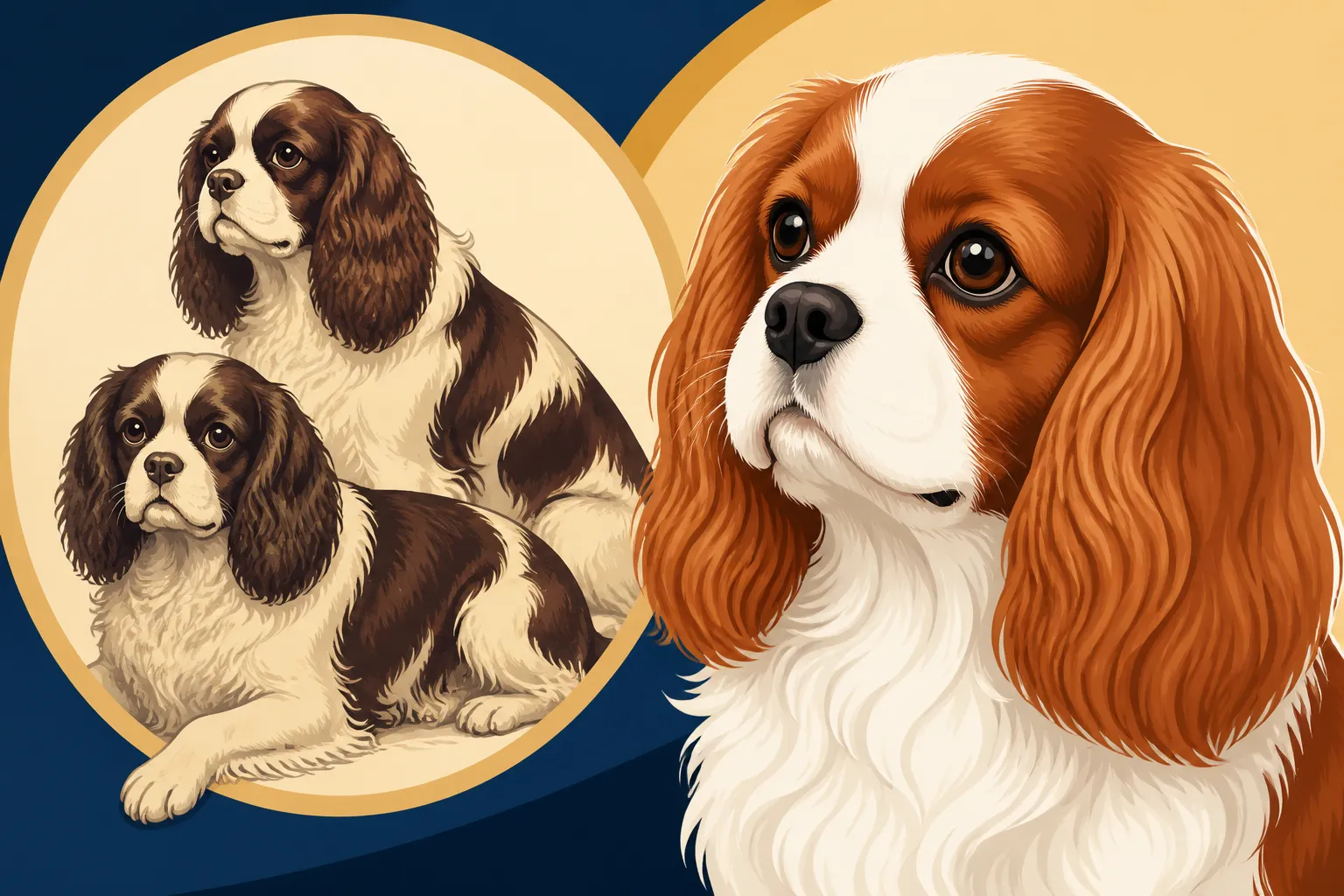
The First Dogs Shown as Old Type Cavaliers
It's easy to look at the Cavalier King Charles Spaniel today and assume they've always looked this way, with their sweet, moderately-muzzled faces. But if you've ever delved into the history of the breed, you know there was a time when this familiar face was nearly lost, replaced by a much flatter-faced spaniel. This guide is all about those pivotal dogs, the very first "Old Type" Cavaliers that were shown, and how they brought back the beloved look we cherish today.
The Quest for the Lost Type: Why "Old Type" Cavaliers Mattered
Imagine a world where the dog we now adore as the Cavalier King Charles Spaniel essentially disappeared, its unique features bred out in favor of a different aesthetic. That's precisely what happened over centuries. The little spaniels favored by European royalty, with their longer noses and gentle expressions, gradually morphed. By the Victorian era, the fashion had shifted dramatically towards dogs with pushed-in faces, domed skulls, and undershot jaws, often influenced by breeds like the Pug and Japanese Chin. These were the "King Charles Spaniels" of the time – charming in their own right, but a far cry from the dogs seen in old paintings from the court of King Charles II.
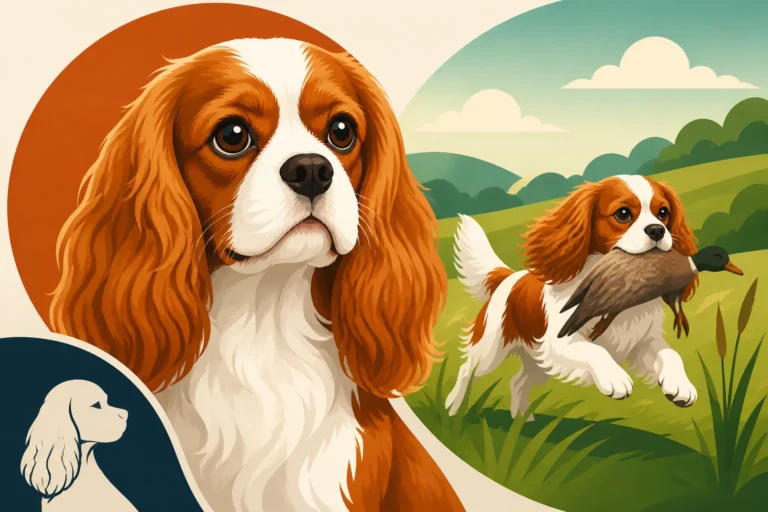
This shift meant that if you wanted a dog like the ones in the old masters' paintings, you simply couldn't find one. The traditional spaniel, the original companion breed that sat on noble laps and graced royal portraits, was effectively extinct. For some enthusiasts, this was a real source of sadness and a feeling of historical loss. They knew what had been, and they longed to see it return.
The Desire to Recreate a Historical Look
The push to revive the "old type" wasn't just about nostalgia; it was about honoring the breed's true heritage. People looked at paintings by artists like Titian and Van Dyck and saw the elegant, well-proportioned spaniels with flat heads and longer muzzles, and they recognized something special. These weren't the brachycephalic dogs that had become popular. They were athletic, with expressive eyes and ears that sat lower on the head. The yearning to bring these dogs back was palpable among a dedicated few. They weren't seeking to create a new breed, but to resurrect a historical one, giving modern dog lovers a chance to connect with the past. This often meant sifting through existing lines, searching for any hint of those older traits.
Distinguishing from the Contemporary King Charles Spaniel
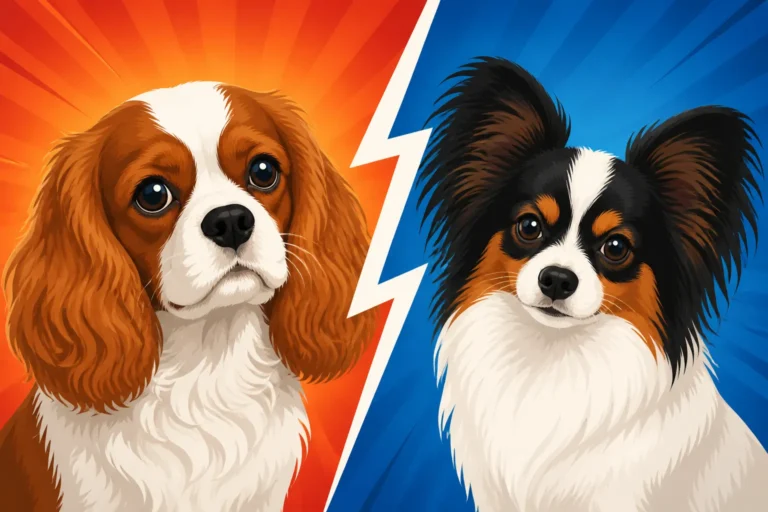
It's crucial to understand that the King Charles Spaniel, as recognized by kennel clubs in the early 20th century, was quite different. Known as the English Toy Spaniel in America, this breed had a distinctly domed head, a very short, upturned nose, and a perpetually worried or melancholic expression due to its facial structure. It was, in essence, the "new type" that had evolved. The "Old Type" Cavalier, by contrast, was characterized by a flatter skull, a longer, more defined muzzle, and a less pronounced stop (the indentation between the eyes). Its eyes were large and dark, but set in a way that conveyed a gentle, eager expression, rather than the slightly bulging appearance common in some brachycephalic breeds. The difference was stark, and recognizing these distinctions was the first step in the long journey to re-establishing the breed. You can read more about Why Cavalier and King Charles Spaniel Mean Two Dogs to understand this divergence better.
Roswell Eldridge's Vision and the First Exhibitors
The true catalyst for the revival of the "Old Type" Cavalier was an American named Roswell Eldridge. A wealthy art collector and enthusiast of dogs, Eldridge visited the famous Crufts dog show in England in 1926. What he saw there disappointed him deeply. He observed the fashionable King Charles Spaniels, but none resembled the dogs he admired in his art collection. He saw a gap, a lost piece of canine history that he believed could, and should, be restored. This observation sparked a mission that would forever change the destiny of the Cavalier King Charles Spaniel.
The 1926 Crufts Advertisement
Driven by his passion and a significant sum of money, Roswell Eldridge placed a remarkable advertisement in the Crufts catalogue in 1926. This wasn't just a simple announcement; it was a challenge, a plea, and an incentive all rolled into one. The advertisement offered a substantial cash prize for any dog that most closely resembled the spaniels depicted in the paintings of King Charles II's era. Specifically, it called for "long faces, no stop, flat skull, not inclined to be domed, and with the spot in the centre of the skull." This specific description laid out the blueprint for the "Old Type" Cavalier that breeders were now encouraged to seek out or breed towards. You can dive deeper into The 1926 Advertisement That Revived the Cavalier to see the exact wording.
The advertisement ran for five years, each year offering this tempting prize. While it didn't immediately flood the shows with "Old Type" Cavaliers, it certainly got people talking and looking at their existing King Charles Spaniels with new eyes. Many breeders likely thought it was an unusual request, but the prize money was a powerful motivator.
Ann's Son and the Other Early Contenders
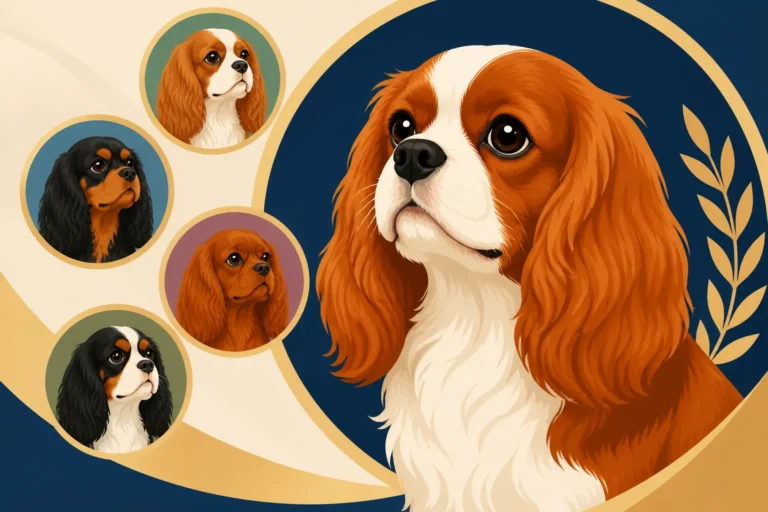
Among the first dogs to truly embody Eldridge's vision, one name stands out: Ann's Son. Bred by Miss L. Aldridge, Ann's Son was a Blenheim-colored dog who perfectly fit the description. He had the desired flatter skull, the longer muzzle, and a distinct lack of the exaggerated "doming" seen in the contemporary King Charles Spaniel. Ann's Son was awarded the prize in 1928, marking him as a pivotal figure in the breed's re-establishment. He was the standard-bearer, the living embodiment of the "Old Type."
Other early dogs also played crucial roles, even if their names aren't as widely recognized today. These dogs were often derived from existing King Charles Spaniel lines, chosen because they exhibited some throwback traits. Breeders, intrigued by Eldridge's challenge, began to actively select for these features, often working with dogs that might have been considered "faulty" by the prevailing King Charles Spaniel standard of the day. It was a true act of conservation and careful breeding. These initial dogs, whether named or unnamed, were the foundation upon which the entire Cavalier King Charles Spaniel breed would eventually be built. Their success proved that the "Old Type" was not entirely lost, but merely waiting to be rediscovered.
Characteristics of the Early "Old Type" Cavaliers
When you look at photos of the very first dogs identified as "Old Type" Cavaliers, or descriptions from those early years, you can see a clear difference from their King Charles Spaniel cousins. These were dogs deliberately chosen and bred to diverge from the then-fashionable short-faced look, a move that felt quite radical at the time. Understanding their specific characteristics helps us appreciate the journey of the breed.
Muzzle Length and Head Shape
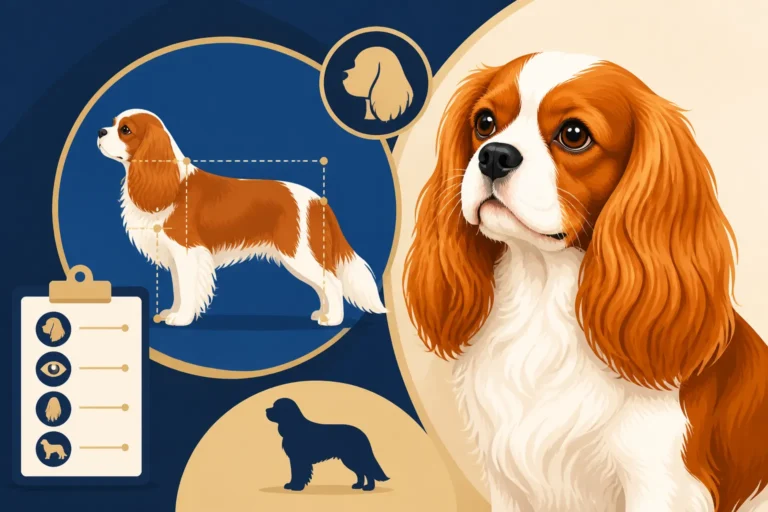
The most striking feature of these early "Old Type" Cavaliers was undoubtedly their muzzle. Unlike the heavily foreshortened, almost flat face of the King Charles Spaniel, these dogs sported a distinctly longer muzzle. It wasn't pointed or snipey, but rather tapered gently from the eyes, allowing for a good length from the stop to the tip of the nose. This longer muzzle, combined with a flatter skull, gave them a much more refined and elegant profile. The absence of a deep "stop" (the indentation where the muzzle meets the forehead) was also key. Instead, they had a gentle, gradual slope. This particular characteristic was vital in Eldridge's original description and defined the look he sought.
This structural difference wasn't just aesthetic; it had practical implications. A longer muzzle meant better breathing, something that later became a significant health consideration for brachycephalic breeds. It meant a more functional bite, less crowding of teeth, and generally less predisposition to the breathing difficulties sometimes associated with very short-faced dogs. When considering the physical makeup of a Cavalier, even today, these early choices remain foundational. For grooming supplies and toys that fit their unique needs, many Cavalier owners find great selections at Chewy.
Eye Placement and Expression
The eyes of the early "Old Type" Cavaliers were another critical characteristic. They were large, round, and dark, but crucially, they were not prominent or bulging. Instead, they were set well apart and gave the dog a soft, gentle, and intelligent expression. This differed from the somewhat anxious or surprised look that can sometimes be seen in the very prominent eyes of flatter-faced breeds. The expression was intended to be sweet and melting, reflecting the companionable nature of these dogs. It was a look of contentment and warmth, not one of respiratory effort or strained breathing.
This emphasis on eye placement contributed significantly to the breed's overall appeal. An open, friendly gaze is a hallmark of the Cavalier temperament. The eyes were a window into their soul, reflecting the affectionate and eager-to-please nature that makes Cavaliers such wonderful companions. The way their eyes were set in their skull truly defined the "soft" expression that is highly prized in the breed standard even today. If you're looking into buying a Cavalier puppy, understanding The Eye Shape the Cavalier Standard Calls For is incredibly helpful.
Coat Texture and Ear Set
While Roswell Eldridge's initial focus was heavily on head structure, the overall appearance, including coat and ears, also contributed to the "Old Type" image. These dogs possessed the long, silky, flowing coat that is characteristic of Cavaliers today. It was never intended to be coarse or excessively fluffy, but rather smooth and soft to the touch, with lovely feathering on the ears, chest, legs, and tail. This kind of coat requires regular care, and good quality grooming tools, often found on platforms like Chewy, are essential to maintain its pristine condition.
The ear set was also important. The ears were typically long and well-feathered, set high enough on the head to frame the face beautifully but not so high as to give a "prick-eared" or overly alert appearance. They lay flat against the cheeks, contributing to the gentle, soft-headed look. The combination of the silky coat and the long, low-set ears further distinguished these "Old Type" dogs from their contemporary cousins and brought them closer to the historical depictions that Eldridge admired. It was this entire ensemble of features that truly defined the type and set them on their path to becoming a recognized, distinct breed.
Here's a quick comparison of the Old Type Cavalier vs. the Contemporary King Charles Spaniel (English Toy Spaniel of the era):
| Feature | Early "Old Type" Cavalier | Contemporary King Charles Spaniel (English Toy Spaniel) |
|---|---|---|
| Muzzle | Longer, gradually tapering, well-defined | Very short, pushed-in, often upturned |
| Stop | Gentle slope, minimal indentation | Distinct, deep indentation |
| Skull | Flatter between the ears | Domed, high-set |
| Eyes | Large, round, dark; set well apart, not prominent | Large, dark, often prominent/bulging |
| Expression | Sweet, gentle, eager | Often melancholic, worried, or "toy" expression |
| Jaw | Level or slight scissor bite | Often undershot due to extreme brachycephaly |
| Breathing | Generally clear, due to longer muzzle | Often snorting, wheezing, prone to respiratory issues |
The Legacy: How These Early Dogs Shaped the Breed Standard
The efforts of Roswell Eldridge and the dedication of early breeders to find and cultivate the "Old Type" had a profound and lasting impact. Without their vision and persistence, the Cavalier King Charles Spaniel as we know it today simply wouldn't exist. These foundational dogs were the blueprints for what would become one of the most beloved companion breeds in the world.
Forming the First Breed Club and Standard
The success of dogs like Ann's Son proved that the "Old Type" was not just a fleeting fancy, but a viable and desirable form. This momentum led directly to the formation of the first dedicated breed club for these "King Charles Spaniels, Blenheim Spaniels, etc. of the old type." This occurred in 1928, the same year Ann's Son won Eldridge's prize. The club's primary objective was to establish a breed standard that accurately described and preserved the characteristics of these historical spaniels.
This standard, directly influenced by Eldridge's description and the physical traits of the winning dogs, codified the desired longer muzzle, flat skull, and gentle expression. It was a clear statement that this "new" breed (or rather, "re-established" breed) was distinct from the existing King Charles Spaniel. This move was crucial for formal recognition and for guiding future breeding programs, ensuring consistency in type. For more on the early days of the breed's formalization, explore Ann's Son and the First Cavalier Standard.
The Path to Kennel Club Recognition
Establishing a breed club and a written standard was a monumental first step, but gaining full recognition from the major kennel clubs took time and sustained effort. For many years, these "Old Type" dogs were shown in special classes at shows like Crufts, distinct from the regular King Charles Spaniel classes. It wasn't until 1945, after years of careful breeding and consistent exhibition of the desired type, that the Kennel Club in the UK officially granted separate breed status to the Cavalier King Charles Spaniel. This was a massive achievement, solidifying their place in the canine world and distinguishing them permanently from their shorter-faced cousins.
This recognition meant that breeders could register their dogs as Cavaliers, participate in championship shows, and continue to develop the breed with a clear standard in mind. It was the ultimate validation of Eldridge's original vision and the hard work of those early exhibitors. The breed's journey to global popularity, including its eventual recognition by the AKC, stemmed directly from this critical separation.
The Lasting Impact on Breed Health and Type
The emphasis on the "Old Type" with its longer muzzle and flatter skull had an unintentional but immensely positive impact on the breed's health. By moving away from extreme brachycephaly, the early Cavaliers inherently possessed better respiratory function and a reduced incidence of certain health problems often associated with very short faces. While the breed faces its own challenges today, particularly with heart and neurological conditions, the foundational decision to revive a dog with a more moderate skull and muzzle shape meant avoiding another set of severe issues.
These first dogs truly set the stage for the beloved companion we know today. Their physical characteristics — the expressive eyes, the silky coat, the gentle head shape — became the defining traits that continue to captivate owners worldwide. Every time a Cavalier gives you that soft, adoring look, or gently sniffs the ground with their well-formed muzzle, you're seeing the direct legacy of Roswell Eldridge's vision and the dedicated efforts of those first exhibitors. They ensured that the spirit of the old court spaniels would live on, now cherished in homes around the globe, from those who get their food and toys from Chewy to those who buy from specialized pet stores. Their story is a testament to how passion and a clear vision can quite literally bring a cherished piece of history back to life.
Disclaimer
This article is for general informational purposes only and does not constitute professional advice. Laws, prices and regulations vary by location and change over time. Consult a qualified professional for guidance on your specific situation.