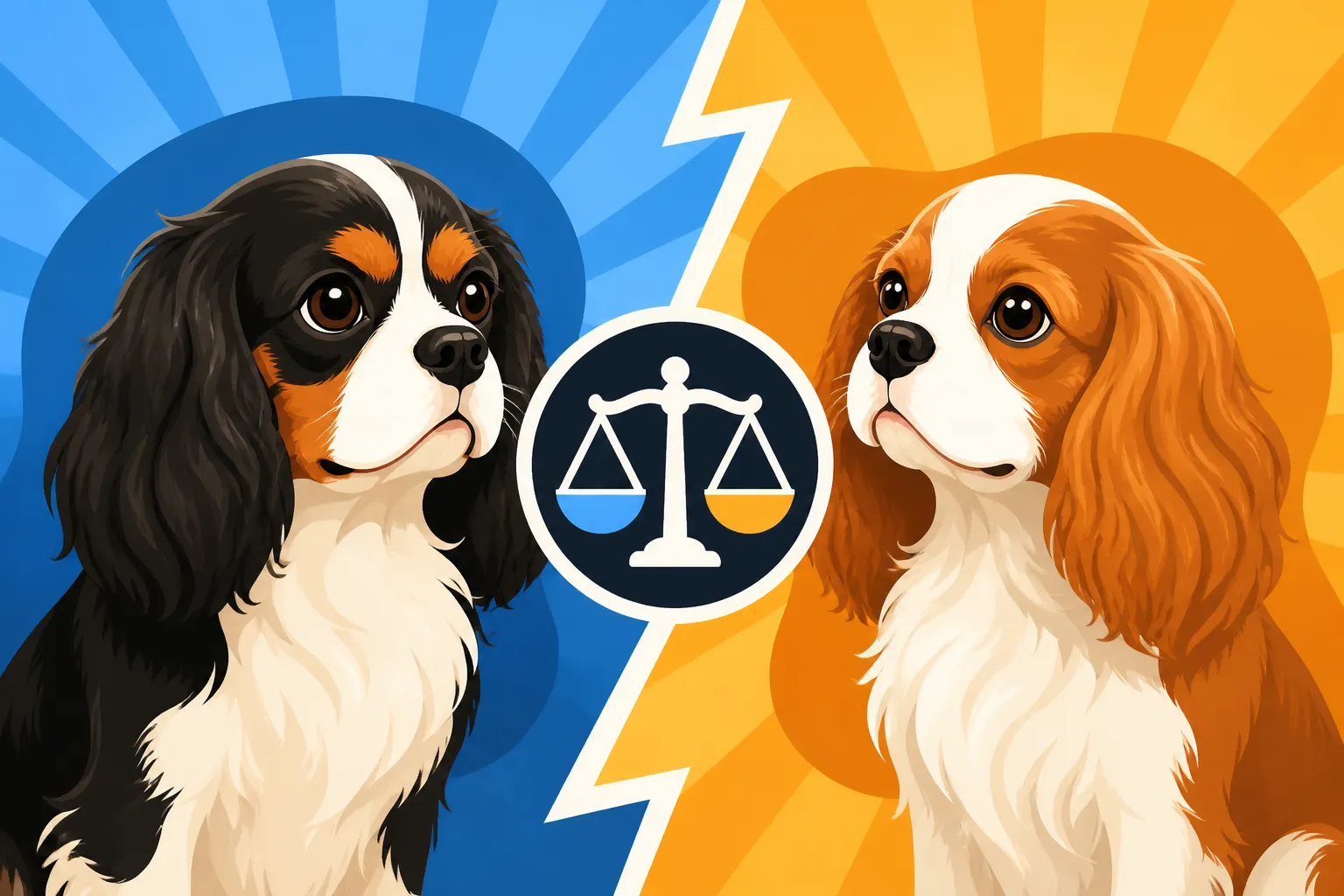
Whether Two Cavalier Standards Say Different Things
It can be incredibly confusing to hear people talk about different "standards" for the Cavalier King Charles Spaniel. You might stumble upon references to the AKC standard versus another, leaving you wondering if there are actually two distinct blueprints for our beloved breed, and what that means for your own furry family member. This guide will untangle the historical threads and present-day realities of Cavalier breed standards, so you can understand what's truly at play.
The Historical Roots of Cavalier Breed Standards
Understanding why there's even a question about "two standards" for the Cavalier King Charles Spaniel requires a little trip back in time, particularly to the breed's journey and development in the United States. It's not so much about two entirely different physical descriptions of the dog, but rather about the different organizations that recognized and championed the breed, each with their own pathway and priorities.
The Genesis of the Breed Standard
Before the Cavalier King Charles Spaniel was the cherished lapdog we know today, its ancestors, the small toy spaniels, graced the courts of European royalty for centuries. These dogs, often depicted in paintings, eventually evolved and, through selective breeding, their appearance changed quite a bit over time, sometimes resulting in flatter faces and domed skulls. By the early 20th century, an American named Roswell Eldridge made it his mission to bring back the "old type" spaniel, the ones with longer muzzles seen in the old portraits. He even offered prize money at Crufts for dogs fitting this description. This push led to the formal establishment of the Cavalier King Charles Spaniel as a distinct breed, separate from the shorter-nosed King Charles Spaniel.
In the UK, the Kennel Club established the first official breed standard for the Cavalier King Charles Spaniel, defining what the ideal dog should look like, its temperament, gait, and general characteristics. This was the foundational document, a detailed blueprint for breeders and judges alike. This initial standard emphasized a charming, active, and affectionate toy dog with a moderately short muzzle, soft expression, and well-feathered coat. This is where the breed’s modern story truly began, distinguishing it from its flat-faced cousins. If you're curious about how this specific type was revived, you might enjoy reading The 1926 Advertisement That Revived the Cavalier.
The American Divide: AKC vs. CKCSC, USA
When the Cavalier King Charles Spaniel made its way across the Atlantic to the United States, its journey to full recognition was a bit more complex. Initially, a dedicated group of enthusiasts formed the Cavalier King Charles Spaniel Club, USA (CKCSC, USA) in 1956. This club was passionately committed to preserving the breed's original type and health, strictly adhering to the UK Kennel Club standard as their guiding light. They established their own robust registry and held shows, focusing intensely on health clearances and careful breeding practices. They had a strong belief in slow, deliberate growth, ensuring the breed's integrity wasn't compromised by rapid popularity. For decades, the CKCSC, USA was the authority for Cavaliers in America.
However, as the breed's popularity grew, there was a growing desire among some owners and breeders for the Cavalier to be recognized by the American Kennel Club (AKC), which is the largest purebred dog registry in the US. The CKCSC, USA resisted this for a long time, fearing that full AKC recognition might lead to over-breeding, a dilution of health standards, and a deviation from the established breed type. Despite these reservations, a separate group eventually formed and successfully petitioned the AKC for recognition. The Cavalier King Charles Spaniel was officially accepted into the AKC's Toy Group in 1995.
This historical moment created the perception of "two standards." The CKCSC, USA continued to operate with its original ethos and adherence to a standard very closely aligned with the UK, while the AKC developed its own breed standard. It’s important to note that the AKC's standard was heavily influenced by and, in essence, nearly identical to the original UK standard and the one used by the CKCSC, USA. The core differences really lay in the philosophies of the clubs and their approaches to breeding and showing, rather than vastly different physical descriptions of the dog. This dual existence of major clubs and their respective standards is unique for many breeds, but it’s a key part of the Cavalier’s story in America. To understand more about the structural reasons behind this, take a look at Why Two Cavalier Clubs Exist in America.
Are There Really Two Distinct Standards Today?
While the historical narrative can make it seem like there are two completely different rulebooks for what a Cavalier should be, the reality in modern times is much more nuanced. The written breed standards themselves, from both the CKCSC, USA and the AKC, are remarkably similar, often using almost identical language to describe the ideal Cavalier. The perceived differences tend to stem from slight variations in interpretation, historical emphasis, and the culture of each organization rather than fundamental disagreements on the breed's physical characteristics.
Unpacking the Nuances of the Written Word
Let's talk about the actual documents. Both the AKC Standard for the Cavalier King Charles Spaniel and the CKCSC, USA standard (which aligns very closely with the UK Kennel Club standard) describe a dog that is symmetrical, balanced, and elegant. They both call for a sweet, gentle expression, large, dark, round eyes, and ears set rather high but not too close. When it comes to size, both standards specify a weight between 13 and 18 pounds and a height of 12 to 13 inches at the shoulder. There are no major discrepancies in these core physical traits. You won't find one standard demanding a long nose and another a short one; they both advocate for a moderately proportioned muzzle. The Cavalier's Longer Muzzle and Flatter Skull goes into more detail about how this specific facial structure became standard.
The nuances, if you can even call them that, might be found in subtle differences in phrasing or emphasis. For example, one might slightly stress "courageous and sporting" while the other leans into "affectionate and outgoing." But these are subjective interpretations of temperament, not physical variations. Both standards describe the four recognized colors – Blenheim, Tricolor, Ruby, and Black and Tan – and their correct markings. The ideal gait, coat texture, and tail carriage are also consistently described across both. If you were to read both documents side-by-side, you'd be hard-pressed to find significant contradictions regarding the ideal physical appearance of the breed. It's truly a testament to the dedication of those who initially crafted the standard for the resurrected breed, a standard that both major clubs in America ultimately adopted with very minor stylistic differences. For example, both standards agree on The Twelve to Thirteen Inch Cavalier Standard for height.
The Practical Impact on Judging and Breeding
So, if the written standards are so similar, where does the "two standards" idea come from in practice? It often boils down to how judges and breeders, especially those deeply ingrained in one club's culture, interpret and prioritize those subtle nuances. Historically, the CKCSC, USA placed a very strong emphasis on comprehensive health testing as a prerequisite for dogs to earn championship points, reflecting their commitment to breed health above all else. This meant that a dog might be conformationally perfect, but if its parents didn't have the necessary heart and eye clearances, for instance, it wouldn't progress in the show ring. This was a critical distinction, aimed at protecting the breed from common genetic ailments like Mitral Valve Disease in the Cavalier King Charles Spaniel and Syringomyelia.
The AKC, while certainly encouraging health testing, adopted a more traditional approach where conformation to the written standard was the primary focus for show wins. While health is always a concern for responsible breeders in any registry, the enforcement mechanism for health clearances through show titles was historically different between the two organizations. This led to a perception that the CKCSC, USA was inherently more "health-focused" in its breeding protocol, even if both clubs technically describe the same ideal dog.
However, over time, as health awareness increased and veterinary medicine advanced, many breeders, regardless of which club they primarily showed under, have adopted rigorous health testing protocols. So, while the spirit and historical emphasis might differ, the actual breeding practices of reputable breeders often align more closely today. Judges, too, are often educated across both systems and are looking for the same quality characteristics described in the shared standard. The table below highlights some of the key points of differentiation and alignment between the two main American clubs concerning the breed standard:
| Aspect | Cavalier King Charles Spaniel Club, USA (CKCSC, USA) | American Kennel Club (AKC) for Cavaliers |
|---|---|---|
| Founding Purpose | Dedicated to preserving original Cavalier type and health. | Broad recognition and promotion of the breed within the larger AKC system. |
| Standard Basis | Closely aligned with the UK Kennel Club standard. | Developed from, and very similar to, the UK/CKCSC, USA standard. |
| Historical Health Emphasis | Strong, early integration of health clearances into championship requirements. | Encouraged health testing, but historically separate from direct championship title requirements. |
| Focus in Shows | Conformation, type, and verifiable health. | Conformation, type, within a wider array of dog sports. |
| Membership Base | Traditionally smaller, focused on dedicated breed preservation. | Larger, broader appeal, encompasses many breeds and disciplines. |
Ultimately, when people mention "two Cavalier standards," they're usually referring to the distinct historical paths and organizational philosophies of the CKCSC, USA and the AKC, rather than two conflicting descriptions of the ideal Cavalier. The written words of the standards are nearly identical; it's the culture and emphasis of the clubs that created the distinction.
What These Standards Mean for the Everyday Cavalier Owner
For most Cavalier owners, the existence of two historical breed standards might seem like academic trivia. After all, you just want a healthy, happy companion! But understanding this background can give you valuable insight into the breed's history, the dedication of its fanciers, and most importantly, how to evaluate a breeder and ensure you're bringing home a well-bred puppy.
Understanding Your Cavalier's Pedigree
When you look at a Cavalier's pedigree, you might see references to champions from either the CKCSC, USA or the AKC. This is completely normal and, frankly, a good thing, as it often means the dog comes from a line that has been recognized for its adherence to the breed standard by respected judges. A reputable breeder will be able to explain the lineage of their dogs, their titles, and the health clearances behind them. They will readily share information about the parents' hearts, eyes, patellas, and MRI scans for syringomyelia. For instance, a breeder might show you clearances that indicate the parents adhere to The Cavalier MVD Breeding Protocol, showing their commitment to long-term health.
Whether a dog has an AKC or CKCSC, USA pedigree, the goal remains the same: to produce healthy, type-correct Cavaliers with wonderful temperaments. If you're delving into pedigrees and breed standards, you might also find yourself on websites like Chewy, researching the best foods or supplies for your new puppy based on recommendations from experienced owners or veterinarians. A solid understanding of the breed's standards, regardless of the registering body, empowers you to ask informed questions and make confident decisions. This foundational knowledge allows you to appreciate the intricate genetic tapestry that makes up your beloved Cavalier.
Focusing on Health Beyond the Standard
While breed standards primarily describe physical appearance and temperament, responsible Cavalier ownership goes far beyond aesthetics. Given the breed's predisposition to certain health conditions, notably Mitral Valve Disease (MVD) and Syringomyelia (SM), the most critical "standard" a breeder should adhere to is a rigorous health testing protocol. A beautifully conformed Cavalier is wonderful, but a healthy one is paramount. This is why many experienced Cavalier owners will tell you that the true "gold standard" for the breed isn't just winning ribbons in the show ring, but producing dogs with long, healthy lives.
When choosing a puppy, always prioritize health clearances from the parents and their lineage over specific club affiliation. Ask to see actual health certificates for heart, eye, patella, and often MRI scans. Understand that these screenings are essential, and a breeder who is transparent and proactive about them is invaluable. Whether they primarily participate in AKC events or CKCSC, USA events, a truly dedicated breeder will uphold the highest standards of health and welfare. As an owner, you can support your Cavalier’s health by providing excellent nutrition, perhaps ordering high-quality kibble or specialized diets from Chewy if recommended by your vet. You can also ensure they get regular veterinary check-ups, which include listening for a murmur, as detailed in The Age a Cavalier Murmur Usually Appears.
Your Cavalier, regardless of its club's pedigree, is a unique individual. While breed standards give us a framework for what an ideal Cavalier should look like and how it should behave, your dog's true value lies in the joy, companionship, and love it brings into your life. The conversation about "two standards" is a fascinating piece of breed history, but your focus should always remain on the health, temperament, and well-being of your precious family member. Supporting breeders who prioritize these aspects, ensuring they are providing a loving home and the best possible care, perhaps stocking up on quality food and cozy beds from Chewy, is the most important "standard" of all.
Disclaimer
This article is for general informational purposes only and does not constitute professional advice. Laws, prices and regulations vary by location and change over time. Consult a qualified professional for guidance on your specific situation.