Telling Episodic Falling From a Cavalier Seizure
It’s truly agonizing to witness your beloved Cavalier suddenly lose control of their body, whether it’s collapsing, trembling, or stiffening up. The sheer panic that washes over you, trying to figure out if they’re in pain, having a heart attack, or experiencing something even more profound and terrifying, is a shared fear for many Cavalier owners. This guide is here to help you understand the crucial differences between two conditions that often cause this alarm: Episodic Falling Syndrome (EFS) and seizures, providing you with the knowledge to recognize, manage, and seek appropriate veterinary care for your cherished companion.
Understanding Episodic Falling Syndrome in Cavaliers
Episodic Falling Syndrome, often abbreviated to EFS or sometimes called "Cavalier Muscle Hypertonicity Syndrome," is a neurological disorder unique to the Cavalier King Charles Spaniel breed. It’s not actually a seizure disorder, nor is it a fainting spell or a heart issue, though it can look remarkably similar to these. Instead, it’s a genetic condition that causes muscles to become overly stiff and unable to relax, leading to a temporary inability to move or stand normally.
The Genetic Roots and Muscle Contractions
At its heart, EFS is caused by a genetic mutation. Research has identified the specific gene responsible, which impacts how a Cavalier’s muscles regulate tone and contraction. Essentially, when a dog with EFS experiences certain triggers, their muscles seize up in a sustained contraction, a state known as hypertonicity. Think of it like a severe, prolonged cramp that affects the entire body or specific muscle groups. Unlike a seizure, where there's uncontrolled electrical activity in the brain, EFS is a muscle issue stemming from a nervous system abnormality, but not directly from the brain’s electrical signals. This is why you'll often hear that Why a Cavalier's Falling Is Not Epilepsy. It's a critical distinction for understanding the condition and its management.
These episodes usually don't cause the dog to lose consciousness, which is a major differentiator from most seizures. Your Cavalier might appear awake, aware, and even frightened or confused during an episode, but simply unable to control their limbs. They might try to move, their eyes might track you, and they can often respond to your voice, even if it's just a subtle shift in gaze. This awareness, coupled with the muscle rigidity, is a hallmark of EFS.
Typical Triggers and Clinical Signs
EFS episodes are typically triggered by excitement, exercise, stress, or even sudden changes in emotion. Imagine your Cavalier running to greet you at the door after you've been away, or getting worked up during playtime with another dog – these can all set off an episode. The age at which these signs begin varies, but often appears in young Cavaliers, sometimes as early as a few months old, and typically before the age of four, as discussed in The Age Episodic Falling Appears in a Cavalier.
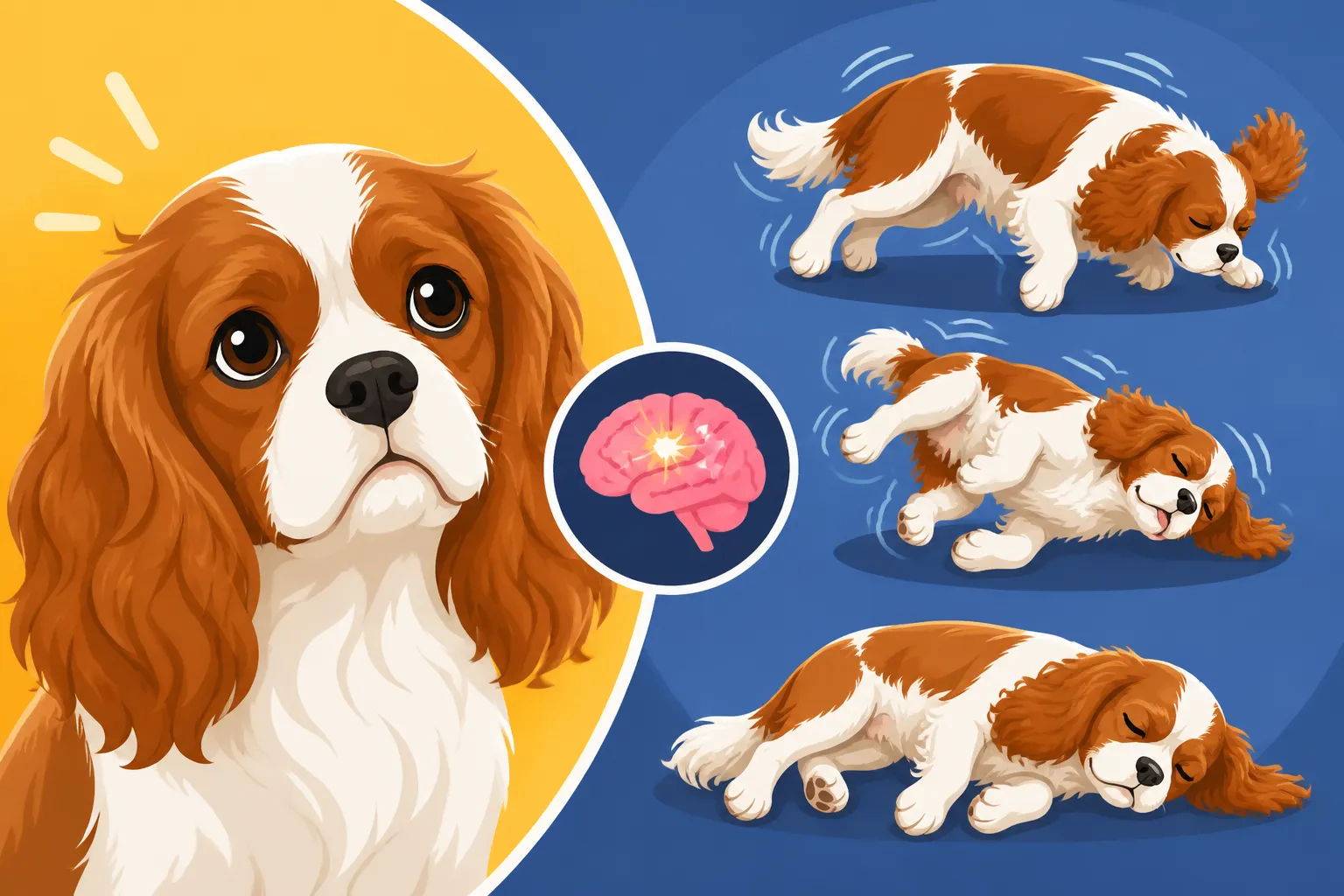
The clinical signs can range in severity. Mild episodes might just look like awkward, stiff gaits, where your Cavalier appears to be walking on tiptoes or with a bunny-hop. Their hind legs might seem weak, or they might stumble. More severe episodes involve a complete collapse, where the dog falls over, stiffens up, and may remain in a rigid posture for several seconds to minutes. During these more intense episodes, the Cavalier might have a "fixed" or "frozen" expression, and their legs may be extended rigidly. Some dogs might appear to be "air scratching" if they fall onto their side and their limbs stiffen in a paddling motion, which can easily be mistaken for seizure activity. However, even with this stiffness or "paddling," the key is that their consciousness is typically preserved.
Distinguishing EF from Fainting Spells
It's easy to confuse an EFS episode with a fainting spell, or syncope, which can also cause a dog to collapse. However, fainting is usually a temporary loss of consciousness due to a sudden drop in blood pressure or a heart issue. A dog having a true fainting spell will typically go limp and be unresponsive for a brief period before quickly recovering. There won't be the intense muscle rigidity seen in EFS, nor the prolonged stiffness.
In a fainting spell, the dog often appears completely out of it, much like a person who has fainted. They'll typically regain consciousness fairly quickly and may be a bit disoriented afterward, but without the lingering muscle stiffness. With EFS, your Cavalier remains mentally present, even if their body isn't cooperating. This distinction, along with the triggers (excitement for EFS vs. sudden changes in posture or certain medical conditions for fainting), helps differentiate the two. For some Cavaliers, especially those with advanced heart disease, fainting spells can become a concern, making a correct diagnosis even more critical.
Understanding Seizures in Cavaliers
Seizures in Cavaliers, like in any other dog breed, are caused by abnormal, uncontrolled electrical activity in the brain. This can manifest in a variety of ways, from full-body convulsions to more subtle, localized changes in behavior or movement. Unlike EFS, which is a muscle issue exacerbated by excitement, seizures are a neurological event that directly affects brain function, leading to temporary disruption of normal bodily control.
Types of Seizures in Cavaliers
Seizures in dogs are generally categorized into two main types: generalized (or grand mal) seizures and focal (or partial) seizures.
-
Generalized Seizures: These are what most people picture when they think of a seizure. The entire body is affected, leading to a sudden loss of consciousness, uncontrolled muscle activity such as paddling of the limbs, jaw chomping, salivation, and often urination or defecation. The dog will fall to the side and experience rhythmic, violent muscle contractions. These episodes can last from a few seconds to several minutes. During a generalized seizure, the dog is completely unaware of their surroundings. This is a profound difference from EFS, where awareness is typically maintained.
-
Focal Seizures: These seizures are more localized, affecting only a specific part of the brain and thus causing symptoms in only one part of the body. For example, a dog might twitch uncontrollably on one side of its face, chew air, or have a limb that stiffens or paddles independently. Consciousness can be either impaired or fully preserved during a focal seizure, making them sometimes harder to distinguish from other conditions. However, even with preserved consciousness, there’s an element of unresponsiveness or an altered state that is distinct from EFS. Sometimes, a focal seizure can generalize and become a grand mal seizure.
Common Causes and Associated Health Issues
Seizures can be caused by a wide range of underlying issues. In some cases, there's no identifiable cause, and the condition is diagnosed as idiopathic epilepsy. This means the dog has recurring seizures without any structural brain disease or metabolic issues. Genetic predisposition plays a significant role in idiopathic epilepsy in many breeds, and Cavaliers are no exception.
However, seizures can also be symptomatic of other health problems. These include:
- Brain tumors: Growths in the brain can disrupt normal electrical activity.
- Head trauma: Past injuries to the head can create scar tissue that acts as an epileptic focus.
- Infections: Encephalitis (brain inflammation) caused by viruses, bacteria, or fungi.
- Metabolic disorders: Low blood sugar (hypoglycemia), liver disease, kidney disease, and electrolyte imbalances can all trigger seizures.
- Toxins: Ingestion of certain poisons or medications can lead to seizure activity.
- Congenital malformations: Brain abnormalities present from birth, such as those sometimes associated with Syringomyelia and Chiari Malformation in Cavaliers, can predispose a dog to seizures. While SM itself causes pain and neurological symptoms, the underlying structural issues with the skull and brain can sometimes be a factor in seizure activity, though it's less common than the pain and motor issues it's known for.
Given the potential for serious underlying causes, any seizure activity warrants immediate veterinary attention.
The Pre-Ictal, Ictal, and Post-Ictal Phases
A seizure event is typically divided into three distinct phases, which can help owners and vets understand and diagnose the condition:
-
Pre-Ictal Phase (Aura): This phase occurs just before the seizure itself. It can last from a few seconds to hours or even days. Dogs often exhibit changes in behavior, such as restlessness, seeking attention, hiding, whining, pacing, or appearing anxious. Some dogs might drool or stare blankly. Recognizing this phase can give you a precious few moments to get your Cavalier to a safe spot.
-
Ictal Phase (The Seizure Itself): This is the active seizure event. As described earlier, it can be generalized (loss of consciousness, full-body convulsions, paddling, drooling, urination/defecation) or focal (localized twitching, altered awareness). The dog is not in control of its body and is not aware of its surroundings during a generalized seizure. It’s important to remember that they are not suffering in the moment, even if it looks violent.
-
Post-Ictal Phase: This is the recovery period after the seizure, and it can be quite disorienting and distressing for your Cavalier. It can last minutes, hours, or even days. During this time, dogs may appear confused, disoriented, wobbly, blind, or temporarily deaf. They might pace aimlessly, drink excessive amounts of water, eat ravenously, or seem unusually tired or restless. They may not recognize familiar people or surroundings right away. This phase is usually characterized by gradual improvement until they return to their normal self. The severity and duration of the post-ictal phase can vary greatly between individuals and seizure types.
Key Differences in Symptoms and Presentation
Distinguishing between Episodic Falling Syndrome and a seizure in your Cavalier is paramount for accurate diagnosis and effective treatment. While both can involve a collapse or abnormal movements, there are critical differences in how they present. Observing these details carefully during an episode, as upsetting as it may be, provides invaluable information for your veterinarian.
Consciousness and Awareness During an Episode
This is arguably the most significant differentiator.
-
Episodic Falling Syndrome (EFS): During an EFS episode, your Cavalier almost always remains conscious and aware of its surroundings. They might look frightened, confused, or even try to respond to your voice or touch, even if their body is stiff and unresponsive. Their eyes will typically be open and tracking, and they might show signs of distress that indicate they know something is wrong but cannot control it. They are "trapped" within their own body, so to speak. This preserved consciousness is a cornerstone of EFS diagnosis and a strong indicator that you are witnessing an EFS event rather than a seizure.
-
Seizures: In the case of a generalized seizure, consciousness is completely lost. Your Cavalier will be unresponsive to external stimuli, their eyes might roll back or appear vacant, and they won't react to your voice or touch. For focal seizures, consciousness might be impaired or altered; they might seem "out of it" or unresponsive, even if not fully unconscious. The dog is not aware of what is happening during the ictal phase of a true seizure.
Muscle Tone and Movement Patterns
The nature of the abnormal muscle activity also provides strong clues.
-
Episodic Falling Syndrome (EFS): EFS episodes are characterized by increased muscle tone (hypertonicity), leading to stiffness, rigidity, and sustained muscle contractions. Your Cavalier's limbs might become rigid, extended, or held in an unusual, stiff posture. They might appear to be walking on stiff legs, falling, or even "air scratching" with stiff, rapid movements. There's an absence of the rhythmic, uncontrolled convulsions seen in generalized seizures. The muscle contractions are more like prolonged cramps rather than uncontrolled spasms.
-
Seizures: Generalized seizures involve rhythmic, uncontrolled muscle contractions and relaxation, often described as "paddling" of the limbs, jaw chomping, and full-body tremors. The muscle activity is involuntary and often violent. Focal seizures might involve localized twitching, trembling, or stiffening of a specific body part. While some stiffening can occur, especially in the tonic phase of a generalized seizure, it's typically followed by the clonic (paddling) phase, and the overall pattern is distinct from the sustained rigidity of EFS.
Recovery Period and Aftermath
The period immediately following the episode (the post-ictal phase for seizures, or simply recovery for EFS) is also telling.
-
Episodic Falling Syndrome (EFS): Recovery from an EFS episode is usually relatively quick, and the dog often returns to normal behavior almost immediately or within a few minutes. There’s generally no significant post-episode disorientation, confusion, or severe exhaustion. Once the muscles relax, they might be a bit wobbly or tired, but they won't typically exhibit the profound confusion, pacing, or blindness often seen after a seizure. They often appear relieved and will want to resume normal activity.
-
Seizures: As discussed earlier, the post-ictal phase of a seizure can be quite prolonged and distressing. Your Cavalier might be disoriented, confused, pace erratically, appear temporarily blind or deaf, eat excessively, or be unusually tired. This recovery period can last from minutes to hours, sometimes even longer, and is a strong indicator that a seizure has occurred. The gradual return to normalcy, often accompanied by significant behavioral changes, is a classic sign of seizure activity.
Here’s a summary table to help visualize these distinctions:
| Feature | Episodic Falling Syndrome (EFS) | Seizure (Generalized) |
|---|---|---|
| Consciousness | Typically preserved; dog is aware and responsive. | Lost; dog is unresponsive to surroundings. |
| Muscle Tone | Increased (hypertonicity), leading to stiffness, rigidity, sustained contractions. | Rhythmic, uncontrolled contractions (paddling, chomping); can involve initial stiffness. |
| Movement | Stiff gait, collapse, rigid limbs, "air scratching" possible but not rhythmic convulsions. | Violent, rhythmic paddling, tremors, jaw chomping, often full-body. |
| Triggers | Excitement, stress, exercise, strong emotion. | Often no obvious trigger; can be random or related to underlying health. |
| Duration | Seconds to a few minutes. | Seconds to a few minutes. |
| Recovery (Post-Event) | Quick return to normal, possibly mild wobbliness or tiredness. | Prolonged post-ictal phase: disorientation, confusion, temporary blindness/deafness, pacing, excessive thirst/hunger. |
| Vocalization | May whine or cry out of distress/frustration. | May vocalize during (e.g., moaning) due to involuntary muscle contractions. |
| Urination/Defecation | Rare. | Common during generalized seizures. |
Diagnostic Process for Falling vs. Seizures
When your Cavalier experiences an episode of collapsing, stiffening, or uncontrolled movements, the diagnostic journey begins with your veterinarian. This can be a frustrating and anxiety-inducing time, as these episodes are often unpredictable and hard to capture on camera. But gathering as much information as possible is key to helping your vet pinpoint the cause.
Veterinary Examination and History Taking
Your vet will start with a thorough physical examination and a detailed history of the episodes. This is where your observations become crucial. Try to capture as much detail as you can:
- When did the first episode occur?
- How old was your Cavalier when it started?
- How often do they happen?
- What was your Cavalier doing right before the episode? (e.g., playing, excited, resting)
- What exactly did you observe during the episode? (e.g., stiffening, paddling, drooling, vocalizing, loss of consciousness, urination/defecation)
- How long did the episode last?
- How did your Cavalier recover? (e.g., immediately normal, confused, disoriented, ravenous)
- Has anything changed in their diet, medication, or environment?
- Are there any other symptoms you've noticed? (e.g., A Cavalier That Yelps When Picked Up, phantom scratching, changes in gait)
Taking videos of any episodes, even partial ones, is incredibly helpful. It allows your vet to observe the symptoms directly, which is often difficult given the transient nature of these events. Don't worry if the video isn't perfect; any footage is better than none.
Neurological Assessment and Blood Work
A comprehensive neurological exam will be performed to assess your Cavalier's reflexes, coordination, balance, and cranial nerve function. This helps identify any underlying neurological deficits that might point towards a brain issue.
Blood tests are also essential to rule out metabolic causes of seizures or other systemic illnesses. This might include a complete blood count (CBC), biochemistry panel (to check liver and kidney function, blood sugar, electrolytes), and sometimes a bile acid test for liver shunts. If a seizure is suspected, specific tests to look for toxins might also be considered if exposure is plausible. These tests are vital for getting a full picture of your Cavalier's overall health and ruling out common issues that could mimic or cause neurological signs.
Advanced Imaging: MRI and DNA Testing
If the initial workup suggests a neurological origin, or if the episodes remain undiagnosed, your vet might recommend advanced diagnostics:
-
MRI (Magnetic Resonance Imaging): An MRI of the brain is the gold standard for detecting structural abnormalities such as tumors, inflammation (encephalitis), hydrocephalus, or Syringomyelia and Chiari Malformation in Cavaliers. This is a crucial step if seizures are suspected or if EFS cannot be definitively confirmed otherwise. An MRI requires general anesthesia, which can be a concern for some owners, but it provides detailed images that cannot be obtained with X-rays or basic blood work. Understanding What a Cavalier MRI Scan Costs and Shows can help you prepare for this potential step.
-
Electrocardiogram (ECG): If fainting (syncope) is a strong possibility, an ECG might be performed to check for underlying heart rhythm abnormalities. This helps differentiate cardiac events from neurological ones.
-
DNA Test for Episodic Falling Syndrome: For EFS specifically, a definitive DNA test is available. This simple cheek swab test can confirm the presence of the genetic mutation responsible for the condition. If your Cavalier tests positive and their clinical signs match EFS, then the diagnosis is clear. This test is a game-changer because it provides a clear answer and avoids unnecessary, expensive, and potentially invasive diagnostics like MRIs, particularly if EFS is the primary suspicion. For any Cavalier showing signs of EFS, it's highly recommended to pursue The Episodic Falling DNA Test for Cavaliers.
The cost of these diagnostic tests can be significant, especially if multiple avenues need to be explored. This is where pet insurance, like a plan from Healthy Paws, can be an absolute lifesaver. Enrolling your Cavalier when they're young and healthy, before any symptoms appear, can help ensure that chronic conditions like EFS or epilepsy are covered, easing the financial burden during these stressful times.
Management and Treatment Approaches
Once your Cavalier receives a definitive diagnosis, whether it's EFS or a seizure disorder, the focus shifts to management and treatment. It's important to remember that neither condition is typically "curable" in the sense of making it disappear forever, but both can often be effectively managed to improve your dog's quality of life significantly.
Medication Protocols for Episodic Falling
For Cavaliers diagnosed with Episodic Falling Syndrome, the primary goal of treatment is to reduce the frequency and severity of the episodes. The good news is that EFS usually responds well to specific medications.
The most commonly used medication for EFS is Clonazepam, a benzodiazepine. This drug works by enhancing the activity of GABA, a neurotransmitter that helps calm nerve activity in the brain and relax muscles. It's often given orally, once or twice a day, and the dosage is carefully adjusted by your vet to find the lowest effective dose that controls your dog's symptoms.
Another medication that might be considered, particularly if Clonazepam alone isn't fully effective, is Acetazolamide. This is a carbonic anhydrase inhibitor that can help reduce muscle stiffness and spasms. However, it's used less frequently than Clonazepam.
It's crucial to understand that these medications manage the symptoms; they don't fix the underlying genetic issue. Therefore, your Cavalier will likely need to be on medication for life. Managing a Cavalier With Episodic Falling often involves a bit of trial and error with dosages and medication combinations to find the perfect balance that keeps them comfortable and episode-free. Regular check-ups with your vet will be necessary to monitor the effectiveness of the treatment and adjust as needed. You might find that during periods of higher stress or excitement, a temporary increase in dosage is required, always under veterinary guidance.
Anticonvulsant Therapy for Seizures
If your Cavalier is diagnosed with a seizure disorder, such as idiopathic epilepsy, anticonvulsant medications are the cornerstone of treatment. The goal is to reduce the frequency, duration, and severity of seizures.
Common anticonvulsant medications include:
- Phenobarbital: This is often a first-line drug for canine epilepsy. It's effective but requires careful monitoring of blood levels to ensure therapeutic ranges and to watch for potential side effects on the liver.
- Potassium Bromide (KBr): Often used in conjunction with phenobarbital or as an alternative for dogs that cannot tolerate other drugs. It also requires careful monitoring.
- Levetiracetam (Keppra): This is a popular choice due to its relatively low side effect profile and quick onset of action. It can be particularly useful as an add-on therapy or for cluster seizures.
- Zonisamide: Another good option, often used as an add-on drug, with relatively fewer side effects than phenobarbital.
- Gabapentin: While primarily used for nerve pain, it can also have mild anticonvulsant properties and is sometimes used as an adjunct therapy, especially if pain (like that from medication for Cavalier nerve pain) might be contributing to agitation or seizure threshold issues.
Choosing the right medication or combination depends on your Cavalier's individual case, the type and frequency of seizures, and their response to treatment. Your vet will typically start with one medication and gradually increase the dose or add another if seizures aren't well-controlled. Regular blood tests will be needed to monitor drug levels and assess organ health. It's critical to never stop or change your Cavalier's seizure medication without veterinary guidance, as this can trigger severe cluster seizures.
Environmental and Lifestyle Adjustments
Beyond medication, making certain adjustments to your Cavalier's environment and lifestyle can play a significant role in managing both EFS and seizures.
For Episodic Falling Syndrome, reducing excitement and stress is key. This might sound easier said than done with a happy-go-lucky Cavalier, but practical steps include:
- Calm greetings: When you come home, keep greetings low-key rather than overly exuberant.
- Structured play: Engage in controlled play sessions rather than allowing them to get over-stimulated.
- Quiet environment: Provide a calm, predictable home environment.
- Avoid over-exertion: Monitor their activity levels to prevent them from becoming too tired or excited.
- Harness use: For walks, a well-fitting harness is always recommended over a collar, especially for a Cavalier who might stiffen or pull, to avoid putting pressure on the neck.
For seizure disorders, managing environmental triggers can also be helpful, though less directly impactful than for EFS. Ensuring a consistent routine, avoiding sudden loud noises or flashing lights, and maintaining a calm atmosphere can all contribute to reducing seizure frequency in some dogs. It's also vital to ensure your Cavalier is in a safe space during a seizure, away from stairs or sharp objects, to prevent injury.
For both conditions, maintaining a healthy weight and providing a balanced diet are always important for overall health, though specific diets typically don't directly prevent or treat these neurological conditions. However, avoiding high-sodium treats might be a consideration for a Cavalier already on heart medication.
Living with a Cavalier with Neurological Conditions
Receiving a diagnosis of EFS or a seizure disorder for your Cavalier can feel overwhelming, but with proper management, many dogs can lead full and happy lives. The journey involves vigilance, patience, and a close partnership with your veterinary team.
Monitoring and Record Keeping
One of the most powerful tools you have as an owner is detailed record-keeping. It's impossible to remember every detail of every episode, especially when you're in a panic. Keeping a journal or using a dedicated app to track your Cavalier's episodes is invaluable.
For each episode, try to note:
- Date and Time: When did it start and end?
- Duration: How long did it last? (Use a timer if possible)
- Pre-episode activity: What was your Cavalier doing right before it happened?
- Symptoms observed: Be specific – stiffening, paddling, drooling, vocalizing, loss of consciousness, urination, defecation.
- Recovery: How long until they returned to normal? Any post-event behavior changes?
- Medication given: What dosage and time?
- Possible triggers: Was there anything unusual or particularly exciting/stressful that day?
This information helps your vet track the effectiveness of medication, identify patterns, and make informed decisions about treatment adjustments. It also helps you feel more in control and less helpless. Remember to capture videos if possible, as they provide objective evidence for your vet.
Support Systems and Quality of Life
Living with a dog with a chronic neurological condition can be emotionally taxing. It's normal to feel worried, stressed, or even isolated. Seek out support systems:
- Veterinary team: Don't hesitate to call your vet with questions or concerns. They are your primary resource.
- Breed-specific groups: Online forums or local clubs for Cavalier King Charles Spaniels often have members who have experience with EFS or seizures. Sharing experiences and advice with others who truly understand can be incredibly validating and helpful.
- Pet insurance: Financial stress can add to emotional strain. Having pet insurance, especially from companies like Healthy Paws, which is known for its comprehensive coverage, can alleviate a huge burden. If your Cavalier was enrolled before any signs of EFS or seizures appeared, the costs of ongoing diagnostics, medications, and specialist visits will be far more manageable. This peace of mind allows you to focus on your Cavalier's care rather than the escalating bills.
Ultimately, the goal is to ensure your Cavalier enjoys a good quality of life. This means effectively managing their symptoms so they can participate in normal activities, even if those activities need to be slightly modified. It involves regular veterinary check-ups to monitor their condition and medication, and a loving, supportive home environment where they feel safe and comfortable.
Emergency Preparedness
Knowing what to do in an emergency can reduce panic and potentially save your Cavalier's life.
- During an EFS episode: Stay calm. Speak to your Cavalier in a soothing voice. Ensure they are in a safe spot where they won't fall and injure themselves. Do not try to hold them down or force them to move, as this could cause injury. Once the episode passes, allow them to recover at their own pace.
- During a seizure: Again, stay calm. Move any objects away from your Cavalier that they could hit. Do not put your hands in their mouth (they cannot swallow their tongue, and you could be bitten accidentally). Keep track of the time the seizure starts and ends. Once the seizure stops, guide them gently to a safe, quiet space for recovery.
- When to seek emergency care:
- Any seizure lasting longer than 5 minutes (status epilepticus).
- Multiple seizures in a short period (cluster seizures).
- Your Cavalier is not recovering between seizures.
- Severe injury during an episode.
- First-time seizure or EFS episode to get an immediate diagnosis.
- Changes in episode frequency or severity despite medication.
Always have your vet's emergency contact information readily available, along with the contact for your nearest 24-hour veterinary emergency clinic. Being prepared, even for the worst-case scenario, helps you act decisively when it matters most. It’s also wise to discuss with your vet whether you should keep emergency medications like rectal diazepam on hand for prolonged or cluster seizures.
The journey with a Cavalier diagnosed with EFS or seizures is a commitment, but one filled with love and dedication. By understanding their condition, working closely with your vet, and providing consistent care, you can help your sweet companion thrive.
Disclaimer
The information provided in this article is for general informational purposes only and is not a substitute for professional veterinary advice. Always consult with a qualified veterinarian for any health concerns or before making any decisions related to your pet's medical care.