What a Cavalier Policy Costs Monthly
One of the biggest worries for any Cavalier King Charles Spaniel parent is the potential for unexpected vet bills, especially with our beloved breed's predisposition to certain health issues like heart disease and syringomyelia. These conditions can lead to astronomical costs, leaving many feeling overwhelmed and unprepared. This comprehensive guide will meticulously break down what a pet insurance policy for your Cavalier might cost you monthly, exploring the many factors that influence these premiums and helping you navigate your options.
Understanding the Basics of Pet Insurance for Cavaliers
Bringing a Cavalier into your life is an absolute joy, but it also comes with a significant responsibility to protect their health. Pet insurance isn't just a luxury; for a breed like ours, it's often a financial lifesaver.
Why Pet Insurance is Crucial for Cavaliers
Let's be honest, Cavaliers are incredibly sweet, charming, and often seem perpetually happy. But beneath that adorable exterior, they are unfortunately prone to several serious inherited conditions. The most infamous is Mitral Valve Disease (MVD), a progressive heart condition that affects a staggering number of Cavaliers, often starting to manifest as a murmur by middle age. Then there's Syringomyelia (SM), a neurological condition where the skull is too small for the brain, causing fluid-filled cavities in the spinal cord and often leading to chronic pain.
These aren't minor ailments. MVD often requires specialized veterinary cardiology care, including regular echocardiograms, chest X-rays, and daily medications like pimobendan and diuretics, which can quickly add up. Diagnosing SM typically involves an expensive MRI scan, followed by ongoing medication or even surgery. Without insurance, a single emergency visit for a Cavalier in heart failure, or a full diagnostic workup for neurological symptoms, could easily run into thousands of dollars. Thinking about What Cavalier Heart Disease Costs to Treat or Paying for a Cavalier Syringomyelia Workup can be daunting, and that's where pet insurance steps in, offering a financial safety net against these realities. It ensures that you can make medical decisions based on what's best for your dog, not just what you can afford out of pocket.
Types of Pet Insurance Coverage
When you start looking into pet insurance, you'll quickly realize there isn't a one-size-fits-all solution. Different types of policies offer varying levels of coverage, and understanding these distinctions is key to choosing the right fit for your Cavalier.
- Accident-Only Plans: These are the most basic and typically the least expensive. They cover costs associated with accidents like broken bones, lacerations, or swallowing a foreign object. While useful, they won't help you with the breed-specific illnesses like MVD or SM. For a Cavalier, this type of plan offers minimal protection against the most common and costly issues.
- Accident & Illness Plans: This is the most popular type of coverage and what most Cavalier owners opt for. These plans cover both accidental injuries and illnesses, including chronic conditions, cancer, and hereditary diseases. This is where you'll find coverage for MVD, Syringomyelia, pancreatitis, allergies, and other common health concerns your Cavalier might face over their Cavalier Lifespan and What Cuts It Short. However, it's crucial to understand that these plans generally do not cover pre-existing conditions – an illness or injury that your pet had before your policy started or during the waiting period.
- Wellness Plans/Routines Care Add-ons: These are often supplemental to accident and illness plans and cover routine preventative care. This can include annual check-ups, vaccinations, flea and tick prevention, and sometimes even dental cleanings. While helpful for managing predictable costs like Routine Vet Bills for a Cavalier, these add-ons usually aren't subject to the same deductible and reimbursement structures as accident and illness coverage. They're more about spreading out routine costs rather than protecting against catastrophic unexpected bills.
When to Enroll Your Cavalier
This is perhaps one of the most critical pieces of advice any Cavalier owner can receive: enroll your dog as early as possible. The concept of "pre-existing conditions" is paramount here. An illness or injury is considered pre-existing if it occurred or showed symptoms before your policy began or during the waiting period. Insurance companies will typically not cover these conditions.
For Cavaliers, this means if your dog develops a heart murmur – and remember, Why Half of Cavaliers Have a Murmur by Five is a stark reality for the breed – before you enroll them, that MVD will be excluded from coverage. This is why Insuring a Cavalier Before the Murmur Arrives is so vital. Ideally, you should enroll your Cavalier puppy as soon as they are old enough, often around 8 weeks. At this age, they are generally healthy, meaning most conditions that develop later won't be considered pre-existing. Waiting even a few months can be risky. If your Cavalier shows symptoms or receives a diagnosis of a condition like a heart murmur or patellar luxation, that condition, and any related future treatments, will likely be excluded from your policy. It’s a gamble that few Cavalier owners can afford to lose. The younger and healthier your Cavalier is at enrollment, the more comprehensive and effective your policy will be throughout their life.
Key Factors Influencing Your Monthly Premium
Pet insurance premiums are not a flat rate. They fluctuate based on a variety of factors, some of which are specific to your Cavalier, and others that relate to where you live and how you choose to structure your policy. Understanding these influences is crucial for predicting and managing your monthly costs.
Your Cavalier's Age and Breed-Specific Risks
The age of your Cavalier is one of the most significant determinants of your monthly premium. Just like with humans, younger pets are generally healthier and less likely to need expensive medical intervention. As a result, puppies and young adult Cavaliers typically have lower premiums. However, as your Cavalier ages, their risk of developing health issues, especially those common to the breed like MVD and Syringomyelia, increases. This natural progression means that premiums will generally rise each year as your dog gets older.
Beyond age, the Cavalier King Charles Spaniel breed itself carries inherent risks that insurance companies factor in. They are unfortunately predisposed to several well-documented genetic and hereditary conditions. We've talked about MVD and SM, but also consider conditions like Episodic Falling Syndrome in a Cavalier and certain eye conditions. Because of this, premiums for Cavaliers can sometimes be higher than for breeds with fewer known health issues. Insurance providers assess the statistical likelihood of claims for specific breeds. A Cavalier's breed profile, coupled with their age, gives the insurer an idea of the potential costs they might incur over the dog's lifetime. This is why it's so important to get coverage when they're young, before any of these conditions have a chance to show up on their medical record.
Where You Live Matters: Geographic Variations
Just like human health insurance, the cost of pet insurance can vary significantly depending on your geographic location. This isn't just about different states or regions; it can even change between zip codes within the same city. Several factors contribute to these regional differences:
- Cost of Veterinary Care: Veterinary costs are not uniform across the country. Areas with a higher cost of living generally have higher vet fees, specialist consultation charges, and diagnostic costs. Major metropolitan areas like New York City, Los Angeles, or Boston, for example, typically have more expensive veterinary services than rural areas. This higher baseline cost for treatment naturally translates to higher insurance premiums for policyholders in those regions.
- Prevalence of Certain Conditions: While Cavaliers have breed-specific issues regardless of location, regional environmental factors or even the availability of advanced veterinary care might indirectly influence premiums. For instance, if an area has a higher incidence of tick-borne diseases, related treatments could factor into average claims, affecting overall policy pricing.
- Competition Among Insurers: In areas with many competing pet insurance providers, you might find slightly more competitive pricing as companies vie for market share. Conversely, in areas with fewer options, prices might be higher. It's always a good idea to get quotes from multiple providers in your specific location to find the best rate for your Cavalier.
Customizing Your Policy: Deductibles, Reimbursement, and Annual Limits
When you purchase a pet insurance policy, you'll be faced with several choices that directly impact your monthly premium. These include the deductible, reimbursement percentage, and annual limit. Understanding how to Set a Deductible Against Cavalier Heart Bills and other potential expenses is key to finding a balance between monthly cost and financial protection.
- Deductible: This is the amount you pay out of pocket before your insurance coverage kicks in. Most plans offer annual deductibles, meaning once you meet it for the year, the insurance will start reimbursing you for subsequent claims. Common deductible options range from $100 to $1,000 or more. A higher deductible will result in a lower monthly premium, but you'll have to pay more upfront if your Cavalier needs veterinary care.
- Reimbursement Percentage: This is the percentage of eligible vet bills that the insurance company will reimburse you for after your deductible has been met. Common percentages are 70%, 80%, or 90%. A higher reimbursement percentage means the insurance company pays more, but your monthly premium will also be higher. For instance, with an 80% reimbursement, if you have a $1,000 vet bill and a $250 deductible, the insurance would pay 80% of the remaining $750 (which is $600), leaving you to pay $400 ($250 deductible + $150 remaining 20%).
- Annual Limit: This is the maximum amount the insurance company will pay out in covered expenses within a policy year. Limits can range from $5,000 to unlimited. A higher annual limit, or an unlimited option, will naturally come with a higher monthly premium, offering more comprehensive protection against very costly events like major surgery, long-term cancer treatment, or complex management of How Cavalier Heart Disease Progresses Stage by Stage. If you choose a lower limit to save on premiums, be aware that you might hit that ceiling quickly with a major illness.
By adjusting these three factors, you can tailor a policy to fit your budget and desired level of coverage. It's a balancing act: lower monthly premiums usually mean higher out-of-pocket costs when you make a claim, and vice versa.
Breaking Down Typical Monthly Costs
So, what can you actually expect to pay each month for pet insurance for your Cavalier? While exact figures vary widely, we can look at some general ranges based on age and health status to give you a clearer picture.
Average Premiums for Cavalier Puppies
Enrolling your Cavalier when they're a puppy, typically between 8 weeks and a year old, is almost always the most affordable option. At this stage, they're generally healthy, and the likelihood of pre-existing conditions being established is low. For a young Cavalier puppy, you might expect to pay anywhere from $25 to $50 per month for a comprehensive accident and illness plan.
This range can depend on your chosen deductible, reimbursement percentage, and annual limit, as well as your location. For example, a puppy in a lower cost-of-living area with a higher deductible and 70% reimbursement might be closer to the $25-$30 mark. Conversely, a puppy in a high-cost urban area with a low deductible, 90% reimbursement, and an unlimited annual limit could easily push towards $50 or slightly higher. Many new Cavalier owners often try to factor this into their initial Setting Up for a Cavalier Puppy's First Weeks budget, knowing that this early investment can save them thousands later. This is truly the golden window for securing the best rates and most comprehensive coverage for your beloved companion.
Costs for Adult Cavaliers (Before a Murmur Arrives)
As your Cavalier moves into adulthood, typically between one and five years old, premiums will generally see a modest increase compared to puppy rates. However, if they are still healthy and have no documented pre-existing conditions, the rates remain relatively manageable. For an adult Cavalier in this age range, you might anticipate monthly premiums falling between $40 and $70 per month.
Again, these figures are influenced by all the factors discussed earlier: your policy choices (deductible, reimbursement, annual limit), and your geographical location. The key here is the "before a murmur arrives" part. If your Cavalier already has a heart murmur diagnosed at, say, age three, that MVD will be considered pre-existing if you try to enroll them now. This is why Why a Cavalier Murmur Becomes Pre-Existing is such an important concept. If you enrolled them as a puppy, however, and they develop a murmur at three, their MVD would be covered, provided you maintained continuous coverage. The monthly rate for a healthy adult Cavalier reflects the rising statistical risk of developing age-related or breed-specific conditions, but it's still significantly lower than what you might face if you waited until issues manifest.
Senior Cavalier Premiums and Existing Conditions
Once your Cavalier reaches their senior years, typically around six or seven years old and beyond, pet insurance premiums climb considerably. This is a direct reflection of the increased likelihood of age-related illnesses, chronic conditions, and the potential need for more frequent veterinary care. For a senior Cavalier, monthly premiums can range from $70 to well over $100 per month, especially for comprehensive coverage.
Furthermore, if you are attempting to enroll a senior Cavalier who has not had continuous coverage since puppyhood, you will almost certainly face significant challenges and exclusions. Any health issues they already have – a heart murmur, arthritis, allergies, or even early signs of Syringomyelia as a Pre-Existing Cavalier Condition – will be deemed pre-existing. This means the policy will not cover treatments for those specific conditions, leaving you to bear the full financial burden for conditions that are highly likely to incur substantial costs later in life. This often leads to the unfortunate realization that pet insurance is far less impactful when purchased late in a Cavalier's life, especially if conditions like MVD or SM have already been diagnosed. This reinforces the critical importance of early enrollment.
| Age of Cavalier | Average Monthly Premium Range (Accident & Illness) | Considerations |
|---|---|---|
| Puppy (8 weeks – 1 year) | $25 – $50 | Best time to enroll for comprehensive coverage and lowest rates. Fewest pre-existing conditions. |
| Adult (1 – 5 years) | $40 – $70 | Rates increase slightly. Crucial to enroll before common breed-specific issues (e.g., heart murmur) appear. |
| Senior (6+ years) | $70 – $100+ | Highest premiums due to increased health risks. Pre-existing conditions are very likely to be excluded if not continuously covered. |
Note: These ranges are estimates and can vary based on provider, location, deductible, reimbursement rate, and annual limit.
Comparing Pet Insurance Providers
With so many pet insurance companies out there, it can feel like a minefield trying to pick the right one. It's not just about the monthly premium; it's about what you get for your money, how they handle claims, and what limitations they might have, especially for a breed with specific health concerns like the Cavalier.
What to Look for in a Policy
When comparing policies for your Cavalier, you need to dig deeper than just the headline price. Here are some key things to scrutinize:
- Coverage for Hereditary and Congenital Conditions: This is paramount for Cavaliers. Ensure the policy explicitly states that it covers hereditary conditions (passed down from parents) and congenital conditions (present from birth, even if not immediately apparent). Most reputable accident and illness plans do, but always confirm. This is where MVD and SM fall.
- Waiting Periods: All policies have waiting periods – a specific amount of time after you enroll before certain conditions become covered. There are usually separate waiting periods for accidents (often short, like 2-14 days) and illnesses (typically 14-30 days). Some policies also have extended waiting periods for orthopedic conditions like patellar luxation or hip dysplasia (sometimes 6 months to a year). Ensure these waiting periods are reasonable and understand them fully, as a claim made too early will be denied.
- Customer Service and Claim Process: Research the company's reputation for customer service. Are they easy to reach? Is their claims process straightforward? Are claims paid quickly? Look for online reviews and ratings from current policyholders. You want a company that will be there for you when you need them most.
- Reviews and Financial Stability: Check independent review sites for insights into policyholder experiences. Also, consider the financial stability of the insurer; you want assurance they'll be around to pay claims years down the line.
Understanding Different Company Offerings
Many companies offer excellent pet insurance, and it's worth getting quotes from a few to compare. For instance, Healthy Paws is a well-regarded insurer known for its comprehensive accident and illness plans, often with no annual limits, which is a huge plus for a breed like the Cavalier that might face chronic, expensive conditions. They are often highly rated for customer service and a fast claims process. Other popular providers include Embrace, Trupanion, Fetch by The Dodo, and Lemonade. Each has its own nuances: some might offer unlimited annual coverage as a standard, while others might have a range of limits. Some might offer broader wellness packages, while others focus solely on accident and illness.
It's also worth noting that some pet-related companies, like Chewy, have ventured into pet health services, sometimes partnering with insurance providers or offering their own forms of pet care subscriptions or wellness plans. While not always direct insurance, these services can complement your coverage by helping with routine care costs or providing access to vet chat services. Additionally, subscription fresh food services like Ollie focus on high-quality nutrition, which can contribute to overall health and potentially reduce vet visits for diet-related issues, though they are not a substitute for insurance. When researching, gather a minimum of three quotes and lay them out side-by-side to compare not just the premium but the full suite of benefits and limitations.
Reading the Fine Print: Exclusions and Waiting Periods
This cannot be stressed enough: read the policy terms and conditions carefully. Don't just skim the highlights. Pay particular attention to:
- Exclusions: What specifically is not covered? Beyond pre-existing conditions, some policies might exclude certain elective procedures, grooming, or specific alternative therapies. Make sure nothing critical for Cavalier health is excluded.
- Pre-existing Condition Definitions: Understand how each insurer defines a pre-existing condition. Some might distinguish between "curable" and "incurable" conditions, potentially allowing coverage for a previously curable condition after a certain symptom-free period. However, for chronic diseases like MVD or SM, they are almost always permanently excluded if diagnosed prior to enrollment.
- Bilateral Conditions: Some policies might treat bilateral conditions (conditions that can affect both sides of the body, like patellar luxation or cruciate ligament tears) as pre-existing on both sides if one side shows symptoms before coverage. Clarify this, especially as Cavaliers can be prone to joint issues.
- Age Limits: While most policies don't have an upper age limit for enrollment, some might, or they might significantly reduce coverage options for very senior pets. Be sure to check this, especially if you're considering a policy for an older adopted Cavalier.
By carefully reviewing these details, you can avoid unpleasant surprises down the road and ensure the policy you choose genuinely provides the protection you expect for your Cavalier.
Strategies to Manage and Potentially Lower Costs
While pet insurance is an unavoidable expense for many Cavalier owners, there are smart strategies you can employ to manage these costs and even potentially lower your premiums without sacrificing essential coverage.
The Power of Early Enrollment
We've touched on this repeatedly, but it bears repeating: early enrollment is your absolute best tool for managing long-term pet insurance costs for a Cavalier. The younger you enroll your puppy, the lower your initial premiums will be, and more importantly, the greater the chance that all future health issues will be covered. If you wait until your Cavalier is older, even if just a few years, you run the risk of conditions like a heart murmur or neurological symptoms developing, which will then be classified as pre-existing and excluded from any new policy. This exclusion not only means you'll pay out of pocket for those specific treatments, but it also means the insurer views your pet as higher risk, potentially leading to higher premiums for other covered conditions.
Consider the potential costs of managing Mitral Valve Disease in the Cavalier King Charles Spaniel or Syringomyelia and Chiari Malformation in Cavaliers over several years. Medications, specialist visits, diagnostics – these can easily amount to tens of thousands of dollars. By enrolling your Cavalier as a puppy, you lock in coverage for these conditions should they arise, transforming a potentially ruinous financial burden into manageable deductible and co-pay amounts. It's a proactive investment that almost always pays off in the long run for a breed with such well-documented health challenges. Delaying enrollment is perhaps the most costly mistake a Cavalier owner can make regarding pet insurance. This is why it is critical to know The Age to Insure a Cavalier.
Bundling Policies and Discounts
Many pet insurance providers offer discounts that can help chip away at your monthly premium. It’s always worth asking about these when you get a quote. Common discounts include:
- Multi-Pet Discounts: If you have more than one pet, many companies will offer a discount for insuring multiple animals under the same policy. If you have two Cavaliers, or a Cavalier and another breed, this can be a significant saving.
- Annual Payment Discounts: While we're talking about monthly costs, some insurers offer a small discount if you choose to pay your premium annually in one lump sum rather than monthly installments. If your budget allows, this can be a way to save a few dollars.
- Employee/Affinity Group Discounts: Check if your employer, alumni association, or any other group you belong to has a partnership with a pet insurance provider. Some companies offer discounts to employees as part of their benefits package.
- Military Discounts: Many providers offer discounts for active military personnel and veterans.
- Good Samaritans: Some insurers may offer discounts for pets adopted from shelters or rescues.
It’s crucial to ask about all available discounts when you're comparing policies. Even a small percentage off can make a difference in your overall annual spending.
Maintaining Your Cavalier's Health
While insurance handles the unforeseen costs, proactive health management can reduce the frequency and severity of vet visits for preventable issues, indirectly saving you money. Keeping your Cavalier in top shape is not just good for them; it's good for your wallet.
- Regular Veterinary Check-ups: Don't skip annual exams, even if your Cavalier seems perfectly healthy. These visits allow your vet to catch subtle changes early, often before they become major, expensive problems. For example, a vet can detect a new heart murmur or changes in weight that might indicate an underlying issue. This is crucial as part of Annual Cardiologist Exams for a Cavalier or simply regular check-ups.
- Proper Nutrition: Feeding a high-quality, balanced diet suitable for your Cavalier's age and activity level is foundational. Avoid overfeeding, as Cavalier Weight Gain and What It Costs the Heart is a real concern. Obesity can exacerbate existing conditions and lead to new ones like diabetes or joint problems. Companies like Ollie, while a fresh food service and not an insurer, emphasize high-quality ingredients that support overall health.
- Consistent Exercise: Regular, appropriate exercise keeps your Cavalier at a healthy weight, strengthens their muscles and joints, and boosts their overall well-being. Even short, daily walks can make a big difference.
- Preventative Care: Stay on top of vaccinations, flea and tick prevention, and regular deworming. These measures prevent common, costly illnesses.
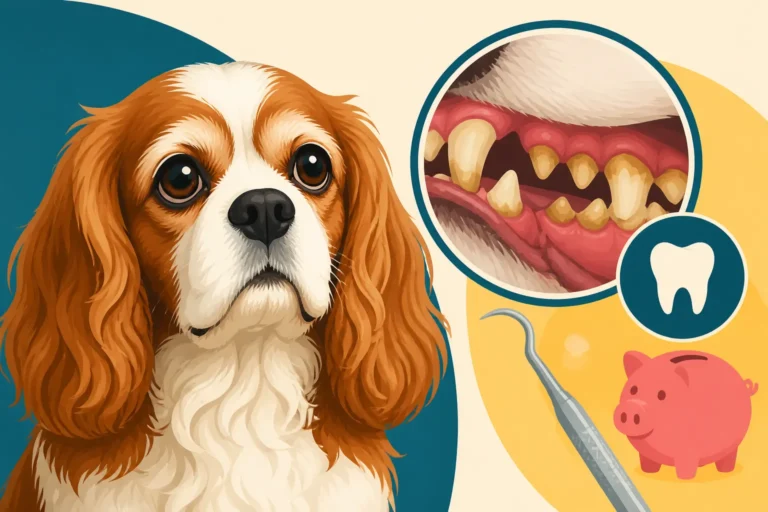
- Dental Hygiene: Cavalier Dental Disease in a Crowded Jaw is common. Regular tooth brushing and dental cleanings can prevent painful infections and extractions, which can be surprisingly expensive, especially if anesthesia is required.
- At-Home Grooming: While professional grooming is often necessary, regular brushing at home, as discussed in Brushing a Cavalier's Feathering Three Times a Week, helps prevent matting, skin issues, and allows you to spot lumps, bumps, or parasites early.
By investing time and effort into your Cavalier's preventative health, you might reduce the number of claims you need to make, potentially keeping your annual deductible costs lower or simply avoiding the need for a vet visit altogether. It's about combining good daily care with a solid insurance policy to ensure the best possible outcome for your furry family member.
Disclaimer
This article is for general informational purposes only and does not constitute professional advice. Laws, prices and regulations vary by location and change over time. Consult a qualified professional for guidance on your specific situation.