Cruciate Injury in a Small Cavalier
There's nothing quite as heartbreaking as seeing your beloved Cavalier King Charles Spaniel suddenly refuse to put weight on a back leg, or develop a persistent limp that just won't go away. Many of us have been there, watching our normally playful pups struggle, and the thought of a serious joint injury can be incredibly daunting. This comprehensive guide is here to walk you through everything you need to know about cranial cruciate ligament (CCL) injuries in small Cavaliers, from spotting the first signs to understanding the treatment and recovery process, so you can help your furry friend get back on all fours.
Understanding Cruciate Ligament Injuries in Cavaliers
When we talk about a "cruciate injury" in dogs, we're usually referring to the cranial cruciate ligament (CCL), which is similar to the anterior cruciate ligament (ACL) in humans. This isn't a minor sprain; it's a significant knee problem that can severely impact your Cavalier's mobility and quality of life if not properly addressed.
What is the Cruciate Ligament?
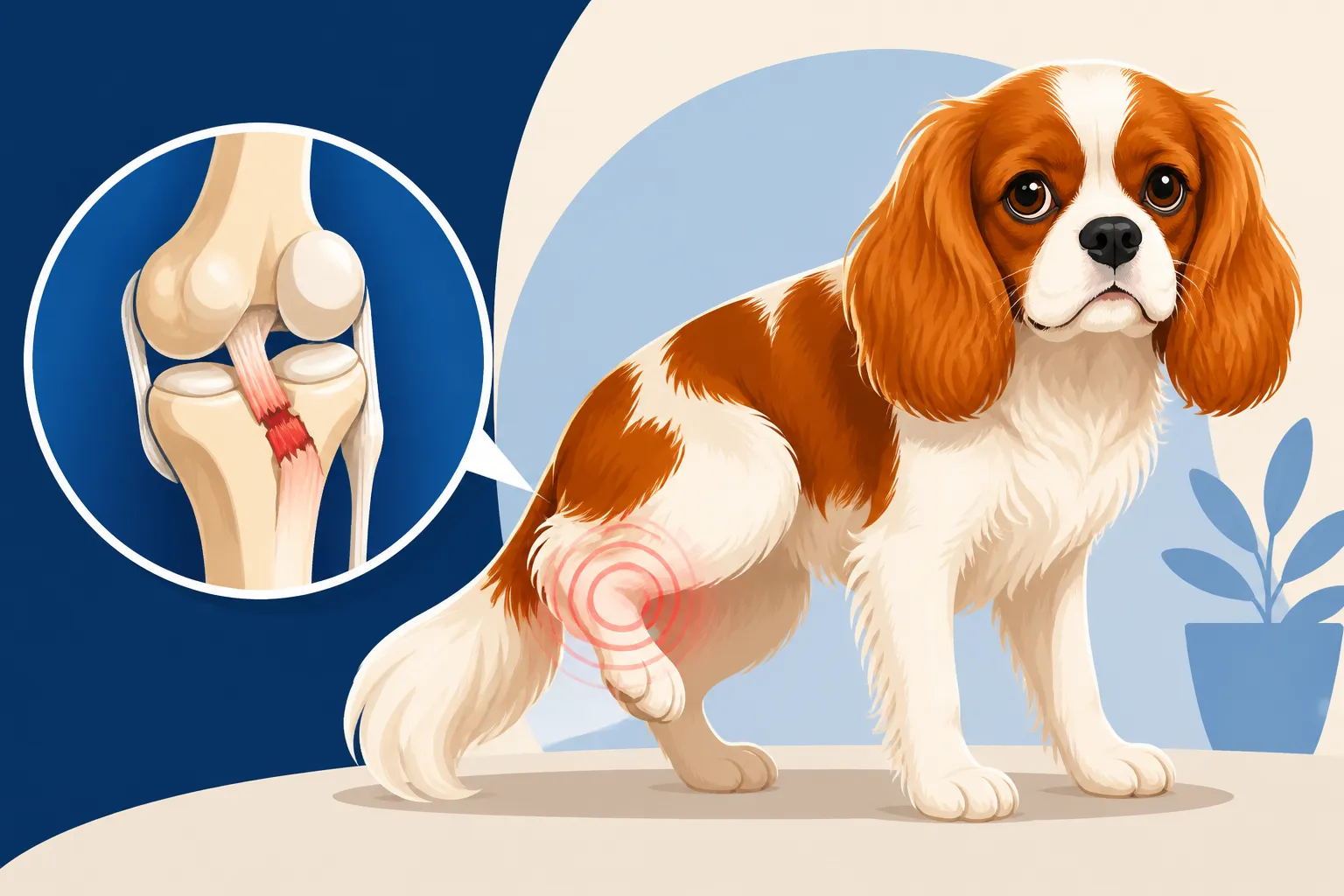
The cranial cruciate ligament is one of two primary ligaments within your dog's knee joint (the stifle joint). It runs diagonally from the femur (thigh bone) to the tibia (shin bone), forming an "X" shape with the caudal cruciate ligament. Its critical job is to prevent the tibia from sliding forward relative to the femur, stop the knee from hyperextending, and limit internal rotation of the tibia. Think of it as a vital stabilizer, keeping the knee joint happy and aligned during every walk, jump, and zoomie.
When this ligament is damaged, that stability is compromised. The knee becomes unstable, causing pain, inflammation, and abnormal movement. Over time, this instability can lead to significant arthritis and further damage to the meniscus, a C-shaped piece of cartilage that acts as a shock absorber within the knee. For a small, active dog like a Cavalier, maintaining proper knee function is paramount to their overall well-being.
Why Cavaliers Are Susceptible
While any dog can suffer a CCL injury, certain breeds, including our beloved Cavaliers, can have predispositions. It's not always about a sudden, traumatic incident; often, it's a degenerative process that weakens the ligament over time, making it prone to tearing with minimal stress. Cavaliers, though small, are active little dogs, and their conformation can play a role. Issues that contribute include subtle anatomical variations in the knee joint or factors related to their size and bone structure.
Furthermore, Cavaliers are prone to other joint issues, such as Cavalier Knees, Hips and Joint Problems, and sometimes these conditions can indirectly contribute to or mask early signs of cruciate issues. For instance, a Cavalier with developing arthritis in a hip might shift weight, putting more strain on a knee. Their relatively high activity levels for a small breed, combined with potential genetic predispositions, mean that even routine activities can sometimes lead to a partial or complete tear. We want to keep them bouncy and happy, but sometimes that enthusiasm can unfortunately lead to problems.
Common Causes of Injury
Cruciate ligament injuries in dogs typically fall into two categories: acute trauma and chronic degeneration. Acute trauma is what most people picture: a sudden misstep, a bad jump off the sofa, or a quick twist while running. Your Cavalier might yelp, immediately stop bearing weight, and you'll know something is seriously wrong. This type of injury often results in a complete tear.
However, the more common scenario, especially in breeds like Cavaliers, is chronic degeneration. This means the ligament has been weakening slowly over months or even years. The tear might start as a partial rupture, causing intermittent lameness that seems to come and go. Over time, with continued activity and the inherent instability, this partial tear progresses to a complete rupture. Factors like genetics, obesity, and even other concurrent orthopedic issues can accelerate this degenerative process. Understanding this distinction is crucial because the onset of symptoms might be subtle, and it's easy to dismiss a mild limp as just "a little tweak" until it becomes much more severe.
Recognizing the Signs of a Cruciate Injury
Spotting a cruciate injury early can make a big difference in your Cavalier's treatment and recovery. It’s not always a dramatic event; sometimes, it’s a slow, subtle decline in mobility or comfort.
Initial Symptoms and Progression
The most obvious sign of a cruciate ligament injury is limping or lameness in a hind leg. This can range from a subtle, occasional limp to a complete inability to bear weight on the affected leg. You might notice your Cavalier "toe-touching," meaning they put just the tips of their toes down, avoiding full weight bearing. They might also hold the leg up when standing or walking, especially after a period of rest, or when they've been running or playing vigorously. Think about when you've seen A Cavalier Limping After Play—it might be more than just tired muscles.
As the injury progresses, you might see a reluctance to jump, climb stairs, or even get on and off furniture. Your usually enthusiastic greeter might hesitate before bounding to the door. The muscles in the affected leg might start to atrophy (waste away) because your Cavalier isn't using it properly, making the leg appear thinner than the other. Swelling around the knee joint can also be a sign of inflammation. Owners often describe a "sitting sideways" posture, where the dog avoids putting weight on the injured leg, sitting with it extended out to the side rather than tucked underneath.
Distinguishing from Other Knee Issues
It's important to remember that not all limps are cruciate tears. Cavaliers can experience other orthopedic problems that might present similarly. For example, Loose Kneecaps in a Thirteen-Pound Cavalier, also known as patellar luxation, is common in small breeds. This is when the kneecap slips out of its groove, causing a skip or hop in their gait. While both cause hind leg lameness, the sensation and type of instability are different. Cruciate tears lead to more generalized instability of the knee, while patellar luxation is specifically about the kneecap.
Arthritis, especially in older Cavaliers, can also cause stiffness and lameness. However, with arthritis, the pain is usually more generalized and chronic, whereas a cruciate tear often has a more acute or rapidly worsening component. A thorough veterinary examination, including specific orthopedic tests and potentially imaging, is essential to differentiate between these conditions and pinpoint the exact cause of your Cavalier's discomfort. Don't try to guess; let your vet properly diagnose what's going on.
When to Seek Veterinary Attention
If you notice any persistent limping, reluctance to move, or signs of pain in your Cavalier's hind leg, it's time to call your veterinarian. Don't wait, hoping it will just "get better on its own." Even if the limp seems mild or intermittent, early diagnosis can prevent further damage and improve the outcome of treatment. A partial tear, if caught early, might be managed differently than a complete rupture.
An immediate vet visit is crucial if your Cavalier suddenly cannot bear any weight on a leg, is crying out in pain, or if the limb appears swollen or deformed. Prompt attention ensures pain management can begin quickly and the appropriate diagnostic steps can be taken. Delaying treatment for a cruciate injury not only prolongs your dog's discomfort but can also lead to more complex problems, including meniscal tears and severe osteoarthritis, making recovery longer and potentially less successful.
Diagnosing and Treating Cruciate Ligament Tears
Once you've noticed the signs, the next step is getting an accurate diagnosis and understanding the treatment options available for your precious Cavalier. It can feel overwhelming, but your vet is there to guide you.
Veterinary Examination and Diagnostics
Diagnosing a CCL injury usually starts with a comprehensive orthopedic examination by your veterinarian. They'll observe your Cavalier's gait, palpate the knee joint, and perform specific tests to assess knee stability. The two most common tests are the Cranial Drawer Test and the Tibial Compression Test.
- Cranial Drawer Test: Imagine pulling a drawer open. Your vet will try to manually move the tibia forward relative to the femur. If the CCL is torn, there will be excessive forward movement, indicating instability.
- Tibial Compression Test: This involves flexing the ankle while keeping the knee extended. If the CCL is torn, the tibia will shift forward.
These tests can sometimes be challenging in small, tense dogs or those with partial tears, as muscle splinting can mask instability. Sedation might be necessary to get an accurate assessment. Beyond physical manipulation, X-rays are often taken. While X-rays don't show the ligament itself, they can reveal signs of instability (like joint effusion or bone spurs), assess for arthritis, and rule out other bone conditions. For more subtle cases, or if other soft tissue injuries are suspected, an MRI might be recommended, though this is less common for straightforward CCL tears. For any surgical procedure, especially for an older Cavalier or one with an existing heart murmur, you'll need to consider Pre-Surgery Testing for an Older Cavalier and be aware of Anesthesia Risk in a Cavalier With a Murmur.
Surgical Treatment Options
For most complete CCL tears, especially in active dogs, surgical repair is considered the gold standard. Surgery aims to stabilize the knee, reduce pain, and slow the progression of arthritis. There are several surgical techniques, and your vet or an orthopedic specialist will recommend the best one for your Cavalier based on their size, activity level, and the specific nature of the injury.
Tibial Plateau Leveling Osteotomy (TPLO)
TPLO is one of the most common and highly effective surgical procedures. It involves cutting and rotating the top part of the tibia (the tibial plateau) and securing it with a bone plate and screws. This changes the angle of the tibial plateau, neutralizing the forward thrust that occurs in a CCL-deficient knee, effectively making the torn ligament irrelevant. TPLO offers excellent long-term stability and a good return to function. While it sounds invasive, it's often the preferred method for medium to large dogs, but many specialists perform it successfully on smaller breeds like Cavaliers too, often with very good outcomes.
Tibial Tuberosity Advancement (TTA)
Similar to TPLO, TTA is another osteotomy procedure that alters the biomechanics of the knee. It involves cutting the front part of the tibia (the tibial tuberosity) and advancing it forward, then securing it in its new position with a cage and bone plate. This procedure also aims to neutralize the forces within the knee, preventing the forward movement of the tibia. TTA tends to be less invasive than TPLO in some respects, and may be an option for certain smaller dogs, though TPLO is generally more widely used and considered for a broader range of cases.
Lateral Suture (Extracapsular Repair)
Sometimes called an extracapsular repair, this is a less invasive and often less expensive option, typically considered for smaller, less active dogs, or sometimes for older patients where a major osteotomy isn't feasible. This technique involves placing a strong suture material (like nylon) outside the joint, mimicking the function of the torn CCL. The suture runs from the lateral fabella (a small bone behind the femur) to a hole drilled through the tibia. This suture provides immediate stability while the natural fibrous tissue around the joint thickens over several weeks to provide long-term stability. For a small Cavalier, especially one that isn't excessively active, a lateral suture can be a very good option, often allowing for a good recovery, though the long-term stability might not be quite as robust as with TPLO or TTA.
Non-Surgical Management
While surgery is often the best route for complete tears, non-surgical management can be considered for very small dogs, those with partial tears, or those who are not candidates for surgery due to other health concerns. The goal of non-surgical management is to reduce pain and inflammation, encourage scar tissue formation to stabilize the joint, and manage the progression of arthritis.
This approach typically involves strict rest and activity restriction for several weeks, followed by a very gradual increase in controlled exercise. Anti-inflammatory medications (NSAIDs) will be prescribed to manage pain and swelling. Weight management is absolutely critical, as excess weight puts enormous strain on already compromised joints; you can learn more about this in Why an Overweight Cavalier Fails Faster. Physical therapy, including gentle range-of-motion exercises, massage, and potentially hydrotherapy, can also be beneficial. However, it’s important to understand that non-surgical management rarely provides the same level of stability as surgery, and the risk of developing significant arthritis and potential meniscal tears is higher. It's often a commitment to Pain Management for a Senior Cavalier rather than a complete fix.
Surgical Options Comparison for Small Cavaliers
| Feature | TPLO (Tibial Plateau Leveling Osteotomy) | TTA (Tibial Tuberosity Advancement) | Lateral Suture (Extracapsular Repair) |
|---|---|---|---|
| Principle | Changes knee biomechanics to eliminate tibial thrust | Changes knee biomechanics to eliminate tibial thrust | Replaces ligament function with external suture |
| Invasiveness | High (bone cut and plate) | High (bone cut and cage) | Moderate (suture placed outside joint) |
| Cost | Higher | Higher | Lower |
| Recovery Time | Typically 4-6 months to full activity | Typically 4-6 months to full activity | Often 2-4 months to good function, 6 months for full stability |
| Long-Term Stability | Excellent, very stable | Excellent | Good, relies on fibrous tissue development |
| Suitability for Small Cavaliers | Excellent option, widely performed | Good option, but less common for small breeds than TPLO | Excellent for smaller, less active dogs, or partial tears |
| Complications | Infection, implant failure, meniscal tears (rare) | Infection, implant failure, meniscal tears (rare) | Suture breakage, infection, less robust for very active dogs |
Considering the potential costs involved with surgery and post-operative care, many Cavalier owners find immense relief in having pet insurance. Companies like Healthy Paws can help cover a significant portion of these unexpected expenses, making the decision for complex surgery a little less daunting financially. It’s always a good idea to consider Insuring a Cavalier Before the Murmur Arrives or any other health issues, as pre-existing conditions are typically not covered.
Post-Operative Care and Recovery
Undergoing surgery is just the first step. The success of a cruciate ligament repair largely depends on dedicated post-operative care and a well-structured rehabilitation program. This phase requires patience, consistency, and a lot of love from you.
Immediate Post-Surgery Home Care
The first few weeks after surgery are critical for healing. Your Cavalier will come home with pain medication, which is essential to keep them comfortable and encourage early, gentle weight-bearing. Strict confinement is non-negotiable. This means crate rest or a small, confined area where they cannot run, jump, or play. Leash walks for potty breaks should be short, controlled, and on flat surfaces only. No stairs, no slippery floors, and absolutely no off-leash activities.
You'll also need to monitor the incision site for any signs of swelling, redness, discharge, or if your Cavalier is licking or chewing at it. An E-collar (cone of shame) is usually required to prevent this, as chewing at the incision can lead to infection and dehiscence (the wound opening up). Your vet will provide specific instructions for cleaning the incision, medication schedules, and when to return for follow-up appointments and staple removal. It's a demanding time, but vital for successful healing.
Rehabilitation and Physical Therapy
Rehabilitation starts almost immediately and is crucial for restoring full function to the knee. Your vet will guide you through a controlled exercise program that typically progresses over several months. Initially, this involves passive range-of-motion exercises to prevent stiffness and muscle atrophy. This means gently flexing and extending the knee joint, as instructed by your vet or a certified canine physical therapist.
As your Cavalier heals, the exercises will gradually increase in intensity and duration. This might include short, controlled leash walks, balancing exercises, gentle weaving through cones, and eventually, incorporating activities like underwater treadmill therapy (hydrotherapy). Hydrotherapy is fantastic because the buoyancy of the water reduces weight-bearing stress on the joint while allowing for muscle strengthening. This structured approach helps rebuild muscle, improve balance, and restore confidence in using the leg. Don't rush this process; slow and steady wins the race for long-term recovery.
Long-Term Outlook and Prevention
With proper surgery and diligent rehabilitation, many Cavaliers return to a good quality of life, often regaining near-normal function. However, it's important to have realistic expectations. Even with successful surgery, some degree of arthritis will likely develop in the joint over time, as the initial injury sets the stage for degenerative changes. Ongoing management with joint supplements, maintaining a healthy weight, and appropriate exercise will be key to keeping your Cavalier comfortable in the years to come.
Crucially, Cavaliers who have torn one CCL have a significantly higher risk (up to 50-60%) of tearing the CCL in the other knee, sometimes within a year or two. This is often due to the underlying degenerative process affecting both ligaments. Therefore, proactive measures, such as maintaining an ideal body weight, regular moderate exercise, and potentially joint supplements, are vital for both legs. Discuss with your vet about appropriate activity levels, especially if your Cavalier also has conditions like Whether Exercise Is Safe for a Cavalier With MVD. Regular check-ups with your vet can help monitor joint health and address any emerging issues early. Investing in preventative care and pet insurance plans like those offered by Healthy Paws can help you manage potential future health challenges effectively.
Disclaimer
The information provided in this guide is for general informational purposes only and does not constitute veterinary advice. Always consult with a qualified veterinarian for any health concerns or before making any decisions related to your Cavalier's health or treatment plan.