Feeling a Cavalier’s Ribs Under Feathering
It’s a common frustration for many Cavalier King Charles Spaniel owners: their beloved companion looks perfectly healthy, even plump, thanks to that glorious, flowing feathering. But beneath that beautiful coat, insidious weight gain can often hide, leading to serious health issues down the line. This guide will walk you through the essential skill of feeling your Cavalier's ribs, a hands-on method to accurately assess their body condition and help keep them in tip-top shape.
Why Feeling Ribs is Crucial for Cavalier Health
Cavaliers are masters of disguise when it comes to weight. Their soft, luxurious coats, especially the longer feathering on their chest, flanks, and belly, can make it incredibly difficult to tell just by looking if they're carrying a few extra pounds. But those "few extra pounds" can quickly add up to significant health risks for this sensitive breed.
The Challenge of Assessing Weight in Feathered Breeds
Imagine trying to tell if a fluffy cloud is gaining weight – that’s often what it feels like trying to assess a Cavalier's physique visually. Their breed standard calls for a body that is slightly longer than it is tall, with a moderate amount of bone and muscle. However, that profuse silky coat, especially as they mature and grow their full feathering, can create an illusion of fullness even when they're actually getting pudgy underneath. You might see a seemingly perfectly proportioned dog, while their ribs are actually buried under a layer of fat, and their waistline has long since disappeared. This visual deception means that many owners unknowingly allow their Cavaliers to become overweight, simply because it's not obvious until it's a significant problem.
The Hidden Dangers of Cavalier Weight Gain
For a breed already predisposed to certain health conditions, carrying excess weight isn't just about aesthetics; it's a serious health hazard. One of the most devastating conditions for Cavaliers is heart disease, specifically Mitral Valve Disease (MVD). Excess weight puts an enormous strain on the heart, forcing it to work harder to pump blood throughout the body. This can accelerate the progression of existing heart murmurs and disease, leading to a much faster decline. If you're wondering Why an Overweight Cavalier Fails Faster, it's often because their cardiovascular system is already compromised, and extra weight adds insult to injury.
Beyond the heart, obesity in Cavaliers contributes to a whole host of other problems. It can exacerbate joint issues like patellar luxation (loose kneecaps) and hip dysplasia, leading to early onset arthritis and chronic pain. Overweight dogs are less tolerant to heat, more prone to respiratory issues, and even face increased risks during anesthesia. Their Cavalier Lifespan and What Cuts It Short can be significantly impacted by preventable conditions directly linked to excess body fat. Maintaining a healthy weight is one of the most impactful things you can do to support your Cavalier's long-term health and quality of life.
Beyond the Scale: Why Palpation is Key
While weighing your Cavalier regularly is important, the number on the scale doesn't tell the whole story. A fifteen-pound Cavalier might be perfectly lean and muscular, while another fifteen-pound Cavalier could be significantly overweight if they have a finer bone structure. This is where palpation – feeling with your hands – becomes invaluable.
Think of it like this: the scale gives you a quantitative measure, but palpation provides a qualitative assessment of body condition. It allows you to feel the actual muscle and fat distribution, giving you a much clearer picture of your dog's physique than just their weight or what you can see through their coat. Learning to properly feel for their ribs, spine, and waist will give you a consistent, reliable method to monitor your Cavalier's body condition between vet visits, helping you make adjustments to their diet and exercise before problems become severe.
The Step-by-Step Guide to Palpating Your Cavalier's Ribs
Alright, let's get hands-on! This isn't about giving your Cavalier an uncomfortable prodding; it's about a gentle, consistent check that becomes part of your routine. The key is to be calm, consistent, and know what you're looking for.
Creating a Calm Environment
First things first, make this a positive experience for your Cavalier. Choose a quiet time when your dog is relaxed, perhaps after a short walk or during a cuddle session. Avoid times when they're over-excited or anxious. You can even incorporate it into their regular grooming routine or during a petting session. A calm environment and a relaxed dog will give you the most accurate results and make the process enjoyable for both of you. Many Cavaliers respond well to positive reinforcement, so a few gentle strokes and a reassuring voice will go a long way. If your Cavalier tends to be sensitive, starting with gentle handling exercises, similar to those you might use for Teaching a Cavalier to Accept Grooming, can help them become more comfortable.
The Hand Placement and Pressure
To start, position yourself comfortably next to your Cavalier. If they're small enough, you can gently place them on a raised, stable surface like a table with a non-slip mat, or have them stand calmly on the floor beside you.
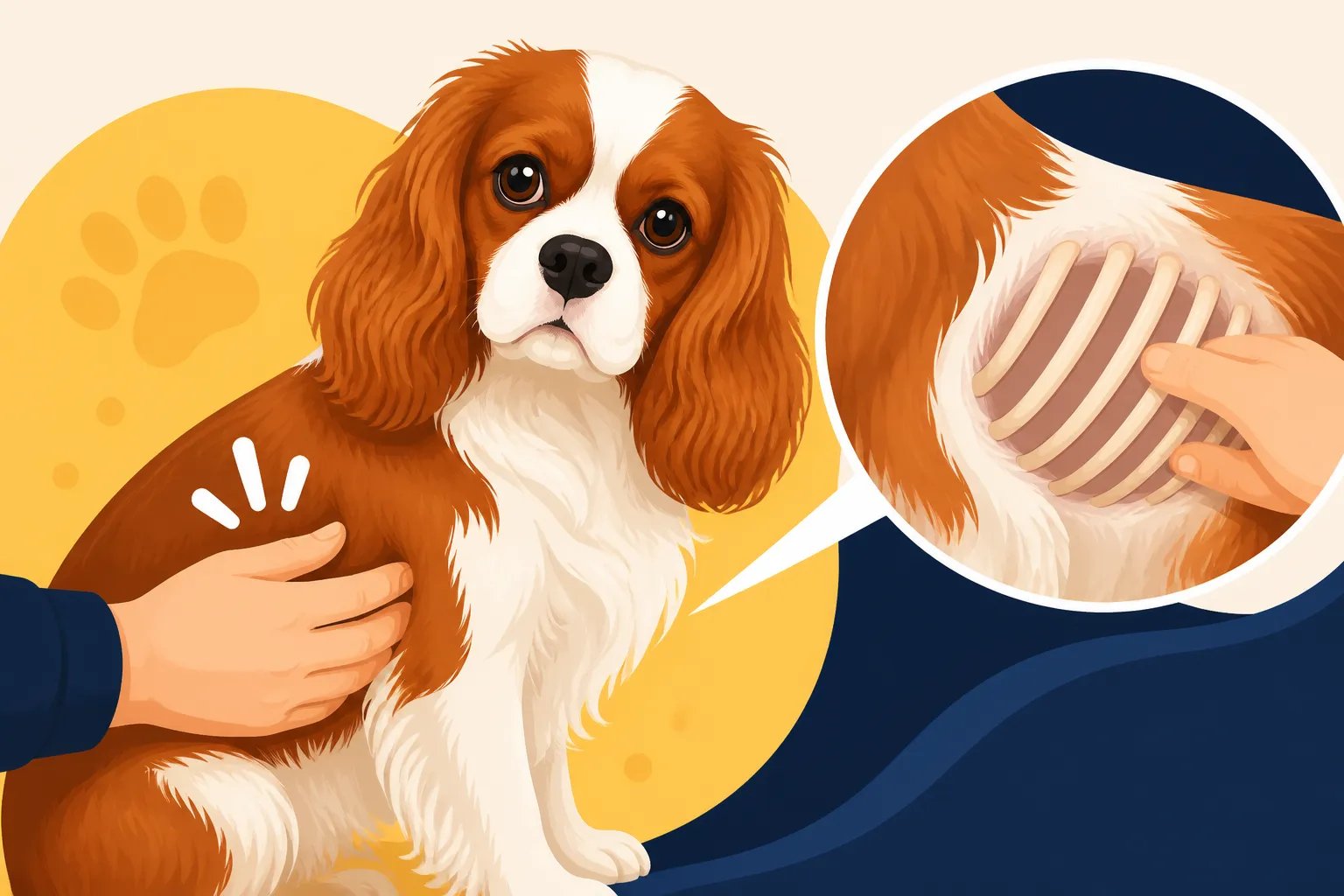
- Locate the Rib Cage: Place both of your hands flat on either side of your Cavalier's chest, just behind their front legs. You're looking for the general area of their rib cage.
- Use Your Fingertips: Using the flat pads of your fingers, gently run them along the sides of your Cavalier's rib cage, moving from front to back. Don't dig in, but apply enough pressure to feel through their coat and the skin. It should feel like you're gently feeling your own knuckles under a thin blanket, not pressing hard enough to cause discomfort.
- Consistency is Key: Practice this a few times, getting a consistent feel for the area. The goal is to feel the individual ribs beneath the skin and muscle. You'll move your hands in short, sweeping motions, like you're gently raking your fingers across their side.
What You Should Be Feeling For
Now for the crucial part: interpreting the sensation under your fingertips. Think of feeling your own hand to understand the difference between ideal and overweight.
- Ideal Sensation: The ideal sensation should be similar to feeling the back of your own hand. When you run your fingers over your knuckles, you can feel the individual bones with a thin layer of skin and muscle over them, but no thick padding. You should be able to easily feel each individual rib without having to press hard. There's a slight covering, but the ribs are distinct. This is the goal for your Cavalier: easily palpable ribs, but not sharp or protruding.
- Too Lean: If the ribs feel very prominent, sharp, and you can see them without pressing, your Cavalier might be too lean. This is less common in Cavaliers, who are often prone to gaining weight, but it can happen in cases of illness or insufficient feeding.
- Overweight Sensation: If you have to press firmly to feel the ribs, or if you can't feel them at all, then your Cavalier is likely carrying too much body fat. It will feel like feeling the palm of your hand – soft, cushioned, and the bones underneath are difficult to distinguish. This is the sensation that signals a need for diet and exercise adjustments.
Remember to also check for a discernible waist. After you've felt the ribs, move your hands back towards their hips. Just behind the rib cage, there should be a gentle inward curve, or "tuck," when viewed from above. When you run your hands along their sides, you should feel this indentation. If your Cavalier's body goes straight back from the ribs to the hips, or even bulges out, they're likely overweight. Checking for Finding a Cavalier's Waist Under the Feathering is another excellent visual and tactile cue.
Interpreting What You Feel: Ideal Weight vs. Overweight
Understanding what your hands are telling you is the most important part of this exercise. Vets use a "Body Condition Score" (BCS) system, typically on a scale of 1 to 9 (with 5 being ideal) or 1 to 5 (with 3 being ideal), to objectively assess a pet's weight. While you won't be assigning a formal score, you can learn to recognize the general categories.
The Goldilocks Zone: What a Healthy Cavalier Should Feel Like
In the "Goldilocks Zone," your Cavalier is neither too fat nor too thin – they're just right. This is where their body condition is optimal for health and longevity. When you gently run your hands over their rib cage, you should easily feel their ribs, almost like feeling the slats of a venetian blind under a thin curtain. There's a minimal layer of fat covering them, but no hard pressing is required.
From a visual standpoint, when looking down at your Cavalier from above, you should see a discernible waistline behind their ribs, like a subtle hourglass figure. When viewed from the side, their abdomen should tuck up slightly, rather than hanging low. Their muscles should feel firm, not flabby. This ideal body condition means their joints are under less strain, their heart isn't overworked, and their overall energy levels and well-being are at their peak. It’s the sweet spot where they can enjoy their walks and play without being unduly burdened by excess weight.
Recognizing Excess Fat: When Ribs Are Hard to Find
If you're having trouble feeling individual ribs without significant pressure, or if you can't feel them at all, it's a clear sign your Cavalier is carrying too much fat. The sensation will be more like pressing into a soft, cushioned sofa than feeling distinct bones. This indicates they are overweight or obese.
Other signs of excess fat include:
- No discernible waist: From above, their body appears straight or even convex behind the ribs.
- Pendulous abdomen: When viewed from the side, their belly might sag or hang low.
- Fat deposits: You might feel noticeable padding at the base of their tail, over their hips, or on their neck and shoulders.
- Lethargy: They might be less enthusiastic about walks, tire quickly, or seem generally less energetic.
- Difficulty grooming: Overweight Cavaliers may struggle to groom themselves properly, especially their hindquarters.
It’s crucial to act when you notice these signs. The sooner you address weight gain, the easier it is to reverse course and prevent the serious health complications that can arise. For instance, Cavalier Weight Gain and What It Costs the Heart is a very real concern for this breed, and early intervention can make a significant difference.
When to Seek Veterinary Advice
While home palpation is an excellent tool, it's not a substitute for professional veterinary assessment. If you're consistently struggling to find your Cavalier's ribs, if they suddenly gain or lose a significant amount of weight, or if you notice other concerning symptoms (like changes in appetite, energy, or mobility), it's definitely time to schedule a vet visit.
Your veterinarian can confirm your assessment, help you establish a target weight, and develop a safe, effective weight management plan. They can also rule out any underlying medical conditions that might be contributing to weight changes. Remember, a quick call to your vet is always a good idea if you're ever uncertain about your Cavalier's body condition. Many owners find peace of mind with pet insurance like Healthy Paws, knowing they're covered for unexpected health concerns that can arise from issues like obesity.
Here's a quick reference table for Body Condition Scoring based on palpation:
| Body Condition Score (BCS) | Visual Appearance | Palpation of Ribs | Palpation of Waist/Abdomen |
|---|---|---|---|
| 1 (Emaciated) | Ribs, spine, pelvic bones visible from distance | Easily palpable; no fat covering | Severe abdominal tuck |
| 3 (Lean) | Ribs easily palpable with minimal fat covering | Ribs easily palpable; minimal fat covering | Distinct waist, slight abdominal tuck |
| 5 (Ideal) | Ribs easily palpable with slight fat covering | Ribs easily palpable; thin fat layer | Well-proportioned waist, moderate abdominal tuck |
| 7 (Overweight) | Ribs palpable with moderate pressure; thick fat | Ribs palpable with difficulty; moderate fat | Waist barely discernible, no abdominal tuck |
| 9 (Obese) | Ribs not palpable even with firm pressure; very thick fat | Ribs not palpable; very thick fat layer | No waist, abdominal bulge |
Maintaining a Healthy Weight for Your Cavalier
Keeping your Cavalier at a healthy weight is an ongoing commitment, but it's one of the best investments you can make in their long-term health and happiness. It involves a balanced approach to diet, exercise, and consistent monitoring.
The Role of Diet and Portion Control
Diet is paramount when it comes to weight management. Cavaliers have a notorious love for food, and it’s all too easy to overfeed them, especially with treats. Understanding your Calorie Needs for an Eighteen-Pound Cavalier is essential, but it's also important to remember that these are just guidelines; individual needs vary based on age, activity level, and metabolism.
- Accurate Portions: Don't just eyeball your Cavalier's food. Use a kitchen scale to measure their kibble precisely. Even a small handful extra each day can lead to significant weight gain over time for a small breed. Most adult Cavaliers thrive on two meals a day, rather than free-feeding.
- Quality Food: Choose a high-quality, balanced dog food appropriate for small breeds. Your vet can provide recommendations if you're unsure.
- Treat Wisely: Treats should make up no more than 10% of their daily caloric intake. Opt for Low-Calorie Treats for a Cavalier That Gains Easily like small pieces of carrot, green beans, or specially formulated low-calorie dog treats. Avoid table scraps altogether.
- Prescription Diets: If your Cavalier is significantly overweight, your vet might recommend a prescription weight-loss diet, which is specially formulated to be lower in calories while still providing essential nutrients. Regular check-ups are key, and if a weight issue is identified, your vet might recommend further diagnostics or a special diet. Having a good pet insurance policy, such as with Healthy Paws, can certainly help manage the costs associated with these interventions.
Appropriate Exercise for Cavaliers
Exercise is the other side of the weight management coin, but it needs to be tailored to your Cavalier's individual health status. While Cavaliers love walks and playtime, vigorous exercise might not always be appropriate, especially for those with heart murmurs or joint issues. If you're concerned about their heart, you might wonder Whether Exercise Is Safe for a Cavalier With MVD. Always consult your vet about an appropriate exercise regimen.
- Daily Walks: Aim for at least two moderate daily walks, totaling 30-60 minutes, depending on your dog's energy and health. These walks should be brisk enough to get their heart rate up but not so strenuous that they're panting excessively or lagging behind.
- Playtime: Engage them in interactive play like fetch (indoors or in a secure yard), gentle tug-of-war, or hide-and-seek. Mental stimulation is just as important as physical exercise.
- Consistency: Regular, consistent exercise is more beneficial than sporadic bursts of intense activity.
- Monitor for Fatigue: Always watch for signs of fatigue or discomfort. If your Cavalier is coughing (which can be a sign of heart issues) or showing signs of pain, stop and consult your vet.
Regular Home Checks and Vet Visits
The best approach to maintaining a healthy weight is a combination of diligent home monitoring and routine professional care.
- Weekly Rib Checks: Make feeling your Cavalier's ribs a weekly habit. It only takes a minute or two and provides invaluable feedback. You’ll quickly learn what feels "normal" for your dog and be able to spot subtle changes. This complements other routine care, such as regular Brushing a Cavalier's Feathering Three Times a Week or Daily Ear Checks on a Cavalier.
- Monthly Weight Checks: If possible, weigh your Cavalier monthly at home or at your vet's office. Many vet clinics have scales available for public use. Track their weight, and if you see a creeping increase, you know it's time to adjust their food portions or increase their activity.
- Annual Vet Check-ups: Regular veterinary check-ups are non-negotiable. Your vet will not only weigh your Cavalier but also perform a physical exam, which includes their own body condition assessment. They can catch subtle health changes, update vaccinations, and discuss any concerns you have about your dog's weight or overall health. Even something as simple as modifying your Cavalier's diet or starting a gentle exercise routine can have profound benefits, and your vet can guide you. And when those vet bills add up, having a plan in place, like a comprehensive policy from Healthy Paws, can make all the difference.
Ultimately, keeping your Cavalier at a healthy weight is one of the best proactive steps you can take for their long-term well-being, potentially reducing the need for extensive treatments down the line. But for any surprises, remember services like Healthy Paws exist to support you. It's a journey of love, care, and a keen eye (and hand!) for detail, ensuring your little companion enjoys the longest, happiest life possible.
Disclaimer
This article is intended for informational purposes only and is not a substitute for professional veterinary advice, diagnosis, or treatment. Always seek the advice of your veterinarian or other qualified animal health provider with any questions you may have regarding a medical condition or the health and welfare of your pet.