What a Cavachon Takes From Its Cavalier Parent
A Cavachon may inherit the Cavalier King Charles Spaniel’s affectionate nature, soft expression, and love of company—but a puppy is not a predictable blend of two breeds. The Bichon Frise parent matters just as much, and coat, size, energy, and health can vary even within one litter. This guide explains what the Cavalier side may contribute and what prospective owners should check before choosing a Cavachon.
What the Cavalier parent may contribute
Affection, sociability, and a strong desire for company
Cavaliers are typically people-oriented companion dogs. That tendency may show up in a Cavachon that wants to sit close, follow family members from room to room, or greet visitors with enthusiasm. A Cavachon may enjoy being included in ordinary routines more than spending long stretches entertaining itself.
That doesn’t mean every Cavachon will be an easygoing lap dog. A puppy’s temperament reflects both parents, early experiences, and ongoing training. The Bichon side may bring its own sociability and liveliness, while individual dogs differ in confidence and independence. If a Cavachon becomes distressed when left alone, the answer is patient, gradual training—not assuming the dog will simply grow out of it. For a closer look at the Cavalier tendencies behind this, see Cavalier Temperament and the Sporting Spaniel Beneath It and Why Cavaliers Are Called Velcro Dogs.
It’s worth asking a breeder how both parent dogs behave in real situations: around visitors, during grooming, when resting, and when briefly separated from people. Descriptions such as “friendly” or “sweet” are pleasant, but specific examples are more useful. A parent that settles comfortably after greeting guests may offer a different clue from one that stays highly excited or struggles to relax.
A friendly, people-focused approach to family life
The Cavalier parent may contribute a gentle, welcoming style that suits many households. Some Cavachons enjoy meeting new people, playing with considerate children, and sharing space with other pets. Still, a breed mix is not a guarantee of a particular behavior, and a small dog can be hurt by rough handling even when it is patient.
Children should be taught to let the dog approach, avoid pulling ears or coat, and leave the dog alone when it is eating or sleeping. Adults should supervise interactions, especially with toddlers, whose movements and volume can feel unpredictable to a young dog. A quiet retreat, such as a bed or pen, gives the Cavachon somewhere to settle without being followed. The guidance in Cavaliers in Families With Young Children is useful for thinking through those boundaries.
A Cavachon’s friendliness also doesn’t remove the need for socialization. Calm, positive introductions to people, everyday sounds, gentle handling, and appropriate dogs help build confidence. If a puppy seems worried, forcing a greeting can make the experience harder rather than easier. Give the dog room, reward relaxed curiosity, and let trust develop at its own pace.
Spaniel curiosity and a willingness to explore
Cavaliers are companion dogs, but their spaniel ancestry can show in curiosity about scents, birds, and movement outdoors. A Cavachon may enjoy sniffing on walks, investigating a patch of grass, or following a scent more than its cuddly appearance suggests. That interest is not necessarily a problem; it simply means outdoor safety and recall practice matter.
Use a well-fitted harness and leash in unfenced areas, and practice coming when called in a secure space before relying on the cue in a distracting setting. Small dogs can move quickly, and a sudden dash after a bird or squirrel can become dangerous near roads. You can read more about the Cavalier’s inherited instincts in The Spaniel Instincts Left in a Cavalier.
A Cavachon also needs more than affection to thrive. Sniffing games, short training sessions, and gentle play provide mental activity without turning every day into a high-intensity exercise routine. If the dog is reluctant, tiring unusually quickly, or uncomfortable during activity, don’t assume it is simply stubborn or out of shape. A veterinarian can help distinguish a training issue from pain or illness.
Coat, size, and appearance are not guaranteed
A soft coat can come in several forms
Cavachons are commonly described as having a soft, wavy, or curly coat, but the texture can differ considerably. A puppy may take more after the Cavalier, more after the Bichon, or land somewhere between the two. Coat changes as a dog matures, so the puppy’s first few months are not a reliable preview of its adult grooming needs.
The Cavalier side may contribute longer, silky feathering around the ears, chest, legs, and tail. The Bichon side may contribute a curlier texture that tangles differently and may need regular professional grooming. A crossbreed’s coat can be especially frustrating when expectations are set by a photo: two Cavachons of similar age may need quite different brushing routines.
Plan for coat care before bringing a puppy home. Ask the breeder to explain the adult coat types seen in the family lines and to show how they introduce puppies to brushing, bathing, nail handling, and the grooming table. A gentle routine, started early, makes it easier to spot knots before they tighten against the skin. For comparison, Brushing a Cavalier's Feathering Three Times a Week explains why the Cavalier-style coat needs regular attention.
Low shedding does not mean no grooming or no allergens
Some Cavachons shed less visibly than a typical Cavalier, particularly if they inherit a curlier Bichon-like coat. But low shedding is not the same as hypoallergenic, and no coat type guarantees that a person with allergies will be comfortable around the dog. Allergens can be carried in dander and saliva as well as loose hair.
It’s sensible for allergy-sensitive households to spend time with adult dogs from the same lines, if possible, before committing. Even then, one person’s reaction may not predict another’s, and a puppy’s coat can change as it grows. Don’t choose a dog based solely on a breeder’s claim that a cross is allergy-proof.
Grooming needs are real even when loose hair is less noticeable. Curly or wavy coats can mat behind the ears, under the collar, in the armpits, and around the legs. Regular combing down to the skin, plus professional grooming when needed, helps prevent painful tangles. If you’re gathering basic care supplies, Chewy can be one place to compare everyday items such as combs, brushes, and coat-care products; choose tools suited to the dog’s actual coat and ask a groomer to demonstrate safe use.
Adult size and coloring can vary
A Cavachon’s adult size depends on the size and build of both parents, not just the Cavalier parent. Many are small companion dogs, but individual dogs can be taller, heavier, or more compact than expected. A puppy’s paw size or weight at a single age is not a dependable way to promise its final adult size.
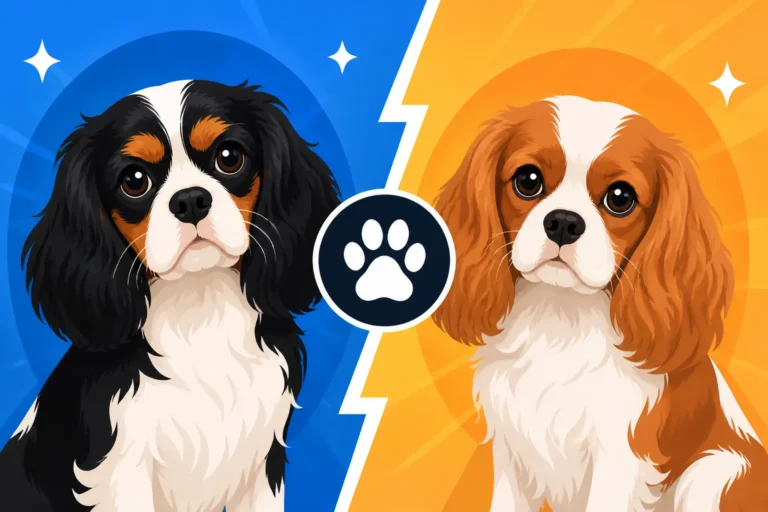
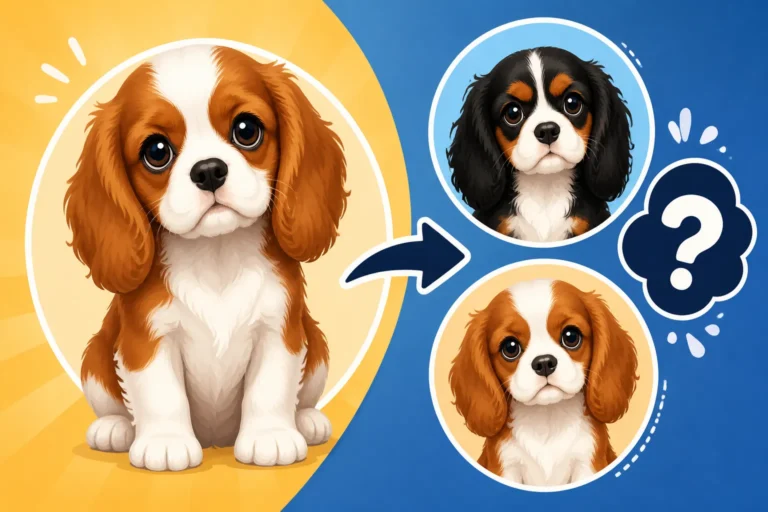
Color and markings can vary too. A Cavachon may have coloring associated with Cavaliers, such as chestnut and white or black-and-tan markings, but crossbred puppies may also show a range of shades and patterns. Appearance is often the easiest part of a puppy to admire and the least reliable way to predict its adult temperament or care needs.
Ask for the adult weights and general builds of both parents, and ask whether the breeder has experience estimating adult size from previous litters. If you live in an apartment or have a particular size limit in mind, plan for some uncertainty rather than treating an estimate as a guarantee. The Cavalier’s own proportions are discussed in The AKC Standard for the Cavalier King Charles Spaniel, but a Cavachon is a crossbreed and may not match that standard.
Health and temperament need to be assessed individually
A crossbreed is not automatically healthier
It’s tempting to assume that mixing two breeds prevents inherited health problems. That isn’t a safe assumption. A Cavachon can inherit health risks from either parent, and two dogs with different breed names can still share vulnerabilities. A mixed-breed label alone does not tell you whether a particular puppy’s parents were responsibly screened.
The Cavalier parent’s heart health deserves particular attention. Mitral valve disease is a significant concern in Cavaliers, and screening history is more meaningful than a general statement that a parent is “healthy.” Ask what heart evaluations were performed, who performed them, and when. For context on why testing matters, see The Heart Testing a Cavalier Breeder Must Do.
Also ask about relevant health screening and veterinary history for the Bichon parent. A thoughtful breeder should be willing to explain what was tested, what the results mean, and how those results inform breeding decisions. You can use Whether Cavalier Crosses Are Healthier as a starting point for considering why crossing breeds does not erase inherited risk.
A breeder’s answers matter more than a reassuring label
Before choosing a puppy, ask to review documentation rather than relying on verbal assurances. Find out whether you can meet the mother, learn about the father, and see records for the health checks recommended for each parent’s breed and family history. If the breeder dismisses reasonable questions or presents a cross as guaranteed free of breed-related conditions, treat that as a warning sign.
It is also fair to ask how the puppies are raised. Puppies benefit from safe exposure to household sounds, gentle handling, and age-appropriate experiences. You want to know whether they are growing up in a clean, attentive environment and whether the breeder is prepared to discuss the puppy’s individual personality rather than steering every buyer toward the same description.
A puppy’s health paperwork is not a lifetime guarantee, but it gives you a better basis for informed decisions. How to Judge Whether a Cavalier Breeder Is Serious offers useful questions to adapt when evaluating a breeder of Cavalier crosses.
What to ask about health records
Use a short list so the conversation stays practical. Ask for the names and dates of health evaluations, copies of the results where available, and the veterinarian or specialist involved. Ask what conditions have appeared in close relatives and how the breeder responds if a puppy develops a problem after going home.
| What to ask | Why it matters |
|---|---|
| What heart screening has the Cavalier parent had? | Helps you understand the parent’s cardiac evaluation and its timing |
| What health screening has the Bichon parent had? | Checks that both sides of the cross are being considered |
| Can I see the results and veterinary records? | Lets you review evidence rather than relying on a verbal claim |
| What health issues have appeared in close relatives? | Gives context beyond the two parent dogs |
| What support do you provide if a puppy becomes ill? | Clarifies the breeder’s approach to follow-up and responsibility |
| How are the puppies introduced to handling and grooming? | Offers clues about early care and preparation for lifelong coat maintenance |
No single answer makes a breeder automatically responsible or irresponsible. Look at the whole picture: transparent records, realistic discussion of uncertainty, good care of the dogs, and willingness to answer questions without pressure.
Deciding whether a Cavachon fits your household
Match the dog to your daily routine
A Cavachon may suit someone looking for a small, affectionate companion, but “small” doesn’t mean effortless. The dog still needs daily interaction, toilet breaks, exercise, training, grooming, veterinary care, and a plan for time alone. If your household is away for long stretches, consider how the dog will cope and who can provide companionship or a walk.
Before bringing one home, picture an ordinary weekday rather than an ideal weekend. Who will brush the coat? Who will handle the early-morning toilet trip? What happens when work runs late or you need to travel? A plan that includes a trusted sitter, friend, or dog walker can help make care more reliable. Chewy’s supplies may help with practical preparation—such as choosing a secure harness, grooming tools, or a comfortable bed—but those purchases don’t replace time, training, or veterinary care.
For a broader check on whether a Cavalier’s companion-dog needs fit your life, read Whether a Cavalier Is the Right Dog for You. The same questions apply to a Cavachon, while remembering that the Bichon side may affect the dog’s energy and coat-care needs.
Compare the Cavalier influence with the whole cross
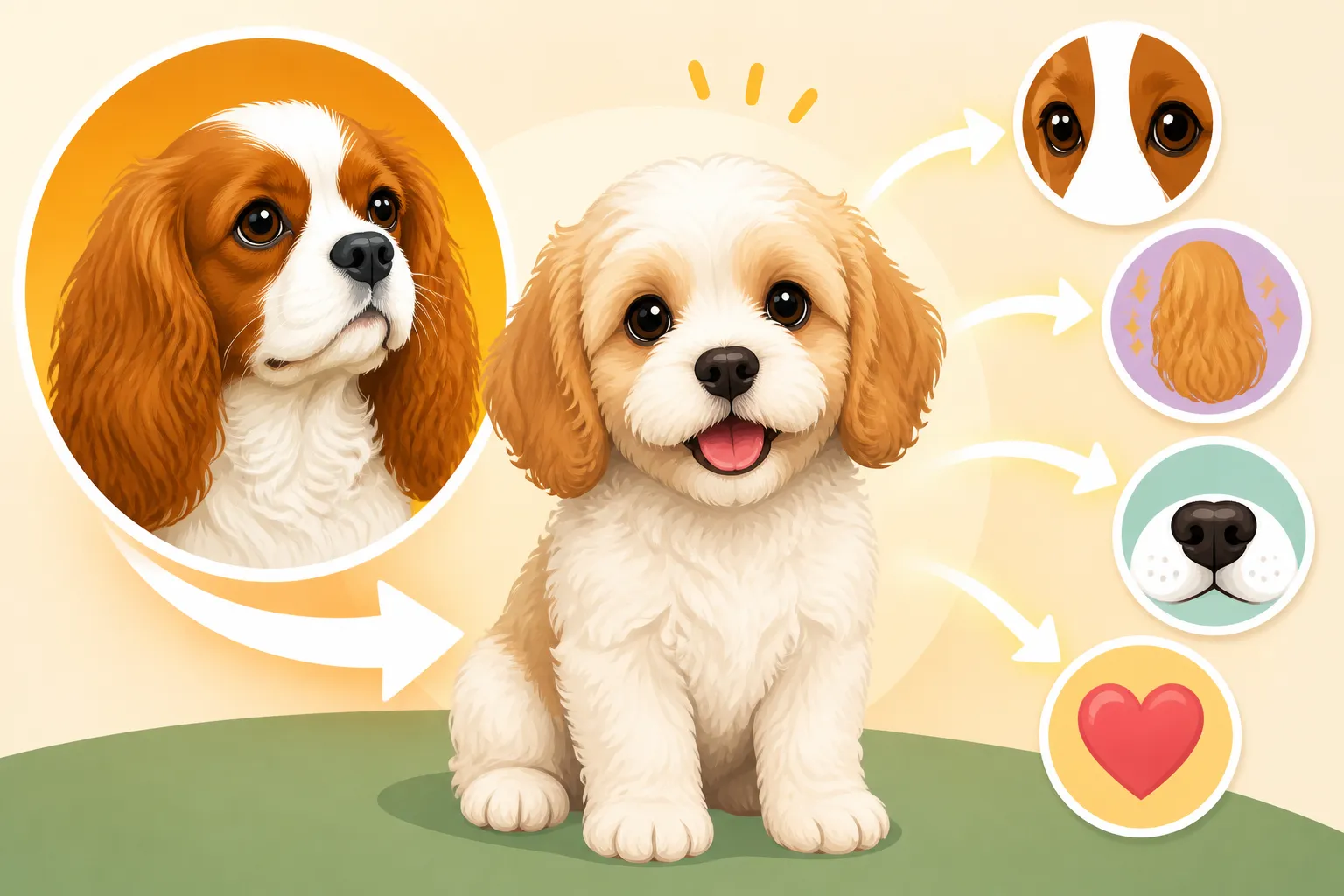
The Cavalier parent may contribute warmth, sociability, and a desire to stay close. The Bichon parent may contribute a different coat texture and its own lively, people-oriented qualities. But the puppy may not inherit the traits buyers expect in a neat, half-and-half package. Temperament, adult size, shedding, and grooming needs can all vary.
| Trait | Possible Cavalier influence | What can vary in a Cavachon |
|---|---|---|
| Temperament | Affectionate, social, people-focused | Confidence, independence, excitement, and response to new situations |
| Activity | Enjoys walks and exploring | Exercise needs and interest in sniffing or play |
| Coat | Silky hair and feathering | Curl, waviness, shedding, matting, and grooming frequency |
| Size | Small companion-dog build | Adult height and weight, depending on both parents |
| Health | Cavalier-related risks may be inherited | Risks from either parent and the individual family line |
If you are comparing different crosses, Cockaliers and Other Cavalier Crosses can help you think about what may change when the other parent breed changes. The important question isn’t which cross has the most appealing label. It’s whether the individual dog’s likely needs match your household, and whether the breeder can discuss the parents and their health history openly.
Build care around the dog you actually bring home
Once your Cavachon is home, adjust the routine to its coat, body condition, personality, and veterinary advice. A dog with a curlier coat may need more frequent combing than one with silkier hair. A shy puppy may need slower introductions than an outgoing littermate. A dog that struggles to settle alone may need gradual independence training and a carefully managed routine.
Keep a simple record of health visits, changes in appetite or energy, grooming appointments, and questions that come up. If you notice a new cough, reduced stamina, persistent discomfort, unusual scratching, or a sudden change in behavior, contact a veterinarian rather than assuming it is a normal feature of the mix. Chewy may be useful for replacing routine care supplies or finding products your veterinarian has recommended, but health concerns need a veterinary assessment.
Above all, choose for the individual dog, not for a promise that a Cavachon will be allergy-friendly, perfectly predictable, or free of inherited health concerns. Understanding the Cavalier parent gives you helpful context. Understanding both parents—and meeting the puppy as an individual—gives you a much stronger foundation for making a thoughtful decision.
Disclaimer
This article is for general informational purposes only and does not constitute professional advice. Laws, prices and regulations vary by location and change over time. Consult a qualified professional for guidance on your specific situation.