Medication for Cavalier Separation Anxiety
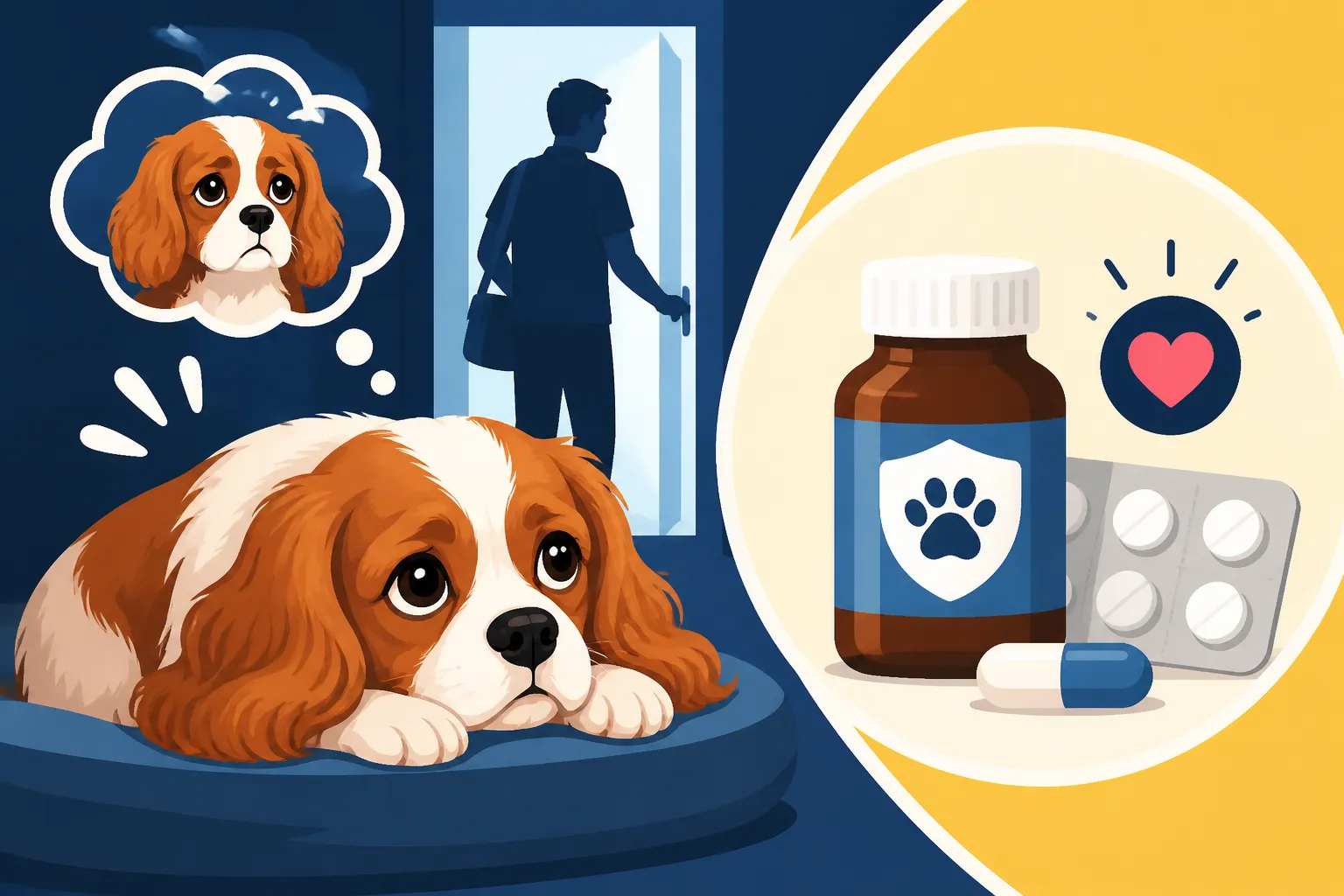
There are few things more heartbreaking than realizing your sweet Cavalier, who thrives on your presence, falls apart the moment you leave the house. The destructive chewing, the frantic barking, the desperate attempts to escape – it’s not just annoying, it's a clear cry for help. This comprehensive guide will walk you through understanding why medication might be a crucial part of managing your Cavalier's separation anxiety, what options are available, and how to combine it effectively with behavior modification.
Recognizing the Signs of Separation Anxiety in Cavaliers
Cavalier King Charles Spaniels are renowned for their loving, companionable nature, often earning them the nickname "Velcro dogs." While this devotion is one of their most charming traits, it can also predispose them to developing significant separation anxiety. It’s not simply a matter of a little whining when you leave; true separation anxiety manifests as intense panic and distress.
The Heartbreaking Clues When You're Gone
When your Cavalier is struggling with separation anxiety, the signs can be quite clear, especially if you have a way to observe them when you're not home. Owners often come home to a scene of destruction: chewed door frames, shredded cushions, or even attempts to dig through walls. This isn't naughtiness; it's a frantic effort to escape and find you. You might also find A Cavalier That Chews Doorframes When Alone, or that your dog has soiled indoors, despite being reliably house-trained. This inappropriate urination or defecation is another common stress response, not a defiance of training.
Beyond the visible damage, the vocalizations can be relentless. Neighbors might complain of constant barking, howling, or whining that starts moments after you walk out the door and continues unabated for extended periods. This isn't just a brief protest; it's sustained vocal distress that speaks volumes about their internal turmoil. If you've tried Filming a Cavalier While You Are Out, you might hear A Cavalier That Howls the Moment You Leave, which can be truly distressing to witness. This isn't about being bored; it's about being terrified.
Subtle Signals and When to Act
Sometimes, the signs are more subtle, especially in the early stages or in dogs who try to suppress their distress. Your Cavalier might become excessively clingy as your departure time approaches, following you Why a Cavalier Follows You Room to Room, whimpering, or pacing nervously. They might refuse food or treats once you're gone, even high-value ones, which is a significant indicator of stress since most Cavaliers are highly food-motivated. If you notice A Cavalier That Refuses Food Until You Return, it's a strong red flag that something deeper is at play.
It's crucial to distinguish genuine separation anxiety from simple boredom or a lack of house-training. A bored dog might chew a toy, but they typically won't cause self-harm or destroy exits in an attempt to escape. A dog with poor house-training might have accidents, but it's usually not accompanied by the intense vocalization or destructive behavior. Understanding Signs a Cavalier Is Distressed When Alone is the first step towards getting your beloved companion the help they need. The sooner you recognize these patterns and seek professional help, the better the prognosis for your Cavalier.
When Medication Enters the Conversation for Cavalier Separation Anxiety
For many Cavalier owners, the idea of medicating their beloved pet feels like a drastic step. It's completely understandable to feel hesitant; we all want our dogs to be happy and healthy naturally. However, for severe cases of separation anxiety, medication isn't a quick fix, but a vital tool that can help your Cavalier learn to cope, especially when behavioral interventions alone aren't enough.
Understanding the "Why" Behind the Meds
Think of medication for separation anxiety not as a sedative to "drug" your dog, but rather as a way to lower their overall anxiety levels to a point where they can actually learn and respond to training. When a Cavalier is in a state of extreme panic, their brain is essentially in "fight or flight" mode. They can't process information, learn new behaviors, or relax, no matter how perfectly you execute a training plan. The stress hormones flooding their system make it impossible for them to engage constructively.
Medication can help to quiet that overwhelming anxiety, bringing your Cavalier's emotional state down from a "10" to a "5" or "6." At this more manageable level, they are much more receptive to the behavior modification techniques we'll discuss later. It creates a window of opportunity for them to realize that being alone isn't life-threatening, and that you do always come back. Without this initial calming, some dogs are simply too panicked to make any progress with training, leading to frustration for both the dog and the owner.
The Role of Your Veterinarian and Board-Certified Behaviorist
Deciding to use medication for separation anxiety should always be a collaborative process involving your veterinarian and, ideally, a board-certified veterinary behaviorist. Your regular vet is crucial for ruling out any underlying medical conditions that might be contributing to or mimicking anxiety symptoms, such as pain or certain neurological issues. For instance, sometimes pain from conditions like syringomyelia can cause behavioral changes. They will also perform necessary blood work to ensure your Cavalier's organs can safely metabolize any prescribed medication.
A board-certified veterinary behaviorist, however, brings specialized expertise. They have extensive training in both veterinary medicine and animal behavior, allowing them to accurately diagnose the severity of the anxiety, recommend the most appropriate medication and dosage, and create a tailored behavior modification plan. They understand the nuances of how different medications work, potential side effects, and how they interact with specific training protocols. While a referral to a specialist might seem like an added expense, their expertise can save you time, money, and heartache in the long run by getting the treatment right from the start.
Integrating Medication with Behavior Modification
It's vital to understand that medication is rarely, if ever, a standalone solution for separation anxiety. It's a support tool, an aid to make behavior modification possible and more effective. Imagine trying to teach someone to swim while they're having a panic attack in the deep end. You'd first help them calm down, then teach them the strokes. It's similar with your Cavalier. The medication helps them calm down, and the behavior modification teaches them the coping skills.
Your behaviorist will work with you to implement a gradual desensitization program, which involves slowly increasing the time your Cavalier is left alone, always staying below their panic threshold. This is complemented by counter-conditioning, where your dog learns to associate your departures with positive experiences, like a special treat or puzzle toy. Think of a structured program like those offered by BAXTER & Bella which often emphasize positive reinforcement. Medication simply makes your dog more capable of benefiting from these essential training steps. Without a solid training plan alongside it, medication might temporarily reduce symptoms, but it won't teach your Cavalier how to truly feel safe and comfortable when you're away. This integrated approach offers the best chance for long-term success and a happier, more independent Cavalier.
Common Medications for Cavalier Separation Anxiety
When it comes to treating separation anxiety in Cavaliers with medication, there isn't a one-size-fits-all approach. The choice of medication often depends on the severity of the anxiety, your dog's individual response, and any other concurrent health issues. Your vet or veterinary behaviorist will carefully consider these factors to determine the best course of action.
Selective Serotonin Reuptake Inhibitors (SSRIs) and Tricyclic Antidepressants (TCAs)
For chronic, moderate to severe separation anxiety, your veterinarian might prescribe daily medications that help regulate brain chemistry over time. The most common types fall into two categories: Selective Serotonin Reuptake Inhibitors (SSRIs) and Tricyclic Antidepressants (TCAs). These medications work by affecting neurotransmitters in the brain, like serotonin, which play a key role in mood, anxiety, and learning. By increasing the availability of these calming neurotransmitters, they can help reduce overall anxiety levels and make your Cavalier more amenable to learning new coping mechanisms.
Examples of SSRIs that may be prescribed include fluoxetine (often known by human brand names like Prozac, though pet formulations exist), while TCAs might include clomipramine (Clomicalm is a common veterinary brand). These medications are typically given daily and require several weeks, sometimes even 4-8 weeks, to reach their full therapeutic effect. It’s not an immediate fix; rather, it’s about gradually shifting your Cavalier's baseline anxiety to a more manageable state. During this time, patience is absolutely key, and close communication with your vet to monitor for side effects or adjust dosage is essential. Remember, these are not sedatives; their goal is to alter mood and perception of stress, enabling your Cavalier to engage more effectively with training.
Situational Medications for Acute Anxiety
In addition to daily medications, there are also "situational" or "as-needed" medications that can be used for acute anxiety, particularly during the initial stages of treatment or for situations where your Cavalier experiences a spike in anxiety. These medications work more quickly, often within an hour or two, and are designed to provide short-term relief from intense panic. They can be incredibly helpful when you're starting a behavior modification program, allowing your Cavalier to remain calm enough to practice being alone without spiraling into a full-blown panic attack.
Common examples of situational medications include benzodiazepines like alprazolam (Xanax) or clonazepam (Klonopin), or other anxiolytics such as trazodone. These are often used strategically before you need to leave your Cavalier for a period that would typically trigger their anxiety. They can help bridge the gap while the daily medications build up in their system or as you progress through desensitization exercises. It’s important to note that these are usually prescribed in conjunction with a long-term plan, not as a sole treatment, and their use requires careful guidance from your vet, as some can have a sedating effect or become less effective over time if used improperly.
What to Expect When Starting Medication
Starting your Cavalier on medication for separation anxiety is a process that requires observation and partnership with your veterinary team. Initially, your vet will likely start with a low dose and gradually increase it, monitoring your dog's response. It's crucial to watch for any side effects, which can vary depending on the medication but might include lethargy, gastrointestinal upset, changes in appetite, or increased anxiety in some rare cases. Keeping a detailed log of your Cavalier's behavior and any observed side effects can be incredibly helpful for your vet in fine-tuning the treatment plan.
The goal isn't to turn your Cavalier into a zombie; it's to reduce their anxiety while maintaining their personality. You should expect to see a gradual reduction in the intensity and frequency of their anxious behaviors over several weeks. During this period, it's more important than ever to commit to the accompanying behavior modification program. The medication creates the fertile ground, but the training sows the seeds of new, calm behaviors. Remember that finding the right medication and dose can sometimes take trial and error, so consistent communication with your veterinary behaviorist is paramount. They will guide you through this journey, ensuring your Cavalier gets the most effective and safest treatment possible.
Complementing Medication with Training and Environment Changes
Medication alone is seldom the complete answer for separation anxiety. It's truly most effective when woven into a holistic approach that includes careful behavior modification and environmental adjustments. Think of the medication as scaffolding that supports the construction of new, healthier coping mechanisms within your Cavalier. Without the actual building happening, the scaffolding might hold things steady for a bit, but it won't create a lasting structure.
Crafting a Safe and Soothing Environment
Creating a predictable and calming environment is a cornerstone of managing separation anxiety. When you're dealing with a Cavalier who panics when alone, you need to think about every detail of their space. This might involve a comfortable crate, if your Cavalier is crate-trained and views it as a safe haven rather than a place of confinement – Choosing a Crate a Cavalier Will Rest In is a good starting point. For many Cavaliers, a secure, cozy space can reduce feelings of vulnerability. Ensure this spot is always available, even when you are home.
Beyond the immediate space, consider ambient factors. Leaving on a radio or TV can provide "white noise" that masks outside sounds, which might otherwise startle or trigger your anxious Cavalier. Some owners find specific dog-calming music or audiobooks helpful. Investing in puzzle toys or long-lasting chews (like a Kong stuffed with frozen peanut butter or cream cheese) can provide a positive distraction, especially if they are only given when you depart. You might find a variety of suitable options on Amazon that cater to different chewing styles and food preferences. The goal is to make the experience of being alone as un-threatening and, ideally, even pleasant as possible.
Desensitization and Counter-Conditioning Techniques
These are the core behavioral strategies that medication helps to facilitate. Desensitization involves gradually exposing your Cavalier to being alone, starting with incredibly short durations that do not trigger anxiety, and slowly increasing the time. This might mean leaving for literally 5-10 seconds, returning before your dog shows any signs of distress, and rewarding them for their calm. This process is slow, painstaking, and requires immense patience, often Building From Thirty Seconds With a Cavalier. The idea is to keep your Cavalier "under threshold" – never letting them experience full-blown panic.
Counter-conditioning pairs your departure with something positive. As you prepare to leave, you might offer a high-value treat or a favorite puzzle toy that only appears when you're about to walk out the door. The goal is to change your Cavalier's emotional response from "Oh no, they're leaving, I'm going to panic!" to "They're leaving, but I get this awesome treat!" Over time, this helps to reframe the association. Combining this with Departure Routines That Calm a Cavalier, which might involve quiet, low-key goodbyes rather than prolonged, emotional ones, further reinforces the idea that your leaving is not a catastrophic event.
The Importance of a Consistent Routine
Dogs, and especially Cavaliers, thrive on routine. A predictable schedule helps to reduce uncertainty, which is a major contributor to anxiety. Try to keep feeding times, walk times, and your departure and arrival times as consistent as possible. While life happens and perfect consistency isn't always achievable, a general framework provides a sense of security for your Cavalier. Knowing roughly when things will happen can reduce their anticipation and stress.
This consistency extends to how you interact with them, particularly around departures and arrivals. Keep hellos and goodbyes calm and low-key. Avoid making a big fuss when you leave or return, as this can inadvertently heighten the emotional intensity of these moments. Instead, give your Cavalier a few minutes to settle down after you arrive home before offering gentle greetings. Furthermore, consider incorporating regular exercise and mental stimulation into their day, well before you plan to leave. A tired Cavalier, both physically and mentally, is often a calmer Cavalier. Puzzle toys, short training sessions, and enrichment activities can help tire their minds and body, making them more likely to rest quietly when you are gone.
| Approach | Primary Goal | How it Helps with SA | Pros | Cons |
|---|---|---|---|---|
| Behavior Modification | Teach coping skills; change associations | Desensitizes to departures, counter-conditions fear with reward | Long-term solution, addresses root cause, no side effects | Requires significant time & consistency, can be slow, difficult in severe cases |
| Daily Medication | Reduce baseline anxiety; enhance receptivity to training | Lowers overall stress hormones, allows for learning | Creates window for effective training, improves quality of life | Requires vet consultation, potential side effects, not a standalone fix |
| Situational Medication | Provide acute relief during high-stress times | Calms immediate panic, aids early desensitization | Quick-acting relief, useful for specific triggers | Short-term effect, not a cure, can have sedating effect, requires careful timing |
| Environmental Changes | Minimize triggers; maximize comfort | Creates a safe space, reduces external stimuli | Non-invasive, immediate comfort, complements other methods | May not be enough for severe cases, requires ongoing effort |
| Combined Approach | Holistic treatment for optimal results | Medication lowers anxiety, training builds coping skills in calm state | Most effective for severe SA, addresses both physiology & behavior | Requires commitment to multiple strategies, ongoing vet oversight |
Ultimately, managing Cavalier separation anxiety is a journey, not a sprint. It demands patience, consistency, and a deep understanding of your Cavalier's unique needs. While the thought of medication can be daunting, when used correctly and in conjunction with a robust behavior modification plan, it can be a truly life-changing intervention for a dog struggling with profound distress. Always work closely with your veterinarian or a certified veterinary behaviorist to tailor the best possible plan for your beloved companion, ensuring they can live a calmer, happier life, even when you're away.
Disclaimer
This article is for general informational purposes only and does not constitute professional advice. Laws, prices and regulations vary by location and change over time. Consult a qualified professional for guidance on your specific situation.