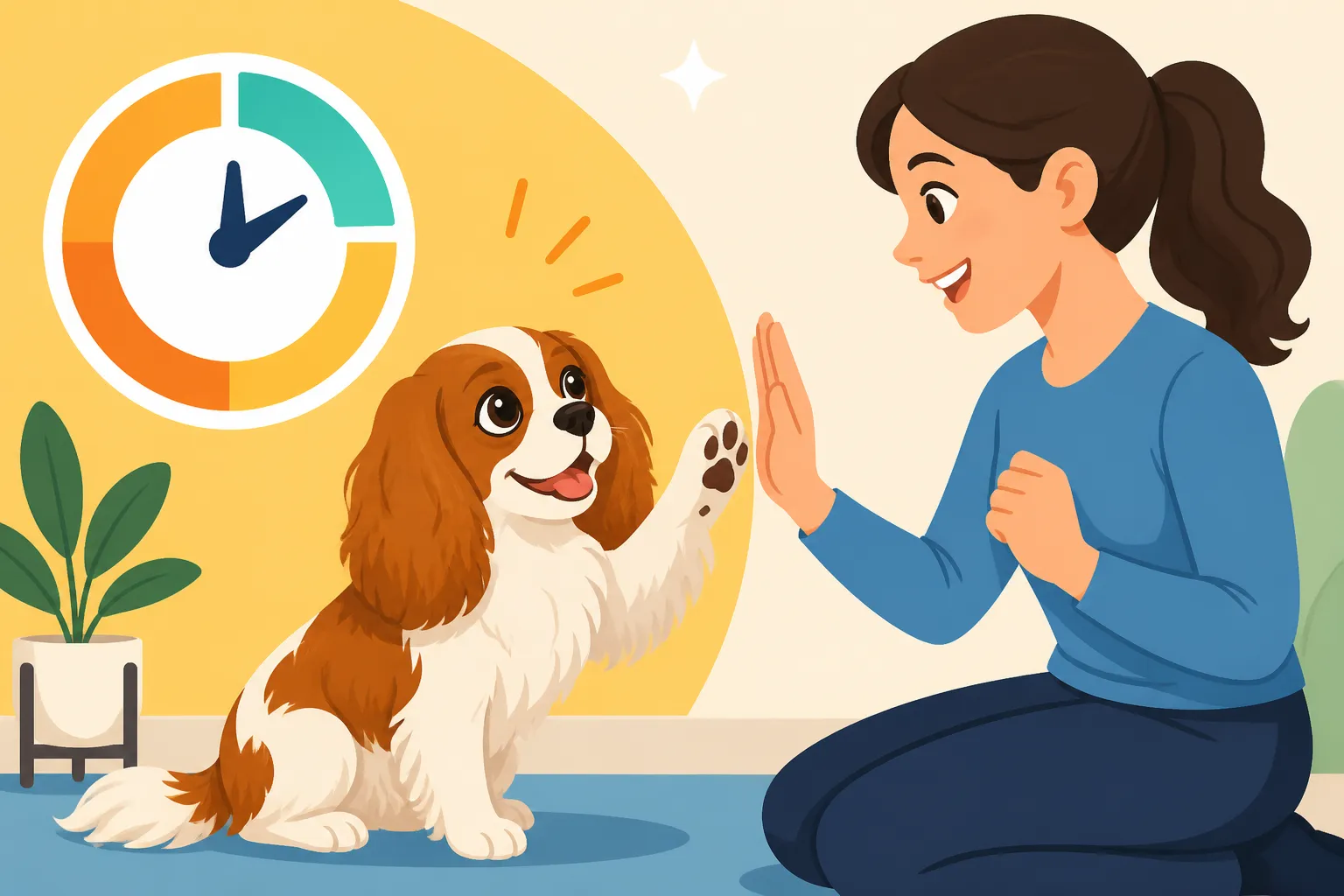
Five-Minute Training Sessions With a Cavalier
It can be incredibly frustrating when you're trying to teach your sweet Cavalier new things, only to have them lose focus after a minute or two, or get distracted by a dust bunny. Many Cavalier owners feel like they're constantly battling short attention spans, wondering if their beloved dog is even listening. This comprehensive guide is here to tell you that it's not you, and it's certainly not your Cavalier's intelligence; it's often just about adjusting your approach. We'll dive into why short, focused training sessions are the secret to unlocking your Cavalier's learning potential, transforming frustration into joyful progress.
Why Short, Sweet Sessions Are a Cavalier's Best Friend
Cavaliers are, by nature, charming, affectionate, and intelligent little dogs, but they also have a unique way of interacting with the world. They love to be with you, yes, but their focus can be as fleeting as a butterfly flitting past a window. Trying to make them sit through a twenty-minute, rigid training session is often a recipe for frustration for both of you. Instead, embracing their natural tendencies by keeping sessions short, positive, and engaging can make all the difference in their learning journey.
Understanding the Cavalier Attention Span
Think about your Cavalier – one minute they're perfectly still, gazing adoringly at you, and the next they're off investigating a phantom smell or nudging your hand for pets. This isn't naughtiness; it's simply how their sweet little brains are wired. They thrive on interaction and affection, but can also be easily overstimulated or under-stimulated by repetitive tasks. Longer training sessions often push them past their natural attention limit, leading to what looks like stubbornness but is actually just mental fatigue or a lack of engagement.
It's a common complaint among Cavalier owners, myself included, that you feel like you're talking to a brick wall sometimes. You might be repeating "sit" for the tenth time in five minutes, and your dog just blinks at you, tail wagging, wondering if you're offering a treat or just making funny noises. This isn't a reflection of their intelligence, but rather a sign that the session duration might be too long. We often expect our dogs to learn like human children in a classroom, but dogs, especially Cavaliers, learn best through short, frequent, and highly rewarding interactions.
Preventing Boredom and Frustration for Both of You
Nobody wants training to feel like a chore. If you're dragging your feet to start a session, or your Cavalier is yawning and looking for an exit strategy, then something needs to change. Long, drawn-out sessions quickly lead to boredom for your dog, which then leads to a lack of motivation and a diminished desire to participate. For us humans, it can lead to frustration and a feeling of failure, making us less likely to continue training consistently.
By keeping sessions to a snappy five minutes (or even less!), you ensure that your Cavalier stays engaged and excited. You finish before they have a chance to get bored, always leaving them wanting more. This positive association with training is crucial. Every session becomes a fun game rather than a dull lesson. It's about building a solid foundation of positive experiences, ensuring that your Cavalier always associates learning with good things – treats, praise, and quality time with you. This approach aligns perfectly with Reward-Based Training With a Cavalier, making it a joyful process.
Structuring Your Five-Minute Cavalier Training Session
The beauty of five-minute training sessions is their flexibility and ease of integration into your daily life. You don't need to carve out a huge chunk of time; you can do several mini-sessions throughout the day. The key is to make each of those five minutes intentional and effective. It's not just about the duration, but how you optimize that brief window.
Setting the Scene for Success
Before you even say "sit," setting up the right environment is paramount for your Cavalier's success. Cavaliers are sensitive to their surroundings, and a bustling kitchen or a living room with the TV blaring might be too distracting for them to focus, especially when learning something new. Think about where you can minimize extraneous noise and movement. A quiet corner of a room, a hallway, or even a fenced-in yard when no one else is around can be ideal.
Gather your tools beforehand. You'll need high-value treats – something your Cavalier absolutely loves and rarely gets, cut into pea-sized pieces. Soft, chewy treats like tiny bits of cooked chicken, cheese, or specialized training treats often work wonders. Consider if you'll be using a clicker, which can be an incredibly effective marker for precise timing in Teaching a Cavalier to Lie on a Mat Nearby or other behaviors. Having everything within arm's reach means you won't break the flow of your session by fumbling for rewards. This preparation makes a huge difference in Keeping a Cavalier Focused in a Short Session.
The Flow of a Short Session
A five-minute session isn't just five random minutes; it has a structure that helps maximize learning and engagement.
- Warm-up (30 seconds): Start with one or two commands your Cavalier already knows perfectly, like "sit" or "down." This gets their brain warmed up, builds confidence, and reminds them that "training time" means good things are coming. Keep it super enthusiastic!
- Known Commands (1-2 minutes): Practice 1-2 more familiar commands, but perhaps with a slightly higher expectation or in a slightly new location. This reinforces learned behaviors and maintains their motivation.
- New or Challenging Command (1-2 minutes): This is where the real learning happens. Introduce a new command, or work on a tricky part of an existing one. Break it down into tiny, achievable steps. If you're teaching "stay," maybe just work on holding it for one second, then two, then three. End this part before your Cavalier gets frustrated.
- Cool-down & Play (30 seconds – 1 minute): Finish with one last easy, known command and a jackpot of treats, followed by a quick burst of play or cuddles. This ensures the session ends on a high, positive note, leaving them feeling successful and happy. A quick game of tug or a short chase in the yard works wonders.
The goal is to keep the energy positive and light. If you notice your Cavalier losing interest, looking away, or getting fidgety, wrap up the challenging part and immediately go to the cool-down. It’s always better to end a session too early than too late. You want them to think, "Wow, that was fun! When can we do it again?" This continuous positive reinforcement is how you truly cement behaviors.
Making Every Minute Count: Tips and Tricks
The magic of five-minute sessions isn't just in their brevity, but in the intensity and quality of the interaction within those minutes. To truly make every second count, you need to be strategic with your rewards, consistent in your approach, and always thinking about how to make the learning experience the most enjoyable for your Cavalier.
High-Value Rewards and Enthusiasm
Cavaliers are food-motivated little sponges, and leveraging this natural drive is critical. Forget the bland kibble; for training, you need Treats a Cavalier Will Trade Anything For. These should be small, soft, and utterly irresistible. Bits of hot dog, cheese, cooked chicken, or specific high-value training treats work wonders. The goal is to make the reward so good that your Cavalier is willing to do almost anything for it. You can find a fantastic variety of high-value, pea-sized training treats on Amazon, or even clicker training kits that come with a guide.
Beyond food, your enthusiasm is a powerful reward. Cavaliers live for your approval. Use an excited, happy tone of voice, lots of praise ("Good boy!" "Yes!"), and gentle physical affection (if they're not too overstimulated by it) to mark correct behaviors. Your energy should be infectious, making the training feel like the best game ever. If you're bored, your Cavalier will be too. Remember, you're competing with all the interesting smells and sights of the world, so make yourself the most exciting thing in the room.
Consistency, Repetition, and Proofing
The true power of short sessions lies in their frequency and consistency. One five-minute session a day is good, but three or four short sessions spread throughout the day are even better. This frequent repetition helps cement the learning without overwhelming your Cavalier. Imagine trying to learn a new language – short, daily practice sessions are far more effective than one long, arduous weekly class.
Once your Cavalier understands a command in a quiet environment, you need to "proof" the behavior by gradually introducing distractions. This is where those short sessions become incredibly versatile.
| Training Stage | Environment Description | Example Goal |
|---|---|---|
| Stage 1: Quiet Focus | Calm, distraction-free room; no other people or pets | "Sit" in the living room |
| Stage 2: Mild Distractions | Room with a quiet TV, another person sitting still, gentle outdoor sounds | "Sit" while family is reading |
| Stage 3: Moderate Distractions | Busy room, park on a quiet day, other pet in distance | "Sit" with kids playing softly |
| Stage 4: High Distractions | Busy park, pet store, veterinarian's waiting room | "Sit" with other dogs nearby |
This gradual increase in challenge builds their ability to perform in the real world. For example, if you're working on The Recall Word a Cavalier Learns Fastest, start in your secure backyard, then move to a slightly more open area, and eventually to a busy park, always keeping sessions brief and positive. If you're looking for a more structured approach to puppy training that embraces short, positive sessions, programs like BAXTER & Bella often provide excellent resources and step-by-step guides that align perfectly with this philosophy.
What You Can Teach in Five Minutes a Day
It might sound like five minutes isn't enough time to teach anything significant, but you'd be surprised! The cumulative effect of consistent, brief sessions is incredibly powerful. You're not just teaching commands; you're building a relationship of trust and communication.
Foundation Behaviors
Every solid training program starts with foundational behaviors. These are the building blocks for more complex commands and good manners. In five-minute bursts, you can tackle them with great success.
- Sit: A classic for a reason. Lure your Cavalier into a sit with a treat, mark the moment their rear touches the ground, and reward. Repeat 5-10 times. You can easily do this during commercial breaks, before meals, or when getting ready for a walk.
- Stay: Start small. Ask for a sit, say "stay," take one step back, then immediately return and reward if they remain. Gradually increase the distance and duration. Building From Thirty Seconds With a Cavalier applies here – if they can stay for 3 seconds reliably, you’ve hit a huge win for that session.
- Come (Recall): Crucial for safety! Start in a quiet room, call their name and "come!" in an excited voice, and reward heavily when they reach you. Make coming to you the most rewarding thing ever. This can be layered with The Emergency Word That Stops a Cavalier as they progress.
- Down: Often harder than sit for some dogs. Lure them from a sit into a down position with a treat, moving it towards their nose and then to the floor between their paws.
- Leave It: Essential for safety and manners. Place a low-value treat on the floor, cover it with your hand. When your Cavalier looks at you instead of the treat, mark and reward them with a different, high-value treat. Gradually uncover the treat and increase the temptation.
These are just a few examples, but the principle remains the same: break down each behavior into its smallest components, reward every tiny step of progress, and keep it fun and fast. For enrichment toys to keep their minds busy between sessions, a quick browse on Amazon can yield some great options.
Addressing Common Cavalier Challenges
Beyond basic commands, five-minute sessions are fantastic for chipping away at common Cavalier quirks and challenges. Many Cavaliers struggle with a few specific behaviors that can be improved with consistent, short training.
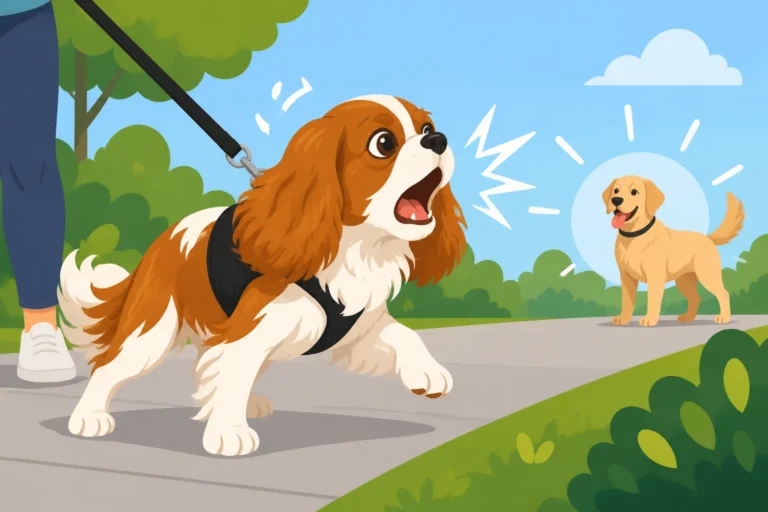
- Leash Manners: Cavaliers, despite their size, can be surprisingly strong pullers, especially when an exciting smell or another dog is in view. In a five-minute session, practice loose-leash walking in your living room or a quiet hallway. Take two steps, if the leash is loose, mark and reward. If they pull, stop dead in your tracks until the leash slackens. Consistency, even for just a few minutes a day, can make a huge difference. You might also want to explore Harnesses Suited to a Cavalier's Neck to make walks more comfortable and manageable.
- Polite Greetings: Cavaliers are often enthusiastic greeters, sometimes to the point of jumping on guests. In a short session, you can practice "four on the floor." Have a family member or friend calmly approach. If your Cavalier keeps all four paws on the ground, mark and reward. If they jump, the person immediately turns their back. Repeat, keeping interactions brief to avoid over-excitement.
- Reducing Barking at the Doorbell: This is a classic! During a quick session, have someone ring the doorbell, and immediately distract your Cavalier with a treat, then ask for a sit or a down. Reward calm behavior before they start barking, or at the very first sign of quiet. Over time, you'll be teaching them to associate the doorbell with looking at you for a treat, rather than barking at the perceived intruder.
| Day/Session | Primary Focus | Secondary Focus | Key Reward Strategy | Notes |
|---|---|---|---|---|
| Day 1 AM | Sit (new environment, e.g., kitchen) | Stay (1-second hold) | High-value treats, enthusiastic praise | End with play; keep energy high. |
| Day 1 PM | Loose-leash walking (living room) | Come (from 5 feet away) | Chicken pieces for loose leash, cheese for come | Stop immediately if pulling; make "come" a party. |
| Day 2 AM | Down (from sit) | Leave It (low-value treat covered) | Hot dog bits for down, kibble for leave it success | Ensure "leave it" reward is better than the temptation. |
| Day 2 PM | Doorbell desensitization (pre-recorded sound) | Sit in presence of mild distraction | Continuous stream of small treats for calm | Ring, treat, repeat. Gradually increase volume. |
| Day 3 AM | Stay (3-second hold, 1-step distance) | Polite greetings (family member) | Verbal praise for stay, chicken for "four on floor" | Practice stay in a new, slightly busier spot. |
| Day 3 PM | Recall (in fenced yard) | Loose-leash walking (short outdoor) | Favorite toy as reward for recall, liver treats | Make recall the ultimate fun game. Keep outdoor walk super short. |
This table illustrates how you can mix and match different exercises within your five-minute windows. Remember, consistency is key, and every little bit of positive training adds up, turning your Cavalier into a well-behaved, joyful companion. They say consistency is key, and if you ever feel stuck, online resources from platforms like BAXTER & Bella can offer fantastic support, breaking down complex behaviors into manageable training steps.
Disclaimer
This article is for general informational purposes only and does not constitute professional advice. Laws, prices and regulations vary by location and change over time. Consult a qualified professional for guidance on your specific situation.