Whether Feathering Differs Between Cavalier Colors
One of the most charming characteristics of a Cavalier King Charles Spaniel is their luxurious, silky feathering. It cascades from their ears, chest, legs, and tail, giving them that undeniably regal and sweet appearance we all adore. But if you’ve ever found yourself scrolling through countless pictures of Blenheims, Tricolors, Rubies, and Black and Tans, perhaps wondering if a Ruby Cavalier will have thicker feathering than a Blenheim, or if a Black and Tan's coat will be softer, you're not alone. It's a common thought, fueled by the visual differences in markings and the sheer beauty of each color. This guide will dive deep into whether your Cavalier's coat color genuinely affects the texture, length, or density of their beautiful feathering, separating myth from reality, and equipping you with the knowledge to care for your beloved companion's unique coat, no matter their hue.
The Underlying Nature of Cavalier Feathering
Let's start by understanding what we mean when we talk about a Cavalier's "feathering." These aren't just stray hairs; they're specific areas of longer, finer, silkier fur that distinguish the Cavalier's coat from many other breeds. Typically, you'll find this beautiful feathering on their ears, which can grow quite long and magnificent, on their chest, along the backs of their legs (often called "pants" or "breeches"), and, of course, their wonderfully plumed tail. The overall coat is meant to be medium length, without excessive curl, and feel soft and silky to the touch.
This type of coat is a hallmark of the breed, a defining characteristic outlined in the breed standard itself. It's a single coat, meaning Cavaliers generally lack the dense, insulating undercoat that many double-coated breeds possess. This is why you'll find their shedding to be more about individual hairs rather than seasonal "blowing" of a thick undercoat. The texture should ideally be smooth and flowing, rather than coarse or woolly, which can sometimes be a sign of mixed breeding or a deviation from the desired coat type. A healthy Cavalier's feathering should gleam, reflecting their overall well-being. The density and length of this feathering often increase as a Cavalier matures, reaching its peak around two to three years of age, and sometimes continuing to develop even further as they enter their senior years. Whether a Cavalier Coat Changes at a Year can tell you more about how their puppy fuzz transforms into that adult glamour.
What Defines the Ideal Cavalier Coat
When we talk about the ideal Cavalier coat, we're looking for several key attributes. First and foremost is the texture: it should be soft and silky, almost luxurious to the touch. It shouldn't feel harsh, wiry, or overly cottony. Secondly, the length of the feathering is important; while it should be abundant, particularly on the ears, chest, and legs, it shouldn't be so long or dense that it impedes movement or hides the dog's natural outline. The feathering should flow with the dog's movement, not clump or appear overly heavy.
Consider a Cavalier who has been meticulously bred to the standard. Their ear feathering might sweep down past their shoulders, while their leg feathering creates elegant "fringes." Their tail, too, will sport a magnificent plume that is carried cheerfully. This isn't just about aesthetics; the quality of the coat can also be an indicator of health. A dull, brittle, or sparse coat, regardless of color, can sometimes signal underlying health issues or nutritional deficiencies. When you see pictures of show-winning Cavaliers, you're observing coats that embody these ideal characteristics, and it's less about the specific color and more about the genetic predisposition for such quality.
Grooming Requirements for a Silky Coat
Maintaining that silky, flowing feathering requires a commitment to regular grooming, regardless of whether your Cavalier is a striking Tricolor or a beautiful Ruby. Because their coat is fine and tends to mat, especially in areas of friction or behind the ears, daily or every-other-day brushing is truly essential. Without it, those glorious feathers can quickly become a tangled mess, leading to discomfort for your dog and a much more difficult grooming session for you.
Tools matter here. A good slicker brush and a metal comb are indispensable. The slicker brush helps to remove loose hair and minor tangles from the main body and feathering, while the metal comb is crucial for getting right down to the skin, especially in those sensitive areas like behind the ears, armpits, and groin. The Brush and Comb a Cavalier Coat Needs goes into much more detail about the best tools. For particularly stubborn tangles or mats, a detangling spray can be a lifesaver. You can find excellent detangling sprays and brushes on sites like Chewy or Amazon, making it easy to stock up on your grooming essentials. Regular bathing with a gentle, moisturizing shampoo is also important to keep the coat clean and healthy. After a bath, careful drying and thorough brushing will prevent mats from forming as the hair dries. This consistent care routine is far more impactful on the quality and appearance of the feathering than any inherent difference based on coat color.
Common Misconceptions About Color and Coat Differences
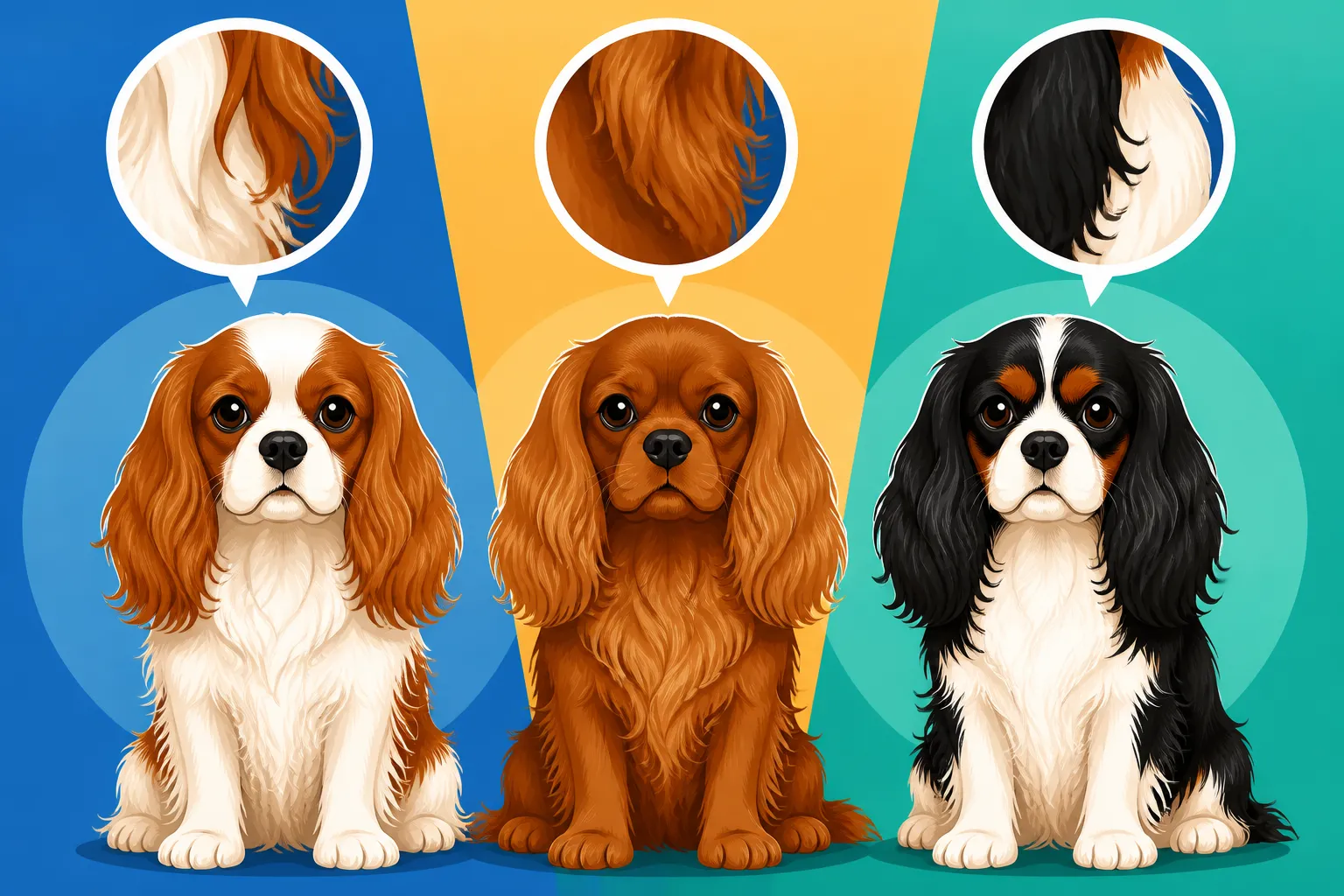
It’s easy to look at the different Cavalier colors – Blenheim (chestnut and white), Tricolor (black, white, and tan), Ruby (solid red), and Black and Tan – and assume that these distinct markings might come with inherent differences in coat texture or feathering. Perhaps the deep, rich red of a Ruby suggests a thicker, more plush coat, or the stark contrasts of a Tricolor hint at a coarser texture. However, this is largely a misconception. While individual variations certainly exist, the color itself does not dictate the fundamental characteristics of a Cavalier's feathering.
The breed standard for the Cavalier King Charles Spaniel describes the coat type as "medium length, silky, free from curl, with plenty of feathering." This description applies equally to all four recognized colors. There isn't a separate standard for Blenheim feathering versus Ruby feathering. The genetic blueprint that determines coat quality – its silkiness, length, density, and tendency to feather – is largely independent of the genes that determine color. Think of it like human hair: while some people with red hair might have a certain texture, and some with brown hair another, it's not the color itself that's causing it, but other underlying genetic factors that happen to be more common in certain populations.
Why Perceptions Might Differ
So, if the actual genetics don't link color to feathering differences, why do people often perceive them? Part of it can be an optical illusion. For example, the solid, rich color of a Ruby or Black and Tan Cavalier might make the coat appear denser simply because there are no white areas breaking up the visual flow. A Blenheim or Tricolor, with their white patches, might visually "lighten" the coat, making it seem less dense, even if the actual hair count per square inch is identical.
Another factor is anecdotal evidence. Perhaps an owner has had a Blenheim with particularly profuse feathering and then a Ruby with a slightly less dramatic coat. They might attribute this difference to color, when in reality, it's simply individual variation within the breed, much like how two siblings from the same parents can have different hair types. These individual genetic differences in coat quality are far more influential than the color itself. Environment, diet, and even health status also play significant roles, which we'll explore shortly. The crucial takeaway is that a high-quality, well-feathered coat is a trait of the breed as a whole, not exclusive to any single color. If you are comparing Ruby and Black Cavalier Coats Compared, you'll find the color is the main difference, not the coat type.
What Breeders Prioritize (Beyond Color)
Responsible Cavalier breeders focus on a holistic approach when it comes to their dogs, and coat quality is a significant consideration, but it's not tied to color in the way some might imagine. When evaluating breeding pairs, breeders look for dogs that exemplify the breed standard across the board: temperament, health clearances (especially heart and MRI scans), conformation, and yes, coat quality. They aim to produce puppies with that characteristic silky, medium-length coat with good feathering, irrespective of whether the puppy will be a Blenheim, Tricolor, Ruby, or Black and Tan.
A breeder will assess the texture, density, and growth patterns of the feathering in their breeding dogs. If a particular line consistently produces dogs with cottony or sparse coats, for example, that would be a concern, regardless of the colors those dogs carry. The goal is to maintain the breed's distinctive appearance and feel. Therefore, when you're looking at a well-bred Cavalier of any color, you should expect to see that same beautiful, flowing feathering. The differences you might observe are more likely due to individual genetic variations in coat-producing genes, rather than the color genes themselves. Asking a breeder about the coat types in their lines is a much more informative question than asking if a specific color has different feathering.
Factors That Truly Influence Cavalier Feathering
While coat color doesn't fundamentally alter the type of feathering a Cavalier possesses, many other factors can and do influence its appearance, texture, and density. Understanding these elements is key to appreciating why two Cavaliers of the same color might have vastly different feathering, and how you can support your own dog in achieving their best coat. These factors are far more significant than the pigment in their hair.
Genetics and Lineage
Just like every other physical trait, the quality and quantity of a Cavalier's feathering are heavily influenced by genetics. A dog inherits genes from both parents that determine everything from coat texture (silky vs. cottony), growth rate, and overall density. If a Cavalier comes from lines known for abundant, well-textured feathering, they are more likely to inherit those traits, regardless of their specific color pattern. Conversely, if a dog's lineage has a history of sparse or less-than-ideal coats, their offspring might also exhibit these characteristics.
This is why reputable breeders place so much emphasis on lineage and selecting breeding pairs carefully. They're not just breeding for color or temperament, but for the entire package, which includes that iconic Cavalier coat. You might see two Blenheim Cavaliers, for instance, with drastically different amounts of feathering. This difference isn't because one is Blenheim and the other is not (they both are!), but because their ancestral genetics for coat growth are different. It's a roll of the genetic dice, albeit one guided by careful breeding choices.
Age and Hormonal Changes
A Cavalier's coat, and especially its feathering, undergoes significant changes throughout its life. Puppies typically have a softer, fluffier coat that gradually transitions into the adult silky texture. As they mature, usually between one and three years of age, their feathering will become much more prominent and develop its full length and density. This is a common developmental stage for all Cavaliers, regardless of color.
Hormonal changes also play a huge role. Spaying or neutering can sometimes lead to changes in a Cavalier's coat. Some owners report that their spayed or neutered Cavaliers develop a softer, "cottonier" or more profuse coat that can be more prone to matting. This isn't a universal experience, but it's a known phenomenon in many breeds and is linked to the altered hormone levels. Pregnant or lactating females might also experience temporary changes in coat quality due to the demands on their body. These hormonal influences are far more impactful on feathering than any specific color.
Nutrition and Overall Health
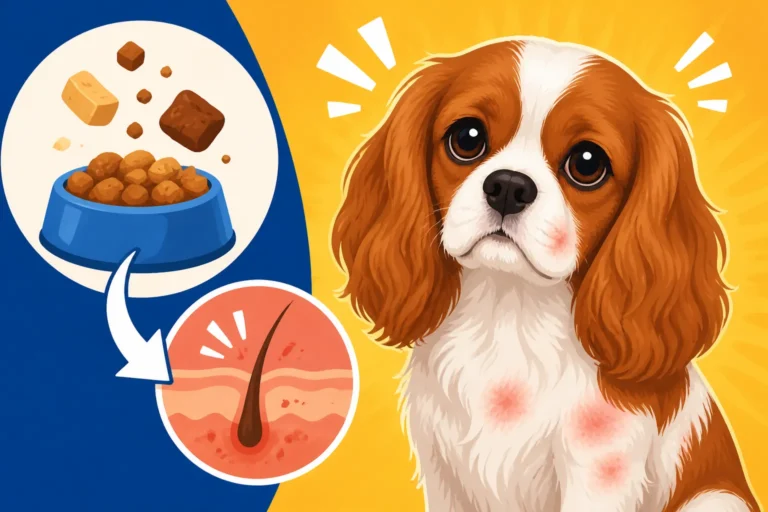
The adage "you are what you eat" applies just as much to your Cavalier's coat as it does to their overall health. A diet rich in high-quality protein, essential fatty acids (especially Omega-3s and 6s), and vitamins is crucial for healthy skin and a lustrous coat. If your Cavalier isn't getting adequate nutrition, their coat can become dull, dry, brittle, or sparse, and their feathering might not develop to its full potential. Conversely, a well-fed Cavalier on a balanced diet often sports a gleaming, healthy coat that is a joy to behold.
Beyond diet, underlying health conditions can manifest in a poor coat. Issues like allergies, thyroid problems, parasites, or even chronic stress can all negatively impact coat quality. A Cavalier suffering from skin allergies might scratch excessively, leading to broken hairs and thinning feathering. A dog with a systemic illness might have a dull, unthrifty coat. Regular veterinary check-ups are essential to rule out any health issues that might be affecting your Cavalier's beautiful coat. Paying attention to your dog's diet, perhaps considering premium foods from brands like Ollie or checking out a wide range of options on Chewy, can make a noticeable difference.
Here's a quick summary of factors influencing feathering:
| Factor | Description | Impact on Feathering |
|---|---|---|
| Genetics | Inherited traits from parents and lineage. | Determines potential for length, density, texture (silky vs. cottony). |
| Age | Developmental stages from puppyhood to maturity and senior years. | Puppies' soft coats develop into adult feathering; changes can occur in old age. |
| Hormones | Impact of spaying/neutering, pregnancy, or medical conditions. | Can alter texture (e.g., cottony coat post-spay) or density. |
| Nutrition | Quality of diet, nutrient intake (protein, fatty acids, vitamins). | Directly affects coat health, shine, growth, and strength. |
| Overall Health | Presence of allergies, systemic illness, parasites, stress. | Can lead to dullness, dryness, brittleness, excessive shedding, or thinning. |
| Grooming | Regular brushing, bathing, proper product use. | Prevents mats, distributes oils, keeps coat clean and healthy, promotes growth. |
| Environment | Exposure to sun, harsh chemicals, friction. | Sun can bleach/damage; chemicals can strip oils; friction can cause mats/breakage. |
Tailoring Grooming to Your Cavalier's Unique Coat (Regardless of Color)
Since we've established that the fundamental nature of your Cavalier's feathering isn't dictated by their color, the real secret to maintaining their gorgeous coat lies in understanding and responding to their individual coat characteristics and general needs. Every Cavalier, regardless of whether they are Blenheim, Tricolor, Ruby, or Black and Tan, will have their own unique hair growth patterns, texture nuances, and prone-to-matting spots.
The most important thing you can do is establish a consistent grooming routine. This isn't just about making your dog look good; it's vital for their comfort and health. Matted fur can pull on the skin, causing pain and irritation, and can hide skin infections or parasites. Regular grooming sessions also give you a chance to bond with your Cavalier and perform routine health checks, looking for lumps, bumps, or any changes in their skin. Brushing a Cavalier's Feathering Three Times a Week is a good baseline to aim for, but some Cavaliers might need more frequent attention.
Essential Tools and Techniques
Having the right tools is half the battle when it comes to maintaining a Cavalier's feathering. You'll want a good quality slicker brush and a sturdy metal comb with both fine and wide teeth. The slicker brush is great for general brushing and removing loose hair, while the comb is indispensable for getting into those areas prone to mats, such as behind the ears, in the armpits, and along the "pants" on their hind legs. If your Cavalier tends to get mats, especially in these high-friction areas, Mats in a Cavalier's Armpits and Groin offers specific advice on how to address them gently.
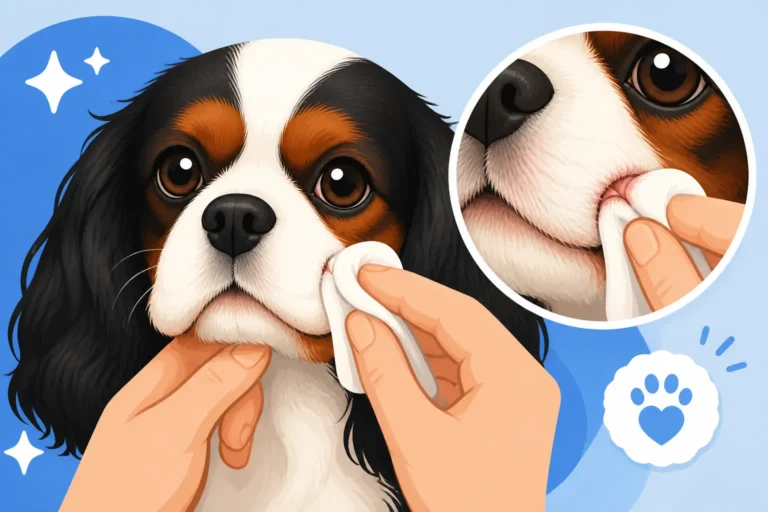
When brushing, always work in sections, gently parting the hair and brushing from the skin outwards. This ensures you're actually getting through the coat and not just skimming the top layers. Pay extra attention to the long ear feathering, which can easily get tangled or caught in food and water. Many Cavalier owners find snoods invaluable for keeping ears clean during meal times. For bathing, use a gentle, moisturizing dog shampoo and conditioner. Rinse thoroughly to prevent residue, which can irritate the skin or dull the coat. Shampoo for a Cavalier's Silky Coat provides more detailed guidance on choosing the right products. After bathing, gently towel dry, then use a low-heat blow dryer while brushing to prevent mats from forming as the coat dries, ensuring that beautiful, flowing finish. You can find all these grooming products, from brushes to shampoos, readily available online at retailers like Amazon or Chewy.
Professional Grooming and Specific Needs
While daily home grooming is critical, many Cavalier owners opt for professional grooming every 6-8 weeks. A professional groomer who is familiar with the Cavalier breed can expertly trim paw pads, tidy up leg feathering (without over-trimming, which is a common mistake), and perform a thorough bath and brush out that might be difficult to achieve at home. They can also spot potential skin issues you might have missed. It's important to communicate clearly with your groomer about your desire to maintain the natural length of your Cavalier's feathering, as some groomers might be inclined to clip it shorter, which can permanently alter the texture. What a Cavalier Groomer Should and Should Not Cut is a must-read before your first professional appointment.
Some Cavaliers might have specific coat needs due to their lifestyle or individual genetics. For instance, a Cavalier who spends a lot of time outdoors might require more frequent brushing to remove burrs and debris. An older Cavalier with mobility issues might need a softer brush and more gentle handling during grooming sessions. Those with allergies might benefit from specialized shampoos recommended by their vet. The key is to observe your own Cavalier's coat, paying attention to what works best for them, rather than making assumptions based solely on their color. Every Cavalier is an individual, and their grooming routine should reflect that beautiful uniqueness. Even small details, like providing a balanced diet and managing weight, contribute to coat health, as discussed in Feeding a Cavalier on Fifteen Pounds.
Disclaimer
This article is for general informational purposes only and does not constitute professional advice. Laws, prices and regulations vary by location and change over time. Consult a qualified professional for guidance on your specific situation.