Which Club Wrote the First Cavalier Standard
For anyone delving into the history of the Cavalier King Charles Spaniel, it's easy to get lost in the charming tales of royalty and courtly dogs. But beneath the aristocratic sheen lies a fascinating story of a breed almost lost, then meticulously brought back to life, with a crucial step being the establishment of its very first written standard. This guide will walk you through the journey of how this beloved breed's defining characteristics were penned, and which dedicated group took on that monumental task.
The Fading Echo of a Royal Companion: Before the Standard Existed
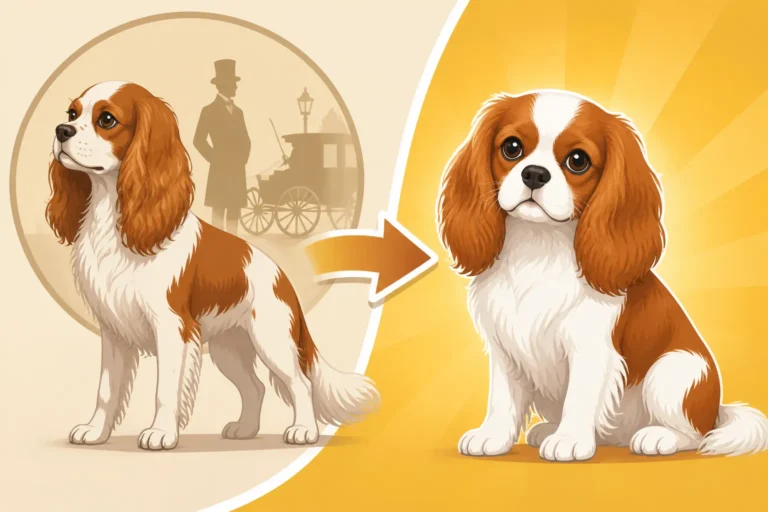
Imagine a time when dog breeds weren't neatly categorized with official papers and precise descriptions. For centuries, the small spaniels favored by European royalty, particularly during the Stuart era in England, were known simply as "comforters" or "toy spaniels." These were the dogs you’d see curled on laps, warming beds, and gracing the canvases of famous artists. King Charles II, in particular, was so devoted to them that it's said he wouldn't go anywhere without them, even making decrees that they be allowed in public places, including Parliament. These dogs, often depicted with flatter skulls and longer muzzles, were the true ancestors of what we now know as the Cavalier. You can read more about their early days in The Court Spaniels the Cavalier Descends From.
However, as centuries turned, canine fashion began to shift. The rise of Eastern dog breeds, like the Pug and the Japanese Chin, brought a new aesthetic to popular taste: shorter noses, domed skulls, and more pronounced eyes. Breeders, eager to follow trends, started crossing their beloved English toy spaniels with these brachycephalic breeds. Over time, the "old type" spaniel, with its distinctly flatter head and longer muzzle, became incredibly rare, almost an anachronism. By the late 19th and early 20th centuries, what remained of the English Toy Spaniel (known as the King Charles Spaniel in the UK) looked very different from its 17th-century forebears. They were smaller, with domed skulls and very flat faces, a stark contrast to the dogs in the old paintings.
This divergence left a void for those who admired the historical type. There was no consistent vision, no guiding document, for what these original "Cavalier-type" spaniels should look like. Each breeder might have a slightly different idea, leading to inconsistency. The frustration among enthusiasts grew as the dogs they cherished from historical artwork seemed to vanish, replaced by a new, more extreme fashion.
Roswell Eldridge's Vision and the Birth of a New Movement
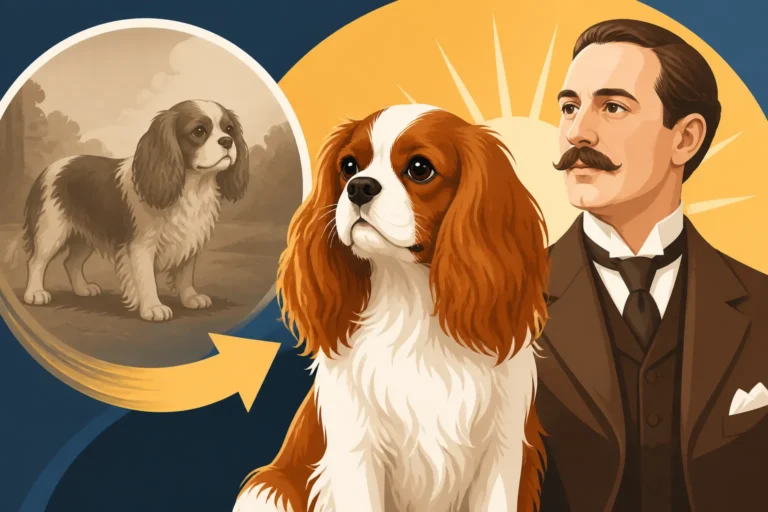
It was against this backdrop of fading history and changing tastes that an American named Roswell Eldridge stepped forward. Eldridge was a wealthy and passionate dog enthusiast who visited England in the 1920s. He was deeply captivated by the portraits of King Charles II and his long-nosed spaniels. He lamented the transformation of the breed, seeing the modern King Charles Spaniel as a deviation from its historical elegance. He made it his personal mission to bring back the "old type" spaniel that was so prevalent in those classic paintings.
In 1926, Eldridge made a bold move. He placed an advertisement in the catalog for Crufts, one of the most prestigious dog shows in the world, offering a monetary prize for a dog that most closely resembled the spaniels of King Charles II's era. Specifically, he sought dogs with "long face, no stop whatever, flat skull, not inclined to be domed, and with the spot in the centre of the skull" – what we now call a Blenheim spot or lozenge. This prize, offered for five consecutive years, was a significant incentive, encouraging breeders to seek out and produce dogs that embodied the historical look. You can learn more about this pivotal moment in How Roswell Eldridge Brought Back the Cavalier and The 1926 Advertisement That Revived the Cavalier.
Initially, entries were sparse, as finding dogs that fit this description was a challenge. Most of the existing King Charles Spaniels had the fashionable flatter faces. However, a few dedicated individuals, who perhaps held onto lines that retained some of the older characteristics, began to respond. These early enthusiasts gathered at Crufts, discussing the possibilities and sharing their hopes for restoring the breed. They understood the importance of consistency, the need to define what they were aiming for, and the ultimate requirement for a common "standard" to guide their breeding efforts. This informal gathering of like-minded people was the spark that ignited the formal movement.
The Cavalier King Charles Spaniel Club of England: Penning the First Standard
The pivotal moment arrived in 1928. Inspired by Roswell Eldridge's persistence and the growing interest, a group of dedicated breeders and fanciers met at the Crufts show. It was at this meeting that they decided to officially form a club dedicated to the revival of the "old type" spaniel. This was the birth of The Cavalier King Charles Spaniel Club of England.
This newly formed club immediately set about the crucial task of defining their ideal dog. They understood that without a written standard, their efforts would remain fragmented and subjective. They meticulously studied old paintings and historical records, taking notes on the physical attributes that made the King Charles II spaniels so distinctive. The standard they drafted was a detailed description of the breed, covering everything from head shape and muzzle length to eye placement, ear set, coat type, and overall temperament. It specifically called for a longer muzzle, a flatter skull, and a more moderate "stop" (the indentation between the eyes) – characteristics that directly counteracted the trends of the time and aimed to recapture the look of the past. Ann's Son and the First Cavalier Standard explores how this early standard came to define the breed through a key dog.
Here's a simplified look at some key differences the first standard aimed to establish:
| Feature | "Old Type" (Cavalier – per initial standard) | "New Type" (King Charles Spaniel) |
|---|---|---|
| Muzzle Length | Moderate, distinct from skull | Very short, almost flat with skull |
| Skull Shape | Flat between ears | Domed |
| Stop | Moderate, gentle transition | Very deep, abrupt |
| Eyes | Large, dark, round, widely set | Large, dark, round, more prominent, set closer |
| Overall Head | Balanced, refined | More "pushed in" appearance |
By establishing this standard, the Cavalier King Charles Spaniel Club of England provided a clear blueprint for breeders. It was a declaration of intent: they were creating a distinct breed, one that harked back to an earlier era, and they needed a precise definition to ensure its consistent development. This foundational document was the guiding light that allowed the Cavalier to emerge as a separate and recognizable breed, distinct from the King Charles Spaniel, which continued to thrive under its own, different standard. You can learn more about their unique features in Why Cavalier and King Charles Spaniel Mean Two Dogs.
From British Isles to Global Recognition: The Standard's Enduring Legacy
Once the Cavalier King Charles Spaniel Club of England had its standard in place, the breed slowly began to gain traction. It took time, of course. The breed needed to prove its consistency, its health, and its ability to reproduce true to type before it could gain wider acceptance. For many years, dogs of the "Cavalier" type were often shown in "Any Variety Not Separately Classified" classes at dog shows, as they were not yet recognized as a distinct breed by major kennel clubs.
It wasn't until 1945, nearly two decades after the club's formation and the initial drafting of the standard, that the British Kennel Club officially recognized the Cavalier King Charles Spaniel as a separate breed. This was a monumental achievement for the dedicated individuals who had worked so hard to preserve the historical type. This recognition solidified the breed's identity and gave it a legitimate place in the canine world, all thanks to the carefully crafted standard.
The influence of this original standard didn't stop in England. As the popularity of the charming Cavalier spread, so too did the demand for the breed in other countries. When the Cavalier eventually made its way to the United States, enthusiasts there also formed clubs. While the American Kennel Club (AKC) initially had its own separate process, eventually, the core tenets of the breed standard, largely based on the original English blueprint, were adopted and adapted. The AKC officially recognized the Cavalier King Charles Spaniel in 1995, many decades after its British counterpart. Today, organizations like Chewy often carry a wide range of products specifically designed for small breeds like the Cavalier, from specialized kibble to comfy beds that cater to their needs, a testament to their established place in dog ownership.
The various national standards, while having minor differences in wording or emphasis, all trace their lineage back to that pioneering document written by The Cavalier King Charles Spaniel Club of England. This shared foundation ensures that Cavaliers worldwide largely adhere to the same classic look and gentle temperament. When you look at a Cavalier today, with its sweet expression, soft, flowing coat, and moderate muzzle, you are seeing the direct result of that initial vision and the standard that brought it to life. Understanding The AKC Standard for the Cavalier King Charles Spaniel helps you see these connections.
The establishment of a breed standard is not just about aesthetics; it's about preserving a type, guiding ethical breeding, and setting expectations for future generations. It ensures that when someone brings home a Cavalier, they know what kind of dog they are getting, both in looks and, ideally, in temperament and potential health predispositions. It allows new owners to buy appropriate supplies, whether from local pet stores or online retailers like Chewy, knowing they fit a Cavalier's specific needs. Without the foresight and dedication of The Cavalier King Charles Spaniel Club of England, the Cavalier as we know it today might never have existed, remaining merely a delightful detail in an old painting.
Disclaimer
This article is for general informational purposes only and does not constitute professional advice. Laws, prices and regulations vary by location and change over time. Consult a qualified professional for guidance on your specific situation.