The Twelve to Thirteen Inch Cavalier Standard
It's easy to imagine a Cavalier King Charles Spaniel as this tiny, ethereal creature, perpetually a puppy in size and spirit. But many first-time Cavalier owners are often surprised when their adorable fluffball grows into a solid, sturdy adult. This guide is here to demystify the official breed standard regarding size, specifically the oft-quoted twelve to thirteen inches, and help you understand what that actually means for your beloved companion.
Understanding the Cavalier King Charles Spaniel Breed Standard
The breed standard for any purebred dog is essentially a blueprint, a written description of the ideal specimen of that breed. It outlines everything from temperament and coat texture to ear set and, yes, size. For Cavaliers, this standard is a critical document that breeders strive to uphold, and it paints a picture of the perfect Cavalier King Charles Spaniel. It’s not about perfection in a superficial sense, but rather about maintaining the health, function, and distinctive characteristics that make a Cavalier truly a Cavalier.
What "Standard" Actually Means for the Breed
When we talk about "the standard," we're referring to the detailed description set forth by authoritative kennel clubs, such as the American Kennel Club (AKC) in the United States. This document is meticulously crafted by breed enthusiasts and experts, outlining the physical traits and temperament that define the Cavalier King Charles Spaniel. It acts as a guide for judges in conformation shows, helping them evaluate dogs against the ideal, and for breeders, informing their decisions in selecting breeding stock. It’s a historical document, too, reflecting the careful work that went into reviving and establishing the breed as we know it today. Understanding The AKC Standard for the Cavalier King Charles Spaniel is key to appreciating the breed's heritage and intended form.
For pet owners, while your dog isn't being judged in a show ring, the standard offers valuable insight into what to expect from your Cavalier in terms of physical development and overall characteristics. It explains why certain traits are desirable and how they contribute to the dog's well-being and ability to function as a companion. For example, the specified ear set isn't just for looks; it relates to how the ears frame the face and allow for proper ventilation.
Why Size and Proportions Matter in the Standard
Size, along with overall proportion, is incredibly important in the breed standard. It's not just an arbitrary number; it relates to the Cavalier's historical role as a lap dog and companion, needing to be small enough to be portable but sturdy enough to be healthy. A Cavalier that is too large might struggle to be carried or might develop joint issues if its bone structure isn't proportional to its weight. Conversely, a Cavalier that is excessively small might be overly delicate or prone to different health vulnerabilities.
The standard aims for a harmonious balance. It describes a dog that is well-balanced from nose to tail, with no single feature appearing out of proportion with the rest. This includes the length of the back, the depth of the chest, and the length of the legs relative to the body. These proportions contribute to the Cavalier's characteristic graceful movement and charming overall appearance. Deviations can impact not only aesthetics but also the dog's movement and general health. For instance, an overly long back might predispose a dog to spinal issues, while very short legs could hinder their ability to move freely.
Deciphering the Twelve to Thirteen Inch Height Requirement
When breeders, judges, and seasoned Cavalier owners talk about "standard size," they are almost always referring to the height measurement. This is a very specific parameter that dictates the vertical dimension of an adult Cavalier King Charles Spaniel. It's often the first thing people look at, apart from color, when trying to understand if a dog fits the breed's ideal.
How Height is Measured on a Cavalier
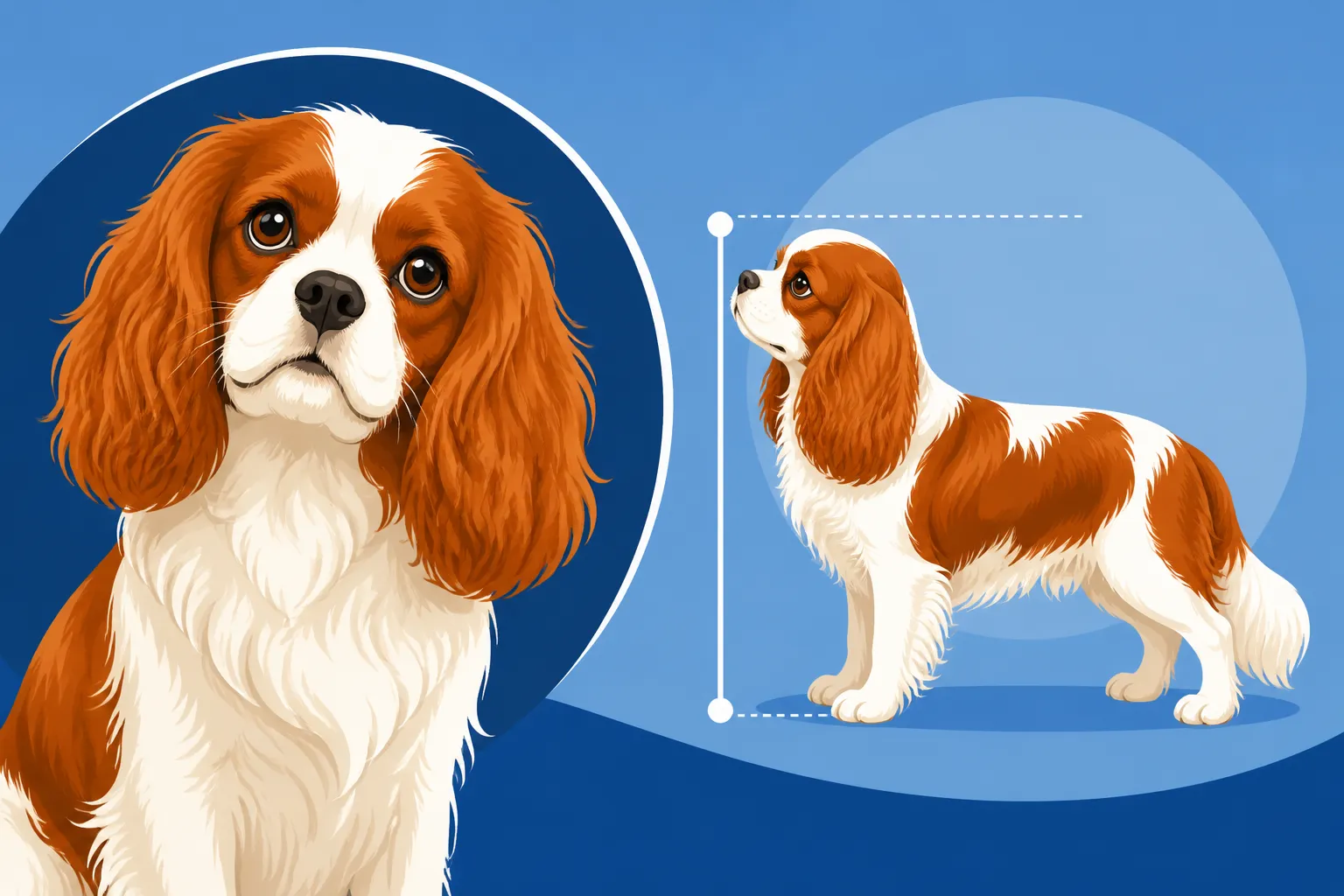
The height of a Cavalier King Charles Spaniel, as specified in the breed standard, is measured from the highest point of the dog's shoulder blades (the withers) straight down to the ground. This measurement is taken when the dog is standing four-square on a level surface, often using a special measuring stick called a wicket. It's not measured to the top of their head, nor does it include the floofy hair on their back! This precise method ensures consistency in measurement across different individuals and helps maintain the integrity of the standard.
For a Cavalier, the standard calls for a height of 12 to 13 inches. This means that a dog standing within this range is considered to be of ideal height. A small variation of half an inch either way might sometimes be tolerated, especially if the dog is otherwise exceptional in other areas of the standard, but significant deviations are generally considered faults in the show ring. For a pet owner, this means your Cavalier is likely to be about the size of a sturdy housecat, perhaps a little taller, and certainly not a tiny teacup dog.
The Impact of Deviating from the Standard Height
Dogs that fall outside the 12 to 13-inch height range are considered "too tall" or "too short" by the breed standard. In the context of conformation showing, a dog significantly outside this range would be penalized or even disqualified. However, for a pet Cavalier, a height deviation doesn't mean your dog is "less" of a Cavalier or that there's anything inherently wrong with them. Many wonderful companion Cavaliers fall outside the strict height guidelines.
A Cavalier that measures 14 inches or more might be considered too tall, sometimes appearing leggy or less compact than the ideal. One that measures under 12 inches might be seen as too small or delicate. These variations are often due to genetics, and sometimes even nutrition during growth. It's important to remember that the standard describes an ideal, and healthy, happy Cavaliers come in a range of sizes. What matters most for a pet is its health and temperament, not its ability to win a ribbon. You might wonder Whether an Undersized Cavalier Is a Fault, and while it is in the show ring, it's not a fault in your heart!
Weight: The Companion to the Height Standard
While height has a very specific numerical range, the breed standard is a bit more flexible when it comes to weight. It typically states a preferred weight range, often between 13 to 18 pounds, but always with the caveat that the dog should be "in good flesh and proportion to its height." This means a Cavalier at the taller end of the spectrum (13 inches) might comfortably weigh 18 pounds and still be perfectly proportioned, while a shorter Cavalier (12 inches) might be ideally 13-15 pounds.
The key here is balance and condition. A Cavalier should not be overweight, which can put undue strain on their heart and joints – a common concern for the breed. Nor should they be underweight, appearing frail. You should be able to easily feel their ribs without seeing them, and they should have a discernible waist when viewed from above. Understanding What an Adult Cavalier Should Weigh is essential for their overall health, especially considering how easily Cavaliers can gain weight. If your Cavalier tends to be on the larger side, closer to Cavaliers That Grow Past Eighteen Pounds, careful management of their diet and exercise is even more crucial. For treats that fit within a healthy caloric intake, you can find a wide variety on platforms like Chewy, making it easier to keep their weight in check without sacrificing training rewards.
Practical Implications for Cavalier Owners
Understanding the breed standard isn't just for breeders or show enthusiasts; it holds practical implications for everyday Cavalier owners too. From selecting a puppy to managing their daily care, knowing what the standard describes can help you make informed decisions and set realistic expectations.
What This Means for Choosing a Puppy
When you're looking for a Cavalier puppy, understanding the height and weight standards can guide your conversation with a reputable breeder. A good breeder will be knowledgeable about the standard and can give you an estimate of how large their puppies are likely to grow based on the parents' size and historical litters. While no one can guarantee exact adult size, they can provide a general range. If you're buying a puppy from a health-testing breeder, they will also prioritize temperament and health clearances above all else, but will still breed for type, which includes size within the standard. This means they are aiming for healthy, well-proportioned dogs. Buying a Cavalier From a Health-Testing Breeder is the best way to ensure you're getting a puppy bred with care and adherence to ethical practices, including aiming for the breed standard.
It’s also important to manage your expectations. A puppy will grow, and while they might start tiny, they will reach their adult size around The Age a Cavalier Reaches Full Size, which is typically between 9-12 months, though they may fill out a bit more until two years old. Don't be swayed by breeders advertising "teacup" or "mini" Cavaliers; these are not recognized by the breed standard and often come with exaggerated health risks due to irresponsible breeding practices focused solely on size reduction. The standard size is already a small, manageable dog.
Living with a Cavalier of Any Size
Regardless of whether your Cavalier precisely meets the 12-13 inch standard, living with them is a joy. Their size makes them incredibly adaptable to various living situations, from apartments to houses with yards. They're small enough to be carried if needed, but sturdy enough to enjoy walks and playtime. This mid-range size means they fit well on laps without being too dainty.
Their modest size also influences practical aspects of daily life. Choosing the right gear, like Harnesses Suited to a Cavalier's Neck, is important for their comfort and safety during walks. Their stature also means considering things like Whether a Cavalier Puppy Can Climb Stairs early on to protect their developing joints, or ensuring they have ramps or steps to access furniture as they age. Even things like feeding bowls might need to be elevated slightly to prevent strain on their neck. You can find a vast selection of dog beds, collars, and toys perfectly suited for the Cavalier's standard size on sites like Chewy, ensuring comfort and appropriate fit for your companion.
Health Considerations and Size
While the breed standard emphasizes aesthetic ideals, there are often underlying health reasons for certain size parameters. For Cavaliers, being within the ideal height and weight range helps minimize stress on their joints, particularly their knees and hips, which can be prone to conditions like patellar luxation or hip dysplasia. An overweight Cavalier, regardless of its height, will place additional strain on its heart, a critical consideration given the breed's predisposition to mitral valve disease.
Conversely, an undersized Cavalier might sometimes indicate underlying health issues or poor development, though not always. The overall sturdiness and bone structure described in the standard aim for a dog capable of living an active, healthy life. Responsible breeding focuses on producing dogs within this healthy range. It’s a delicate balance, and experienced breeders understand that a well-proportioned dog is often a healthier dog. Regular veterinary check-ups and a balanced diet are crucial for maintaining your Cavalier's ideal weight and supporting their health throughout their life.
The Show Ring vs. the Pet Home Perspective
The breed standard truly comes into its own within the world of conformation shows, where dogs are judged against this ideal blueprint. However, for the vast majority of Cavaliers who live as cherished family pets, the standard's rigid requirements take on a different, more relaxed meaning.
The Importance of the Standard in Conformation Shows
In the conformation ring, every aspect of a Cavalier is meticulously evaluated against the written standard. Judges are looking for the dog that most closely embodies the ideal, and this absolutely includes height and overall proportion. A Cavalier that is perfectly within the 12 to 13-inch range, with a weight that complements that height, and displays the correct body structure, gait, and temperament, is considered a prime example of the breed. This strict adherence helps to maintain the integrity of the breed and guides future breeding decisions, ensuring that generations of Cavaliers continue to possess the characteristics that define them.
Breeders who participate in conformation shows are often doing so to validate their breeding program. Success in the ring indicates they are producing dogs that closely match the breed's ideal, making them desirable candidates for breeding. This helps maintain breed type and, ideally, contributes to the overall health and soundness of the breed. For a show Cavalier, even elements like Low Jump Heights for a Cavalier in Agility might be considered, as soundness and appropriate physical characteristics are paramount for competitive activities.
Why Your Pet Cavalier's Size is Perfect Just as It Is
For pet owners, while understanding the breed standard provides valuable context, it’s crucial to remember that your Cavalier’s worth and charm are not diminished if they fall slightly outside the strict height or weight guidelines. Your pet Cavalier is a beloved family member, and their "perfection" is defined by their loving companionship, happy demeanor, and good health, not by adherence to a show ring ideal. Whether your Cavalier is 11 inches or 14 inches tall, what truly matters is that they are healthy, well-cared for, and bring joy to your life.
Many Cavaliers live long, happy lives without ever stepping into a show ring. Their slight variations in size often go unnoticed in the comfort of a loving home. What's more important is focusing on their overall well-being, including proper nutrition, regular exercise appropriate for their individual needs, and consistent veterinary care. So, while the 12 to 13-inch standard is an important guide for the breed, embrace your Cavalier for exactly who they are – a wonderful, unique companion, perfectly sized for your heart, no matter the tape measure. Even if you've invested significantly, perhaps paying what some consider high for Whether a Cavalier Is Worth Three Thousand Dollars, their value is immeasurable, regardless of a precise measurement. And for general grooming, understanding What a Cavalier Grooming Appointment Covers is far more useful than stressing over an exact inch.
Disclaimer
This article is for general informational purposes only and does not constitute professional advice. Laws, prices and regulations vary by location and change over time. Consult a qualified professional for guidance on your specific situation.