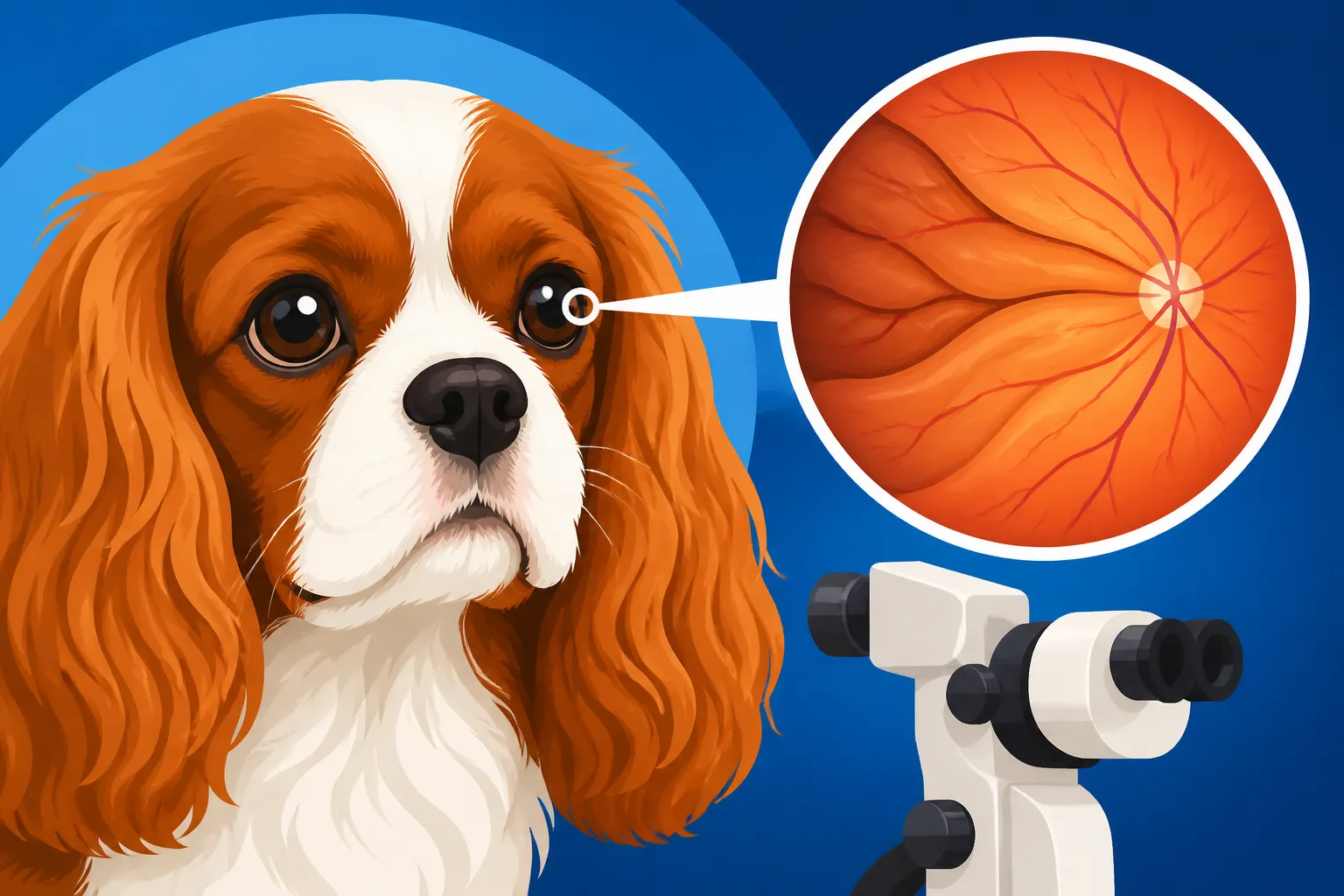
Retina Folds Found in a Cavalier Eye Exam
Finding out your beloved Cavalier King Charles Spaniel has retinal folds during an eye exam can be a jarring experience. Visions of blindness or severe eye problems might flood your mind, leaving you worried and unsure of what this diagnosis truly means. This guide is here to walk you through exactly what retinal folds are, why they appear in Cavaliers, and most importantly, what steps you can take to ensure your furry friend lives a happy, healthy life.
Understanding Retinal Folds in Cavaliers
When your vet or a veterinary ophthalmologist mentions "retinal folds," it's completely natural to feel a knot of anxiety in your stomach. The eye is such a delicate and crucial organ, and any mention of abnormalities can be unsettling. However, with Cavaliers, understanding retinal folds often brings a sigh of relief.
What Exactly Are Retinal Folds?
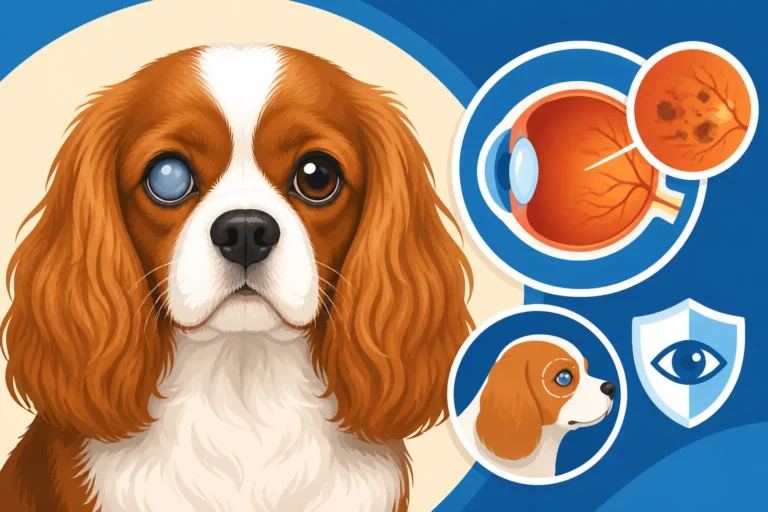
At its simplest, a retinal fold is a localized malformation or folding of the retina, the light-sensitive tissue at the back of your dog's eye. Think of the retina as the film in a camera; it captures images and sends them to the brain. When there's a fold, it means this delicate tissue isn't perfectly smooth. These folds can vary greatly in appearance and size. They might be tiny, subtle creases that are only visible to a specialist with specific magnification tools, or they could be larger, more prominent wrinkles.
The important thing to remember is that these are often congenital, meaning your Cavalier was born with them. They typically result from a slight developmental anomaly during the puppy's embryonic growth. In many cases, these folds are completely benign and static, meaning they don't change or worsen over time. They're just a unique feature of your dog's eye, much like a birthmark might be on a person. They aren't usually progressive, and they very rarely lead to more severe retinal detachment or vision loss. It's not like the retina is "unfolding" or collapsing; it's just a small area that didn't quite lay perfectly flat during development.
Why Are Cavaliers Prone to Them?
Cavalier King Charles Spaniels, like many purebred dogs, can have certain predispositions to particular health conditions, and eye issues are certainly on that list. While they're often more commonly associated with conditions like Cavalier Cataracts and Retinal Disease or Cavalier Eye Disease From Dry Eye to Cataracts, retinal folds are another finding that frequently pops up during routine eye examinations in this breed.
The exact genetic mechanism behind why Cavaliers are particularly prone to retinal folds isn't always clear-cut, but it's widely accepted that there's a hereditary component. This means it can be passed down from parent dogs to their offspring. Responsible breeders often conduct extensive health testing, including eye examinations by board-certified veterinary ophthalmologists, precisely to identify such conditions. The goal is to understand the prevalence within their lines and make informed breeding decisions. It's not necessarily a sign of a "bad" breeder if a Cavalier has retinal folds, especially if they are mild and non-progressive. Rather, it highlights the importance of thorough screening and transparency in breeding practices, as detailed in discussions about topics like The DNA Tests Every Cavalier Should Have.
Diagnosing Retinal Folds and What Comes Next
Receiving any kind of diagnosis for your beloved pet can feel overwhelming, but understanding the diagnostic process for retinal folds can help demystify it and empower you to ask the right questions. These are not typically something you'd spot at home; they require a professional eye.
The Comprehensive Eye Exam: What to Expect
The discovery of retinal folds almost always occurs during a thorough ocular examination performed by a veterinary professional, often a board-certified veterinary ophthalmologist. While your regular veterinarian can perform a basic eye check, a specialist has the advanced training and specialized equipment to conduct a much more detailed assessment of the retina.
During this comprehensive eye exam, your Cavalier will typically have their pupils dilated with eye drops. This allows the ophthalmologist to get a much wider and clearer view of the back of the eye, including the retina. They'll use an indirect ophthalmoscope, a handheld instrument that projects light into the eye and magnifies the view, allowing them to meticulously examine the entire retinal surface for any abnormalities, including folds. They might also use a slit lamp biomicroscope for an even more magnified, detailed view of the anterior and posterior segments of the eye. This process is non-invasive and generally well-tolerated by most Cavaliers, though some might find the bright light a little startling. It's a crucial part of any thorough eye health assessment, and many owners question Whether a Cavalier Needs a Yearly Eye Exam – for many reasons, including conditions like these, the answer is often yes, especially for breeds with known predispositions.
Interpreting the Findings: Single vs. Multiple Folds
Once the ophthalmologist has completed their examination, they'll discuss their findings with you. Retinal folds can be described in various ways based on their appearance and location:
- Focal folds: These are small, localized folds. They are the most common type and often considered benign.
- Geographic folds: These are larger, more extensive areas of retinal folding.
- Multifocal folds: This indicates multiple folds scattered across the retina.
The ophthalmologist will also note whether the folds are unilateral (in one eye) or bilateral (in both eyes). In the vast majority of cases in Cavaliers, these folds are classified as Retinal Dysplasia, which is a general term for abnormal development of the retina. Most frequently, this presents as Non-Attachment Retinal Dysplasia, meaning the retina itself is developing abnormally, but it’s not detaching from the back of the eye.
A critical distinction the specialist will make is whether the folds are "benign" or "severe."
| Type of Retinal Fold | Common Appearance | Vision Impact (Typical) | Progression (Typical) | Underlying Concern |
|---|---|---|---|---|
| Focal (Benign) Folds | Small, localized wrinkles or creases on the retina | None or negligible | Non-progressive | Low; often an incidental, non-threatening finding |
| Multifocal Folds | Multiple small folds scattered across the retina | None or negligible | Non-progressive | Low; similar to focal, but more widespread |
| Geographic Folds | Larger, more extensive, "map-like" areas of folding | Potentially minor impact | Usually non-progressive | Moderate; could rarely be associated with other defects |
| Detachment Retinal Dysplasia | Retinal folds with evidence of partial or full detachment | Significant to severe | Potentially progressive | High; often indicates a more serious developmental issue |
For the typical Cavalier, the findings are usually benign focal or multifocal folds. These are generally considered an incidental finding that does not pose a threat to vision or overall eye health. In rare instances, severe or widespread retinal dysplasia can be associated with other developmental anomalies, sometimes even skeletal abnormalities in other breeds, but this is exceptionally uncommon in Cavaliers presenting solely with folds. Your ophthalmologist will differentiate between a simple fold and more concerning conditions like a retinal detachment, which would warrant a very different treatment plan.
The Impact of Retinal Folds on Your Cavalier's Vision and Health
It's natural to jump to the worst-case scenario when you hear "eye condition," but for most Cavaliers with retinal folds, the outlook is overwhelmingly positive.
Do Retinal Folds Affect Vision?
This is the big question every owner asks, and the answer is almost always a resounding "no." For the vast majority of Cavaliers diagnosed with focal or multifocal retinal folds, their vision remains completely normal. These small creases are simply not significant enough to disrupt the retina's ability to process light and send clear images to the brain. Your dog will likely navigate the world, play fetch, and find their favorite treat with perfect clarity, just as they would without the folds.
It's important to differentiate retinal folds from conditions that do severely impact vision, such as progressive retinal atrophy or full retinal detachments. In the rare cases where retinal dysplasia is extensive and involves large portions of the retina (like severe geographic or detachment retinal dysplasia), it could potentially lead to some degree of vision impairment. However, these severe forms are far less common in Cavaliers than the benign folds. The good news is that most retinal folds in Cavaliers are non-progressive, meaning they won't worsen over time to eventually cause vision loss. The ophthalmologist will specifically tell you if there is any concern for progression or visual impairment based on the severity and extent of the folds observed during the exam.
Management and Monitoring for Cavalier Eye Health
Since most retinal folds in Cavaliers are benign and don't affect vision, the management is usually quite straightforward: continued monitoring. Your veterinary ophthalmologist will likely recommend follow-up examinations, perhaps annually, just to ensure there have been no changes and to keep a general check on your Cavalier's overall eye health. This is particularly important for a breed prone to other eye issues, such as those that can cause Corneal Ulcers on Prominent Cavalier Eyes or require careful attention to Cavalier Eye and Face Cleaning.
There's typically no specific treatment required for retinal folds themselves because they don't cause pain or vision problems. Your primary focus should be on maintaining your Cavalier's general well-being and continuing with routine veterinary care. This includes ensuring they receive regular check-ups, a balanced diet, and appropriate exercise. If you're concerned about the costs of specialist visits for ongoing monitoring or other potential health issues, considering pet insurance like Healthy Paws from a young age can be a wise financial decision, as it helps cover unexpected veterinary bills, especially for hereditary conditions not yet diagnosed.
Keep an eye out for any new signs of vision trouble, such as bumping into furniture, reluctance to go out in dim light, or changes in eye appearance. While these are unlikely to be related to benign retinal folds, they always warrant a veterinary visit to rule out other, more serious conditions.
Breeding Considerations and Long-Term Outlook
When an inherited condition like retinal folds is identified, it naturally brings up questions about breeding practices and the long-term health prospects for the breed. Responsible decisions in this area are paramount for the future of Cavaliers.
Retinal Folds and Responsible Breeding
For breeders, the diagnosis of retinal folds in a Cavalier, even benign ones, should prompt careful consideration. While focal or multifocal retinal folds typically don't cause vision impairment, their hereditary nature means they can be passed down to offspring. The Canine Health Information Center (CHIC), a program supported by the Orthopedic Foundation for Animals (OFA), provides a centralized database for health screening results, including eye examinations by board-certified veterinary ophthalmologists (often leading to an OFA Eye certification).
Reputable breeders will have their breeding stock screened and will be transparent about any findings. If a potential breeding dog is diagnosed with benign retinal folds, a breeder might still choose to breed them, especially if the dog excels in other health areas and temperament, and is carefully paired with a mate from lines clear of retinal folds to reduce the risk of producing affected puppies. However, dogs with severe or progressive forms of retinal dysplasia should generally not be bred. This commitment to screening and ethical breeding is crucial for improving the overall health of the Cavalier King Charles Spaniel, mirroring the importance placed on The Cavalier MVD Breeding Protocol for heart health. When you're looking for a puppy, always ask to see the parents' full health clearances, including recent eye exam results, as discussed in Reading a Cavalier Puppy's Health Certificates.
Living a Full Life with Retinal Folds
For the vast majority of Cavaliers, a diagnosis of benign retinal folds changes absolutely nothing about their day-to-day life or their long-term prognosis. These dogs go on to live full, active, and happy lives, completely unaffected by the folds in their retina. They'll enjoy chasing squirrels, cuddling on the sofa, and demanding belly rubs just like any other Cavalier.
Your role as an owner remains the same: provide a loving home, a healthy diet, regular exercise, and consistent veterinary care. This general approach to wellness is what truly dictates a Cavalier's quality of life and longevity. While specific conditions like Mitral Valve Disease in the Cavalier King Charles Spaniel or Syringomyelia and Chiari Malformation in Cavaliers often require more intensive management as a Cavalier ages, retinal folds typically do not add to these concerns. Continue with regular check-ups, and don't hesitate to consult your vet or ophthalmologist if you notice any new or unusual symptoms. Remember, a pet insurance policy like those offered by Healthy Paws can provide peace of mind by helping manage the costs associated with ongoing specialist care or unforeseen health challenges throughout your Cavalier's life, ensuring you can always provide the best care without financial stress.
Disclaimer
This article is intended for informational purposes only and does not constitute veterinary advice. Always consult with a qualified veterinarian or veterinary ophthalmologist for any health concerns or before making any decisions about your Cavalier King Charles Spaniel's care.