Classes for a Cavalier That Cannot Be Left
It's absolutely heartbreaking to see your beloved Cavalier King Charles Spaniel distressed when you have to leave the house, even for a short while. That deep bond we share with our Cavaliers, while wonderful, can sometimes manifest as overwhelming anxiety when they find themselves truly alone. This guide is here to walk you through how specialized classes and training can equip both you and your Cavalier with the tools to navigate alone time more confidently and peacefully.
Understanding Separation Anxiety in Cavaliers
Oh, the dreaded "Velcro dog" reputation of our Cavaliers! It's one of their most endearing traits, isn't it? That constant shadow, the sweet head resting on your foot, the way they follow you from room to room – it's pure Cavalier love. But this intense attachment, a cornerstone of their breeding as companion dogs for centuries, can quickly spiral into a challenging situation when they suddenly have to cope with your absence. Understanding why your Cavalier might be melting down when you leave is the first crucial step toward helping them. It’s not about being "naughty"; it’s about genuine panic.
Why Cavaliers Are Prone to Clinginess
Cavaliers were quite literally bred to be lap warmers and constant companions. Think of their ancestors, those tiny spaniels draped across the laps of royalty, never far from their human. This isn't just a cute quirk; it's deeply ingrained in their genetic makeup. They thrive on connection and often struggle to understand why that connection is suddenly broken, even temporarily. This is why you'll often hear us Cavalier owners talking about how much our dogs are truly Why Cavaliers Are Called Velcro Dogs. They're not being manipulative; they're fulfilling their centuries-old purpose as devoted companions. They see us as their whole world, and when that world walks out the door, it can feel like abandonment to them.
This inherent need for companionship means that many Cavaliers naturally develop a very low tolerance for solitude. They are, by design, dogs that expect company. When a Cavalier is left alone, especially if they haven't been gradually acclimated to it, their anxiety can quickly escalate. It’s not just boredom; it’s a profound sense of loss and fear that can feel overwhelming for such a sensitive breed. This is why traditional "tough love" methods, like simply letting them cry it out, are not only cruel but utterly ineffective for a breed so wired for closeness.
Differentiating Anxiety from Nuisance Behavior
It’s easy to misunderstand a dog’s destructive chewing or relentless barking as mere "bad behavior" or a lack of training. However, with a Cavalier, especially concerning alone time, these actions are almost always symptoms of genuine distress. A dog with true separation anxiety isn't trying to annoy you; they're having a panic attack. Common signs include incessant barking or howling the moment you leave, destructive chewing of doorframes, window sills, or personal items, and even house soiling when they are otherwise perfectly potty-trained. You might come home to a shredded sofa cushion or find they've chewed through the bottom of the door. These aren't acts of defiance; they are desperate attempts to cope with overwhelming fear.
Sometimes, the signs are more subtle: excessive drooling, panting even when it’s not hot, or frantic pacing. The key difference lies in the motivation. A bored dog might chew a slipper, but a dog with separation anxiety might chew through drywall in an attempt to escape. To truly understand what's happening, many owners find it incredibly insightful to set up a camera. Filming a Cavalier While You Are Out can provide irrefutable evidence of the subtle, or not-so-subtle, signs of distress, showing you exactly when the anxiety starts and how it manifests. This objective view can be crucial in distinguishing true anxiety from simple boredom or puppy antics. It helps you see beyond the "mess" to the underlying emotional struggle.
The Emotional Toll on Both Dog and Owner
Living with a Cavalier suffering from separation anxiety is emotionally exhausting for everyone involved. For your precious Cavalier, it's a daily dose of fear and panic. They are genuinely suffering, experiencing physiological stress responses like elevated heart rate and cortisol levels. Imagine feeling that level of panic every time your most cherished person leaves you, with no understanding of when or if they will return. It's a profound trauma that can impact their overall well-being, making them withdrawn, less playful, or even affecting their physical health over time.
For you, the owner, the emotional toll is immense. There’s the guilt – the nagging feeling that you've somehow failed your dog or that you're causing them pain. Then there's the frustration, especially when faced with damaged property or complaints from neighbors about barking. Your life becomes dictated by your dog’s anxiety: you avoid leaving the house, you dread appointments, and even simple errands become monumental challenges. Social gatherings are missed, careers can be impacted, and the constant stress can strain relationships. It’s a heavy burden, and it’s why seeking professional help isn't a luxury, but a necessity for both your and your Cavalier's quality of life.
Types of Classes Tailored for Alone-Time Issues
When your Cavalier is struggling with alone time, the good news is that there are structured approaches and professionals who can help. These aren't just your typical "sit-stay" obedience classes, though foundational obedience can certainly contribute. These are specialized programs designed to address the deep-seated emotional responses that fuel separation anxiety. Choosing the right type of class or coaching depends on the severity of your Cavalier's anxiety, your personal schedule, and your budget.
Desensitization and Counter-Conditioning Programs
The gold standard for treating separation anxiety involves a combination of desensitization and counter-conditioning. Desensitization means gradually exposing your Cavalier to their triggers (your departure cues) at such a low level that they don't react with fear. This is often done by starting with incredibly short absences – literally seconds – and slowly, incrementally increasing the duration as your dog remains calm. It's a painstaking process, often involving more than just leaving the house. It includes practicing pre-departure cues like picking up your keys, putting on your coat, or even just walking to the door.
Counter-conditioning, on the other hand, means changing your Cavalier's emotional response to these triggers. Instead of associating your departure with panic, you want them to associate it with something positive. This often involves providing a highly valued, long-lasting treat or puzzle toy (like a Kong stuffed with peanut butter or a chew from Chewy) just as you leave, and taking it away the moment you return. The idea is to create a positive association: "Mommy leaves, but I get this super yummy thing!" This technique is only effective if your dog is calm enough to actually engage with the treat. If they are in full panic, they won't eat. These programs are often highly individualized and require immense patience and consistency.
Group Classes vs. Private Coaching
When deciding on a training path, you'll generally find two main formats for addressing separation anxiety: group classes or private coaching. Both have their merits, and the best choice often depends on your Cavalier's specific needs and your situation.
Group Classes: These can be a more budget-friendly option and sometimes offer a sense of community with other owners facing similar challenges. However, for true separation anxiety, generic group obedience classes are often not sufficient. Look for specialized "calmness" or "alone-time preparation" classes, though these are less common as separation anxiety is so individual. If a group class is offered, it will likely focus on building general confidence, impulse control, and relaxation exercises that indirectly help with anxiety. The downside is that a group environment can be overwhelming or distracting for an already anxious Cavalier, and the curriculum might not be tailored enough to their specific triggers and reactions.
Private Coaching: This is almost always the recommended approach for true separation anxiety. A certified separation anxiety trainer (CSAT) or a qualified behaviorist will work one-on-one with you and your Cavalier, often remotely. They assess your dog’s unique triggers, design a customized training plan, and guide you through each step of the desensitization and counter-conditioning process. This often involves live video coaching during your practice departures, allowing the trainer to observe your Cavalier's subtle cues and adjust the plan in real-time. While more of an investment, private coaching offers unparalleled personalization and support, leading to more effective and lasting results. They can help you implement specific Departure Routines That Calm a Cavalier that are unique to your dog's anxiety.
Here's a quick comparison to help you weigh your options:
| Feature | Group Classes (General Obedience/Calmness) | Private Coaching (Specialized Separation Anxiety) |
|---|---|---|
| Cost | Generally lower per session | Higher per session/package |
| Personalization | Low, general curriculum | High, tailored to your Cavalier's specific needs |
| Focus | General manners, basic obedience, calm behavior | Direct treatment of alone-time distress, panic |
| Environment | Can be distracting, social | Controlled, often remote from home |
| Support Level | Varies, less individualized feedback | Intensive, direct, real-time feedback and guidance |
| Effectiveness | May build general confidence, but rarely resolves clinical SA | Gold standard for resolving clinical SA |
Related Skills Classes that Build Confidence
While direct separation anxiety training is critical, complementing it with other types of classes can be hugely beneficial for building your Cavalier's overall confidence and mental resilience. A more confident, mentally stimulated dog is often better equipped to handle stress, including alone time.
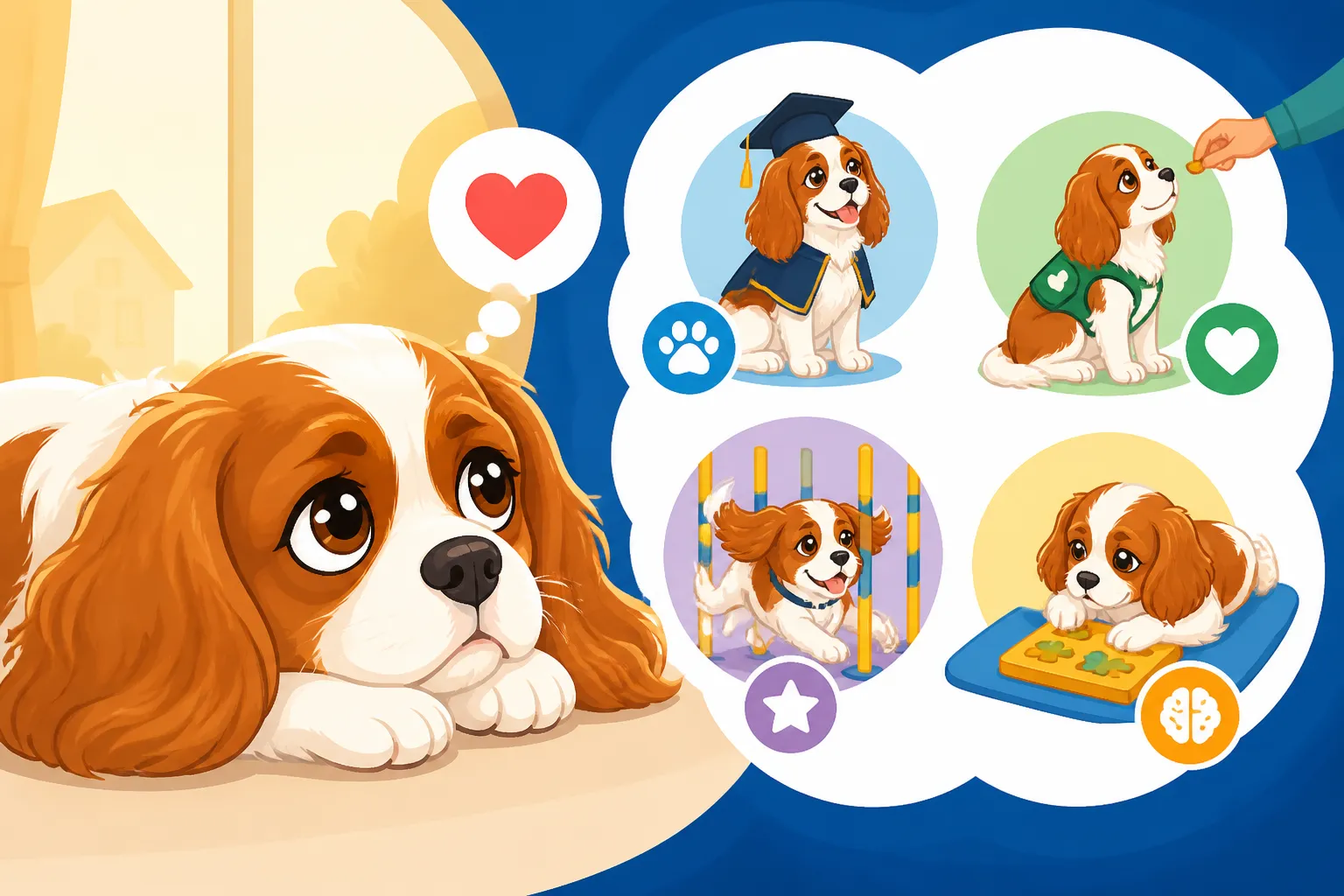
For instance, foundational obedience classes can help your Cavalier learn impulse control and focus, giving them a "job" to do and strengthening your bond through clear communication. Rally obedience or Canine Good Citizen classes can further enhance these skills in a more dynamic setting. But don't forget the power of nose work! Cavalier King Charles Spaniels, despite their toy breed status, still carry those spaniel instincts for scenting. Scent Work as a Low-Impact Cavalier Sport classes are fantastic for mental stimulation, building confidence, and tiring out your dog in a constructive way, all without high physical impact which is good for their delicate joints. They learn to use their natural abilities, which is incredibly empowering.
Even trick training can be a wonderful way to engage your Cavalier's mind and build their self-esteem. Learning new tricks, even simple ones, fosters a sense of accomplishment and strengthens the positive communication between you. The more mental exercise your Cavalier gets, and the more independent problem-solving they engage in, the more resilient they become, which can have a ripple effect on their ability to cope with being left alone.
What to Look for in a Separation Anxiety Class
Choosing the right professional to help your Cavalier overcome separation anxiety is paramount. This isn't just about finding someone who loves dogs; it's about finding an expert with specific knowledge and a compassionate, science-backed approach. The wrong methods can actually worsen anxiety, making careful selection crucial.
Trainer Qualifications and Methodology
When it comes to separation anxiety, you want a trainer who specializes in this complex behavioral issue. Look for certifications such as CSAT (Certified Separation Anxiety Trainer) or a professional who is a certified applied animal behaviorist (CAAB) or a veterinary behaviorist (DACVB). These individuals have undergone rigorous education and practical experience in treating anxiety disorders in pets. Their methodology should be exclusively positive reinforcement-based. This means no punishment, no "corrections," and absolutely no tools that inflict pain or fear, such as choke chains, prong collars, or e-collars.
A reputable trainer will emphasize humane, ethical, and evidence-based practices. They understand that anxiety is an emotional response, not an act of defiance, and therefore cannot be "punished" away. In fact, using harsh methods will almost certainly increase your Cavalier's anxiety and damage your bond. You want someone who understands that Why Shouting Sets a Cavalier Back Weeks in any training, but particularly with sensitive breeds like Cavaliers dealing with anxiety. They should be transparent about their training philosophy and be able to explain the science behind their techniques. Don't be afraid to ask for references or testimonials from previous clients who have successfully addressed separation anxiety with their help.
Class Structure and Curriculum
For specialized separation anxiety training, the "class" structure is often quite different from traditional dog training. As mentioned, it's usually one-on-one and often conducted remotely via video calls, with the trainer guiding you through practice departures from your home. The curriculum should focus on a systematic desensitization protocol, starting from your dog's absolute threshold of comfort (e.g., you walking to the door, or even just touching the doorknob). Each session builds on the last, incrementally increasing the duration of your absence or the intensity of departure cues as your Cavalier demonstrates calmness.
A good program will include:
- Detailed Assessment: A thorough evaluation of your Cavalier's anxiety levels, triggers, and specific behaviors.
- Customized Plan: A step-by-step training protocol tailored to your dog's individual needs.
- Departure Routines: Guidance on establishing calming pre-departure rituals.
- Remote Monitoring: Using cameras (like a Wyze cam or similar) to observe your Cavalier during practice absences.
- Progress Tracking: Methods for documenting success and identifying areas needing more work.
- Contingency Planning: What to do if your dog shows signs of stress during a practice session.
- Environmental Enrichment: Advice on appropriate toys and activities to provide when you're gone. (Perhaps mention Chewy as a source for these.)
The pace of the curriculum is determined by your Cavalier's progress, not a set schedule. There's no rushing.
Support and Communication with Instructors
Ongoing support and clear communication are vital in separation anxiety training. This isn't a "set it and forget it" process. Your trainer should be readily available to answer questions, troubleshoot issues, and provide encouragement. This might involve regular check-ins, email support, or access to a dedicated online portal. You should feel comfortable asking anything and never feel judged for your dog's behavior or your own struggles.
A good instructor will provide constructive feedback, celebrate your small victories, and help you navigate plateaus or setbacks. They should empower you with the knowledge and skills to continue the training independently once the formal sessions conclude. Remember, you are your Cavalier's advocate, and a good trainer will ensure you feel supported and confident in that role throughout the entire journey. This kind of ongoing support is critical because managing a Cavalier with anxiety can be a long-term commitment.
Preparing Your Cavalier and Yourself for Training
Embarking on separation anxiety training is a significant commitment, and setting both yourself and your Cavalier up for success requires some preparation. It's not just about the training sessions themselves but creating a supportive environment and managing your own expectations.
Veterinary Check-Up and Rule Outs
Before you attribute all alone-time issues solely to behavioral anxiety, it's absolutely crucial to rule out any underlying medical conditions. Pain, discomfort, or even certain metabolic issues can mimic or exacerbate anxiety. For example, a Cavalier with untreated dental pain might be more irritable and prone to destructive chewing, or one with joint pain might be restless and unable to settle. A full veterinary check-up is essential, including bloodwork and a thorough physical examination. For Cavaliers, given their breed-specific health concerns, it's particularly important to ensure they're feeling their best. This might involve discussing What a Cavalier Cardiologist Visit Involves if they have a heart murmur, or checking for signs of discomfort that could be related to conditions like Syringomyelia.
Your vet might also suggest specific tests or medications to manage any discomfort that could be contributing to the anxiety. This isn't about medicating away the problem, but ensuring your Cavalier is physically able to learn and cope. A healthy body provides the best foundation for a healthy mind, especially when dealing with stress. Once medical causes are ruled out or managed, you can proceed with behavioral training with confidence that you're addressing the root cause.
Creating a Safe and Calm Home Environment
A calm, predictable home environment is fundamental for an anxious Cavalier. Think about creating a "safe haven" where they feel secure when you're preparing to leave or when they are actually alone. This often involves crate training, but only if your Cavalier views their crate as a den, not a prison. For a Cavalier that panics in a crate, it can make anxiety worse. If they do accept it, choosing a crate your Cavalier will rest in and associating it with positive experiences (treats, soft bedding, quiet time) is key. If a crate isn't suitable, a designated dog-proofed room or a pen can serve a similar purpose.
Beyond physical space, consider environmental factors. Leaving on a radio tuned to classical music or a white noise machine can block out startling outdoor sounds. A diffuser with calming pheromones might also help some dogs. Ensure they have access to fresh water and appropriate, safe chew toys or puzzle feeders from stores like Chewy or your local pet shop to provide mental engagement. It’s also wise to implement consistent daily routines for feeding, walks, and playtime, as predictability can be very reassuring to an anxious dog. And remember, before you even start leaving them, ensure their basic needs for exercise and potty breaks have been met.
Managing Expectations and Patience
Separation anxiety training is not a quick fix; it's a journey that demands immense patience, consistency, and a realistic outlook. There will be good days and bad days, plateaus, and even occasional setbacks. It’s easy to get discouraged when progress feels slow or when your Cavalier has a regression, but it's important to remember that you're reshaping a deeply ingrained emotional response, which takes time and gentle persistence. Celebrate the small victories, like an extra five seconds of calm departure, and try not to dwell on the temporary stumbles.
Avoid comparing your Cavalier's progress to other dogs, as every dog is an individual. Be prepared for your lifestyle to be somewhat constrained during intensive training periods, as you'll be performing many short "practice departures." This might mean rearranging your schedule or having a trusted friend or pet sitter step in if you absolutely need to leave for longer periods than your Cavalier can currently tolerate. Think of it as an investment in your Cavalier's long-term happiness and your own peace of mind. Consistency is more important than speed. If your Cavalier's anxiety is severe, your veterinarian might discuss Medication for Cavalier Separation Anxiety to help them be calm enough to even start the behavioral modification process.
Beyond Classes: Integrating Learning into Daily Life
The structured classes or private coaching sessions are foundational, but the real magic happens when you consistently integrate those learnings into your Cavalier's daily life. This isn't just about practicing departures; it's about fostering an overall sense of independence and confidence that extends beyond the front door.
Consistency Is Key
I cannot stress this enough: consistency is the bedrock of successful separation anxiety training. Your Cavalier needs to understand that the rules and expectations around alone time are always the same. This means practicing your departure routines and short absences every single day, even when you don't need to leave. If you only practice when you're desperate to get out the door, your Cavalier will pick up on your stress, and it will reinforce their anxiety. Think of it like building a muscle – you need regular, gentle exercise to strengthen it.
This also means being incredibly diligent about not pushing your Cavalier past their comfort threshold. If your trainer advises you to leave for only 30 seconds, stick to 30 seconds. Going for five minutes "just to see" can unravel weeks of progress. Building From Thirty Seconds With a Cavalier is often where the journey begins, and honoring those tiny increments is what ultimately leads to greater durations. Every successful, calm absence, no matter how brief, is a brick laid in the foundation of their confidence. Inconsistent practice teaches them that sometimes they fail, and that uncertainty can be just as anxiety-provoking as being left alone for too long.
Enrichment and Mental Stimulation
A tired dog is often a happy dog, but with Cavaliers, it's not just about physical exhaustion. Mental stimulation is just as, if not more, important. Providing enriching activities helps to burn off mental energy, reduce boredom, and gives your Cavalier something positive to focus on when you're not actively engaging with them.
Before you leave, offer your Cavalier a high-value chew, a frozen Kong, or a puzzle feeder. These aren't just distractions; they're engaging activities that require focus and problem-solving, which can be incredibly tiring. You can find a huge variety of these at pet stores like Chewy. Beyond structured "toys," incorporate sniff walks into their routine. Let them follow their nose and explore the world through scent, rather than just marching along on a leash. This taps into their natural spaniel instincts and provides immense mental satisfaction. Interactive games, short training sessions, and even just observing the world from a safe window can provide valuable mental input that makes them more resilient to alone time.
The Role of Diet and Physical Health
It's easy to overlook, but your Cavalier's physical health and diet play a significant role in their overall emotional well-being and ability to cope with stress. A dog that feels unwell, has digestive issues, or is constantly uncomfortable due to pain will naturally be more prone to anxiety. Ensuring a balanced, high-quality diet provides the necessary nutrients for brain health and stable energy levels. Brands like Ollie offer fresh, human-grade food that can be tailored to your dog's specific needs, which can contribute to overall vitality. Avoid highly processed foods with artificial additives, as these can sometimes contribute to hyperactivity or unsettled behavior in sensitive dogs.
Furthermore, appropriate physical exercise is essential, but it needs to be the right kind of exercise for a Cavalier. While they love to romp, strenuous activity isn't always best, especially for a breed prone to heart conditions. Short, regular walks that allow for sniffing and exploration are generally more beneficial than forced long runs. Consult with your vet about the appropriate Walk Length for a Cavalier With a Murmur if your dog has one, as overexertion can be detrimental. Physical activity helps to release endorphins, which are natural mood boosters, and helps them sleep soundly, making them less likely to be restless and anxious when left alone. A healthy body helps support a healthy, calmer mind.
Common Pitfalls and How to Avoid Them
Even with the best intentions and professional guidance, separation anxiety training can be fraught with common mistakes that can hinder progress or even worsen the problem. Being aware of these pitfalls can help you navigate the journey more smoothly.
Rushing the Process
One of the most common and damaging mistakes is trying to go too fast. It's understandable; you want your Cavalier to be happy and you want your life back. But separation anxiety is not a linear journey, and pushing your dog beyond their current comfort level is a guaranteed way to cause a setback. If your Cavalier shows any signs of anxiety during a practice departure – even subtle ones like a flick of the ear or a brief whine – you've gone too far, too fast. This is why a remote camera and a trainer's eye are so invaluable.
The goal is to always end a practice session successfully, with your Cavalier remaining calm. If you observe signs of distress, you must return immediately and reduce the duration or intensity of the next practice session. Each time your Cavalier experiences a panic attack while you're gone, it reinforces their fear and undoes previous progress. Patience is not just a virtue here; it's a critical component of the training methodology. Remember, even if it feels slow, consistent, calm successes are building a strong foundation, whereas rushing risks crumbling the entire structure.
Inconsistent Training
Inconsistency is another major hurdle. Imagine if sometimes your doorbell worked, and sometimes it didn't; how would you ever learn to rely on it? The same goes for your Cavalier and their training. Sporadic practice, skipping days, or varying the routine without good reason can confuse your dog and erode their trust in the process. Your Cavalier thrives on predictability. If your departure cues are sometimes followed by a short, successful absence, and other times by a long, anxiety-inducing one, they will remain on edge, never truly relaxing.
This also applies to other household members. Everyone in the home needs to be on the same page regarding training protocols, departure routines, and how to interact with the Cavalier around alone time. Even subtle changes in behavior from different family members can be picked up by your sensitive Cavalier and cause confusion or anxiety. Consistent effort, even for short periods daily, is far more effective than infrequent, long, and stressful training sessions.
Not Addressing Underlying Health Issues
While we touched on this earlier, it's worth reiterating as a significant pitfall. Sometimes, despite diligent training, a Cavalier's anxiety symptoms might persist or even worsen. In such cases, it's vital to revisit the possibility of an undiagnosed or poorly managed health issue. For a breed like the Cavalier, with predispositions to certain conditions, vigilance is key. For example, a dog with chronic ear pain due to Recurrent Ear Infections in a Cavalier or discomfort from Loose Kneecaps in a Thirteen-Pound Cavalier might be more agitated and less able to settle, making them more susceptible to anxiety when left alone.
If your dog's progress stalls, don't hesitate to go back to your veterinarian or seek a second opinion. Sometimes, subtle pain or discomfort can fly under the radar during a routine exam. Consider asking about comprehensive bloodwork, imaging, or referrals to specialists if warranted. Addressing these physical issues can dramatically improve your Cavalier's capacity to cope with the behavioral aspects of separation anxiety. Also, considering Whether Pet Insurance Is Worth It for a Cavalier early in their lives can help cushion the financial impact of such extensive health investigations and ongoing care, including potential behavioral medication if deemed necessary by a veterinary professional. Ensuring your Cavalier is physically comfortable is a gift you can give them, unlocking their potential to overcome their emotional struggles.
Disclaimer
This article is for general informational purposes only and does not constitute professional advice. Laws, prices and regulations vary by location and change over time. Consult a qualified professional for guidance on your specific situation.