Claims Refused Because a Cavalier Murmur Predated Cover
It's an utterly heartbreaking moment: you're doing everything right for your beloved Cavalier King Charles Spaniel, facing a new heart murmur diagnosis, and you finally submit that veterinary bill to your pet insurance, only to have the claim refused. The reason? "Pre-existing condition." For Cavalier owners, this phrase often comes intertwined with the breed's notorious predisposition to Mitral Valve Disease, and understanding why a claim is denied before it ever happens can save you immense stress and financial strain down the line. This guide will unpack the intricacies of pre-existing conditions as they relate to Cavalier heart murmurs and help you navigate the tricky world of pet insurance.
Understanding Pre-Existing Conditions in Pet Insurance
The term "pre-existing condition" is the cornerstone of pet insurance policies, and frankly, it's often the source of the most significant heartache for pet parents. Simply put, a pre-existing condition is any illness or injury that your pet had before their insurance coverage began, or before the end of a specified waiting period after you enrolled them. This applies even if you didn't know about the condition yet, or if it hadn't been formally diagnosed.
How Insurance Companies Define "Pre-Existing"
Insurance companies typically define a pre-existing condition as any ailment or injury that was present or showed symptoms before the policy's effective date and any applicable waiting periods have passed. This definition isn't just about a formal diagnosis from a vet. It can include conditions that were noted in your pet's medical records, even if they were minor or transient, or even symptoms you observed at home but didn't take to the vet. For instance, if your Cavalier had a suspicious cough a month before you bought the policy, and later developed full-blown heart failure, the insurer might investigate those earlier symptoms. They review your pet's entire medical history, often requesting records from all previous veterinarians, which is why a thorough understanding of your pet's past health is crucial.
The critical thing to remember is that insurance companies look at when symptoms first appeared, not when a definitive diagnosis was made. This can be a real punch to the gut for Cavalier owners, because heart murmurs can be present for a long time before they become serious or require medication. A vet might note a grade 1 murmur at an annual check-up, advise monitoring, and then months or even years later, it progresses. If you buy insurance after that initial notation, even if it's benign at the time, it might be flagged as pre-existing.
The Challenge of Mitral Valve Disease for Cavaliers
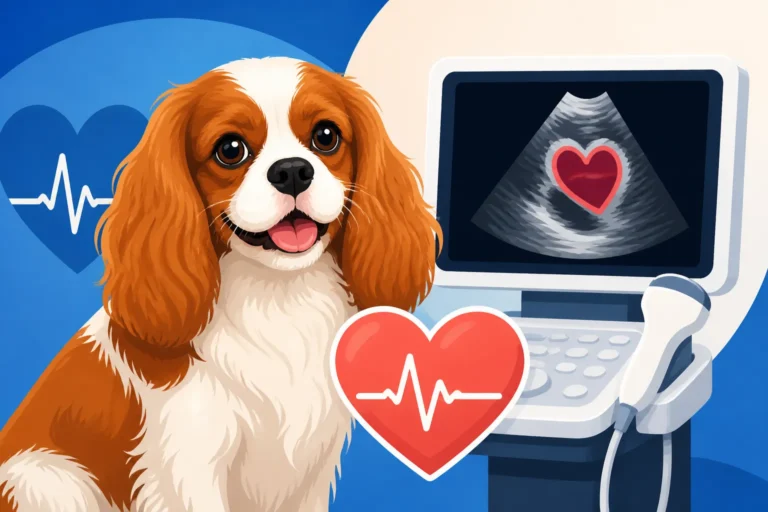
Cavaliers are famously prone to Mitral Valve Disease (MVD), with a significant percentage developing a heart murmur early in life. You might hear statistics like Why Half of Cavaliers Have a Murmur by Five, which really underscores the breed's unique vulnerability. This predisposition makes navigating pet insurance particularly challenging. Because MVD is so common and often develops insidiously, a murmur can be detected long before any clinical signs like coughing or exercise intolerance appear. This early detection, while medically beneficial for tracking the disease, can become an insurance nightmare if the policy isn't in place well beforehand.
Imagine you adopt a Cavalier puppy at 10 weeks old. You take them to their first vet visit, and the vet listens to their heart, notes "no murmur detected." Great! You get pet insurance a week later. Fast forward to age 3, and during a routine check-up, a vet finds a Grade 2 murmur. Because you had insurance before any murmur was noted, this new murmur would typically be covered. However, if you waited until age 3 to get insurance, that Grade 2 murmur would immediately be considered pre-existing, and any related MVD treatment costs would likely be denied. This is a common and devastating scenario for many Cavalier owners, highlighting the importance of early enrollment.
Why Cavalier Murmurs Become Pre-Existing Conditions
The timeline of a Cavalier's heart health, combined with insurance policy waiting periods and medical record reviews, creates a perfect storm for murmurs to be classified as pre-existing. It's not about malice on the insurer's part, but rather the way these policies are structured to protect against insuring an already-present condition.
The Role of Initial Vet Exams and Waiting Periods
When you enroll your Cavalier in a pet insurance plan, there are usually waiting periods before certain coverages kick in. These can vary; for example, accident coverage might start after just a few days, but illness coverage could have a 14-day or even 30-day waiting period. Some specific conditions, like orthopedic issues, might have even longer waiting periods. During this waiting period, if any symptoms of a condition appear, even if undiagnosed, that condition can be deemed pre-existing.
For a Cavalier, this means that if you get your puppy and a murmur is detected before or during the waiting period, even if you just got the policy, it will likely be considered pre-existing. This is why many experienced Cavalier owners will tell you to insure your puppy as early as possible – ideally even before your first vet visit, if the policy allows for a future effective date. That initial vet check, where the absence of a murmur is recorded, becomes a vital timestamp. Any murmur noted after the waiting period, with no prior history in the medical records, stands a much better chance of being covered.
What Happens During a Medical Records Review
When you file your first significant claim, or sometimes even upon enrollment, your pet insurance company will request your Cavalier's complete veterinary medical history. This isn't just a quick scan; they are looking for any mention of symptoms, diagnoses, or even suspicious findings that predate your policy's effective date and waiting periods. This review can go back years, covering every vet visit your Cavalier has ever had.
For a Cavalier and MVD, they'll be scrutinizing those records for any mention of a heart murmur, no matter how mild the grade or how casually it was noted. A passing comment in the notes about "soft murmur present, monitor" at an annual check-up years ago can be enough to classify MVD as pre-existing if it occurred before your policy began. This thoroughness is why it's so important to get insurance in place early, preferably when your Cavalier is a puppy and has a clean bill of heart health, ensuring that future MVD diagnoses aren't flagged. Reading a Cavalier Puppy's Health Certificates from a reputable breeder might give you a head start on understanding their baseline health.
Avoiding Denied Claims for Your Cavalier's Heart
While the risk of MVD is inherent to the Cavalier breed, there are proactive steps you can take to minimize the chances of your insurance claims being denied due to a pre-existing murmur. The key is to be strategic and well-informed from the moment you bring your Cavalier home.
Insure Your Cavalier as Early as Possible
This is arguably the single most important piece of advice for any Cavalier owner. Enroll your puppy in pet insurance as soon as you get them, ideally before their first veterinary check-up, if permitted by the insurer. Most policies will allow you to enroll a puppy as young as 8 weeks old. The younger your Cavalier is when you get coverage, the higher the likelihood that their medical records will be free of any pre-existing conditions, especially a heart murmur. Insuring a Cavalier at Eight Weeks is the gold standard for protecting against future issues like MVD.
Even if you adopt an older Cavalier, get insurance immediately. While they might have existing conditions that won't be covered, any new conditions that arise after the waiting periods will be. It's about protecting against the unknown future, which can still be quite costly. Remember, MVD can progress, and new issues like congestive heart failure often emerge later, potentially requiring Diuretics for a Cavalier in Heart Failure or Pimobendan for a Cavalier With an Enlarged Heart. Getting coverage early helps ensure that these later-stage treatments, when they become necessary, are covered.
Choose a Reputable Insurer and Understand Their Terms
Not all pet insurance policies are created equal, and understanding the nuances of each can make a big difference, especially with a breed like the Cavalier. When researching providers like Healthy Paws, it's crucial to read the fine print regarding pre-existing conditions and waiting periods. Ask direct questions:
- "How do you define a pre-existing condition, specifically relating to heart murmurs?"
- "What is the waiting period for illnesses like Mitral Valve Disease?"
- "Will you require my Cavalier's full veterinary history immediately, or only when I file a claim?"
Some policies might have clauses or riders that are more favorable, or conversely, more restrictive, for breed-specific conditions. While you can't typically get coverage for a known murmur, some insurers might offer specific programs or resources for breeds prone to certain conditions. Being a well-informed consumer is your best defense. Don't be afraid to compare policies and ask difficult questions.
Maintain Clear Veterinary Records and Regular Check-ups
Your Cavalier's medical records are the definitive proof for an insurance company. Ensure that every vet visit is well-documented, and ask for copies of your records regularly. If your vet notes "no murmur detected," that's excellent and serves as crucial evidence for future claims. Regular check-ups are also vital not just for health monitoring, but for maintaining a consistent, well-documented health history.
If a murmur is detected, discuss with your vet how it's noted in the records. While it can't change the pre-existing status if it's already there before your policy, understanding the progression of the murmur with regular Annual Cardiologist Exams for a Cavalier is essential for your dog's health, and good record-keeping supports any claims you might make for new conditions. Additionally, if your Cavalier requires specialized diets or medications, services from companies like Chewy or Ollie can help manage ongoing costs, but remember that the initial diagnosis leading to those prescriptions needs to be covered by insurance for claims to be approved.
What to Do If a Claim Is Denied
It's a sinking feeling when you receive that letter or email informing you that your claim has been refused. But a denial isn't always the absolute final word. There are steps you can take, though they require patience and persistence.
Review the Denial Letter and Your Policy Carefully
The first thing to do is to meticulously read the denial letter. It should state the specific reason for the refusal and reference the clause in your policy that applies. Common reasons include "pre-existing condition," "condition occurred during waiting period," or "condition is excluded from coverage." Once you understand the stated reason, pull out your actual policy document and compare it with the denial. Do the definitions align? Is there any ambiguity?
Sometimes, the insurance company might have incomplete or incorrect information. For example, they might have reviewed only a partial medical history, or misinterpreted a vet's note. This is where your detailed record-keeping comes in handy. You'll need to clearly understand their reasoning before you can effectively appeal.
Gather Supporting Documentation for an Appeal
If you believe the denial is incorrect, or that there's new information to provide, you can typically appeal the decision. This means gathering all relevant documents. This would include:
- Your Cavalier's full medical history, going back to their earliest records, specifically highlighting entries before your policy's start date and after the waiting period regarding their heart health.
- The original claim form and all associated veterinary invoices.
- The denial letter.
- A written statement from your veterinarian clarifying the timeline of the murmur diagnosis and symptom onset, especially if it helps differentiate between a murmur's detection and the onset of clinical disease. For instance, sometimes a mild murmur is noted, but it doesn't become a disease requiring treatment until much later. This distinction might be crucial for appealing.
A well-documented appeal stands a much better chance. If your Cavalier’s murmur was noted as very mild and non-clinical, and then years later it progressed, you might argue that the diagnosable disease truly began after your policy was active. This is a difficult argument to win with MVD, given its progressive nature, but it's worth exploring with your vet's support.
Consider Professional Assistance or Further Action
If your appeal is unsuccessful, you might still have options. Some pet insurance policies offer an external review process, where an independent third party reviews the case. You could also consult with an attorney specializing in consumer law, though this can be expensive and may not be cost-effective given the typical amounts involved in pet insurance claims.
Ultimately, while challenging a denial can sometimes lead to a reversal, for many Cavalier owners, the pre-existing condition clause for MVD is a tough hurdle. This makes the initial decision to get pet insurance for your Cavalier when they are a young puppy, with a clean bill of health, even more paramount. It truly is about protecting your financial peace of mind for what is, unfortunately, a very common and costly breed-specific illness.
| Scenario for Cavalier Heart Murmur & Insurance | Timeline of Murmur Detection | Insurance Enrollment Timing | Likely Claim Outcome for MVD Treatment |
|---|---|---|---|
| Ideal Scenario | No murmur detected at puppy checks | Enrolled at 8-12 weeks, before any murmur | Covered. Murmur arises after waiting period. |
| Common Denial | Murmur noted at age 3 during routine exam | Enrolled at age 4, after murmur was first noted | Denied. Murmur is pre-existing condition. |
| Waiting Period Issue | Murmur detected 10 days after policy start | Enrolled at age 1, murmur found within illness waiting period | Denied. Symptoms appeared during waiting period. |
| Unknown Symptom | Owner noticed coughing at age 2 | Enrolled at age 2.5, MVD diagnosed at age 3 | Denied. Coughing (a symptom) predates enrollment/waiting period. |
| Breeder History | Breeder vet notes trace murmur at 7 weeks | Enrolled at 8 weeks, puppy vet confirms murmur | Denied. Condition present before coverage. |
| New Condition | Old Cavalier with existing Grade 3 murmur | Enrolled at age 7 (murmur is pre-existing) | Covered. New conditions like cancer are still covered if they arise after enrollment. |
Protecting Your Cavalier's Future Health and Your Wallet
Owning a Cavalier King Charles Spaniel is a joy, but it also comes with the responsibility of understanding their breed-specific health challenges, especially their hearts. Mitral Valve Disease in the Cavalier King Charles Spaniel is a serious concern, and preparing for it financially is just as important as preparing emotionally. Thinking ahead about pet insurance is one of the kindest things you can do for your Cavalier and yourself.
The True Cost of Cavalier Heart Disease
It's easy to underestimate What Cavalier Heart Disease Costs to Treat until you're in the thick of it. The costs can quickly add up, from initial cardiologist consultations and echocardiograms (Echo Scan Prices for a Cavalier Heart) to ongoing medications like diuretics and ACE inhibitors, which can be needed for the rest of your Cavalier's life. Weekly visits, emergency care for fluid in the lungs, and specialized diets can create a significant financial burden. Without insurance, these bills can easily run into the thousands of dollars annually, putting immense pressure on owners already dealing with the emotional toll of a sick pet. How Long a Cavalier Lives After Diagnosis can vary, and those years often come with substantial veterinary expenses.
This is why understanding "pre-existing conditions" isn't just a technicality; it's a critical component of responsible Cavalier ownership. If a heart murmur is flagged as pre-existing, you'll be bearing the full cost of all related treatments out of pocket. This can mean tough choices, or a significant drain on your personal finances.
Long-Term Planning for Cavalier Health Expenses
Beyond early pet insurance enrollment, integrate long-term financial planning into your Cavalier ownership strategy. Consider setting up a dedicated savings account or "Cavalier health fund" to supplement your insurance coverage or to cover deductibles and co-pays. Even with insurance, you'll still have out-of-pocket expenses. Saving Ahead of a Cavalier Heart Diagnosis can provide a crucial safety net.
If you're considering a Cavalier, do your research not only on the breed but also on reputable breeders who actively screen their breeding dogs for MVD and follow health protocols like The Cavalier MVD Breeding Protocol. While no breeder can guarantee a Cavalier won't develop MVD, choosing a puppy from health-tested parents can slightly reduce the risk of early onset and gives you the best possible starting point for a healthy life. When you pick up your puppy, make sure to ask Whether a Cavalier Breeder Should Show You Heart Papers for the parents.
In the end, while we can't completely prevent genetic predispositions like MVD in Cavaliers, we can be smart about how we prepare for them. Getting pet insurance early, understanding your policy, and maintaining excellent communication with your vet are your best tools to ensure your beloved Cavalier receives the best possible care throughout their life, without facing the added stress of denied claims.
Disclaimer
This article is for general informational purposes only and does not constitute professional advice. Laws, prices and regulations vary by location and change over time. Consult a qualified professional for guidance on your specific situation.